
Understanding dental insurance options in Texas can feel overwhelming, especially when comparing government programs like Medicaid against private dental insurance plans. For families across Beeville, Seguin, New Braunfels, Leander, and Converse, making the right choice impacts not only your budget but also the quality of dental care you receive. Whether you're a parent seeking pediatric dental coverage, an adult needing preventive care, or someone requiring advanced treatments like dental implants or orthodontics, knowing the distinctions between medicaid vs private dental insurance in texas helps you make informed decisions about your family's oral health. This comprehensive guide breaks down coverage specifics, costs, limitations, and practical considerations to help you navigate the dental insurance landscape in the Lone Star State.
What Is Texas Medicaid Dental Coverage
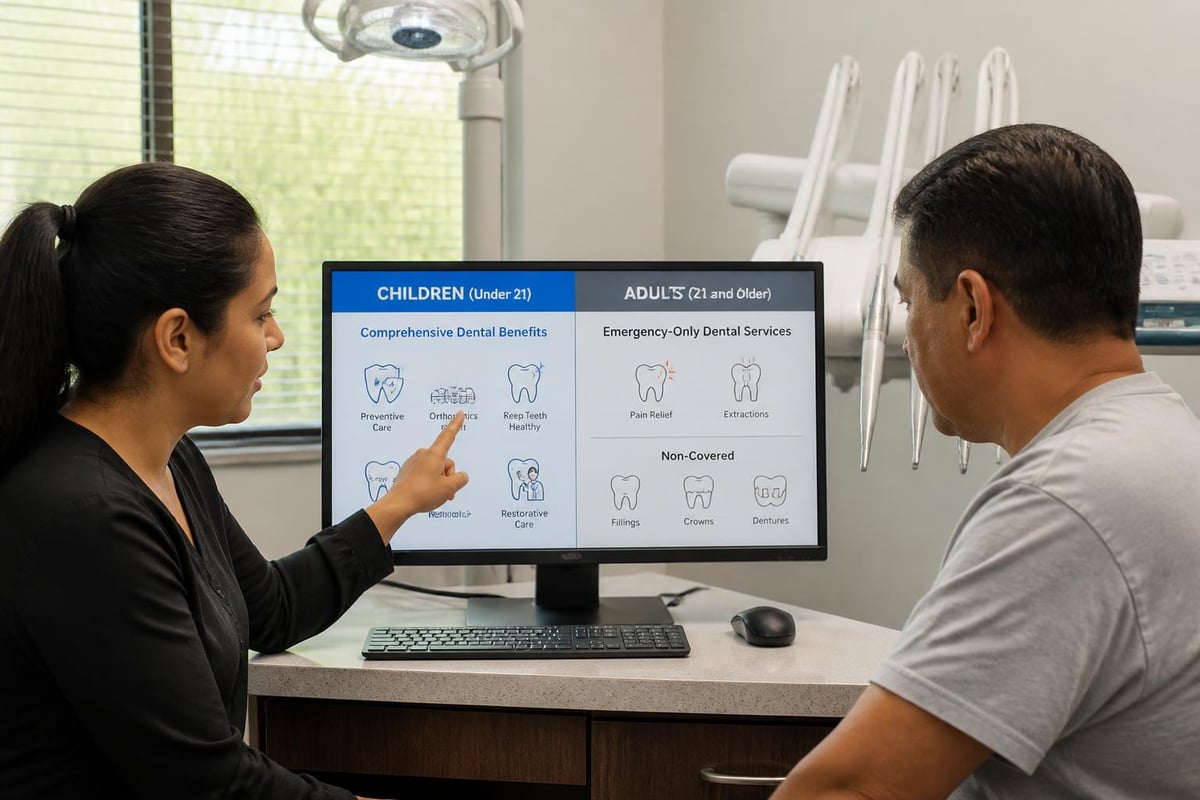
Texas Medicaid dental benefits vary significantly based on age and specific program enrollment. The state provides comprehensive dental coverage for children and young adults through the Texas Medicaid and CHIP Dental Program, administered by DentaQuest. Children under 21 enrolled in Medicaid or CHIP receive extensive dental benefits covering preventive, restorative, and emergency services.
For pediatric patients, the Texas Medicaid dental program includes routine exams, cleanings, fluoride treatments, sealants, fillings, extractions, and even orthodontic care when medically necessary. This comprehensive approach ensures that children have access to essential oral health services during their developmental years.
Adult Medicaid Dental Coverage Limitations
Adult dental coverage under Texas Medicaid presents a different picture entirely. Since 2011, routine dental benefits for adults have been significantly restricted. Texas Medicaid dental coverage for adults is limited primarily to emergency services designed to relieve pain and infection.
Adults with Texas Medicaid typically receive coverage only for:
- Emergency extractions to eliminate pain or infection
- Treatment of dental trauma or injuries
- Services required due to medical complications
- Pre-surgical clearance when necessary for other medical procedures
Routine cleanings, preventive care, fillings, crowns, and other restorative services remain largely unfunded for adults on Medicaid. This creates a substantial gap in care for many low-income Texans who rely on government assistance.
Specialized Coverage Under Texas Medicaid
Certain specialized dental treatments have specific eligibility criteria under Texas Medicaid. For instance, denture coverage in Texas Medicaid exists but requires meeting stringent medical necessity requirements and often involves lengthy approval processes.
Similarly, orthodontic coverage through Texas Medicaid is available exclusively for children with severe functional impairments affecting their bite, speech, or ability to eat. Cosmetic orthodontic needs typically don't qualify for coverage, regardless of the patient's age.
Understanding Private Dental Insurance Options in Texas
Private dental insurance operates fundamentally differently from Medicaid, offering Texas residents more comprehensive coverage options regardless of age. When evaluating medicaid vs private dental insurance in texas, private plans typically provide broader service coverage, greater provider choice, and more predictable out-of-pocket costs.
Most private dental insurance plans follow a three-tier coverage structure:
| Coverage Tier | Typical Coverage Rate | Services Included |
|---|---|---|
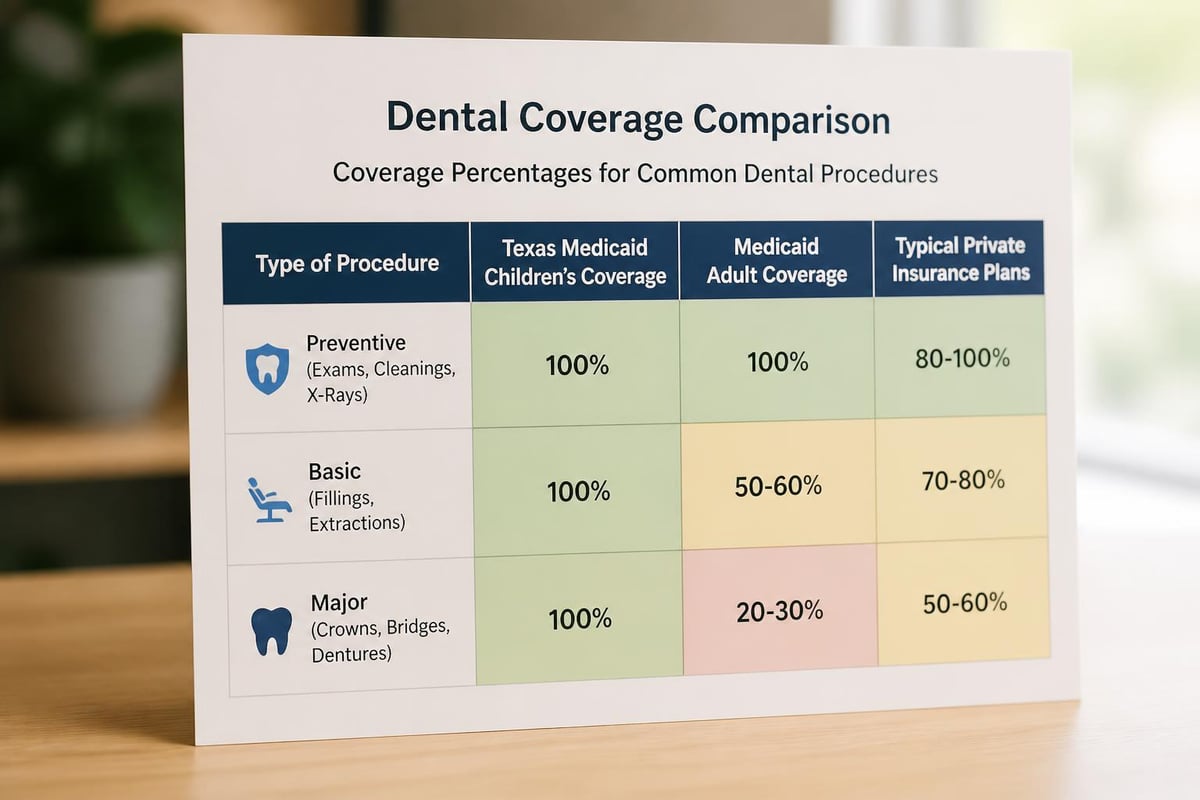
| Preventive (Class I) | 80-100% | Exams, cleanings, X-rays, fluoride treatments |
| Basic (Class II) | 60-80% | Fillings, extractions, periodontal care |
| Major (Class III) | 50% | Crowns, bridges, dentures, implants |
Types of Private Dental Insurance Plans
Private dental insurance comes in several formats, each with distinct advantages and limitations. PPO (Preferred Provider Organization) plans offer the most flexibility, allowing patients to visit any dentist while providing enhanced benefits for in-network providers.
HMO (Health Maintenance Organization) dental plans require members to select a primary dentist from the network and obtain referrals for specialist care. These plans typically feature lower premiums but restrict provider choice more than PPO alternatives.
Indemnity plans represent the traditional fee-for-service model, reimbursing a percentage of dental costs up to annual maximums. While offering complete provider freedom, these plans often involve higher out-of-pocket expenses and require upfront payment followed by reimbursement.
Discount dental plans, while technically not insurance, provide another private option. These membership programs offer reduced fees at participating dentists, which can be explored through resources like understanding dental insurance alternatives in Texas.
Coverage Scope in Private Plans
Unlike Texas Medicaid's restrictive adult coverage, private dental insurance typically covers a wide range of services for all enrollees. Preventive care usually receives full or near-full coverage, encouraging patients to maintain regular dental visits and catch problems early.
Basic restorative procedures like fillings, root canals, and simple extractions generally receive partial coverage between 60-80%. Major procedures including crowns, bridges, and dental implants typically fall under the 50% coverage category, though specific percentages vary by plan.
Orthodontic coverage in private plans often extends to both children and adults, though lifetime maximums typically range from $1,000 to $3,000. Some plans offer adult orthodontic benefits specifically for clear aligner systems or traditional braces.
Cost Comparison: Medicaid vs Private Dental Insurance in Texas
Financial considerations play a central role when comparing medicaid vs private dental insurance in texas. Understanding both premiums and out-of-pocket expenses helps families budget appropriately for dental care.
Medicaid Costs and Expenses
Texas Medicaid enrollees pay zero monthly premiums for dental coverage. For eligible children, there are typically no copayments or deductibles for covered services. This makes Medicaid an extremely affordable option for qualifying low-income families.
However, the limited adult coverage means that adults requiring routine dental care must pay entirely out-of-pocket for non-emergency services. A simple cleaning and exam might cost $150-300 without insurance, while more complex procedures like fillings or crowns can quickly reach hundreds or thousands of dollars.
Private Insurance Premium Structures
Private dental insurance premiums in Texas vary based on coverage level, provider network, and whether coverage is individual or family-based. According to 2026 market data, typical monthly premiums range as follows:
- Individual coverage: $20-60 per month
- Couple coverage: $40-100 per month
- Family coverage: $60-150 per month
These premiums secure access to preventive, basic, and major services, though most plans impose annual maximum benefits between $1,000 and $2,500 per person.
Out-of-Pocket Expense Analysis
When comparing total costs, private insurance often proves more economical for families requiring regular dental care. Consider a family of four needing routine preventive care:
| Service | Without Insurance (Annual) | With Private Insurance (Annual) | Medicaid (Children Only) |
|---|---|---|---|
| 8 cleanings/exams | $1,200-2,400 | $0-400 + premiums ($720-1,800) | $0 |
| 4 fluoride treatments | $200-400 | $0-80 + premiums | $0 |
| 3 fillings | $450-900 | $135-270 + premiums | $0 (children only) |
| Total Annual Cost | $1,850-3,700 | $855-2,550 | $0-1,850 |
This analysis demonstrates that for families with regular dental needs, private insurance typically reduces overall expenses despite premium costs. However, Medicaid remains unbeatable for qualifying families with children requiring standard pediatric care.

Eligibility Requirements: Who Qualifies for What
Understanding eligibility criteria proves essential when evaluating medicaid vs private dental insurance in texas, as qualification standards differ dramatically between programs.
Texas Medicaid Eligibility Standards
Texas Medicaid eligibility depends primarily on income level, family size, age, disability status, and citizenship. Income thresholds for 2026 vary by program:
- Children under 19: Families earning up to 201% of Federal Poverty Level (FPL) qualify for CHIP
- Pregnant women: Eligible at income levels up to 198% FPL
- Parents and caretakers: Must earn below 17% FPL (extremely limited)
- Individuals with disabilities: Varied criteria based on SSI eligibility
For a family of four in 2026, 100% FPL equals approximately $31,200 annually. This means a family earning $62,712 or less might qualify for CHIP coverage for their children, providing access to comprehensive Medicaid dental services.
Private Insurance Accessibility
Private dental insurance eligibility is considerably more straightforward. Anyone can purchase individual or family dental insurance regardless of income level, employment status, or pre-existing dental conditions. No medical underwriting prevents coverage for dental issues.
However, most private plans include waiting periods for certain services:
- Preventive care: Immediate coverage or minimal waiting (0-3 months)
- Basic procedures: 3-6 month waiting period
- Major procedures: 6-12 month waiting period
- Orthodontics: 12-24 month waiting period
These waiting periods prevent individuals from purchasing insurance solely to cover immediately needed expensive procedures. For families planning ahead, enrolling before dental issues arise maximizes benefit utilization.
Employer-sponsored dental insurance often waives waiting periods for employees enrolling during initial eligibility periods, making workplace coverage particularly valuable for those with access.
Provider Networks and Accessibility Across Texas
Geographic accessibility and provider choice represent crucial factors when comparing medicaid vs private dental insurance in texas, especially across the state's vast and diverse regions.
Medicaid Dental Provider Networks
Finding dentists accepting Texas Medicaid can prove challenging, particularly in rural areas. While the state maintains a directory of participating providers, many private practices limit the number of Medicaid patients they accept due to lower reimbursement rates compared to private insurance or self-pay patients.
Urban areas including Houston, Dallas, San Antonio, and Austin generally offer more Medicaid-accepting dental practices. However, smaller communities throughout Central and South Texas, including areas around Beeville, Seguin, and Converse, may have limited options.
Children typically experience better access than adults, as comprehensive pediatric benefits attract more providers to participate in the program. The limited adult coverage further reduces provider participation for adult Medicaid patients.
Private Insurance Provider Networks
Private dental insurance plans generally feature extensive provider networks throughout Texas. PPO plans offer the greatest flexibility, with thousands of participating dentists across metropolitan and rural areas. Patients can verify whether their preferred dentist participates before selecting a plan.
Clinics like those seeking to provide accessible care often participate in multiple private insurance networks to serve diverse patient populations. This multi-network participation ensures that families with various insurance plans can access quality dental care without traveling long distances.
For Texans prioritizing provider choice, selecting a dental clinic that accepts insurance simplifies the process of matching coverage with quality care. Network directories provided by insurance companies help patients identify convenient, in-network providers in their communities.
Specialist Access Considerations
Access to dental specialists varies considerably between Medicaid and private insurance. Private insurance networks typically include orthodontists, oral surgeons, periodontists, and endodontists, facilitating referrals for specialized care when needed.
Medicaid specialist networks are more limited, particularly for adult patients whose coverage restricts specialist access to emergency situations. Children with Medicaid generally have better specialist access, especially for medically necessary orthodontics or surgical interventions.
Coverage for Specific Dental Procedures
Understanding how medicaid vs private dental insurance in texas covers specific treatments helps families anticipate costs and coverage gaps for their actual dental needs.
Preventive Care Coverage
Preventive services form the foundation of good oral health, making coverage for these services particularly important:
Texas Medicaid (Children):
- Bi-annual cleanings and exams: Fully covered
- Fluoride treatments: Fully covered for children under 21
- Dental sealants: Covered for molars
- X-rays: Covered as diagnostically necessary
Private Insurance:
- Bi-annual cleanings and exams: Typically 80-100% covered
- Fluoride treatments: Often covered for children, variable for adults
- Dental sealants: Usually covered for children at 80-100%
- X-rays: Covered preventively and diagnostically at 80-100%
Both coverage types emphasize preventive care for children, though private insurance extends these benefits more consistently to adults. Regular preventive visits, whether covered by Medicaid or private insurance, help avoid costly restorative procedures later.
Restorative and Basic Procedures
When cavities or dental damage occur, restorative coverage becomes essential:
- Fillings: Medicaid covers composite fillings for children; private insurance typically covers 60-80% for all ages
- Root canals: Limited under adult Medicaid (emergency only); private insurance covers 60-80%
- Extractions: Covered under both for children; adults on Medicaid receive coverage only for emergency extractions
- Periodontal care: Children's Medicaid includes coverage; private insurance covers 60-80% for all ages
The stark difference in adult coverage represents a key distinction when comparing medicaid vs private dental insurance in texas. Adults requiring routine restorative care benefit significantly from private insurance coverage.
Major Dental Work and Advanced Treatments
Complex dental procedures often represent the greatest expense and coverage challenge:
| Procedure | Texas Medicaid | Private Insurance | Typical Out-of-Pocket (Private) |
|---|---|---|---|
| Dental crowns | Children only | 50% coverage | $500-800 per crown |
| Bridges | Limited/none | 50% coverage | $1,000-2,000 |
| Dentures | Emergency only (adults) | 50% coverage | $600-1,500 |
| Dental implants | Not covered | 0-50% (plan dependent) | $2,000-4,000 per implant |
| Orthodontics | Medically necessary (children) | Separate benefit ($1,000-3,000 lifetime) | Variable |
For families considering advanced dental treatments like implants, private insurance provides at least partial financial assistance, while Medicaid offers minimal to no coverage for these procedures.
Real-World Scenarios: Which Coverage Works Better
Examining practical situations helps illustrate when medicaid vs private dental insurance in texas serves families best.
Scenario 1: Young Family with Children
The Martinez family from Seguin has two children, ages 6 and 9, and a combined household income of $48,000. Both children qualify for CHIP, providing comprehensive dental coverage at no cost. The parents don't qualify for Medicaid due to income level.
Best option: Keep children on CHIP/Medicaid while parents purchase a basic private plan or utilize a dental savings plan for routine care. This hybrid approach minimizes costs while ensuring comprehensive pediatric coverage.
Scenario 2: Working Adult Needing Routine Care
Sarah, a 32-year-old administrative assistant in Leander, earns $38,000 annually-too much for Medicaid but enough to afford modest insurance premiums. She requires bi-annual cleanings, occasional fillings, and anticipates needing a crown within the next year.
Best option: Private dental insurance through her employer or an individual plan. Annual premiums of approximately $400-500 combined with 60-80% coverage for restorative work will cost less than paying entirely out-of-pocket for her anticipated dental needs.
Scenario 3: Low-Income Senior Requiring Major Work
Mr. Johnson, a 67-year-old retiree in Beeville, receives Medicare and Medicaid but needs extensive dental work including multiple extractions and dentures. Standard Medicare doesn't cover dental, and Texas Medicaid adult coverage is limited.
Best option: This represents a coverage gap scenario. Mr. Johnson might consider supplemental dental insurance if available, explore dental savings plans, or seek care at community health centers offering sliding-scale fees. Some dental clinics work with patients to create affordable payment plans for major work.
Scenario 4: Family with Orthodontic Needs
The Chen family has a 12-year-old daughter requiring braces. They earn slightly above CHIP eligibility limits but qualify for employer-sponsored insurance with orthodontic benefits.
Best option: Private insurance with orthodontic coverage provides the best value. A plan offering a $2,000 orthodontic lifetime maximum significantly reduces the typical $4,000-6,000 cost of comprehensive orthodontic treatment. Even if the child qualified for Medicaid, orthodontic coverage requires proving medical necessity rather than addressing typical alignment issues.
Common Pain Points and How to Address Them
Understanding challenges families face with both coverage types helps in making informed decisions about medicaid vs private dental insurance in texas.
Challenge: Finding Participating Dentists
Pain point: Many dentists limit or don't accept Medicaid patients, making it difficult to find quality, convenient care.
Solution: Start your search early using the Texas Medicaid dental directory. Call offices directly to verify current Medicaid acceptance and new patient availability. Community health centers and Federally Qualified Health Centers (FQHCs) consistently accept Medicaid and provide comprehensive services.
For private insurance, verify your chosen dentist's network participation before enrolling in a specific plan. Resources like finding dentists that accept insurance in Texas streamline this process.
Challenge: Coverage Gaps for Adults
Pain point: Texas Medicaid provides minimal adult dental coverage beyond emergency services, leaving many low-income adults without preventive or restorative care options.
Solution: Explore multiple avenues:
- Community health centers often offer sliding-scale fees based on income
- Dental schools provide reduced-cost care performed by supervised students
- Dental savings plans offer discounted rates for members paying out-of-pocket
- Payment plans through individual dental practices make care more accessible
Some adults qualify for expanded coverage through specific Medicaid waiver programs if they have disabilities or chronic health conditions requiring ongoing dental maintenance.
Challenge: Understanding Plan Details and Making Smart Choices
Pain point: Insurance terminology, coverage percentages, waiting periods, and exclusions confuse many consumers, leading to unexpected costs or inadequate coverage.
Solution: Take time to thoroughly research options. Request detailed coverage summaries from insurance providers. Ask specific questions:
- What preventive services receive 100% coverage?
- What are the waiting periods for each service category?
- What is the annual maximum benefit?
- Are there frequency limitations on specific services?
- Which dental offices participate in the network near my home or work?
Understanding the value of choosing the right dental clinic includes confirming they accept your specific insurance plan and work efficiently with insurance billing.
Challenge: Balancing Cost and Coverage
Pain point: Families struggle to determine whether paying insurance premiums provides better value than paying out-of-pocket or relying on limited Medicaid benefits.
Solution: Calculate your expected annual dental expenses based on your family's history and anticipated needs. Compare this figure against premium costs plus expected out-of-pocket expenses with insurance coverage.
For families with children qualifying for Medicaid/CHIP but adults needing private coverage, hybrid approaches often work best. Maintain free comprehensive coverage for children while securing basic private coverage for adults, prioritizing preventive care to avoid expensive restorative needs.
Frequently Asked Questions About Dental Insurance in Texas
Does Texas Medicaid cover dental implants?
No, Texas Medicaid does not cover dental implants for adults or children. The program considers implants cosmetic or elective rather than medically necessary. Adults requiring tooth replacement due to medical conditions may receive coverage for extractions but not implant placement. Private dental insurance sometimes covers implants at 0-50%, depending on the specific plan and medical necessity documentation.
Can I have both Medicaid and private dental insurance?
Yes, you can maintain both Medicaid and private dental insurance simultaneously. In these situations, Medicaid typically serves as the secondary payer after private insurance processes claims first. This coordination of benefits can reduce out-of-pocket costs, though the benefit depends on what each plan covers. Families sometimes maintain private insurance for adults while children use Medicaid/CHIP.
What happens if I need dental work but don't qualify for Medicaid and can't afford private insurance?
Several alternatives exist for Texans facing this situation. Community health centers throughout Texas offer dental services on sliding-scale fees based on income. Dental schools including UT Health San Antonio provide supervised care at reduced rates. Additionally, dental savings plans offer discounted service rates for an annual membership fee, typically ranging from $100-200 yearly.
How do I find dentists near me that accept my insurance?
Most insurance companies provide online directories of participating providers. Enter your location and plan information to generate a list of nearby dentists. Additionally, call dental offices directly to verify current participation status, as directories sometimes contain outdated information. Clinics with multiple locations across Texas, such as those in New Braunfels, Converse, and Leander, often participate in numerous insurance networks to serve diverse communities.
Are waiting periods the same for all private dental insurance plans?
No, waiting periods vary significantly between insurance companies and specific plan types. Some plans offer immediate preventive coverage with 3-6 month waits for basic services and 12-month waits for major procedures. Other plans impose no waiting periods but charge higher premiums. Employer-sponsored plans frequently waive waiting periods for employees enrolling during initial eligibility windows. Always review waiting period details before purchasing coverage.
Does private dental insurance cover orthodontics for adults?
Many private dental insurance plans include adult orthodontic benefits, though coverage is often less generous than pediatric orthodontic benefits. Typical adult orthodontic coverage ranges from $1,000-2,000 lifetime maximum, compared to $1,500-3,000 for children. Some plans exclude adult orthodontics entirely or cover only specific conditions. Review orthodontic provisions carefully if this coverage matters to your family.
Can I switch from Medicaid to private insurance mid-year?
Yes, you can transition from Medicaid to private dental insurance whenever your circumstances change. However, you may need to wait for open enrollment periods for certain plans unless you experience a qualifying life event (job change, marriage, birth, etc.). When transitioning, ensure continuous coverage by maintaining Medicaid until your private insurance becomes active. Be aware that private plans may impose waiting periods for certain services even if you had recent Medicaid coverage.
What dental services does Texas CHIP cover for children?
Texas CHIP dental coverage provides comprehensive benefits including preventive services (exams, cleanings, fluoride, sealants), restorative services (fillings, crowns), endodontic treatment (root canals), periodontic treatment, oral surgery (extractions), emergency services, and medically necessary orthodontics. This extensive coverage ensures children receive complete dental care to maintain optimal oral health during developmental years.
Making the Right Choice for Your Family's Dental Health
Deciding between medicaid vs private dental insurance in texas requires careful consideration of your family's specific circumstances, including income level, ages of family members, anticipated dental needs, and budget constraints.
Key Decision Factors
Choose Medicaid/CHIP if:
- Your children qualify based on income and you need comprehensive pediatric coverage at no cost
- You meet adult Medicaid eligibility and require only emergency dental services
- Your income prevents affording private insurance premiums
Choose private dental insurance if:
- You need adult coverage beyond emergency services
- You require predictable coverage for preventive and restorative care
- You can afford modest monthly premiums for comprehensive benefits
- You want flexibility in choosing dental providers
- You anticipate needing major dental work within coverage limits
Consider hybrid approaches if:
- Children qualify for Medicaid/CHIP but adults need private coverage
- You want maximum coverage while minimizing costs
- You're transitioning between coverage types due to income or employment changes
Resources for Further Information
For additional guidance on obtaining dental coverage in Texas, comprehensive guides on dental insurance options provide detailed comparisons and enrollment instructions. Understanding how Medicaid dental coverage varies by state helps contextualize Texas-specific limitations and benefits.
The Texas insurance marketplace offers information about supplemental dental insurance options that complement health insurance or fill coverage gaps.
Taking Action on Your Dental Insurance Decision
Don't delay making decisions about dental coverage. Dental problems rarely improve without professional treatment and typically become more expensive the longer they're ignored. Whether you ultimately choose Medicaid, private insurance, or alternative coverage arrangements, establishing a plan ensures your family receives necessary dental care.
Start by assessing your eligibility for Medicaid/CHIP through the state's online portal. If you don't qualify or need more comprehensive adult coverage, request quotes from multiple private insurance providers to compare premiums, coverage levels, and network providers.
Consider your family's dental history when projecting needs. Families with consistent dental issues benefit more from comprehensive coverage, while those with minimal dental problems might prefer basic preventive plans with lower premiums.
Schedule consultations with local dental providers to discuss insurance acceptance, payment options, and treatment recommendations. Many dental clinics offer new patient consultations that include insurance verification and treatment planning.
Understanding the differences between medicaid vs private dental insurance in texas empowers you to make informed decisions that protect your family's oral health while managing costs effectively. Whether you qualify for Medicaid, invest in private insurance, or explore alternative coverage options, consistent access to quality dental care remains essential for long-term wellness. Dental Plus Clinic serves patients across Beeville, Seguin, New Braunfels, Leander, and Converse with comprehensive dental services, accepting various insurance plans and working with families to create accessible, affordable treatment solutions. Contact us today to verify your insurance coverage, discuss payment options, and schedule your appointment for professional dental care that prioritizes your family's health and budget.