

Navigating dental implants and insurance coverage in Texas can feel overwhelming, especially when you're trying to restore your smile while managing healthcare costs. Many Texans discover that dental implants, while transformative for oral health and confidence, aren't always covered the same way as traditional dental procedures. Understanding what your insurance policy covers, which providers offer the best benefits, and how to maximize your coverage can make the difference between affordable treatment and unexpected financial burden. Whether you're in Beeville, Seguin, New Braunfels, Leander, or Converse, knowing your insurance options empowers you to make informed decisions about your dental health.
Understanding Dental Implant Insurance Coverage Basics
Dental insurance policies treat implants differently than routine procedures like cleanings or fillings. Most insurance companies classify implants as a major restorative procedure rather than preventive care, which significantly impacts coverage levels.
Typical coverage structures include:
- Preventive care: 80-100% coverage for cleanings and exams
- Basic procedures: 70-80% coverage for fillings and simple extractions
- Major procedures: 50% coverage for crowns, bridges, and implants
- Annual maximums: Usually $1,000-$2,000 per year
The challenge with dental implants and insurance coverage in Texas is that a single implant procedure often exceeds annual maximums. According to insurance coverage guidelines, most policies cap benefits at around $1,500 annually, while a single implant can cost $3,000-$5,000.
Why Insurance Companies Limit Implant Coverage
Insurance providers historically viewed implants as cosmetic or elective procedures. This classification persists despite implants being medically necessary for many patients who've lost teeth due to injury, disease, or extraction.
Some insurers now recognize implants as functional restorations. However, coverage remains limited due to cost concerns and policy structures designed decades ago when implants were less common.
What Texas Insurance Plans Actually Cover
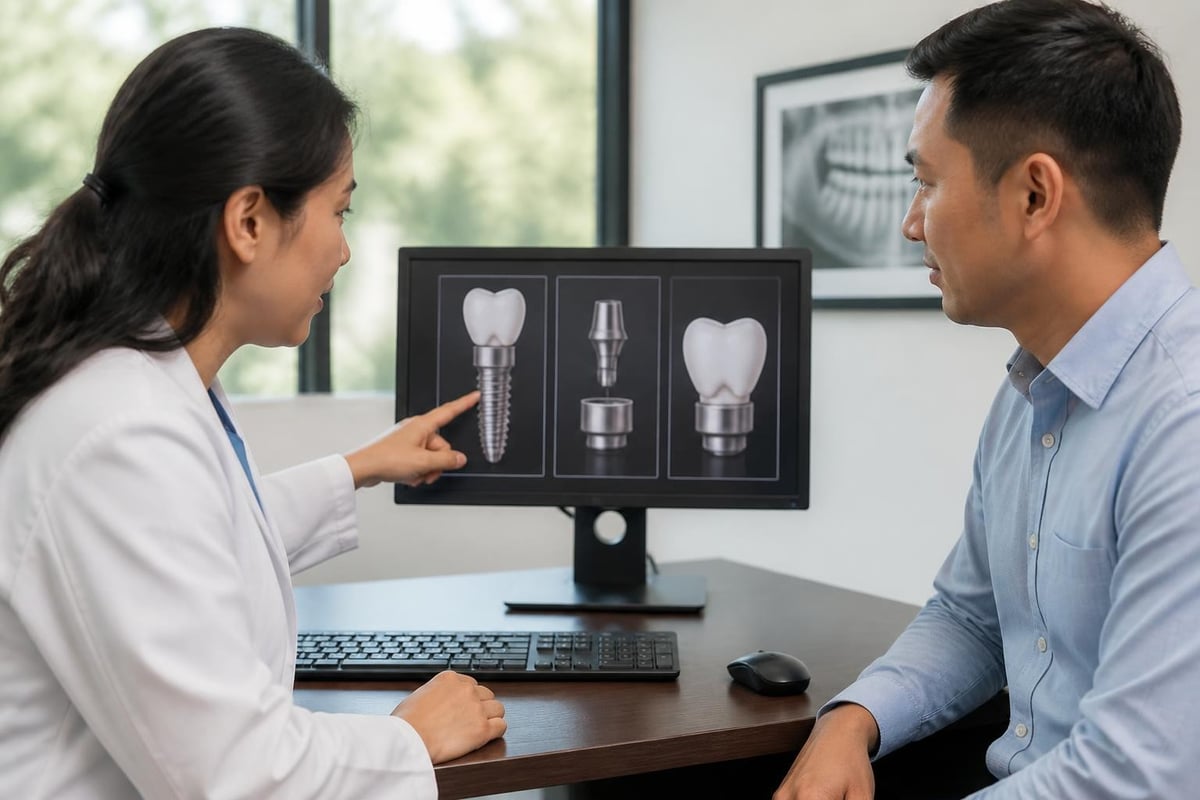
Understanding dental implants and insurance coverage in Texas requires examining specific policy components. Most plans divide implant treatment into three billable phases, each with different coverage percentages.
| Treatment Phase | Typical Cost | Average Coverage | Patient Responsibility |
|---|---|---|---|
| Surgical placement | $1,500-$2,500 | 50% | $750-$1,250 |
| Abutment | $500-$1,000 | 50% | $250-$500 |
| Crown | $1,000-$2,000 | 50% | $500-$1,000 |
| Total | $3,000-$5,500 | Variable | $1,500-$2,750+ |
These numbers fluctuate based on your specific plan, deductible, and whether you've reached your annual maximum. Major insurance providers like Anthem Blue Cross and Aetna in Texas now offer enhanced coverage for medically necessary implants in 2026.
PPO Plans vs. HMO Plans for Implants
PPO (Preferred Provider Organization) plans typically offer better implant coverage because they allow you to choose specialists and often cover 50% of major procedures. You'll have higher premiums but greater flexibility in selecting experienced implant dentists.
HMO (Health Maintenance Organization) plans require referrals and restrict your provider network. Coverage for implants may be minimal or nonexistent, though premiums are lower.
Key considerations when choosing:
- Network restrictions and specialist access
- Annual maximum limits
- Waiting periods for major procedures (often 6-12 months)
- Pre-authorization requirements
- Percentage coverage for major restorative work
Medicare and Medicaid Coverage for Texas Residents
Many Texas residents wonder if government programs cover dental implants. The answer is complex and depends on your specific situation and coverage type.
Medicare Coverage Limitations
Original Medicare does not cover dental implants in Texas or anywhere else in the United States. Medicare Part A and Part B exclude most dental services, including implants, extractions, dentures, and routine dental care.
Exceptions exist only when:
- Dental surgery is required due to accident-related injuries
- Jaw reconstruction is medically necessary for disease treatment
- Dental procedures are integral to covered medical treatments (like radiation therapy)
Medicare Advantage plans (Part C) may include dental benefits with implant coverage. These private plans sometimes offer $1,000-$3,000 annual dental allowances that can apply toward implants.
Medicaid Dental Coverage in Texas
Texas Medicaid provides limited dental coverage for adults, focusing primarily on emergency services. Dental implants are rarely covered for adults under traditional Medicaid.
Children receive comprehensive coverage through:
- Texas Health Steps (EPSDT program)
- Medicaid-funded dental services
- Emergency and restorative treatments
Adults over 21 typically receive only emergency dental services unless they qualify for specific waivers or programs. Understanding these limitations helps you plan alternative financing for implant procedures.

Maximizing Your Insurance Benefits for Dental Implants
Smart planning can significantly reduce your out-of-pocket costs for dental implants and insurance coverage in Texas. Several strategies help patients maximize available benefits.
Timing Your Treatment Strategically
Split procedures across benefit years to access two annual maximums. For example, complete the surgical placement in December 2026 and the crown in January 2027, effectively doubling your coverage.
Plan around waiting periods if you're switching policies or adding coverage. Most plans impose 6-12 month waiting periods for major procedures, so enroll early if you anticipate needing implants.
Pre-Authorization and Documentation
Always request pre-authorization before beginning treatment. This process provides:
- Written confirmation of coverage percentages
- Estimated out-of-pocket costs
- Approval for medically necessary procedures
- Protection against claim denials
Your dentist should submit detailed documentation explaining why implants are medically necessary rather than cosmetic. Include information about bone loss, inability to eat properly, or failed previous treatments.
Essential documentation includes:
- Diagnostic X-rays and CT scans
- Medical history showing tooth loss causes
- Treatment plan with itemized costs
- Explanation of why alternatives won't work
- Photos documenting current condition
Alternative Coverage Options
When traditional insurance falls short, consider these supplemental options:
Dental discount plans aren't insurance but offer 10-60% savings on procedures. Annual membership costs $80-$200 and provides immediate access without waiting periods.
Health Savings Accounts (HSAs) and Flexible Spending Accounts (FSAs) allow pre-tax savings for medical expenses. You can use these funds for implants, reducing effective costs by your tax rate (22-35% for most families).
Medical insurance coverage may apply if implants are required due to accident, injury, or medical condition. Submit claims to medical insurance first, then dental insurance for remaining costs.
Common Insurance Scenarios and Solutions
Real-world examples illustrate how dental implants and insurance coverage in Texas work in practice. These scenarios help you understand what to expect.
Scenario 1: Annual Maximum Exhausted
Situation: Sarah needs two implants costing $8,000 total but has a $1,500 annual maximum with 50% coverage on major procedures.
Solution approach:
- Year 1: Complete surgical placement for one implant ($2,000), insurance pays $750
- Year 2: Complete crown for first implant ($1,500) and surgery for second implant ($2,000), insurance pays $1,500 across both
- Year 3: Complete crown for second implant ($1,500), insurance pays $750
Total insurance contribution: $3,000. Patient pays: $5,000 over three years instead of $7,000 in one year.
Scenario 2: Medically Necessary Approval
Situation: John lost teeth due to periodontal disease and can't chew properly, affecting nutrition and digestion.
Solution approach:
His dentist documented medical necessity, including nutritionist consultation showing inadequate nutrition. Medical insurance covered 70% of surgical costs as medically necessary treatment. Dental insurance covered crown placement at 50%.
Results:
- Total cost: $4,500
- Medical insurance paid: $1,750 (surgical phase)
- Dental insurance paid: $750 (crown phase)
- Patient paid: $2,000
Scenario 3: Medicare Advantage Enhanced Coverage
Situation: Maria, 68, has a Medicare Advantage plan with $2,000 annual dental allowance.
Solution approach:
Her plan covered implants as major restorative work. She combined the dental allowance with a payment plan through the clinic, spreading remaining costs over 12 months interest-free.
Financial breakdown:
- Single implant: $4,200
- Medicare Advantage dental benefit: $2,000
- Patient payment plan: $2,200 over 12 months ($183/month)
What to Look for in Dental Insurance Policies
When selecting or evaluating insurance for dental implants and insurance coverage in Texas, specific policy features make a significant difference in your final costs.
Critical Policy Features
| Feature | Why It Matters | What to Look For |
|---|---|---|
| Annual maximum | Caps total benefits | $1,500+ minimum; $2,500+ ideal |
| Major procedure coverage | Affects implant costs | 50% or higher coverage |
| Waiting periods | Delays treatment access | No waiting or 6 months maximum |
| Missing tooth clause | May deny coverage | Policies without this exclusion |
| Network flexibility | Provider choice | PPO with broad network |
| Pre-authorization process | Claim approval | Clear, straightforward requirements |
The missing tooth clause deserves special attention. Some policies won't cover replacement for teeth lost before coverage began. According to dental insurance coverage analysis, this clause affects roughly 40% of policies and can completely eliminate implant coverage.
Questions to Ask Insurance Representatives
Before committing to any plan, get answers to these questions in writing:
- What percentage of dental implant procedures does this plan cover?
- Does the annual maximum apply per person or per family?
- Are there waiting periods for major restorative procedures?
- Does a missing tooth clause exclude coverage for my situation?
- Is pre-authorization required, and what's the approval process?
- Which implant dentists are in-network in my area?
- Are bone grafts and sinus lifts covered if medically necessary?
- Can I appeal denied claims, and what's the process?
Cost-Saving Strategies Beyond Insurance
Even with insurance, understanding all cost-reduction options for dental implants and insurance coverage in Texas helps make treatment affordable.
Financing and Payment Plans
Many Texas dental practices, including those specializing in implant procedures, offer flexible payment options:
In-house financing through dental offices often provides:
- 0% interest for 12-24 months
- No credit check required
- Approval within minutes
- Monthly payments as low as $150-$300
Third-party financing through CareCredit, LendingClub, or Prosper offers:
- Extended terms up to 60 months
- Promotional 0% APR periods
- Higher approval amounts ($25,000+)
- Credit building opportunities
Dental Schools and Teaching Clinics
Texas has several dental schools where supervised students perform procedures at 30-50% lower costs:
- University of Texas School of Dentistry (Houston)
- Texas A&M College of Dentistry (Dallas)
- UT Health San Antonio School of Dentistry
Treatment takes longer due to educational requirements, but quality remains high under faculty supervision. This option works well for patients with time flexibility and limited insurance.
Combining Multiple Strategies
Successful approach example:
- Maximize annual insurance benefit: $1,500
- Use HSA pre-tax funds: $2,000
- Apply dental discount plan savings: 20% off remaining balance
- Finance remainder through 0% payment plan: 18 months
Total implant cost: $4,500
Effective out-of-pocket: $1,000 plus $55/month for 18 months
This approach makes quality implant treatment accessible without insurance covering the full procedure.

Choosing the Right Implant Provider in Texas
Finding an experienced implant dentist who accepts your insurance maximizes both clinical outcomes and coverage benefits. Understanding what makes a qualified provider helps you make informed choices.
Credentials and Experience
Look for dentists with:
- Advanced implant training beyond dental school (continuing education certificates, fellowships)
- Board certification in periodontics, prosthodontics, or oral surgery
- Membership in American Academy of Implant Dentistry or similar organizations
- Years of experience placing implants (100+ procedures minimum)
- Success rates of 95% or higher for initial integration
Finding the best implant dentist requires researching qualifications, reading patient reviews, and evaluating before-and-after photos of actual cases.
Technology and Techniques
Modern implant technology improves success rates and reduces recovery time. Seek providers offering:
3D imaging and planning for precise placement
Computer-guided surgery for accuracy
Same-day temporary teeth for immediate function
Bone grafting capabilities for compromised bone
Multiple implant systems for personalized treatment
Practices investing in latest dental implant technology typically deliver better outcomes with fewer complications.
Insurance Participation
Verify provider credentials with your insurance company:
- Confirm in-network status
- Check reimbursement rates (in-network pays more)
- Verify submission procedures
- Ask about direct billing
- Request cost estimates with insurance applied
Some excellent implant dentists don't participate in insurance networks but offer competitive pricing that offsets the out-of-network penalty.
Understanding Treatment Options and Costs
Different implant configurations affect both clinical outcomes and insurance coverage for dental implants and insurance coverage in Texas. Knowing your options helps you plan financially.
Single Tooth Replacement
Components and costs:
- Titanium implant post: $1,500-$2,500
- Healing abutment: $200-$500
- Custom crown: $1,000-$2,000
- Total: $2,700-$5,000
Insurance typically covers 50% of each component up to annual maximum. This represents the most straightforward coverage scenario since it's clearly restorative rather than cosmetic.
Multiple Teeth Replacement
Options include:
Individual implants for each missing tooth (2-4 implants)
- Higher cost but independent teeth
- More insurance claims required
- Longer treatment timeline
Implant bridge connecting 2-3 crowns to fewer implants
- Lower total cost
- Single insurance claim
- Faster treatment completion
Full Arch Replacement
When replacing all upper or lower teeth, specialized approaches reduce costs while maintaining function:
All-on-4 or All-on-6 solutions use four to six strategically placed implants supporting a full arch of teeth. Understanding All-on-4 vs All-on-6 dental implants helps you choose the right approach for your situation.
| Solution | Implants Required | Cost Range | Typical Insurance Coverage |
|---|---|---|---|
| All-on-4 | 4 per arch | $20,000-$30,000 | $2,000-$4,000 (maximums) |
| All-on-6 | 6 per arch | $25,000-$35,000 | $2,000-$4,000 (maximums) |
| Individual implants | 10-14 per arch | $35,000-$60,000 | Limited by annual max |
Insurance contribution remains limited by annual maximums regardless of total treatment cost. However, some policies allow separate claims for surgical and restorative phases across multiple benefit years.
Handling Insurance Claim Denials
Even with proper planning, insurance claims for dental implants and insurance coverage in Texas sometimes face denial. Understanding appeal processes protects your financial interests.
Common Denial Reasons
"Not medically necessary" tops the list of denial reasons. Insurance companies argue bridges or dentures suffice as alternatives.
"Cosmetic procedure" classifications deny coverage despite functional need. This applies especially to front teeth replacement.
"Missing tooth clause" excludes coverage when tooth loss predated insurance enrollment.
"Experimental treatment" denials occur with newer techniques despite decades of proven implant success.
Appeal Process Steps
- Request written denial explanation within 30 days
- Gather supporting documentation from your dentist
- Write detailed appeal letter explaining medical necessity
- Include expert opinions from specialists
- Reference policy language supporting coverage
- Submit within deadline (typically 180 days)
- Follow up regularly every two weeks
- Request external review if internal appeal fails
Success rates for appeals reach 50% when properly documented. Persistence pays off, especially with medically necessary cases.
Documentation That Strengthens Appeals
Medical records showing:
- Failed previous treatments (dentures, bridges)
- Bone loss documentation
- Nutritional deficiencies from chewing problems
- Psychological impact statements
- Photos showing functional impairment
Expert letters from:
- Your implant dentist
- Periodontist or oral surgeon
- Primary care physician
- Nutritionist or dietitian
Policy research demonstrating:
- Similar approved cases
- Policy language supporting coverage
- Industry standard treatment protocols
According to insurance coverage experts, comprehensive documentation increases approval chances by 60% compared to simple resubmissions.
Regional Considerations in Texas
Geographic location within Texas affects dental implants and insurance coverage in Texas due to cost variations and provider availability.
Urban vs. Rural Cost Differences
Major metropolitan areas (Dallas, Houston, Austin, San Antonio) typically see:
- Higher base procedure costs ($4,500-$6,000 per implant)
- More insurance network providers
- Greater specialist availability
- More competitive financing options
Smaller cities and rural areas experience:
- Lower procedure costs ($3,500-$4,500 per implant)
- Fewer in-network providers
- Limited specialist access
- Travel requirements for advanced procedures
Patients in cities like Leander benefit from proximity to both Austin's advanced dental resources and smaller-city affordability.
Insurance Network Availability
Network density varies significantly across Texas regions. Urban areas offer dozens of in-network implant providers, while rural residents may travel 50-100 miles to access covered specialists.
Strategies for limited networks:
- Request network expansion from insurance company
- Verify out-of-network benefit percentages
- Compare travel costs against out-of-network penalties
- Explore teledentistry for consultations
- Consider changing insurance during open enrollment
Cost of Living Impact
Texas cities with lower costs of living often provide better value for dental implants:
Beeville, Seguin, New Braunfels, Converse residents typically pay 15-25% less than Dallas or Houston patients for identical procedures. Insurance reimbursement rates, however, remain consistent regardless of location.
This creates advantages for patients willing to seek treatment in smaller Texas cities while maintaining insurance coverage levels.
Preparing for Your Insurance Consultation
Before beginning implant treatment, schedule an insurance consultation with your dental provider. Proper preparation ensures you understand all coverage aspects of dental implants and insurance coverage in Texas.
Information to Bring
Insurance documentation:
- Current insurance card (front and back copies)
- Policy booklet or benefits summary
- Previous year's explanation of benefits (EOB)
- Contact information for insurance representative
Medical and dental records:
- Recent X-rays or CT scans
- List of current medications
- Medical conditions affecting healing
- Previous dental treatment history
Financial information:
- Available HSA/FSA balances
- Credit score (for financing applications)
- Monthly budget for payment plans
- Tax bracket (for calculating pre-tax savings)
Questions to Ask Your Dental Team
- What's the total estimated cost including all phases?
- How much will my specific insurance plan cover?
- Can you provide a pre-treatment cost estimate in writing?
- Will you handle insurance pre-authorization?
- Do you accept direct insurance payments?
- What financing options do you offer in-house?
- Can treatment be phased across multiple benefit years?
- What happens if insurance denies the claim?
- Are there alternative treatments with better coverage?
- What's included in the quoted price (surgery, abutment, crown, follow-ups)?
Request itemized estimates breaking down each procedure component. This transparency helps you verify insurance calculations and plan accurate budgets.
Understanding Your Out-of-Pocket Responsibility
Most dental offices provide a treatment coordinator who specializes in insurance coverage. This professional should explain:
- Total procedure cost for all phases
- Insurance estimated payment based on your benefits
- Patient responsibility before treatment begins
- Payment schedule and financing terms
- Worst-case scenarios if insurance pays less than estimated
Getting these details in writing protects both you and the dental practice from misunderstandings.
Frequently Asked Questions
Does dental insurance cover implants in Texas?
Most dental insurance plans in Texas provide partial coverage for dental implants, typically 50% of the procedure cost up to annual maximum limits of $1,000-$2,000. Coverage varies significantly based on policy type, with PPO plans generally offering better benefits than HMO plans. Some insurers still classify implants as cosmetic, resulting in zero coverage, while others recognize them as medically necessary restorative procedures.
How much does insurance typically pay toward implants?
Insurance contributions average $1,000-$2,000 per year toward implant procedures, representing about 30-40% of a single implant's total cost. For example, if your implant costs $4,500 and your plan covers 50% of major procedures with a $1,500 annual maximum, you'll receive $1,500 from insurance regardless of the 50% coverage rate because the annual maximum caps benefits.
Can I use medical insurance for dental implants?
Medical insurance may cover dental implants in specific circumstances, particularly when tooth loss results from accident, injury, cancer treatment, or congenital conditions. Submit documentation showing medical necessity rather than routine dental care. Successful medical insurance claims typically require physician referrals, detailed medical records, and clear evidence that implants are integral to treating a medical condition rather than purely dental restoration.
What is a missing tooth clause?
A missing tooth clause is a policy provision that excludes coverage for replacing teeth lost before your insurance coverage began. Approximately 40% of dental insurance policies include this limitation. If you lost a tooth in 2024 but enrolled in insurance in 2025, a missing tooth clause might deny implant coverage for that specific tooth. Review policies carefully before enrollment if you already have missing teeth requiring replacement.
Are bone grafts covered by insurance?
Bone grafts necessary for implant placement receive varying coverage levels. Many insurance plans cover bone grafting at 50% as a major procedure when deemed medically necessary for implant success. However, grafts classified as "preparatory" or "elective" may face denial. Pre-authorization with detailed documentation of bone insufficiency improves approval chances. Total costs for bone grafts range from $400-$3,000 depending on graft type and area.
How long do I need to wait after getting insurance?
Most dental insurance plans impose waiting periods of 6-12 months for major procedures like implants. Preventive care (cleanings, exams) typically has no waiting period, basic procedures wait 3-6 months, and major restorative work waits 6-12 months. Some plans offer immediate coverage for all services, though premiums are typically higher. Enroll in dental insurance well before anticipating implant needs to satisfy waiting periods.
Should I choose an in-network or out-of-network dentist?
In-network dentists typically provide better value because insurance pays higher percentages (often 80-90% versus 50-60% out-of-network) and you avoid balance billing. However, if an out-of-network specialist offers superior experience and outcomes, the quality difference may justify higher costs. Calculate total out-of-pocket expenses for both scenarios, considering reimbursement rates, annual maximums, and potential complication costs from less-experienced providers.
Can I get full mouth implants covered by insurance?
Full mouth implant restoration rarely receives comprehensive insurance coverage due to annual maximum limitations. Even with 50% coverage, a $30,000 full arch treatment might only receive $1,500-$2,000 from insurance in a single year. Strategies like phasing treatment across multiple years, combining dental and medical insurance, and utilizing Medicare Advantage dental allowances can increase total insurance contributions to $4,000-$8,000 over 2-3 years, though patients still bear most costs.
What happens if my claim gets denied?
Claim denials aren't final decisions. You have the right to appeal through your insurance company's internal review process, typically within 180 days of denial. Gather supporting documentation from your dentist, including medical necessity explanations, treatment alternatives considered, and clinical evidence supporting implants as the best solution. Appeal success rates reach 40-50% with proper documentation. If internal appeals fail, request external review through your state's insurance department.
Are dental discount plans worth it for implants?
Dental discount plans can provide significant savings on implants when insurance coverage is minimal or nonexistent. Annual membership costs $80-$250 and offers 15-60% discounts on procedures with participating dentists. For a $4,500 implant, a 30% discount saves $1,350, more than offsetting the membership fee. These plans work best combined with traditional insurance, HSA/FSA accounts, or as alternatives when you lack dental insurance. They're not insurance, so no waiting periods, deductibles, or annual maximums apply.
Understanding dental implants and insurance coverage in Texas requires careful research, strategic planning, and clear communication with both your insurance provider and dental team. By maximizing available benefits, exploring alternative payment options, and selecting experienced providers, you can make implant treatment affordable while restoring your oral health and confidence. Dental Plus Clinic offers comprehensive implant consultations at all five Texas locations, helping patients navigate insurance coverage, understand total costs, and create personalized treatment plans that fit their budgets and transform their smiles.