
When you lose a tooth, the decision between restoration options can feel overwhelming. Understanding the distinctions between dental implants vs bridges helps you make an informed choice that impacts your oral health, budget, and quality of life for years to come. Both solutions effectively replace missing teeth, but they differ significantly in procedure, longevity, cost, and impact on surrounding teeth. This comprehensive guide examines every aspect of these popular tooth replacement options, providing Texas families with the detailed information needed to select the right treatment.
Understanding the Fundamental Differences
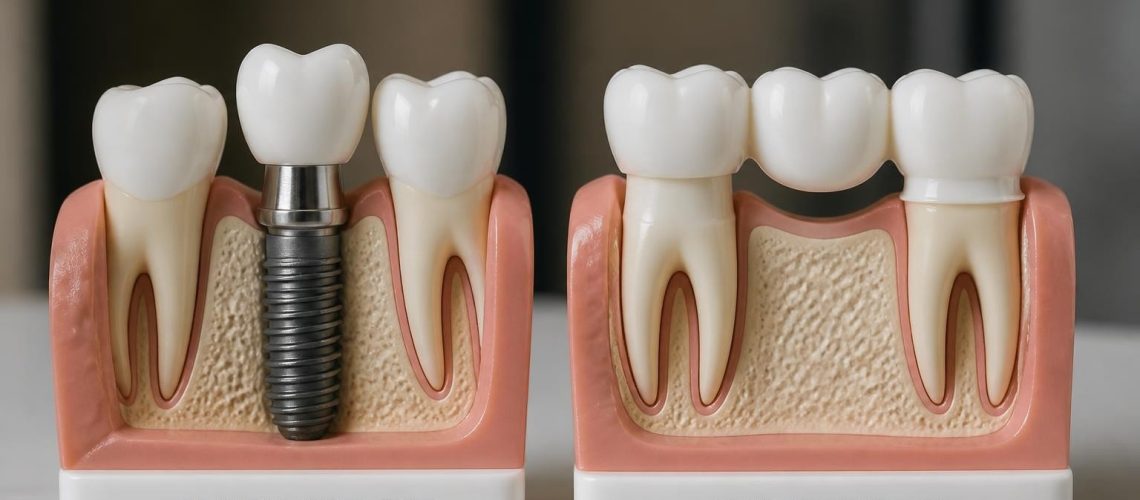
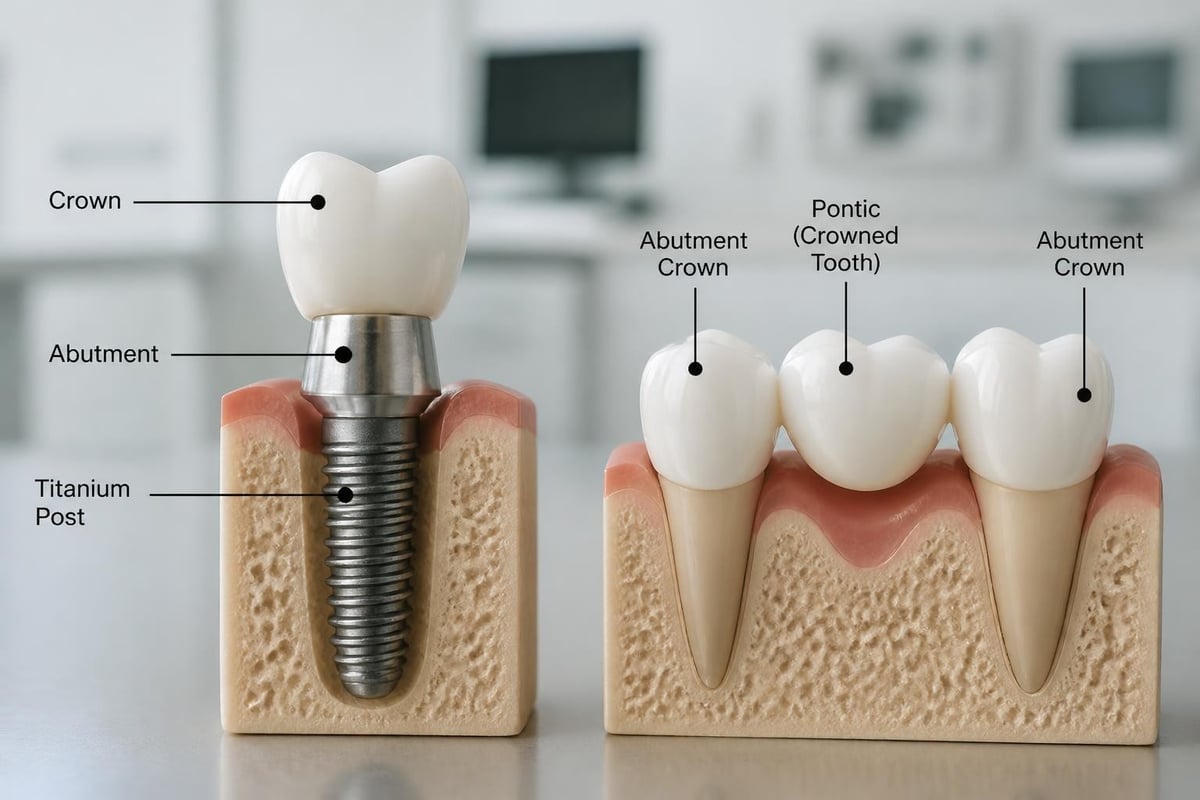
Dental implants and bridges represent two distinct approaches to tooth replacement, each with unique mechanisms and structural requirements. A dental implant involves surgically placing a titanium post into your jawbone, which acts as an artificial tooth root. After the post integrates with the bone through a process called osseointegration, a crown is attached to complete the restoration.
In contrast, a dental bridge uses adjacent teeth as anchors to support a prosthetic tooth. The dentist prepares the neighboring teeth by removing enamel, then places crowns on these supporting teeth with the artificial tooth (pontic) suspended between them. According to the Cleveland Clinic’s analysis of dental restoration options, this fundamental difference affects everything from procedure duration to long-term outcomes.
Structural Components and Placement
The anatomy of each restoration reveals why dental implants vs bridges produce different results over time:
Dental Implant Components:
- Titanium post surgically embedded in jawbone
- Abutment connector piece
- Custom ceramic crown
- Independent structure requiring no alteration of neighboring teeth
Dental Bridge Components:
- Two or more crowns on abutment teeth
- Pontic (false tooth) in the center
- Single connected prosthetic unit
- Requires reshaping of healthy adjacent teeth
This structural difference explains why implants preserve jawbone density while bridges may allow bone deterioration beneath the pontic. The research on dental implants from the National Center for Biotechnology Information demonstrates that implants stimulate bone tissue similarly to natural tooth roots, preventing the bone loss that typically follows tooth extraction.
Procedure Timeline and Treatment Process
The journey from initial consultation to final restoration varies dramatically when comparing dental implants vs bridges. Understanding these timelines helps you plan appropriately and set realistic expectations for your treatment.
Dental Implant Procedure Steps
The implant process typically spans several months, allowing for proper healing and integration:
- Initial consultation and imaging (1 visit) – Comprehensive examination, X-rays, and 3D imaging to assess bone density
- Bone grafting if needed (2-6 months healing) – Additional bone material placed if existing bone is insufficient
- Implant placement surgery (1 visit) – Titanium post surgically inserted into jawbone under local anesthesia
- Osseointegration period (3-6 months) – Post fuses with bone tissue to create stable foundation
- Abutment placement (1 visit) – Connector piece attached to implant post
- Crown fabrication and placement (2 visits) – Custom crown created and permanently attached
For patients seeking specialized implant dentistry in Texas, selecting an experienced provider significantly impacts both procedure comfort and long-term success rates.
Dental Bridge Procedure Steps
Bridge placement requires fewer appointments and shorter overall treatment time:
- Initial consultation and preparation (1 visit) – Examination and treatment planning
- Tooth preparation (1 visit) – Adjacent teeth shaped and reduced to accommodate crowns
- Impression taking – Detailed molds created for laboratory fabrication
- Temporary bridge placement – Protective restoration while permanent bridge is made
- Final bridge placement (1 visit after 2-3 weeks) – Permanent bridge cemented into position
- Follow-up adjustment (as needed) – Fine-tuning fit and bite alignment
Most patients complete the bridge process within three to four weeks, making it appealing for those seeking faster results.
Longevity and Durability Comparison
When evaluating dental implants vs bridges, lifespan represents a critical consideration that directly impacts long-term value and satisfaction.
| Factor | Dental Implants | Dental Bridges |
|---|---|---|
| Average Lifespan | 25+ years (often lifetime with proper care) | 10-15 years |
| Success Rate | 95-98% over 10 years | 85-90% over 10 years |
| Replacement Frequency | Rarely needed | Typically requires replacement 1-2 times |
| Crown Longevity | 15-20 years before crown replacement | Entire bridge requires replacement |
Research indicates that dental implants offer superior durability compared to bridges. The titanium posts rarely fail once osseointegration is complete, though the ceramic crowns may eventually need replacement due to normal wear. Bridges experience higher failure rates because they depend on the health of supporting teeth, which bear additional stress from supporting the pontic.
Factors Affecting Restoration Longevity
Several variables influence how long each restoration type lasts:
- Oral hygiene practices – Both options require diligent cleaning, but implants are more forgiving
- Bite force and grinding habits – Bruxism damages crowns faster, requiring protective night guards
- Location in mouth – Molars experience greater stress than front teeth
- Material quality – Premium ceramics and metals extend restoration lifespan
- Professional maintenance – Regular dental visits catch problems early
The comprehensive comparison at Dentaly emphasizes that patient commitment to oral health significantly impacts outcomes for both restoration types.
Cost Analysis and Financial Considerations
The financial aspect of dental implants vs bridges often weighs heavily in decision-making, particularly for Texas families managing healthcare budgets carefully.
Upfront Investment Comparison
Dental Implant Costs (per tooth):
- Single implant placement: $1,500-$2,500
- Abutment: $300-$500
- Crown: $1,000-$3,000
- Total: $2,800-$6,000
Dental Bridge Costs:
- Traditional three-unit bridge: $2,000-$5,000
- Material-dependent pricing (porcelain-fused-to-metal vs. all-ceramic)
- Total: $2,000-$5,000
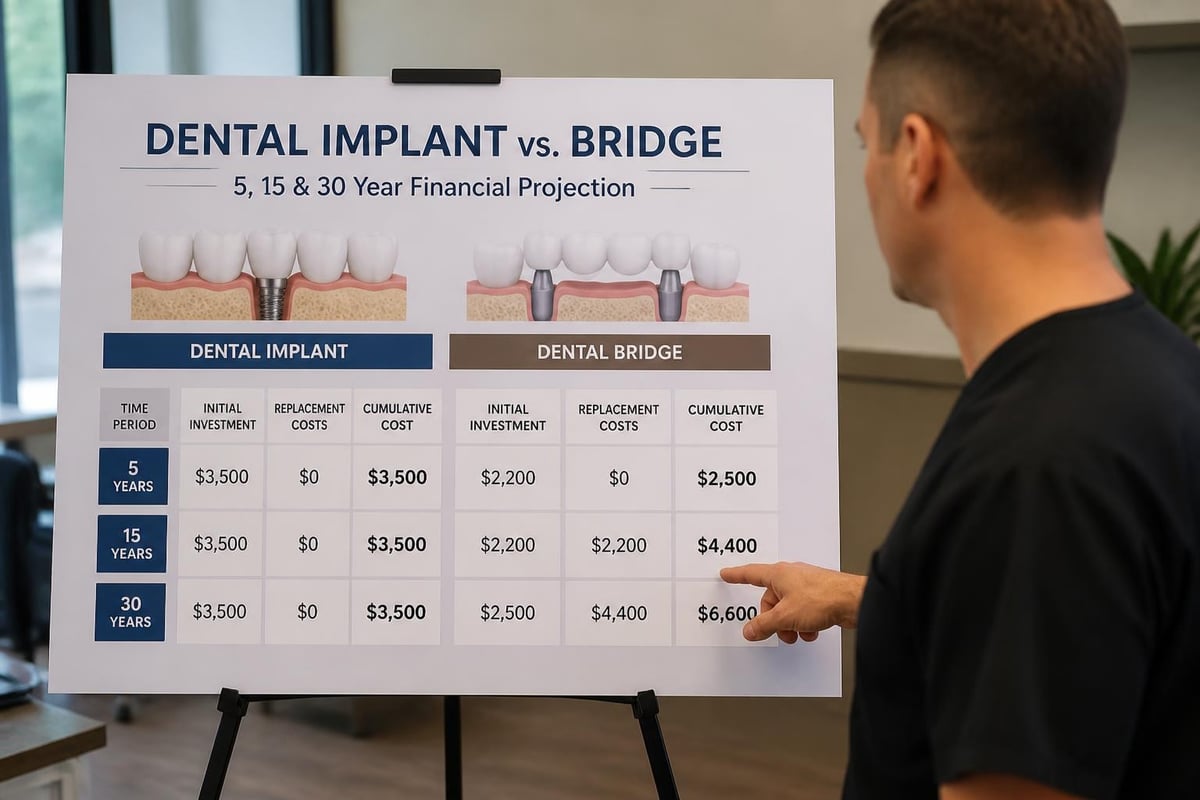
While bridges appear more affordable initially, the financial equation changes when considering replacement cycles. According to CareCredit’s breakdown of restoration costs, patients may replace bridges two or three times over the lifespan of a single implant.
Lifetime Cost Projection
| Timeframe | Dental Implant | Dental Bridge |
|---|---|---|
| Initial Investment | $2,800-$6,000 | $2,000-$5,000 |
| 15-Year Cost | $2,800-$6,000 + possible crown replacement ($1,000-$3,000) | $4,000-$10,000 (one replacement) |
| 30-Year Cost | $3,800-$9,000 | $6,000-$15,000 (two replacements) |
This long-term perspective reveals that dental implants often prove more economical over decades, despite higher upfront costs. For patients exploring dental implants without insurance coverage, understanding financing options and payment plans becomes essential.
Impact on Adjacent Teeth and Oral Health
One of the most significant distinctions when comparing dental implants vs bridges involves their effect on surrounding teeth and overall oral health.
How Bridges Affect Neighboring Teeth
Traditional bridges require permanently altering healthy teeth adjacent to the gap. Dentists must remove substantial enamel from these supporting teeth to accommodate crowns, a modification that cannot be reversed. This process:
- Increases sensitivity in prepared teeth
- Elevates future decay risk in abutment teeth
- May require root canals if preparation causes nerve damage
- Creates dependency where bridge failure affects multiple teeth
- Potentially reduces lifespan of previously healthy teeth
Studies show that approximately 15-20% of teeth prepared for bridge support eventually require root canal treatment within ten years, representing an additional procedure and expense many patients don't anticipate.
How Implants Preserve Dental Health
Dental implants function independently without requiring modification of adjacent teeth. This preservation approach offers multiple benefits:
Bone Preservation:
- Titanium posts stimulate jawbone similarly to natural roots
- Prevents bone resorption that typically follows tooth loss
- Maintains facial structure and prevents "sunken" appearance
- Provides stable foundation for future dental work if needed
Adjacent Tooth Protection:
- No grinding or reshaping of healthy teeth required
- Neighboring teeth maintain natural strength and structure
- Reduced risk of cascade failures affecting multiple teeth
- Easier to maintain with standard brushing and flossing
The detailed analysis from Dental Implants Authority highlights that preserving bone density ranks among the most important long-term health advantages of choosing implants over bridges.
Maintenance Requirements and Daily Care
Daily maintenance differs between these restoration types, affecting both convenience and long-term success rates when considering dental implants vs bridges.
Caring for Dental Implants
Implants require maintenance similar to natural teeth, making them straightforward to incorporate into existing routines:
- Brush twice daily with soft-bristled toothbrush
- Floss daily around implant crown
- Use antibacterial mouthwash to prevent peri-implantitis
- Attend professional cleanings every six months
- Avoid using implants as tools (opening packages, cracking nuts)
- Wear night guard if you grind teeth during sleep
The independence of each implant means cleaning resembles caring for natural teeth. There are no special threading techniques or additional tools required for most patients.
Caring for Dental Bridges
Bridges demand more meticulous cleaning because food particles and bacteria accumulate beneath the pontic:
- Brush normally on outer surfaces of bridge
- Use floss threaders or water flossers to clean under pontic
- Thread floss beneath false tooth and along gumline daily
- Consider interdental brushes for additional cleaning
- Regular professional cleanings to monitor abutment tooth health
- Watch for signs of decay in supporting teeth
Patients often find the extra cleaning steps time-consuming, and inadequate hygiene beneath bridges leads to gum inflammation, decay in abutment teeth, and eventual bridge failure. The connected structure makes replacing a bridge more complex if one component fails.
Candidacy and Eligibility Factors
Not every patient qualifies as an ideal candidate for both options. Understanding eligibility requirements helps set realistic expectations about dental implants vs bridges.
Who Qualifies for Dental Bridges
Bridges work well for patients who:
- Have healthy, strong teeth on both sides of the gap
- Possess adequate bone support for abutment teeth
- Maintain good oral hygiene habits
- Prefer shorter treatment timeline
- Want to avoid surgical procedures
- Have budget constraints requiring lower initial investment
Bridges are less suitable when neighboring teeth are already compromised, weakened by large fillings, or have existing crowns. Additionally, patients missing multiple consecutive teeth may require longer bridges, which experience higher failure rates.
Who Qualifies for Dental Implants
Ideal implant candidates meet these criteria:
- Sufficient jawbone density and volume
- Healthy gums free from periodontal disease
- Good overall health and immune function
- Non-smoker or willing to quit (smoking reduces success rates)
- Commitment to oral hygiene and maintenance
- Realistic expectations about timeline and healing
Potential Disqualifying Factors:
- Uncontrolled diabetes affecting healing
- Recent radiation therapy to head/neck area
- Severe osteoporosis or bone density issues
- Heavy smoking habit
- Certain autoimmune conditions
- Insufficient bone (though grafting can address this)
Many patients initially deemed unsuitable for implants can become candidates through preparatory procedures like bone grafting or treatment of periodoneal disease. Consultation with experienced implant specialists in locations like New Braunfels determines individual suitability.
Aesthetic Outcomes and Natural Appearance
Both restoration types can deliver excellent cosmetic results, though subtle differences exist in how dental implants vs bridges achieve natural aesthetics.
Implant Aesthetics
Modern dental implants provide exceptional cosmetic outcomes:
- Individual crown emergence from gumline mimics natural teeth
- Proper gum contouring creates authentic tissue appearance
- No visible metal at gumline (unlike some traditional bridges)
- Color matching to adjacent teeth achieves seamless blend
- Custom crown shaping matches your unique tooth anatomy
- Maintains gum and bone structure for long-term aesthetics
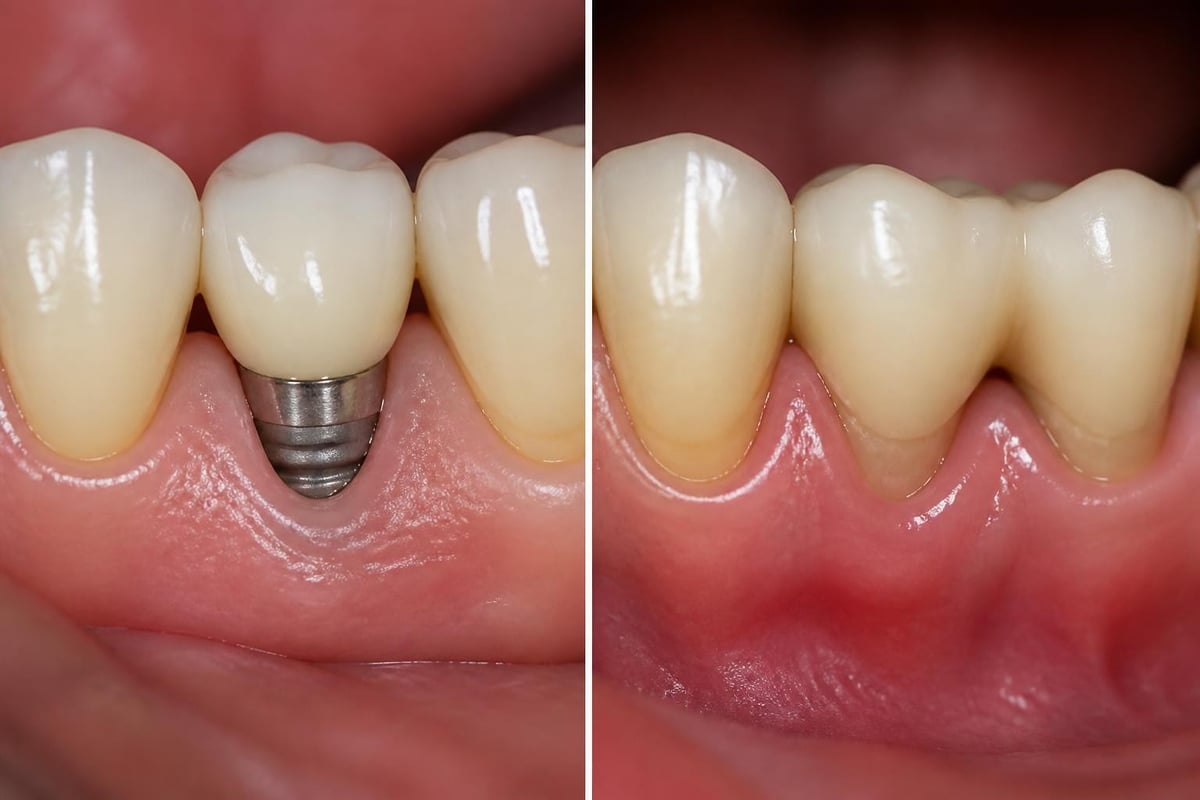
Because implants preserve bone, they prevent the gum recession and sunken appearance that sometimes develops years after traditional bridges. This preservation maintains facial proportions and youthful appearance.
Bridge Aesthetics
Quality bridges also deliver attractive results:
- Skilled ceramists create highly realistic pontics
- Color and translucency matched to natural teeth
- Modern materials eliminate dark metal lines in premium bridges
- Proper fit creates smooth gumline transition
However, bridges may show slight aesthetic compromises over time:
- Bone loss beneath pontic can create visible gap between false tooth and gum
- Gum recession around abutment teeth may expose margins
- Connected structure sometimes appears less natural than individual teeth
- Color matching three connected crowns to surrounding teeth proves more challenging
For front tooth replacement where aesthetics are paramount, implants typically provide superior long-term cosmetic results.
Recovery Time and Post-Procedure Experience
The healing process differs substantially when comparing dental implants vs bridges, affecting both short-term comfort and return to normal activities.
Implant Recovery Timeline
Immediate Post-Surgery (Days 1-7):
- Mild to moderate discomfort managed with over-the-counter pain medication
- Swelling peaks at 48-72 hours, subsides within one week
- Soft food diet for first few days
- Ice packs reduce swelling and discomfort
- Most patients return to work within 1-2 days
Osseointegration Period (Months 1-6):
- No pain during healing phase
- Normal activities resume immediately
- Temporary crown or no visible tooth during integration
- Regular dental monitoring ensures proper fusion
Abutment and Crown Placement:
- Minimal discomfort during these appointments
- Minor gum tenderness for 1-2 days
- Immediate function once crown is placed
Bridge Recovery Timeline
After Tooth Preparation (Days 1-3):
- Sensitivity in prepared teeth (hot/cold)
- Temporary bridge may feel bulky or uncomfortable
- Mild soreness from anesthesia injection sites
- Most discomfort resolves within 48 hours
After Final Bridge Placement:
- Minimal to no discomfort
- Adjustment period of 1-2 weeks for bite to feel natural
- Temporary sensitivity that typically resolves quickly
- Immediate return to normal activities
Bridges offer faster overall completion with less invasive procedures, making them preferable for patients who cannot accommodate extended treatment timelines or surgical procedures.
Special Considerations for Multiple Tooth Replacement
When replacing several consecutive teeth, the comparison between dental implants vs bridges becomes more complex, with additional options entering consideration.
Implant-Supported Bridges
This hybrid approach combines advantages of both technologies:
- Two or more implants placed to support a multi-unit bridge
- Eliminates need to prepare healthy adjacent teeth
- More stable than traditional bridges
- More economical than individual implants for each missing tooth
- Preserves bone beneath implant sites (but not under pontics)
For patients missing three or four consecutive teeth, implant-supported bridges often provide optimal balance of cost, stability, and preservation.
Full-Arch Restoration Options
Patients missing most or all teeth in an arch have specialized choices:
All-on-4 or All-on-6 Implants:
- Four or six strategically placed implants support full arch
- Immediate function with temporary teeth same day
- Eliminates individual implants for every tooth
- Significant cost savings compared to individual replacements
Those interested in comprehensive restoration can explore detailed comparisons of All-on-4 versus All-on-6 approaches to understand which configuration suits their situation.
Traditional Dentures or Partial Bridges:
- Removable prosthetics supported by remaining teeth
- Most economical option initially
- Less stable and comfortable than implant solutions
- Do not prevent bone loss
According to Clearwater Family Dental’s comprehensive breakdown, implant-based solutions consistently outperform traditional removable prosthetics in patient satisfaction and functional outcomes.
Common Concerns and Questions Addressed
Will My Restoration Look Natural?
Both dental implants and bridges can achieve excellent aesthetic results when crafted by skilled dental professionals. Modern ceramic materials replicate the translucency and color variation of natural enamel. The key differences emerge over time: implants maintain gum and bone structure, preventing the sunken appearance that sometimes develops with bridges as bone resorbs beneath the pontic.
How Painful Are the Procedures?
Bridge preparation typically causes minimal discomfort beyond temporary sensitivity in prepared teeth. Implant surgery involves local anesthesia, and most patients report less pain than anticipated. Post-surgical discomfort resembles tooth extraction pain, manageable with standard pain medication. Sedation options are available for anxious patients at comprehensive practices offering various dental services in Converse.
What Happens If My Restoration Fails?
Bridge failure usually requires complete replacement of the entire structure. If an abutment tooth develops decay or fractures, the bridge must be removed, the tooth treated, and a new bridge fabricated. Implant failure (rare at 2-5%) typically involves the post not integrating properly or developing infection. Failed implants can usually be removed and replaced after healing, with success rates for second attempts remaining high.
Can I Eat Normally With Each Option?
Both restorations restore most chewing function, though implants more closely replicate natural tooth strength and stability. Implant patients typically experience no dietary restrictions once healing completes. Bridge patients should exercise some caution with very hard or sticky foods that might damage or dislodge the restoration, particularly in the first weeks after placement.
Does Insurance Cover These Procedures?
Coverage varies significantly by plan. Many dental insurance policies classify bridges as "major restorative" work, covering 40-50% of costs after deductibles. Implants historically received less coverage, often categorized as cosmetic or elective. However, insurance recognition of implants as medically necessary treatment is increasing in 2026. Patients should verify specific coverage details and explore financing options for uncovered portions.
Making Your Decision: Key Factors to Weigh
Choosing between dental implants vs bridges requires evaluating multiple personal factors beyond clinical considerations.
Prioritize Implants If:
- Long-term value outweighs upfront cost concerns
- Preserving adjacent healthy teeth is important to you
- You want the most durable, long-lasting solution
- Preventing jawbone loss matters for facial aesthetics
- You qualify medically and have adequate bone density
- You can accommodate a several-month treatment timeline
Consider Bridges If:
- Budget constraints limit initial investment
- You need faster completion (weeks vs. months)
- Adjacent teeth already need crowns or have large fillings
- You prefer avoiding surgical procedures
- Medical conditions complicate implant healing
- You need immediate restoration for an event or deadline
Questions to Discuss With Your Dentist:
- What is the condition of my jawbone and adjacent teeth?
- What success rates does your practice achieve with each option?
- How will my bite, existing dental work, and oral health affect outcomes?
- What financing options help manage costs?
- What happens if complications arise during or after treatment?
The Role of Professional Expertise
The dentist you choose significantly impacts outcomes regardless of which restoration type you select. Implant placement demands surgical skill, understanding of bone biology, and experience managing complications. Bridge preparation requires technical precision, artistic ability in crown fabrication, and expertise in bite alignment.
When selecting a provider, research:
- Years of experience specifically with implants or advanced restorative dentistry
- Continuing education in latest techniques and materials
- Technology available (3D imaging, guided implant surgery, digital crown design)
- Patient reviews and before/after case examples
- Transparent pricing and financing options
- Comprehensive approach addressing overall oral health
Families across Texas seeking quality dental implant services benefit from providers who combine technical skill with patient education and personalized treatment planning.
Frequently Asked Questions
How long do dental implants last compared to bridges?
Dental implants typically last 25 years or more, often a lifetime with proper care, while bridges generally require replacement every 10-15 years. The titanium implant post rarely fails once osseointegration is complete, though the crown may need replacement after 15-20 years due to wear. Bridges experience higher failure rates because they depend on supporting teeth that bear additional stress and face increased decay risk.
Are dental implants worth the extra cost?
For most patients, dental implants provide superior long-term value despite higher upfront costs. When you calculate replacement expenses over 20-30 years, implants often cost less than bridges while delivering better function, preserving bone and adjacent teeth, and requiring simpler maintenance. However, individual circumstances like budget constraints, timeline needs, and medical eligibility affect this equation.
Can I get a dental implant if I have bone loss?
Many patients with bone loss can still receive implants after bone grafting procedures. Your dentist evaluates bone density through 3D imaging and determines whether grafting can create sufficient foundation. Bone grafting adds 3-6 months to the treatment timeline and increases costs by $300-$3,000, but it enables implant placement for many patients initially deemed unsuitable.
Which option is better for front teeth?
Dental implants typically provide superior aesthetics for front tooth replacement because they maintain bone and gum structure, preventing the sunken appearance that can develop beneath bridge pontics. Individual implant crowns also emerge from the gumline more naturally than connected bridge units. However, skilled cosmetic dentists achieve excellent results with bridges when implants aren't suitable or preferred.
How soon after tooth extraction can I get an implant or bridge?
Implants can sometimes be placed immediately after extraction (immediate placement), though most dentists prefer waiting 3-6 months for complete bone healing. This delay allows the socket to fill with mature bone, improving implant stability. Bridges can typically be fabricated 4-6 weeks after extraction once gum tissue has healed sufficiently for accurate impressions.
Do dental implants feel like real teeth?
Most patients report that dental implants feel virtually identical to natural teeth once healing completes. The crown attaches firmly to the implant post, providing stability that closely replicates natural tooth function. Some patients notice slightly reduced sensory feedback because implants lack the periodontal ligament that surrounds natural tooth roots, but this rarely affects eating or speaking.
Will people be able to tell I have a dental bridge or implant?
High-quality restorations are virtually indistinguishable from natural teeth in appearance. Modern ceramics replicate enamel translucency, color variation, and surface texture convincingly. Implants typically hide any metal components below the gumline, while premium all-ceramic bridges eliminate visible metal margins. Only dental professionals examining your teeth closely would likely identify well-crafted restorations.
Can I switch from a bridge to an implant later?
Yes, patients can replace failed or aging bridges with dental implants, though this requires removing the existing bridge and often the crowns on abutment teeth. If bone has resorbed significantly beneath the old pontic, grafting may be necessary before implant placement. This transition adds complexity and cost but allows patients to upgrade to the more permanent implant solution.
What are the main risks of each procedure?
Bridge risks include damaging healthy abutment teeth during preparation, increased decay risk in supporting teeth, gum irritation beneath the pontic, and eventual bone loss under the false tooth. Implant risks include surgical complications like infection or nerve damage (rare), implant failure to integrate with bone (2-5% of cases), and sinus complications for upper jaw placements. Both procedures carry minimal risks when performed by experienced dentists.
How do I choose between these options if I'm still unsure?
Schedule consultations with qualified dentists who offer both treatment options. A thorough examination including X-rays or 3D imaging reveals your specific anatomy, bone quality, and adjacent tooth condition. Discuss your priorities regarding cost, timeline, longevity, and maintenance. Many patients find that professional assessment clarifies which option suits their unique situation better than general information alone.
Choosing between dental implants vs bridges represents a significant decision that affects your oral health, appearance, and budget for decades to come. Both options successfully restore missing teeth, but they differ fundamentally in durability, impact on surrounding teeth, maintenance requirements, and long-term costs. Whether you prioritize the permanence and bone preservation of implants or the faster, less invasive placement of bridges depends on your individual circumstances, medical suitability, and personal preferences. Dental Plus Clinic provides comprehensive consultations at all five Texas locations, helping families in Beeville, Seguin, New Braunfels, Leander, and Converse make informed decisions with personalized treatment plans, flexible financing options, and experienced dental professionals committed to delivering exceptional results and lifelong oral health.