

When facing severe tooth pain or damage, one critical question arises: should you save the tooth or remove it? Understanding the root canal vs extraction decision can significantly impact your oral health, budget, and quality of life for years to come. Both procedures serve important purposes in modern dentistry, yet they represent fundamentally different approaches to treating compromised teeth. At Dental Plus Clinic, we help patients across Texas make informed decisions about their dental health by explaining the benefits, risks, and long-term implications of each treatment option. This comprehensive guide will walk you through the factors dentists consider, the procedures involved, recovery expectations, and cost considerations to help you understand which treatment might be right for your specific situation.
Understanding When Tooth-Saving vs Removal Becomes Necessary
Dental problems requiring intervention typically develop gradually, though sometimes trauma can create immediate needs. The decision between preserving or extracting a tooth depends on multiple clinical factors that your dentist evaluates during examination.
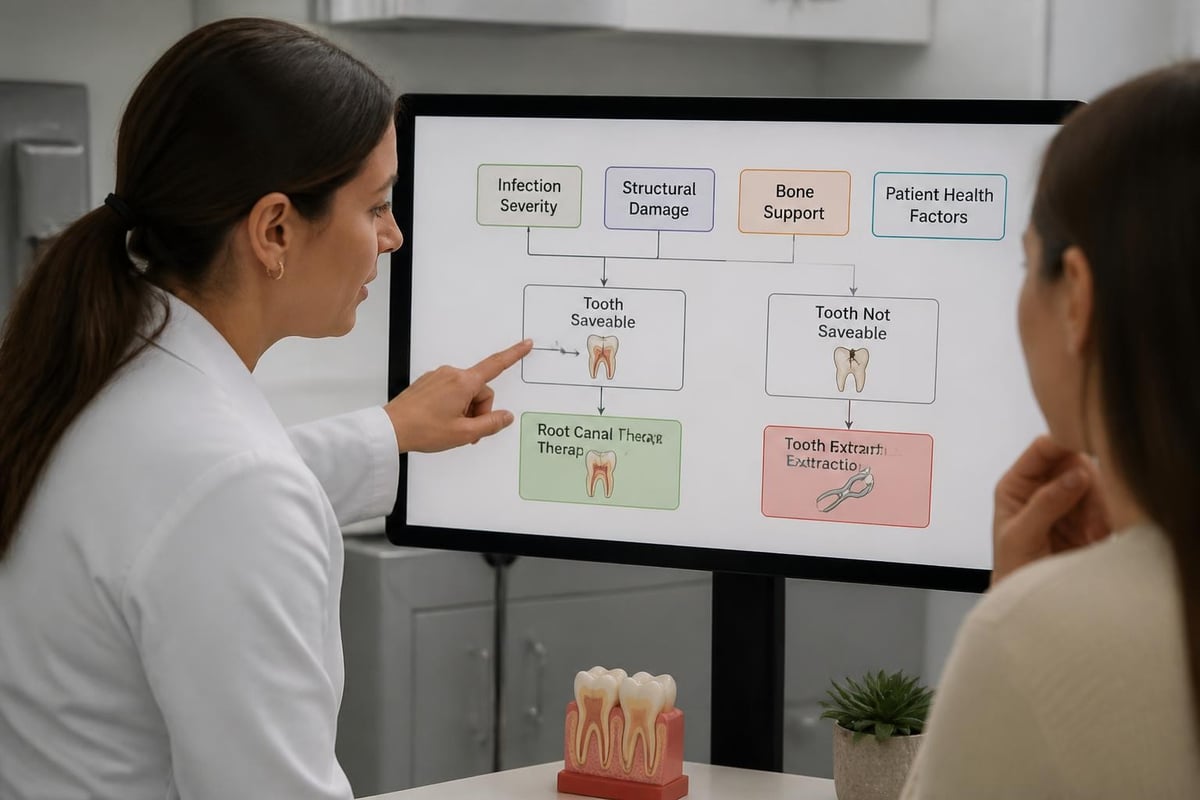
Infection severity plays a primary role in treatment selection. When bacteria penetrate the tooth's pulp chamber (the innermost layer containing nerves and blood vessels), infection develops. Mild to moderate infections with sufficient remaining tooth structure often respond well to root canal therapy. However, extensive infections that have spread to surrounding bone or created large abscesses may necessitate extraction.
The structural integrity of the affected tooth determines whether saving it remains viable. Teeth with substantial decay, large fillings, or fractures extending below the gum line may lack the foundation needed to support a crown post-treatment. In such cases, removal followed by replacement options like dental implants might offer better long-term outcomes.
Common Symptoms Indicating Treatment Need
Recognizing warning signs early allows for timely intervention and potentially more conservative treatment. Patients experiencing the following symptoms should seek prompt evaluation:
- Persistent throbbing pain that worsens with pressure
- Prolonged sensitivity to hot or cold temperatures
- Visible discoloration or darkening of the tooth
- Swelling in the gums near the affected tooth
- Recurring or persistent pimple-like bumps on the gums
- Bad taste or odor that doesn't improve with oral hygiene
Timing matters significantly when addressing dental problems. Early intervention often preserves more tooth structure and increases the likelihood of successful root canal therapy. Delaying treatment allows infections to spread, potentially transforming a savable tooth into one requiring extraction.
The Root Canal Procedure: What to Expect
Root canal therapy has evolved dramatically over recent decades, transforming from a dreaded procedure into a routine treatment comparable in discomfort to receiving a standard filling. Modern techniques and anesthetics make the experience significantly more comfortable than most patients anticipate.
The procedure begins with comprehensive imaging, typically using digital X-rays or cone beam computed tomography (CBCT) to assess the tooth's internal anatomy. Your dentist administers local anesthesia to numb the treatment area completely, ensuring you feel no pain during the procedure.
Step-by-Step Treatment Process
Once anesthesia takes effect, your dentist creates a small access opening in the tooth's crown to reach the pulp chamber. Using specialized instruments called files, they carefully remove infected or damaged pulp tissue from the chamber and root canals.
Cleaning and shaping the canal system represents the most critical phase. Your dentist meticulously cleans the interior spaces, removing bacteria and debris while shaping the canals to receive filling material. Irrigation with antimicrobial solutions disinfects the area thoroughly.
After complete cleaning, the dentist fills the empty canals with a biocompatible material called gutta-percha, sealing the space to prevent future infection. A temporary filling closes the access opening until a permanent restoration can be placed.
| Treatment Phase | Duration | Purpose |
|---|---|---|
| Diagnosis & X-rays | 15-30 minutes | Assess damage extent |
| Anesthesia & preparation | 10-15 minutes | Ensure patient comfort |
| Pulp removal & cleaning | 30-60 minutes | Eliminate infection |
| Canal filling & sealing | 20-30 minutes | Prevent reinfection |
| Crown preparation (separate visit) | 60-90 minutes | Restore function |
Most root canal treatments require two appointments. The first visit addresses the infection and seals the canals. After allowing healing time (typically 1-2 weeks), you return for crown placement to protect and strengthen the restored tooth.
Recovery following root canal therapy generally involves mild discomfort manageable with over-the-counter pain medications. Most patients return to normal activities the following day, though the treated tooth may feel slightly sensitive for several days.
Tooth Extraction: Process and Considerations
While tooth extraction might seem like a simpler solution, the procedure and its long-term implications deserve careful consideration. Extractions range from straightforward to complex, depending on tooth position, root structure, and surrounding bone condition.
Simple extractions involve teeth visible above the gum line with accessible roots. After numbing the area, your dentist uses specialized instruments to loosen the tooth within its socket and remove it completely. The procedure typically takes 20-40 minutes per tooth.
Surgical extractions become necessary for teeth that have broken below the gum line, haven't fully erupted, or have curved roots complicating removal. These procedures may require incisions in the gum tissue, bone removal around the tooth, or sectioning the tooth into smaller pieces for easier extraction.
Immediate Aftercare Requirements
Post-extraction care significantly impacts healing and comfort. Following your dentist's instructions minimizes complications like dry socket (a painful condition where the blood clot dislodges prematurely).
- Bite firmly on gauze pads for 30-45 minutes to control bleeding
- Apply ice packs to the external jaw area for the first 24 hours
- Avoid vigorous rinsing, spitting, or using straws for 72 hours
- Eat soft foods and chew on the opposite side
- Take prescribed medications as directed
- Maintain gentle oral hygiene, avoiding the extraction site initially
The empty socket requires approximately 1-2 weeks for initial soft tissue healing, though complete bone remodeling takes several months. During this time, the surrounding teeth may gradually shift into the gap, potentially causing bite problems and necessitating orthodontic correction.
Comparing Long-Term Outcomes and Success Rates
When evaluating root canal vs extraction options, understanding long-term outcomes helps inform your decision. Both procedures boast high success rates when performed correctly, yet they lead to different functional and aesthetic results.
Root canal success rates hover around 85-95% according to the American Association of Endodontists. Factors influencing success include the tooth's location, number of roots, quality of the final restoration, and patient's oral hygiene maintenance. Properly treated and crowned teeth can last a lifetime with appropriate care.
Teeth that have undergone root canal therapy remain functional and maintain your natural bite alignment. They preserve bone density in the jaw because the tooth root continues stimulating the surrounding bone through chewing forces. This biological process, called mechanotransduction, prevents the bone resorption that occurs after extraction.
The Hidden Costs of Missing Teeth
Extraction creates immediate relief from pain but introduces long-term challenges. The gap left behind triggers a cascade of changes in your mouth's structure and function.
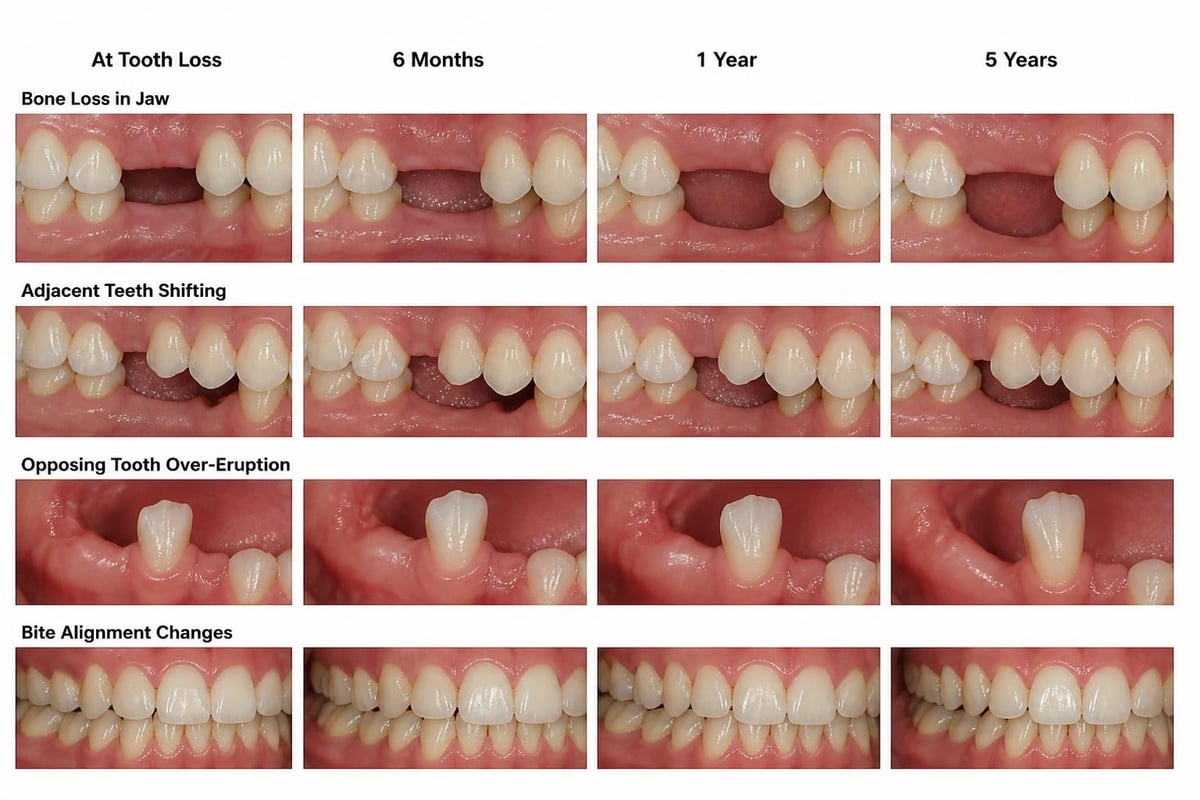
Bone loss begins almost immediately after tooth removal. Without root stimulation, the jawbone in that area gradually deteriorates, losing up to 25% of its width within the first year. This resorption continues throughout life, potentially affecting facial aesthetics and complicating future tooth replacement.
Adjacent teeth tend to drift into the empty space, while the opposing tooth (the one that previously contacted the extracted tooth) may over-erupt from its socket. These movements create bite misalignment, increase wear on remaining teeth, and can trigger temporomandibular joint (TMJ) disorders.
| Outcome Factor | Root Canal Treatment | Tooth Extraction |
|---|---|---|
| Natural tooth preservation | Yes | No |
| Jawbone preservation | Maintained | Progressive loss |
| Bite stability | Preserved | May shift over time |
| Adjacent teeth affected | Minimal | Potential movement |
| Functional longevity | Decades with care | Requires replacement |
| Additional procedures needed | Crown placement | Implant, bridge, or denture |
Replacing an extracted tooth becomes medically advisable to prevent these complications. Options include dental implants, fixed bridges, or removable partial dentures, each carrying its own costs, maintenance requirements, and longevity expectations.
Financial Considerations: Immediate and Long-Term Costs
Cost often influences the root canal vs extraction decision, yet comparing only the immediate procedure expenses overlooks important long-term financial implications. Understanding the complete financial picture helps you make economically sound choices about your dental health.
Root canal therapy typically costs between $700-$1,500 depending on tooth location and complexity, with molars (back teeth with multiple roots) commanding higher fees than incisors or canines. Adding the necessary crown restoration brings total investment to approximately $1,500-$3,000 for a completely restored tooth.
Extraction costs appear more affordable initially, ranging from $150-$400 for simple extractions and $250-$650 for surgical removals. However, this represents only the tooth removal expense, not the total cost of addressing the missing tooth.
Replacement Options and Their Investment
Leaving a gap after extraction might seem like the budget-friendly choice, but the long-term consequences often create more expensive problems down the line. Most dental professionals recommend replacement for optimal oral health.
Dental implants represent the gold standard for tooth replacement, offering functionality and longevity closest to natural teeth. The complete implant process, including the titanium post, abutment, and crown, typically costs $3,000-$6,000 per tooth. While this exceeds root canal expenses, implants can last 25+ years with proper care, making them valuable long-term investments.
Fixed bridges provide another replacement option, utilizing adjacent teeth as anchors to support an artificial tooth. Bridge costs range from $2,000-$5,000, though this approach requires reducing healthy neighboring teeth to serve as support structures.
- Removable partial dentures: $300-$5,000 depending on materials and complexity
- Implant-supported bridge: $4,000-$16,000 for multiple teeth
- All-on-4 dental implants: $15,000-$30,000 per arch for complete tooth replacement
Understanding emergency dental care costs becomes important when unexpected dental problems arise, as delaying treatment often leads to more complex and expensive interventions.
When calculated over a decade, preserving a natural tooth through root canal therapy frequently proves more economical than extraction followed by implant replacement. Insurance coverage varies, but many plans provide better benefits for tooth-saving procedures than for extractions and replacements.

Medical Factors Influencing Treatment Selection
Beyond tooth condition and finances, individual health factors significantly influence which treatment option serves your best interests. Your dentist considers your complete medical profile when recommending root canal vs extraction approaches.
Systemic health conditions affect treatment suitability and success probability. Patients with uncontrolled diabetes may experience slower healing and higher infection risks, potentially complicating both procedures. Those taking bisphosphonate medications for osteoporosis face increased risk of jaw bone complications following extractions, making tooth preservation particularly important.
Individuals with compromised immune systems (from conditions like HIV/AIDS, cancer treatment, or immunosuppressive medications) require special consideration. While both procedures carry infection risks, extraction creates a larger wound requiring more extensive healing.
Age and Long-Term Planning
Patient age influences treatment recommendations in important ways. Younger patients with decades of dental function ahead typically benefit more from preserving natural teeth. The investment in root canal therapy yields returns over many years of continued tooth function.
Older patients may prioritize different factors, including minimizing complex procedures, managing existing dental work, and considering their overall treatment goals. However, age alone shouldn't determine treatment choice-many seniors maintain excellent oral health and benefit from tooth preservation.
Pregnancy requires special timing considerations for dental procedures. While both root canals and extractions can be performed safely during pregnancy (ideally in the second trimester), dentists typically postpone elective procedures when possible. Emergency situations necessitating immediate intervention receive modified treatment approaches to protect both mother and developing baby.
Anxiety and dental phobia affect some patients' treatment preferences. Modern sedation dentistry options make both root canals and extractions comfortable experiences. Patients can choose from nitrous oxide (laughing gas), oral sedation, or IV sedation depending on their anxiety levels and procedure complexity.
Making Your Decision: Questions to Ask Your Dentist
Participating actively in your dental care decisions leads to better outcomes and increased satisfaction with your treatment. When facing the root canal vs extraction choice, asking informed questions helps you understand your specific situation thoroughly.
Assessment and diagnosis questions clarify why your dentist recommends a particular approach. Ask about the extent of tooth damage, infection severity, and whether your tooth structure can support long-term restoration. Request to see your X-rays and understand what the images reveal about your tooth's condition.
Understanding prognosis helps set realistic expectations. Inquire about success rates for your specific tooth and situation, potential complications, and what "success" means in practical terms. Ask how long a successfully treated tooth should last with proper care.
Treatment Alternatives and Options
Exploring all available options ensures you're making an informed choice rather than defaulting to the first suggestion. Some teeth initially appearing unsavable might respond to advanced treatments like apicoectomy (surgical root canal) or intentional replantation.
- What are the immediate consequences of delaying treatment?
- If we save this tooth, what additional procedures might it need in the future?
- If we extract, what are my replacement options and their respective costs?
- Does my insurance cover these procedures, and what will my out-of-pocket expense be?
- What happens if I choose extraction but delay replacement?
Experience and expertise matter significantly in complex dental procedures. Ask about your dentist's training in endodontics (root canal specialty) and their success rates with similar cases. For particularly complex situations, they may refer you to an endodontist who specializes exclusively in root canal therapy.
Understanding the timeline helps you plan appropriately. Root canal treatment typically requires 2-3 visits over several weeks, while extraction might be completed in one appointment. However, extraction followed by implant placement involves a much longer overall timeline-often 4-6 months from extraction to final crown placement.
Insurance Coverage and Payment Options
Navigating dental insurance for major procedures can feel overwhelming, yet understanding your benefits helps avoid unexpected expenses. Most dental insurance plans categorize root canals and extractions differently, affecting your coverage and out-of-pocket costs.
Major restorative procedures like root canals typically receive 50-80% coverage after meeting your annual deductible. Extractions might fall under either basic or major services depending on complexity and your specific plan. The necessary crown following root canal therapy usually requires separate major service coverage.
Many dental plans impose annual maximum benefits (commonly $1,000-$2,000), which both procedures and their follow-up treatments apply against. Complex cases requiring both root canal therapy and crown placement might exceed annual limits, leaving you responsible for the difference until benefits reset the following year.
Alternative Financing Solutions
When insurance coverage falls short or you lack dental insurance entirely, several financing options make necessary dental care accessible. Dental Plus Clinic offers various solutions to help patients receive needed treatment without financial strain.
Dental savings plans provide an alternative to traditional insurance, offering discounted rates on procedures for an annual membership fee. These plans typically provide 10-60% savings on root canals, extractions, and restorative work.
Third-party financing through companies like CareCredit, LendingClub, or Proceed Finance allows you to spread treatment costs over monthly payments, often with promotional interest-free periods. Many dental practices maintain relationships with these lenders and can facilitate quick approvals during your visit.
| Payment Option | Typical Terms | Best For |
|---|---|---|
| Dental insurance | 50-80% coverage with annual max | Those with employer benefits |
| Dental savings plans | 10-60% discounts, annual fee | Uninsured patients needing regular care |
| CareCredit | 6-24 months interest-free options | Spreading costs over time |
| In-house payment plans | Varies by practice | Building payment relationship with provider |
| HSA/FSA accounts | Pre-tax dollars, annual limits | Those with health savings benefits |
Some dental practices offer in-house payment plans, allowing you to pay for treatment over several months directly to the office. These arrangements often avoid credit checks and interest charges, making them accessible to patients who might not qualify for traditional financing.
Understanding whether your dentist participates in your insurance network significantly impacts costs. In-network vs out-of-network dentists can mean the difference between predictable copayments and unexpected balance billing.
Special Circumstances Requiring Unique Approaches
While general guidelines help most patients navigate the root canal vs extraction decision, certain situations demand customized approaches. Recognizing these special circumstances ensures you receive treatment optimized for your specific needs.
Previously treated teeth that develop new problems require careful evaluation. A tooth that has already undergone root canal therapy but shows signs of reinfection might be retreatable in many cases. Endodontists can remove the existing filling material, address the persistent infection, and reseal the canals with a high success rate.
Teeth with complex anatomy-extra canals, calcified canals, or unusual root configurations-challenge even experienced practitioners. Advanced imaging technology like CBCT scans reveals these complications before treatment begins, allowing for informed decision-making. Some anatomically challenging teeth respond better to specialist treatment or may have lower success probabilities that influence the preservation-versus-extraction calculus.
Teeth Supporting Existing Dental Work
Teeth serving as abutments (anchors) for bridges or partial dentures require special consideration. Extracting such a tooth affects not just the single tooth but the entire prosthetic it supports. Your dentist must evaluate whether saving the tooth preserves the existing restoration or whether extraction necessitates completely new dental work.
Orthodontic considerations sometimes influence treatment decisions for younger patients. A tooth's position in the arch, its role in maintaining space, and timing relative to orthodontic treatment plans all factor into recommendations. Preserving a tooth through root canal therapy might support better orthodontic outcomes than extraction in certain cases.
Teeth with vertical root fractures present particular challenges. These cracks, which run along the length of the root, often doom teeth to extraction because sealing them effectively proves impossible. However, distinguishing true vertical fractures from other types of cracks requires expertise and sometimes exploratory surgery, making accurate diagnosis crucial.
Cosmetic implications matter especially for front teeth. While both root canal therapy and extraction with implant replacement can deliver excellent aesthetic results, timing differs significantly. A root canal allows you to maintain your natural tooth immediately, while extraction requires either a temporary replacement or a healing period before implant placement. For patients in public-facing professions or those with special events approaching, this timing consideration might influence treatment choice.
When Extraction Actually Becomes the Better Choice
Despite the general preference for preserving natural teeth, certain situations make extraction the superior option. Recognizing when removal serves your best interests prevents investing time and money in treatments unlikely to succeed long-term.
Extensive structural damage that compromises the tooth's foundation often makes restoration impractical. When decay extends significantly below the gum line or the tooth has fractured in ways that prevent proper seal and support, the materials and techniques available cannot reliably rebuild adequate structure for long-term function.
Severe periodontal disease (gum disease) affecting a tooth's supporting structures may render it unsavable even if the tooth itself remains relatively healthy. When bone loss exceeds 50% around a tooth's roots, the foundation becomes too compromised to support the tooth long-term, regardless of root canal therapy success.
Economic Considerations in Treatment Planning
Sometimes the cost-benefit analysis favors extraction despite technical possibility of root canal therapy. A tooth requiring root canal treatment, buildup, crown, and potential periodontal surgery might cost $4,000-$6,000 with questionable long-term prognosis. In such cases, extraction followed by implant placement might offer more predictable outcomes for similar or lower investment.
- Repeatedly failed previous root canal treatments indicating resistant infection
- Root resorption (the body dissolving the tooth's root structure)
- Supernumerary teeth (extra teeth) that serve no function and crowd the arch
- Teeth in severe malposition that orthodontics cannot adequately address
- Non-restorable teeth that cannot support a crown post-treatment
Third molars (wisdom teeth) frequently warrant extraction rather than root canal therapy when they develop problems. Their position at the back of the mouth makes them challenging to restore properly, difficult to clean, and often prone to recurring problems. Unless a wisdom tooth provides important chewing function, wisdom teeth removal typically represents the most practical solution when these teeth develop decay or infection.
Strategic extractions as part of comprehensive treatment planning sometimes serve overall dental health better than attempting to save every compromised tooth. For patients considering full-mouth reconstruction or extensive dental rehabilitation, selectively extracting teeth with poor prognosis allows for more predictable and stable outcomes.
Prevention: Avoiding the Need for Either Procedure
While understanding treatment options remains important, preventing the need for root canals or extractions delivers even greater value. Proactive oral health care significantly reduces the likelihood of developing dental problems requiring these interventions.
Regular dental examinations allow early detection of decay, cracks, and other problems before they progress to require root canal therapy or extraction. Professional cleanings remove plaque and tartar that home care misses, preventing the decay and gum disease that lead to tooth loss. Most dental professionals recommend examinations every six months, though some patients benefit from more frequent visits.
Daily oral hygiene practices form the foundation of prevention. Brushing twice daily with fluoride toothpaste, flossing once daily, and potentially incorporating antimicrobial mouth rinses removes bacteria before they cause damage. These simple habits, maintained consistently over time, preserve natural teeth throughout life for most people.
Dietary Choices and Dental Health
What you eat and drink significantly impacts your teeth's long-term health. Frequent consumption of sugary or acidic foods and beverages creates an environment where decay-causing bacteria thrive. Limiting these exposures and choosing tooth-friendly alternatives protects enamel and reduces cavity risk.
Protective measures for at-risk teeth prevent damage requiring major intervention. Athletes should wear properly fitted mouthguards during contact sports to prevent fractures. People who grind their teeth (bruxism) benefit from nightguards that prevent excessive wear and cracking. Addressing these risk factors proactively preserves tooth structure.
Prompt attention to minor dental problems prevents their escalation into major issues. A small cavity treated with a simple filling costs a fraction of the root canal that same cavity might require if left untreated for months or years. Similarly, addressing a minor chip or crack before bacteria penetrate deeply into the tooth can save you from more extensive treatment later.
Systemic health management supports dental health in important ways. Controlling diabetes, maintaining good nutrition, avoiding tobacco products, and limiting alcohol consumption all contribute to healthier teeth and gums. The mouth-body connection means that overall health practices support oral health and vice versa.
Patient Experiences and Recovery Expectations
Understanding what to expect during recovery helps you plan appropriately and recognize normal healing versus complications requiring attention. Both root canal therapy and extraction involve recovery periods, though their timelines and experiences differ.
Root canal recovery typically involves mild discomfort for 2-3 days following treatment. Over-the-counter pain medications like ibuprofen or acetaminophen usually provide adequate relief. The treated tooth may feel sensitive to biting pressure for several days, and some patients experience slight gum tenderness around the tooth.
Most patients return to work or normal activities the day following root canal treatment. You can eat on the treated tooth once the temporary filling or crown is placed, though some practitioners recommend chewing on the opposite side until the permanent restoration is completed.
Post-Extraction Recovery Timeline
Extraction recovery involves more intensive aftercare during the first few days. Bleeding should subside within a few hours, though minor oozing might continue for 24 hours. Swelling typically peaks 2-3 days post-extraction, then gradually diminishes over the following week.
Pain management after extraction usually requires prescription pain medication for the first 2-3 days, transitioning to over-the-counter options as discomfort lessens. Most patients report significantly reduced pain by day 4-5, with only residual tenderness remaining.
The extraction site requires 7-10 days for initial healing, during which you'll need to eat soft foods and avoid disturbing the area. Complete bone healing takes several months, though this occurs without noticeable symptoms once the initial recovery period passes.
| Recovery Aspect | Root Canal | Extraction |
|---|---|---|
| Pain duration | 2-3 days mild | 5-7 days moderate |
| Swelling | Minimal | Moderate to significant |
| Activity restrictions | None after 24 hours | 3-5 days limited activity |
| Dietary modifications | Minimal | Soft foods for 7-10 days |
| Return to work | Next day typically | 1-3 days depending on job |
| Follow-up visits | Crown placement in 2-3 weeks | Suture removal in 7-14 days |
Complication recognition helps you know when to contact your dentist. Following root canal therapy, increasing pain, swelling that develops days after treatment, or foul taste might indicate problems. After extraction, severe pain on day 3-5 (potentially indicating dry socket), fever, or excessive bleeding warrant immediate professional attention.
Advanced Technologies Improving Treatment Outcomes
Modern dental technology has transformed both root canal therapy and tooth extraction, improving success rates, reducing treatment time, and enhancing patient comfort. Understanding these advances helps you appreciate the capabilities available at well-equipped dental practices.
Dental operating microscopes allow endodontists to magnify the treatment area up to 20-30 times normal size, revealing tiny canal openings and intricate anatomy invisible to the naked eye. This enhanced visualization increases success rates by ensuring complete cleaning of the canal system and detection of cracks or complications.
Rotary endodontic instruments have replaced traditional hand files for many practitioners. These motorized tools clean and shape canals more efficiently and uniformly, often reducing treatment time while improving outcomes. They navigate curved canals more effectively than manual techniques, expanding the range of teeth that can be saved successfully.
Diagnostic Imaging Advances
Three-dimensional imaging through CBCT scans provides unprecedented views of tooth anatomy, surrounding bone, and anatomical relationships. This technology helps dentists identify extra canals, unusual root configurations, and the proximity of important structures like nerves and sinuses before beginning treatment.
Digital radiography exposes patients to significantly less radiation than traditional X-rays while delivering instant, high-quality images that can be enhanced and shared electronically. This technology supports better diagnosis and allows patients to understand their condition more clearly through visual explanation.
Laser-assisted endodontics represents an emerging technology for disinfecting canal systems. Dental lasers can reach areas that instruments and irrigants might miss, potentially improving success rates for challenging infections. Some practices now incorporate laser technology into their standard root canal protocols.
For extractions, piezosurgery uses ultrasonic vibrations to cut bone with extreme precision while preserving soft tissues. This technology allows for gentler, more controlled surgical extractions with less post-operative discomfort and faster healing. It's particularly valuable for complex extractions or when preserving bone for future implant placement.
Choosing between root canal therapy and extraction represents a significant dental decision with lasting implications for your oral health, function, and budget. While preserving natural teeth generally offers advantages in bone preservation, bite stability, and long-term economics, individual circumstances-including tooth condition, structural integrity, health factors, and personal preferences-must guide your final decision. At Dental Plus Clinic, our experienced team evaluates each patient's unique situation using advanced diagnostic technology to recommend treatments that align with both immediate needs and long-term dental health goals. Whether you're facing dental pain or have questions about your treatment options, Dental Plus Clinic provides compassionate, expert care across our five Texas locations in Beeville, Seguin, New Braunfels, Leander, and Converse-schedule a consultation today to discuss the best path forward for your smile.