

When a severe toothache strikes at midnight or a dental injury happens during a weekend soccer game, the first question many patients ask is: does dental insurance cover emergency dental visits? Understanding your coverage before a crisis occurs can save you time, money, and unnecessary stress when you need urgent dental care. Emergency dental situations range from knocked-out teeth and severe infections to broken crowns and intense pain that disrupts your daily life. While most dental insurance plans do provide some level of emergency coverage, the extent of that coverage varies significantly based on your specific plan, the type of treatment required, and where you receive care. This comprehensive guide will help you navigate the complexities of emergency dental coverage, understand what to expect financially, and make informed decisions when urgent dental care becomes necessary.
Understanding Emergency Dental Coverage Basics
Most dental insurance plans categorize services into three main tiers: preventive, basic, and major procedures. Emergency dental visits typically fall into the basic or major categories depending on the treatment required.
Preventive services usually receive 100% coverage and include routine cleanings, exams, and X-rays. Basic procedures generally receive 70-80% coverage after your deductible and include fillings, simple extractions, and emergency exams. Major procedures typically receive 50% coverage and include crowns, root canals, and surgical extractions.
When you experience a dental emergency, the coverage question actually involves two components: the emergency exam itself and any subsequent treatment needed. According to the American Dental Association’s guide on typical dental plan benefits, most plans cover emergency exams as basic procedures, but the treatments that follow may fall into different coverage categories.
What Qualifies as a Dental Emergency
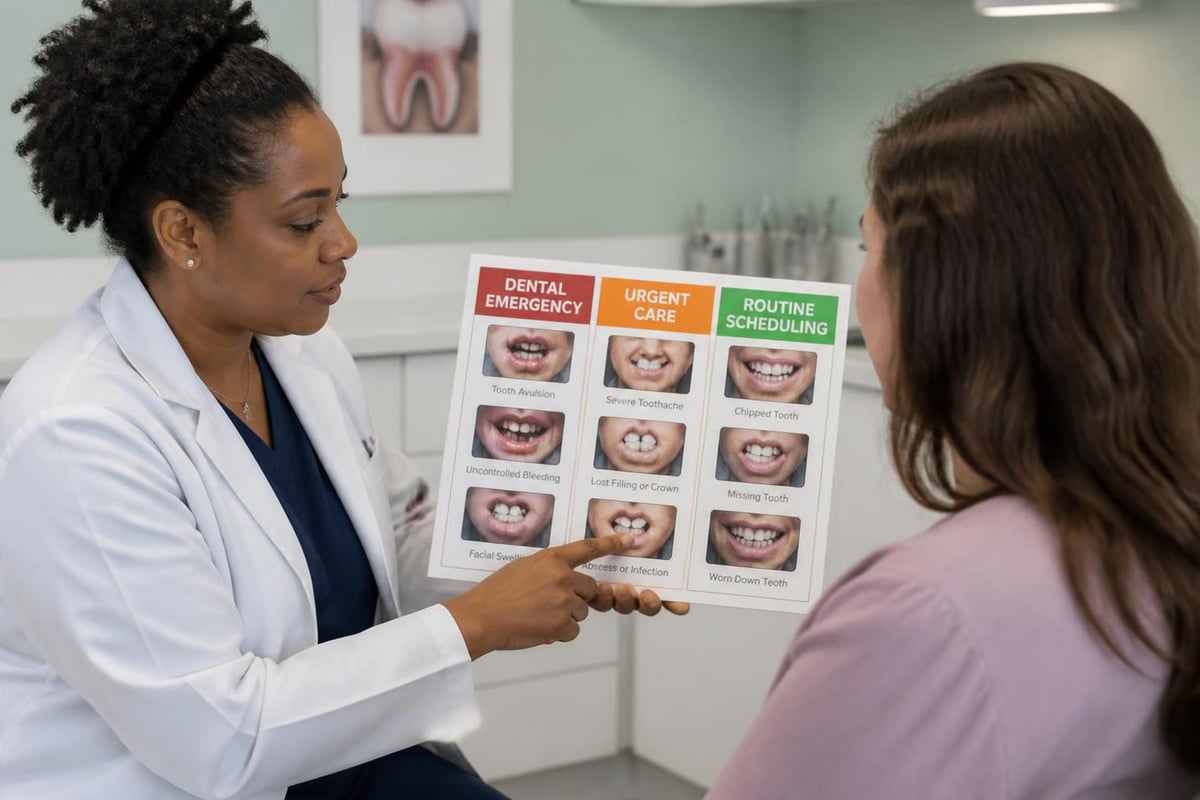
Insurance companies define dental emergencies differently, but most agree on these situations:
- Severe tooth pain that interferes with daily activities
- Knocked-out or avulsed teeth requiring immediate reimplantation
- Broken or fractured teeth with exposed nerves
- Lost fillings or crowns causing significant discomfort
- Abscesses or infections requiring urgent treatment
- Soft tissue injuries to gums, cheeks, or tongue
- Broken or damaged orthodontic appliances causing injury
Not every urgent situation qualifies as a true emergency under insurance definitions. A cracked tooth without pain, for example, might be considered urgent but not an emergency requiring immediate after-hours care.
How Dental Insurance Handles Emergency Visits
The answer to does dental insurance cover emergency dental visits depends heavily on your specific plan structure, annual maximums, deductibles, and whether you visit an in-network or out-of-network provider.
Coverage Percentages and Cost-Sharing
Most dental plans operate on a cost-sharing model where the insurance pays a percentage and you pay the remainder. For emergency situations, you'll typically encounter:
| Service Type | Typical Coverage | Patient Responsibility | Common Scenarios |
|---|---|---|---|
| Emergency Exam | 70-80% | 20-30% | Initial assessment, X-rays |
| Simple Extraction | 70-80% | 20-30% | Non-surgical tooth removal |
| Root Canal Therapy | 50-80% | 20-50% | Infection treatment, nerve removal |
| Crown Placement | 50% | 50% | Tooth restoration after trauma |
| Surgical Procedures | 50% | 50% | Complex extractions, surgery |
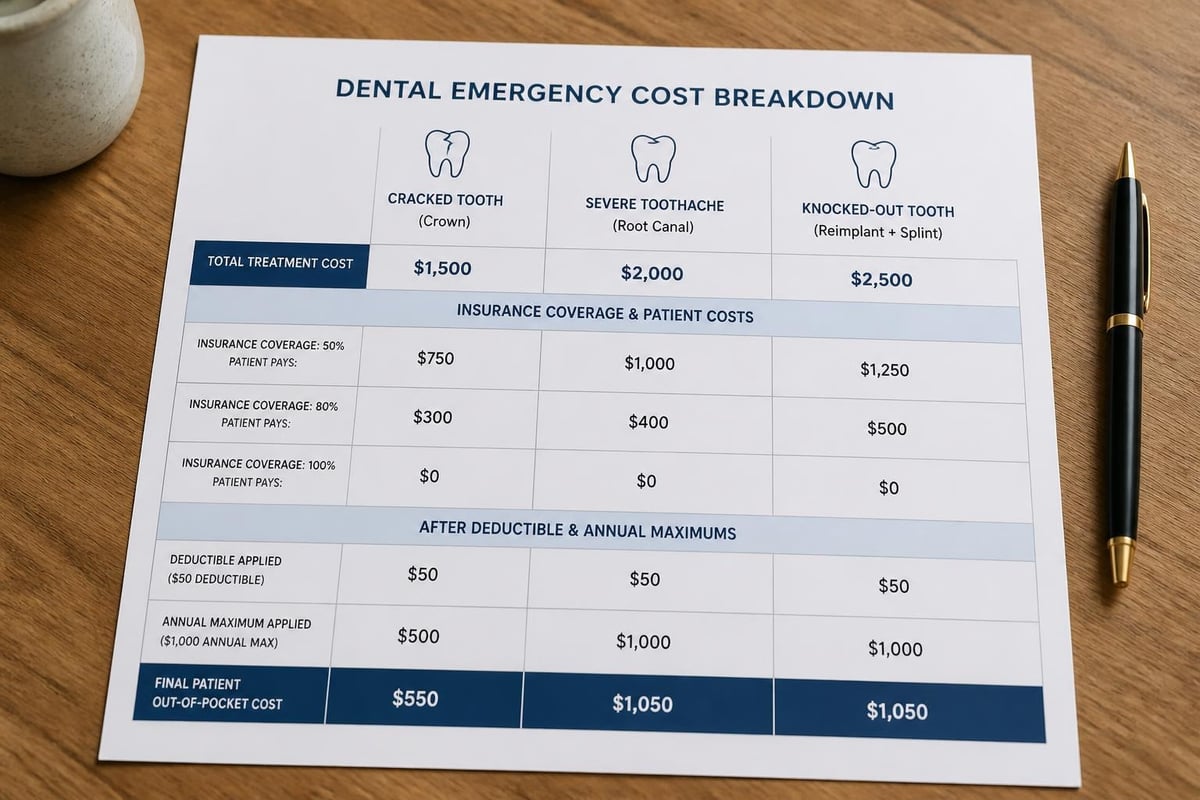
These percentages apply only after you've met your annual deductible, which typically ranges from fifty to one hundred fifty dollars per person. If your emergency occurs early in the year before you've met this deductible, you'll pay that amount first before cost-sharing begins.
Annual Maximums and Their Impact
One critical limitation affecting emergency coverage is the annual maximum benefit. Most dental insurance plans cap benefits at one thousand to two thousand dollars per calendar year. Once you reach this limit, you're responsible for 100% of additional costs until the new year.
This creates a challenging situation when emergencies occur late in the year or when you've already used significant benefits for other dental work. A root canal and crown following an emergency could easily cost two thousand five hundred to three thousand five hundred dollars, potentially exhausting your annual maximum with a single incident.
In-Network vs. Out-of-Network Emergency Care
Where you receive emergency treatment significantly impacts your out-of-pocket costs. Understanding the difference between in-network vs. out-of-network dentists becomes especially important during urgent situations when you might not have time to verify provider networks.
In-Network Provider Benefits
When you visit an in-network dentist for emergency care, you benefit from:
- Pre-negotiated fee schedules that limit what the dentist can charge
- Direct billing to your insurance company
- Lower out-of-pocket costs due to contracted rates
- Clear understanding of coverage before treatment begins
- No balance billing for covered services
For example, if a root canal has a usual and customary fee of one thousand two hundred dollars but your in-network provider has negotiated a rate of eight hundred dollars, your insurance calculates benefits on the lower amount. If your plan covers 50%, you pay four hundred dollars instead of six hundred dollars.
Out-of-Network Considerations
During a true emergency, especially after hours or while traveling, you may need to visit an out-of-network provider. In these situations:
- Your plan may cover a lower percentage (often 50% instead of 70-80%)
- The dentist can charge their full fee without contractual limitations
- You may need to pay upfront and file claims for reimbursement
- Balance billing may apply, where you pay the difference between what the dentist charges and what insurance considers "reasonable and customary"
- Total out-of-pocket costs can be significantly higher
Many plans include provisions for emergency care that reduce these penalties when you genuinely couldn't reach an in-network provider. Review your plan documents or call your insurance company to understand these emergency exceptions.
Common Emergency Scenarios and Coverage Expectations
Does dental insurance cover emergency dental visits? The practical answer varies by the specific emergency you're facing. Let's examine common scenarios Texas families encounter.
Knocked-Out Tooth
When a child loses a permanent tooth during sports or an adult suffers dental trauma, immediate reimplantation offers the best chance of saving the tooth. Emergency exam and reimplantation typically receive basic procedure coverage (70-80%), but any subsequent root canal therapy and crown will likely fall under major procedures (50% coverage).
Expected costs for a knocked-out tooth:
- Emergency exam and X-rays: $150-300 (70-80% covered)
- Tooth reimplantation: $300-500 (70-80% covered)
- Root canal (often needed later): $800-1,500 (50% covered)
- Crown (for long-term stability): $1,000-2,000 (50% covered)
Total treatment could range from two thousand to four thousand dollars, with insurance covering approximately one thousand to one thousand eight hundred dollars depending on your specific plan.
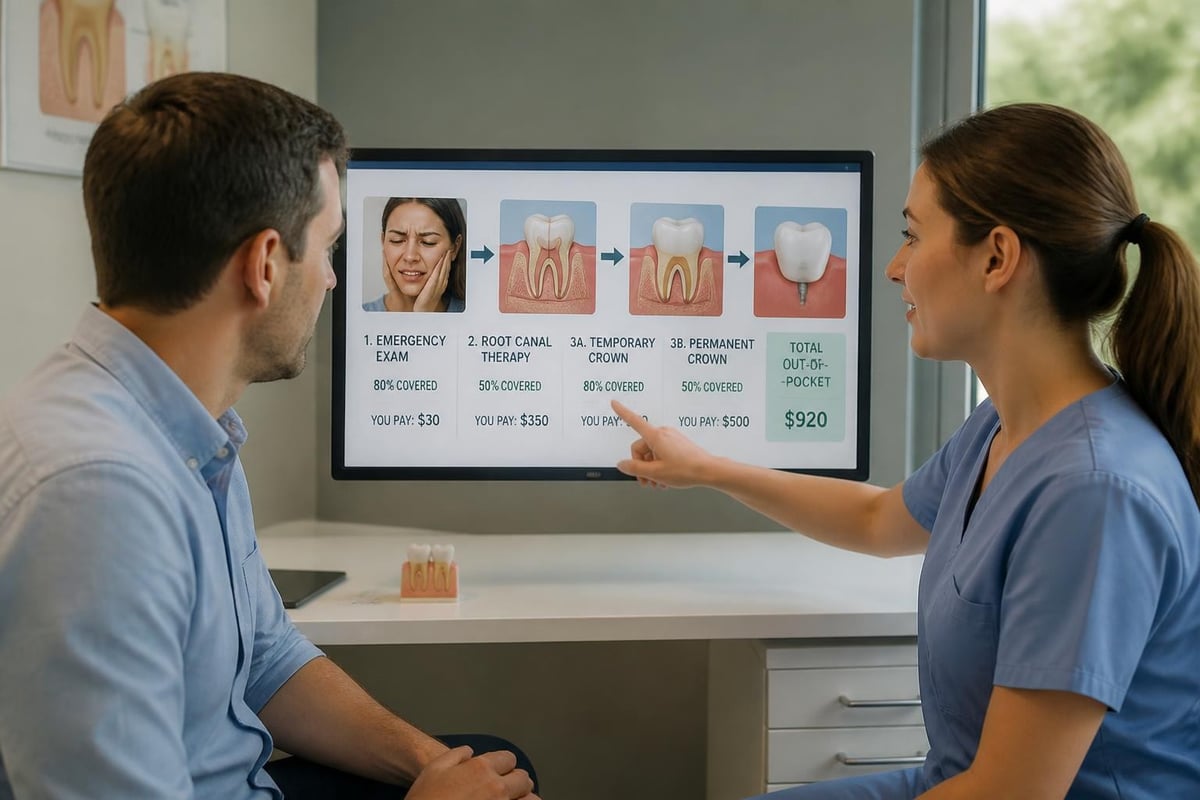
Severe Toothache Requiring Root Canal
Intense tooth pain often signals an infection requiring immediate attention. The emergency visit itself receives good coverage, but the root canal therapy and any necessary crown fall under major procedures.
If you're experiencing tooth pain that needs immediate attention, your coverage timeline matters. Some plans impose waiting periods of six to twelve months for major procedures, though true emergencies sometimes bypass these restrictions.
Broken or Damaged Crown
Lost or broken crowns create both functional and cosmetic concerns. Coverage depends on when the original crown was placed and why it failed.
Most plans have a replacement policy limiting how often they'll cover the same restoration. If your crown is less than five years old and fails due to defect or normal use, your plan might cover replacement at the same percentage as the original (typically 50%). If the crown is older or failed due to accident or decay, coverage follows standard major procedure rates.
Dental Abscess or Infection
Oral infections constitute true medical emergencies that can become life-threatening if untreated. Emergency drainage and antibiotics typically receive strong coverage under basic procedures (70-80%), but definitive treatment like root canal therapy or extraction falls under standard coverage tiers.
In severe cases where hospitalization becomes necessary, your medical insurance rather than dental insurance may provide coverage. Understanding when to seek emergency room care versus urgent dental care affects which insurance applies and your ultimate costs.
When Dental Emergencies Require Medical Emergency Care
Some dental situations escalate beyond what dental insurance covers, crossing into medical insurance territory. According to HealthCare.gov’s guidance on getting emergency care, medical insurance must cover emergency services even when they're related to dental issues.
Medical vs. Dental Insurance for Emergencies
Medical insurance typically covers dental-related emergencies when:
- The situation involves trauma to facial bones or jaw
- Severe infection threatens systemic health
- Breathing or swallowing becomes compromised
- Uncontrolled bleeding occurs
- Emergency room treatment is required
For instance, a dental abscess that causes facial swelling, fever, and difficulty breathing would likely involve emergency room care billed to your medical insurance. However, the subsequent dental treatment to address the underlying tooth problem would fall under dental insurance.
This distinction matters because medical insurance deductibles and out-of-pocket maximums differ significantly from dental insurance limits. An emergency room visit might cost five hundred to two thousand dollars depending on your medical deductible, plus whatever dental work follows.
Special Coverage Situations
Certain populations face unique considerations when asking does dental insurance cover emergency dental visits. Understanding these situations helps families plan appropriately.
Medicare and Emergency Dental Coverage
Traditional Medicare provides minimal dental coverage, creating challenges for older adults experiencing dental emergencies. According to Medicare’s official page on dental services, Medicare Part A may cover dental services when they're an integral part of covered procedures, such as jaw reconstruction following injury.
However, Medicare generally does not cover emergency dental visits for routine issues like infections, broken teeth, or severe pain. Many seniors purchase supplemental dental insurance or Medicare Advantage plans that include dental benefits, though these often have limitations and waiting periods.
Children's Dental Coverage Through Medicaid and CHIP
Texas families with children enrolled in Medicaid or the Children's Health Insurance Program (CHIP) generally receive comprehensive emergency dental coverage. These programs typically cover emergency exams, X-rays, and necessary treatments without the stringent annual maximums that private insurance imposes.
Parents should understand that while emergency coverage is robust, they still need to access care through network providers when possible to avoid payment complications. For families seeking to reduce dental care costs, understanding these program benefits is essential.
Marketplace Plans and Dental Coverage
The Affordable Care Act requires health insurance marketplaces to offer dental coverage for children, but adult dental coverage remains optional. According to HealthCare.gov’s overview of dental coverage, you can purchase standalone dental plans through the marketplace or choose medical plans with embedded dental benefits.
These standalone dental plans handle emergencies similarly to traditional employer-sponsored coverage, with tiered benefit structures and annual maximums. Reviewing your specific marketplace plan documents before an emergency occurs helps you understand your financial responsibility.
Waiting Periods and Their Impact on Emergency Coverage
Many dental insurance plans impose waiting periods before certain benefits become available. These waiting periods can significantly affect your coverage when emergencies arise shortly after enrolling in a new plan.
Typical waiting period structures:
- Preventive services: No waiting period (immediate coverage)
- Basic procedures: 6-month waiting period
- Major procedures: 12-month waiting period
- Orthodontics: 12-24 month waiting period
Emergency situations sometimes bypass waiting periods, but this varies by insurer and plan. A true emergency like a knocked-out tooth or severe infection may receive immediate coverage even during a waiting period, while a broken crown that causes discomfort but isn't urgent might face waiting period restrictions.
When evaluating plans during open enrollment, ask specifically about emergency care provisions during waiting periods. Some insurers waive these restrictions for documented emergencies, while others enforce them strictly.
Navigating Claims and Pre-Authorization
Understanding the administrative side of emergency dental coverage helps avoid claim denials and surprise bills. Unlike routine care where your dentist handles pre-authorization, emergencies often require after-the-fact claims processing.
Documentation Requirements
To ensure your emergency visit receives proper coverage, maintain thorough documentation:
- Detailed notes from your dentist explaining why immediate treatment was necessary
- X-rays and diagnostic images supporting the emergency diagnosis
- Treatment records showing what procedures were performed and why
- Itemized bills separating the emergency exam from subsequent treatments
- Records of any communication with your insurance company
If your dental insurance denies your claim, this documentation becomes critical for the appeals process. Many denials result from insufficient documentation rather than actual coverage exclusions.
Filing Claims for After-Hours Emergency Care
When you receive emergency care outside normal business hours or at an urgent care dental clinic, you may need to file claims yourself rather than having the provider submit them. This process typically involves:
- Requesting an itemized bill with procedure codes (CDT codes)
- Completing your insurance company's claim form
- Attaching supporting documentation and X-rays
- Submitting within the timeframe specified in your plan (usually 90 days)
- Following up if you don't receive a response within 30 days
Keep copies of everything you submit, including proof of mailing or electronic submission confirmations. Insurance companies process emergency claims using the same coverage rules as planned procedures, so understanding your plan's benefit structure helps you anticipate the response.
Out-of-Pocket Costs and Payment Planning
Even with good insurance coverage, emergency dental visits can create significant financial burdens. Planning for these costs helps families manage unexpected dental expenses.
Estimating Your Financial Responsibility
Before or immediately after emergency treatment, request a cost estimate that includes:
- Total charges for all procedures performed
- What your insurance is expected to cover based on your plan
- Your estimated out-of-pocket responsibility
- Whether you've met your annual deductible
- How much of your annual maximum remains
For example, if you need an emergency root canal and crown:
| Item | Total Cost | Insurance Pays (50%) | Your Cost |
|---|---|---|---|
| Emergency Exam | $150 | $105 (70%) | $45 |
| X-rays | $100 | $70 (70%) | $30 |
| Root Canal | $1,200 | $600 | $600 |
| Temporary Crown | $200 | $100 | $100 |
| Permanent Crown | $1,500 | $750 | $750 |
| Total | $3,150 | $1,625 | $1,525 |
This estimate assumes you've met your deductible and have sufficient annual maximum remaining. If you haven't met your deductible, add that amount to your responsibility.
Payment Options and Financing
Many dental practices, including Dental Plus Clinic, offer payment options for emergency care:
- Payment plans spreading costs over 6-12 months
- Third-party financing through CareCredit or similar programs
- Discounts for paying in full at time of service
- Sliding fee scales based on income for uninsured patients
Don't hesitate to discuss financial concerns with your dental provider before treatment begins. Most practices would rather work out a payment arrangement than have patients delay necessary emergency care.
Maximizing Your Emergency Dental Coverage
Strategic planning helps you get the most from your dental insurance when emergencies occur. Consider these approaches to optimize your coverage.
Timing Considerations for Non-Urgent Emergencies
Some situations feel urgent but can wait a few days without compromising outcomes. If you experience a problem late in December and your annual maximum is exhausted, waiting until January 1st when benefits reset could save you hundreds or thousands of dollars.
However, never delay truly urgent care to optimize insurance benefits. Infections, severe pain, and traumatic injuries require immediate attention regardless of insurance timing.
Coordinating Benefits with Multiple Plans
Families with dual coverage through two parents' employer plans can coordinate benefits to reduce out-of-pocket costs. When you have two plans:
- One plan serves as primary, paying benefits first
- The secondary plan may cover some or all of what the primary doesn't pay
- Total benefits cannot exceed 100% of the total cost
- You must file claims in the correct order
For emergency care, coordinating benefits might mean you pay only 10-20% instead of 30-50% of costs. Contact both insurance companies to understand coordination of benefits rules before filing claims.
Using Health Savings Accounts and Flexible Spending Accounts
If you have a Health Savings Account (HSA) or Flexible Spending Account (FSA), these tax-advantaged funds can pay for dental emergency costs not covered by insurance. Both accounts allow you to use pre-tax dollars for qualified medical and dental expenses, effectively reducing your cost by your tax rate.
Many families forget these accounts during emergencies, paying out-of-pocket with after-tax dollars instead. Keep your HSA or FSA debit card accessible for emergency situations, or plan to submit receipts for reimbursement.
What to Do During a Dental Emergency
When a dental emergency strikes, knowing the right steps helps ensure both appropriate care and maximum insurance coverage. Follow this action plan:
Immediate Steps
- Assess the severity – Determine if you need immediate dental care or emergency room treatment
- Contact your dentist – Call your regular dental provider first, even after hours (most have emergency protocols)
- Verify insurance coverage – If time permits, confirm your dentist is in-network and understand your coverage
- Preserve damaged teeth – For knocked-out teeth, place them in milk or saline and seek care within 30 minutes
- Manage pain safely – Use over-the-counter pain relievers as directed while awaiting treatment
Finding Emergency Dental Care
If your regular dentist isn't available, options include:
- Emergency dental clinics that operate extended hours
- Dental schools offering reduced-cost emergency services
- Hospital emergency departments for severe situations involving infection, trauma, or uncontrolled bleeding
- Urgent care centers (though these rarely have dental specialists and typically only provide pain management and antibiotics)
Texas residents can access emergency dental care through Dental Plus Clinic’s five locations across Beeville, Seguin, New Braunfels, Leander, and Converse. Having an established relationship with a dental provider who knows your history significantly improves emergency care quality.
Frequently Asked Questions About Emergency Dental Coverage
Does dental insurance cover emergency visits on weekends or after hours?
Yes, dental insurance covers emergency visits regardless of when they occur. Coverage percentages remain the same whether you receive care during regular office hours, weekends, or late at night. However, some dental providers charge facility fees for after-hours care that insurance might not cover, so ask about these potential additional costs upfront.
Will my dental insurance cover emergency care if I'm traveling out of state?
Most dental insurance plans provide coverage for emergencies regardless of location, though you'll likely receive out-of-network benefits if you visit a dentist outside your plan's network. Keep your insurance card when traveling and contact your insurance company before receiving care if possible to understand coverage levels and any special procedures for out-of-state claims.
How quickly do I need to file a claim for emergency dental treatment?
Most dental insurance plans require claims within 90 days to one year of service, though this varies by carrier. Emergency situations don't receive extended filing timeframes, so submit claims promptly. If your dentist files claims on your behalf (standard for in-network providers), verify they've submitted within a few weeks of treatment.
Can my dentist require payment before emergency treatment if I have insurance?
Dentists can require payment or payment arrangements before providing non-emergency services, and some require deposits for after-hours emergency care. However, most established dental practices will work with insured patients, especially when you have an existing relationship. Discuss payment expectations when you call to schedule emergency care, and be prepared with information about your coverage.
What happens if my emergency treatment exceeds my annual maximum?
Once you reach your annual maximum benefit (typically one thousand to two thousand dollars), you're responsible for 100% of additional costs until your plan year resets. If an emergency occurs late in the year after you've exhausted benefits, you'll need to pay the full cost out-of-pocket or arrange financing. Some patients choose to defer non-urgent portions of treatment (like permanent crowns after root canals) until the new year when benefits renew.
Does dental insurance cover emergency extractions differently than planned extractions?
Insurance companies typically apply the same coverage percentages to extractions whether they're emergencies or planned procedures. Simple extractions usually receive basic procedure coverage (70-80%), while surgical extractions receive major procedure coverage (50%). The urgency doesn't change the coverage tier, though it may affect whether waiting periods apply for newly enrolled patients.
Will insurance cover replacing an emergency temporary crown with a permanent one?
Yes, most plans cover permanent crown placement after emergency temporary crown placement, though both procedures count toward your annual maximum. The temporary crown typically receives basic procedure coverage while the permanent crown falls under major procedures. Your dentist usually schedules permanent crown placement two to three weeks after the emergency, allowing time for lab fabrication.
How does coordination of benefits work for dental emergencies when I have two insurance plans?
When you have dual coverage, one plan acts as primary and processes the claim first, paying benefits according to its terms. The secondary plan then processes the claim, potentially covering some or all of the remaining balance up to their allowed amounts. You cannot receive more than 100% of the total cost. Emergency situations don't change coordination of benefits rules, so follow standard procedures for filing with both insurers.
Understanding Plan Types and Emergency Coverage Variations
Different dental insurance structures handle emergency coverage in distinct ways. Recognizing your plan type helps you navigate emergency situations more effectively.
Preferred Provider Organization (PPO) Plans
PPO plans offer the most flexibility for emergency care. These plans:
- Allow you to visit any dentist, though in-network providers offer lower costs
- Pay higher percentages for in-network care (typically 70-80% for basic procedures)
- Reduce benefits for out-of-network care (typically 50-60% for basic procedures)
- Calculate benefits based on negotiated rates for in-network providers or "usual and customary" rates for out-of-network providers
- Impose annual maximums typically ranging from one thousand to two thousand dollars
Most employer-sponsored plans follow the PPO structure, making it the most common model for emergency coverage. Understanding the difference between in-network and out-of-network benefits becomes especially important during emergencies when you might not have time to verify provider status.
Dental Health Maintenance Organization (DHMO) Plans
DHMO plans work differently from PPOs and require more careful navigation during emergencies:
- You must select a primary care dentist from the plan's network
- Care outside the network typically receives no coverage except true emergencies
- These plans often use copayment structures instead of coinsurance percentages
- Emergency care follows predetermined copayment schedules
- No annual maximums apply, but service limitations may restrict coverage
During a true emergency, most DHMO plans provide some coverage even for out-of-network care, but you'll need to contact your insurance company quickly to understand the process. Non-emergency urgent care typically requires visiting your assigned primary dentist or receiving a referral.
Indemnity or Fee-for-Service Plans
Traditional indemnity plans, though less common in 2026, allow maximum flexibility:
- Visit any licensed dentist without network restrictions
- Insurance pays a percentage of "reasonable and customary" charges
- You may need to pay upfront and file claims for reimbursement
- Annual maximums apply, typically one thousand to one thousand five hundred dollars
- Higher premiums offset the flexibility
These plans handle emergencies straightforwardly: you receive care wherever needed, pay the provider, and file claims for the covered percentage based on your plan's benefit structure.
The Role of Dental Discount Plans in Emergency Situations
Dental discount plans, while not insurance, provide an alternative for managing emergency dental costs. These membership programs offer:
- Negotiated fee schedules with participating dentists
- Discounts typically ranging from 10-60% off standard fees
- No annual maximums, deductibles, or waiting periods
- Coverage for all procedures at the discounted rate
- Monthly or annual membership fees (usually twenty-five to thirty-five dollars monthly for individuals)
For patients without traditional insurance or those who've exhausted annual maximums, discount plans can reduce emergency care costs significantly. However, they require out-of-pocket payment at time of service and only work with participating providers.
Preventing Emergency Dental Situations
While understanding coverage is essential, preventing emergencies reduces the likelihood you'll need to navigate these insurance complexities. Proactive oral health care significantly decreases emergency risks.
Regular Preventive Care
Most emergencies stem from preventable conditions. Regular six-month checkups catch problems early:
- Small cavities can be filled before they require root canals
- Cracked teeth can be crowned before they break catastrophically
- Gum disease can be treated before it causes painful infections
- Worn dental work can be replaced on your schedule, not during an emergency
Preventive care receives 100% coverage under most plans with no deductible, making it the most cost-effective dental benefit available. Maximizing preventive benefits through regular visits protects both your oral health and your wallet.
Addressing Problems Promptly
Many dental emergencies develop from ignored warning signs. If you experience tooth sensitivity, minor pain, or notice damage, schedule an appointment rather than waiting for the situation to escalate. Early intervention:
- Costs significantly less than emergency treatment
- Allows you to schedule care conveniently
- Prevents complications that might require more extensive procedures
- Lets you verify insurance coverage and plan financially
Protective Measures for High-Risk Situations
Athletes and individuals engaged in contact sports should use properly fitted mouthguards to prevent dental trauma. Custom-fitted guards from your dentist offer superior protection compared to over-the-counter options, and most insurance plans cover athletic mouthguards as preventive care.
Children should receive fluoride treatments and sealants as recommended, both typically covered as preventive care. These measures significantly reduce cavity risk and subsequent emergency situations.
Understanding Your Specific Plan Benefits
Generic information about dental insurance helps, but understanding your specific plan details makes the difference during an actual emergency. Take these steps before an emergency occurs:
Review Your Benefits Booklet
Your insurance company provides detailed benefit information, either in physical booklets or online portals. Key sections to review:
- Summary of benefits showing coverage percentages for each procedure category
- Annual maximum amounts and when they reset
- Deductible requirements and whether they apply to emergency care
- Network provider listings and out-of-network coverage details
- Claims filing procedures and timeframes
- Emergency care provisions and any special after-hours policies
Contact Your Insurance Company Directly
Call the customer service number on your insurance card and ask specific questions about emergency coverage:
- "What percentage does my plan cover for emergency exams and X-rays?"
- "Do waiting periods apply to emergency root canal therapy?"
- "How do I find in-network emergency dental providers?"
- "What documentation do I need for after-hours emergency claims?"
- "Does my plan have any emergency care exceptions or special provisions?"
Document the representative's name, date, and responses for your records. This information becomes valuable if disputes arise later.
Understand Your Employer's Plan Design
If you receive coverage through an employer, your human resources department can clarify plan-specific questions. Some employers negotiate enhanced emergency benefits or establish relationships with specific emergency dental providers that offer reduced fees for plan members.
Making Informed Decisions During Dental Emergencies
Armed with knowledge about how dental insurance handles emergency visits, you can make better decisions when urgent situations arise. The question of does dental insurance cover emergency dental visits has a nuanced answer: yes, most plans provide coverage, but the extent varies based on your specific plan, the treatment required, and the circumstances of care.
Key principles to remember:
- Emergency exams typically receive good coverage as basic procedures
- Subsequent treatments follow standard coverage tiers regardless of urgency
- In-network care almost always costs less than out-of-network alternatives
- True emergencies may bypass some plan restrictions like waiting periods
- Documentation matters significantly for claims processing and potential appeals
When facing a dental emergency, prioritize getting appropriate care quickly while being mindful of coverage implications. Never delay treatment for serious infections, trauma, or severe pain due to insurance concerns. Your health takes precedence, and most dental providers work with patients to manage costs after addressing urgent needs.
For families throughout Texas, establishing a relationship with a comprehensive dental care provider before emergencies occur ensures you know where to turn when urgent situations arise. Regular preventive care prevents many emergencies while keeping you connected to a trusted provider who understands your dental history.
Understanding your dental insurance coverage for emergencies helps you navigate these stressful situations with confidence, knowing what to expect financially while focusing on getting the care you need. Whether you're dealing with a knocked-out tooth, severe infection, or sudden dental trauma, knowing your coverage details and having a trusted dental provider makes all the difference. Dental Plus Clinic serves Texas families across five convenient locations in Beeville, Seguin, New Braunfels, Leander, and Converse, providing comprehensive emergency dental care with transparent pricing and insurance support. Our team works directly with your insurance provider to maximize your benefits and offers flexible payment options to ensure you receive the urgent care you need without delay.