

Understanding dental insurance coverage for crowns can feel overwhelming, especially when you're facing an urgent need for restorative dental work. Whether you've cracked a tooth, need to protect a tooth after a root canal, or require a crown for structural reasons, the financial aspect often becomes a major concern. The question "does dental insurance cover crowns?" doesn't have a simple yes or no answer because coverage varies significantly based on your specific plan, provider, and clinical circumstances. Most dental insurance plans do provide some level of coverage for crowns, typically classifying them as major restorative procedures with specific coinsurance percentages, waiting periods, and annual maximum limits. This comprehensive guide will walk you through everything you need to know about dental crown coverage in 2026, helping Texas families make informed decisions about their oral health investments.
Understanding How Dental Insurance Categorizes Crowns
Dental insurance plans typically organize procedures into three or four distinct tiers, each with different coverage levels. This classification system directly impacts how much you'll pay out of pocket for your crown procedure.
The Standard Coverage Tier System
Most dental plans follow a structured approach to benefits:
Preventive Care (Class I) typically includes routine exams, cleanings, and X-rays. These services usually receive 80-100% coverage with no waiting periods because insurance companies recognize that prevention saves money long-term.
Basic Procedures (Class II) encompass fillings, simple extractions, and sometimes root canals. Coverage generally ranges from 70-80% after any applicable deductibles.
Major Restorative Procedures (Class III) is where crowns typically fall. This category includes crowns, bridges, dentures, and other significant restorative work. Coverage percentages usually drop to 50% after deductibles are met.
Orthodontic Services (Class IV) exist as a separate category on some plans, often with lifetime maximums and age restrictions.
When asking does dental insurance cover crowns, you're primarily concerned with Class III major restorative coverage. The American Dental Association provides extensive resources on how dental benefits are structured and the policy considerations that shape coverage decisions.
Why Crowns Are Classified as Major Procedures
Insurance companies categorize crowns as major restorative work for several reasons. First, crowns are relatively expensive compared to fillings or cleanings, typically costing between $800 and $2,500 per tooth depending on the material and location. Second, crowns involve multiple appointments, laboratory fabrication, and specialized materials. Third, from an insurance perspective, crowns restore significant tooth structure and function, distinguishing them from simple repairs.
This classification impacts not just your coinsurance percentage but also waiting periods and how the procedure counts against your annual maximum benefit. Understanding these distinctions helps you plan financially for needed dental work at facilities like Dental Plus Clinic.
Typical Coverage Percentages for Crown Procedures
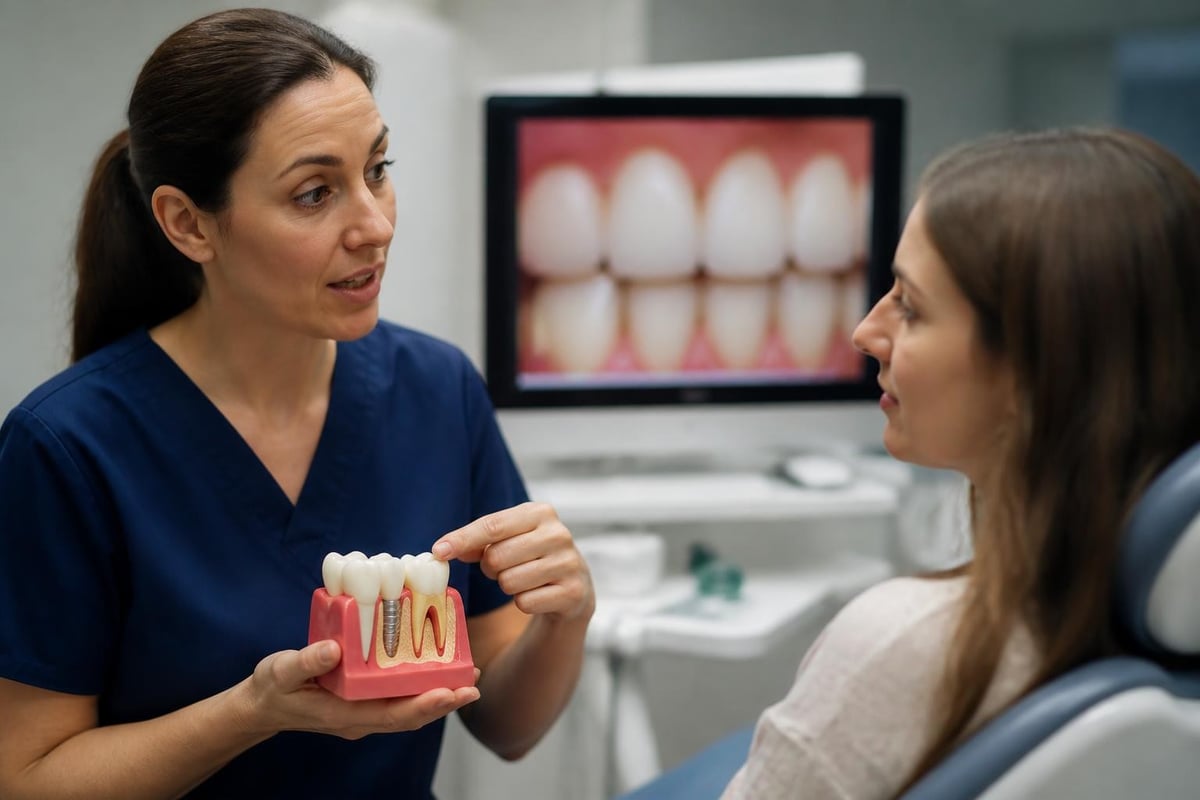
The amount your dental insurance covers for crowns varies considerably based on your specific plan design. However, certain patterns emerge across the insurance landscape that can help you estimate your expected benefits.
Standard Coinsurance Rates
Most traditional dental PPO plans cover crowns at approximately 50% of the negotiated fee after you've met your annual deductible. This means if your crown costs $1,200 and you've already met your $50 deductible, you would typically pay $600 while insurance covers the remaining $600.
Some plans offer slightly more generous coverage:
- Enhanced plans: 60% coverage for major procedures
- Standard plans: 50% coverage for major procedures
- Basic plans: 40% coverage or none for major procedures
Dental HMO plans work differently. Rather than percentage-based coinsurance, HMO plans typically charge a fixed copayment for crowns, often ranging from $200 to $600 per crown regardless of the actual cost. This predictability can be advantageous for budgeting purposes.
According to research from the National Association of Dental Plans, approximately 77% of Americans with private dental coverage have plans that cover at least a portion of crown procedures, though the percentage and conditions vary widely.
Material and Type Considerations
Does dental insurance cover crowns made from different materials at the same rate? This question matters because crown costs vary significantly based on composition.
| Crown Type | Typical Cost Range | Common Coverage Scenario |
|---|---|---|
| Porcelain-Fused-to-Metal | $800-$1,400 | 50% coverage |
| All-Porcelain/Ceramic | $1,000-$2,500 | 50% coverage, may have material downgrade |
| Gold/Metal Alloy | $1,200-$2,500 | 50% coverage |
| Zirconia | $1,000-$2,500 | 50% coverage, possible material restrictions |
Some insurance plans impose "alternative benefit" or "downgrade" clauses. This means even if you choose an all-ceramic crown for aesthetic reasons, insurance might only pay benefits equivalent to a less expensive metal crown. You would then be responsible for the cost difference plus your normal coinsurance.
At dental practices specializing in ceramic and porcelain crowns, understanding these nuances helps patients make informed choices about materials that balance aesthetics, durability, and cost.
Annual Maximums and How They Affect Crown Coverage
One of the most significant limitations affecting crown coverage is the annual maximum benefit built into most dental insurance plans. This ceiling can dramatically impact your out-of-pocket costs, especially if you need multiple crowns or other major dental work in the same year.
Understanding Annual Maximum Limits
The annual maximum is the total dollar amount your dental insurance will pay for covered services within a calendar year or plan year. Once you reach this limit, you're responsible for 100% of any additional dental costs until the next benefit period begins.
Typical annual maximums in 2026:
- Standard plans: $1,000-$1,500 per year
- Enhanced plans: $2,000-$2,500 per year
- Premium plans: $3,000-$5,000 per year (less common)
Here's a practical example: If your plan has a $1,500 annual maximum and covers crowns at 50%, a single crown costing $1,200 would result in $600 in insurance benefits. This leaves you with $900 remaining in your annual maximum. If you needed a second crown in the same year, insurance would cover only the remaining $900 of the $1,200 cost, leaving you to pay $300 plus your normal 50% coinsurance on the covered portion.
Rolling Maximums and Carry-Forward Provisions
Some progressive dental plans have introduced features to address the limitations of standard annual maximums. A small percentage of plans now offer "rollover" or "carry-forward" benefits where unused portions of your annual maximum can transfer to the following year, up to a certain limit.
For example, if you have a $1,500 annual maximum and only use $500 in benefits one year, some plans allow you to carry forward $500-$1,000 to the next year, effectively giving you $2,000-$2,500 in coverage for that period. These provisions can be valuable for patients planning major restorative work like multiple crowns.
Consumer advice from Consumer Reports on dental insurance emphasizes understanding these annual maximums before purchasing coverage, as they represent the most significant limitation for patients needing major work.
Waiting Periods and Pre-existing Condition Limitations
When exploring whether does dental insurance cover crowns, timing becomes crucial. Many dental insurance plans impose waiting periods before major restorative benefits become available, which can delay necessary treatment or leave you paying entirely out of pocket.
Standard Waiting Period Structures
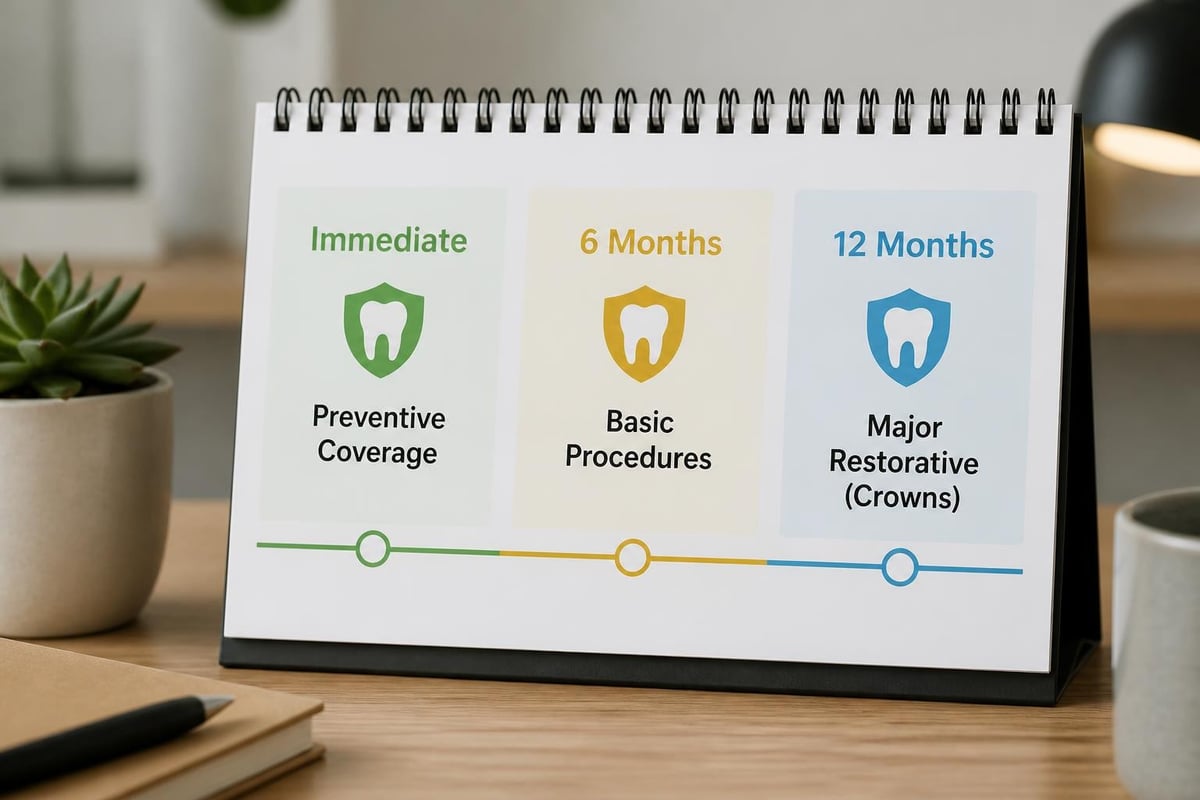
Dental insurance waiting periods typically follow this pattern:
- No waiting period: Preventive services (cleanings, exams, X-rays)
- 0-6 months: Basic services (fillings, simple extractions)
- 6-12 months: Major services including crowns, bridges, dentures
The most common waiting period for crown coverage is 6-12 months from the effective date of your policy. This means if you enroll in a new plan in January 2026, you might not receive coverage benefits for a crown procedure until July 2026 or January 2027, depending on your specific plan terms.
Some employer-sponsored group plans waive waiting periods entirely, which is one of the significant advantages of employer-provided dental insurance over individually purchased plans available through HealthCare.gov dental coverage options.
Pre-existing Condition Clauses
Unlike medical insurance under the Affordable Care Act, dental insurance is not required to cover pre-existing conditions. Many plans include clauses that exclude coverage for conditions that existed before your coverage began, even after waiting periods have passed.
Common pre-existing condition scenarios:
- Missing tooth clause: If you were already missing a tooth before coverage began, the plan may not cover a bridge or implant to replace it
- Treatment in progress: If a dentist has already recommended a crown and documented the need before your coverage started, the insurer may deny the claim
- Recent diagnosis: Some plans exclude conditions diagnosed within the first 30-90 days of coverage
To navigate these restrictions, honest communication with your dental provider is essential. Practices like those offering comprehensive dental services can help you understand timing considerations and potentially structure treatment plans around your coverage limitations.
Medical Necessity vs. Cosmetic Crown Procedures
A critical factor determining whether does dental insurance cover crowns is the distinction between medically necessary and cosmetic procedures. Insurance companies scrutinize crown claims to ensure they meet clinical criteria for coverage rather than purely aesthetic purposes.
Criteria for Medically Necessary Crowns
Insurance plans typically cover crowns when they are deemed medically or functionally necessary to restore tooth structure, protect weakened teeth, or complete other essential dental treatments. According to Aetna’s dental clinical policy on crowns, crowns are generally considered appropriate when specific conditions are met.
Commonly approved indications for crown coverage:
- Protection of a tooth following root canal treatment
- Restoration of a tooth with extensive decay affecting more than half the tooth structure
- Replacement of large, failing fillings where a filling would no longer provide adequate strength
- Repair of fractured or cracked teeth with significant structural compromise
- Coverage of dental implants as part of tooth replacement
- Correction of severe wear from bruxism (grinding) that compromises tooth function
Insurance companies often require documentation such as X-rays, clinical notes, and sometimes photographs demonstrating the medical necessity. Your dentist will typically submit a pre-authorization or predetermination request that includes this supporting evidence before proceeding with the crown preparation.
Cosmetic Exceptions and Coverage Denials
Crowns requested primarily for aesthetic improvement without underlying structural or functional issues typically face coverage denials. Common scenarios where insurance may refuse to cover crowns include:
- Discoloration that could be addressed through whitening or veneers
- Minor chips that don't compromise tooth integrity
- Purely cosmetic reshaping or size adjustment
- Replacement of functional crowns solely for improved appearance
- Upgrading to more expensive materials for aesthetic reasons when a standard crown would suffice medically
Understanding the difference between cosmetic dentistry and restorative care helps set realistic expectations. If your crown has both medical and cosmetic components, your dentist might be able to code the procedure in a way that maximizes insurance coverage for the medically necessary portion while you pay out of pocket for cosmetic upgrades.
How Different Insurance Types Handle Crown Coverage
The question of does dental insurance cover crowns varies not just by plan but by the fundamental type of insurance you carry. Understanding the differences between insurance structures helps you know what to expect from your specific coverage.
Traditional PPO Dental Plans
Preferred Provider Organization plans represent the most common type of dental insurance in 2026. These plans offer:
Network flexibility: You can visit any dentist, but receive higher benefits with in-network providers who have negotiated fee schedules with the insurance company. The importance of understanding in-network vs. out-of-network dentists cannot be overstated, as it can mean hundreds of dollars in savings per crown.
Percentage-based coverage: Typically 50% for crowns after deductibles, calculated on either the actual charge (out-of-network) or the negotiated fee (in-network).
Annual maximums: Usually $1,000-$2,500 per year as discussed earlier.
Freedom of choice: No referrals needed, and you can see specialists directly.
Dental HMO (DHMO) Plans
Health Maintenance Organization dental plans work quite differently from PPOs and can significantly affect crown coverage:
- Network-only coverage: You must use network dentists or receive no benefits
- Fixed copayments: Instead of percentage coinsurance, you pay a predetermined amount (often $200-$600 per crown)
- No annual maximums: Most DHMO plans don't have annual maximum limits
- Primary dentist requirement: You select a primary dental office and may need referrals for specialists
- Lower premiums: Monthly costs are typically much lower than PPO plans
For patients needing multiple crowns, DHMO plans can sometimes be more cost-effective despite less flexibility. However, you must verify that your preferred dental provider accepts the specific DHMO plan, as many practices choose not to participate in these networks.
Discount Dental Plans
These aren't insurance but rather membership programs offering reduced fees. While they don't "cover" crowns in the traditional sense, they provide:
- Discounted crown fees (typically 20-40% off retail prices)
- No waiting periods, deductibles, or annual maximums
- Immediate benefits upon enrollment
- Lower monthly fees than insurance premiums
Discount plans can be valuable alternatives for patients without traditional insurance or those in waiting periods. Many dental practices, including dental clinics accepting major PPO plans, also honor discount plan memberships.
Medicare and Medicaid Coverage
Does dental insurance cover crowns under government programs? The answer is complex:
Medicare: Traditional Medicare Parts A and B do not cover routine dental care, including crowns, in most circumstances. The CMS dental coverage guidelines explain that dental services are only covered when they are an integral part of a covered medical procedure (such as jaw reconstruction following trauma or cancer treatment).
However, many Medicare Advantage plans now include dental benefits. According to Kaiser Family Foundation’s analysis of Medicare Advantage benefits, a growing number of MA plans in 2026 offer coverage for comprehensive dental services including crowns, though with varying annual maximums and cost-sharing requirements.
Medicaid: Coverage varies dramatically by state. Some state Medicaid programs provide comprehensive adult dental benefits including crowns, while others offer only emergency dental services. Texas Medicaid provides limited adult dental coverage focused primarily on emergency treatments, which may not include elective crown procedures.
Maximizing Your Crown Coverage Benefits
Understanding how does dental insurance cover crowns is only the first step. Strategic planning can help you maximize benefits and minimize out-of-pocket costs for this essential restorative procedure.
Timing Your Crown Procedures Strategically
The calendar can be your ally or your enemy when it comes to dental insurance benefits. Consider these timing strategies:
End-of-year planning: If you've met your deductible and have unused annual maximum benefits remaining, scheduling your crown before December 31st ensures you don't lose those benefits. Benefits typically reset on January 1st, so unused maximums disappear.
Split treatment across benefit years: If you need multiple crowns, consider having one completed in December and another in January. This allows you to access two years of annual maximums for what is essentially one treatment period.
Waiting period considerations: If you're enrolling in new coverage, understand your waiting periods and plan accordingly. Don't delay necessary treatment excessively, but if a crown is not urgently needed and you're within a few months of your waiting period ending, patience can save significant money.
Pre-authorization timing: Submit pre-authorization requests well in advance of your desired treatment date. Processing can take 2-4 weeks, and you want to understand your exact coverage before committing to the procedure.
Getting Pre-authorization and Pre-treatment Estimates
Before proceeding with crown work, request a pre-treatment estimate (also called a predetermination) from your insurance company. This process involves:
- Your dentist submits a treatment plan with supporting documentation
- The insurance company reviews the claim and determines coverage
- You receive a breakdown of expected insurance payment and your responsibility
- No actual treatment has occurred yet, giving you time to plan financially
Important note: Pre-authorizations are estimates, not guarantees. Final coverage may vary slightly based on actual treatment codes submitted after the procedure. However, they provide valuable information for financial planning.
Appealing Denied Claims
If your crown coverage is denied, don't automatically accept the decision. According to resources on what to do when dental insurance is denied, you have appeal rights:
- Review the denial reason: Insurance companies must provide specific reasons for denials
- Gather additional documentation: Your dentist can provide more detailed clinical notes, X-rays, or photographs demonstrating medical necessity
- Submit a formal appeal: Follow your plan's appeal process, typically outlined in your benefits booklet
- Escalate if necessary: If the first appeal fails, most plans offer secondary appeals or external review processes
- Consider state insurance department assistance: State regulators can sometimes help resolve disputes
Many denied claims succeed on appeal when proper documentation is provided. Your dental office should be willing to assist with the appeal process, as they have experience with insurance requirements.
Alternative Payment Options When Insurance Falls Short
Even with insurance coverage, does dental insurance cover crowns sufficiently to make them affordable? For many patients, the answer is no, the 50% coinsurance plus annual maximum limitations still leave significant out-of-pocket costs. Fortunately, several alternatives can help bridge the gap.
Dental Financing and Payment Plans
Most dental practices offer flexible payment options specifically designed for major procedures like crowns:
In-house payment plans: Many dental offices, including comprehensive providers like Dental Plus Clinic locations across Texas, offer interest-free payment arrangements that allow you to spread costs over several months.
Third-party financing: Companies like CareCredit, LendingClub, and Alphaeon Credit specialize in healthcare financing with promotional periods:
| Financing Option | Typical Terms | Best For |
|---|---|---|
| CareCredit | 6-24 months interest-free | Patients with good credit needing up to $25,000 |
| LendingClub | Fixed rate loans, 3-5 years | Larger treatment plans requiring longer repayment |
| Alphaeon Credit | 6-18 months deferred interest | Cosmetic and elective procedures |
| In-house plans | 3-12 months, usually interest-free | Smaller balances, all credit types |
Important warning: Deferred interest promotions require paying the full balance before the promotional period ends. If you carry any balance past the deadline, you may owe interest retroactively from the original date at rates often exceeding 20% APR.
Health Savings Accounts and Flexible Spending Accounts
If you have access to a Health Savings Account (HSA) or Flexible Spending Account (FSA), these tax-advantaged accounts can significantly reduce the effective cost of crowns:
- Pre-tax contributions: Money goes into these accounts before income tax, effectively giving you a 22-32% discount depending on your tax bracket
- Qualified expense: Crowns and other restorative dental work qualify as medical expenses
- HSA rollover: Unlike FSAs, HSA balances roll over year to year and can be invested for growth
- FSA planning: If you know you'll need crown work, maximize your FSA contribution for that year (2026 limit is $3,200)
Dental Schools and Reduced-Fee Programs
For patients with limited insurance coverage or financial resources, dental schools offer crown procedures at substantially reduced costs:
- Treatment performed by supervised dental students
- Costs typically 30-50% lower than private practice fees
- Appointments often longer due to educational nature
- High quality of care with faculty oversight
- Limited availability and potentially longer wait times
Texas has several dental schools offering reduced-fee services, including the University of Texas Health Science Center at San Antonio, which serves several of the regions where Dental Plus Clinic operates.

Special Considerations for Different Crown Scenarios
Does dental insurance cover crowns in all situations equally? The answer is no. Different clinical scenarios can affect coverage in important ways that patients should understand before proceeding with treatment.
Crowns Following Root Canal Treatment
Root canal therapy often requires a crown to protect the now-brittle tooth structure. This presents unique insurance considerations:
Sequential procedure coverage: You'll likely use major restorative benefits for both the root canal and the crown, quickly approaching annual maximum limits. A root canal might cost $800-1,500, and the crown another $800-1,500, potentially consuming $1,100-1,500 in benefits even with 50% coverage.
Timing flexibility: While dentists recommend placing a crown within a few weeks to months after a root canal, there is sometimes flexibility. If you're near your annual maximum, you might consider completing the root canal in one benefit year and the crown in the next, though this carries some risk of tooth fracture during the interim period.
Medical necessity documentation: Insurance companies readily accept crowns following root canals as medically necessary, so coverage denials are rare for this indication. Practices specializing in root canal treatment routinely handle the documentation requirements.
Replacement Crowns and the Five-Year Rule
Does dental insurance cover crowns that are replacing existing crowns? This common scenario has specific insurance considerations:
Most dental insurance plans enforce a "replacement rule" stating that crowns and other major restorations will only be covered once every five to seven years per tooth. This means:
- If you had a crown placed in 2023, insurance likely won't cover a replacement until 2028 or 2029
- Exceptions exist for crowns damaged by trauma or documented failures
- Your dentist must provide clinical justification for early replacement
- You may be responsible for 100% of the cost if the replacement occurs within the waiting period
Failure documentation requirements:
- Clinical notes explaining why the crown failed
- X-rays showing defects, recurrent decay, or fractures
- Photographs if available
- Explanation of why repair isn't feasible
Even with proper documentation, some insurance plans refuse early replacement coverage. In these cases, patients must weigh the clinical need against financial constraints.
Implant Crowns vs. Natural Tooth Crowns
Dental implants complicate the insurance picture because they involve multiple components: the implant fixture (surgical placement), the abutment (connector), and the crown (visible portion).
Coverage variations:
- Some plans cover the implant crown at the same 50% major restorative rate as traditional crowns
- Other plans exclude all implant-related procedures entirely, including implant crowns
- A third group covers crowns but not the implant fixture or abutment
Patients considering implants should carefully review their specific plan language. The National Institute of Dental and Craniofacial Research guidance on dental care provides context on when implants versus other restorative options might be clinically appropriate.
For patients exploring dental implants in Texas or considering whether dental implants are worth the cost, understanding insurance limitations is crucial for financial planning.
Pediatric Crown Coverage
When children need crowns, typically stainless steel crowns for primary teeth, insurance coverage can differ from adult crown coverage:
Advantages of pediatric crown coverage:
- Often covered at higher percentages (60-80% vs. 50% for adults)
- May be classified as basic rather than major procedures on some plans
- Shorter or no waiting periods on many plans
- Less likely to have material or frequency restrictions
Considerations for families:
- Verify your plan's specific pediatric dental benefits
- Some plans have separate annual maximums for children
- Pediatric dentistry services often focus on preventive care to avoid crowns, but when needed, specialists can maximize insurance benefits
Frequently Asked Questions About Crown Coverage
Does dental insurance cover crowns if I just got insurance?
Generally, yes, but with important timing considerations. Most dental insurance plans impose a 6-12 month waiting period before covering major restorative procedures like crowns. Additionally, pre-existing condition clauses may exclude coverage if the need for the crown was documented before your coverage began. Employer-sponsored group plans often waive waiting periods, while individually purchased plans almost always enforce them. If you need a crown immediately after enrolling in new coverage, you should expect to pay the full cost out of pocket unless you have a group plan with no waiting periods.
How much does insurance typically pay for a crown?
With standard dental PPO insurance covering crowns at 50% after deductibles, and crowns typically costing $800-2,500, insurance payments usually range from $400-1,250 per crown. However, this assumes you haven't exhausted your annual maximum benefit. For example, if your crown costs $1,200, you've met your $50 deductible, and your plan covers crowns at 50%, insurance would pay $600. If you're using an in-network dentist, the calculation is based on the negotiated fee rather than the dentist's standard charge, often resulting in additional savings.
Can I get a crown covered without waiting periods?
Yes, in several scenarios. Employer-sponsored group dental plans frequently waive all waiting periods as a benefit of group coverage. If you're switching from one dental plan to another without a break in coverage, some new plans will credit your time under the previous plan toward waiting period requirements (called "creditable coverage"). Additionally, emergency crown procedures due to sudden trauma may sometimes be covered immediately under different policy provisions. If timing is critical, contact your insurance company to ask specifically about waiting period exceptions for your situation.
Does insurance cover crown replacements?
Insurance typically covers crown replacements only under specific circumstances. Most plans enforce a five to seven-year replacement rule, meaning they won't cover a new crown on the same tooth unless at least five years have passed since the previous crown. Exceptions exist for documented crown failures, fractures, new decay under the existing crown, or trauma damage. Your dentist must provide clinical justification and supporting documentation to obtain coverage for early replacement. Without meeting these criteria, you'll likely be responsible for the full replacement cost even if you have otherwise good coverage.
What if my dentist says I need a crown but insurance denies it?
First, understand the specific reason for denial by carefully reviewing the explanation of benefits. Common denial reasons include insufficient clinical documentation, cosmetic classification, pre-existing conditions, waiting periods, or replacement frequency violations. Work with your dentist's office to submit additional documentation supporting medical necessity, such as detailed clinical notes, X-rays, or photographs. Many denials are overturned on appeal when proper evidence is provided. If the denial relates to timing issues like waiting periods or replacement rules, you may need to delay treatment, seek alternative financing, or pay out of pocket. Understanding your options when dental insurance denies coverage can help you navigate the appeals process effectively.
Are porcelain crowns covered differently than metal crowns?
Most insurance plans cover different crown materials at the same percentage (typically 50% for major restorative procedures), but they may apply "alternate benefit" or "downgrade" provisions. This means if you choose an all-porcelain crown for aesthetic reasons, insurance might only pay benefits equivalent to a less expensive metal or porcelain-fused-to-metal crown. You would then be responsible for the cost difference plus your normal coinsurance percentage. For example, if an all-porcelain crown costs $1,500 but insurance calculates benefits based on a $1,000 metal crown alternative, they would pay 50% of $1,000 ($500) rather than 50% of $1,500 ($750), leaving you responsible for $1,000 instead of $750.
Does Medicare cover dental crowns?
Traditional Medicare Parts A and B do not cover routine dental care including crowns except in very limited circumstances. According to Medicare dental coverage rules, dental services are only covered when they're an integral part of a covered medical procedure, such as jaw reconstruction following an accident or cancer treatment. However, Medicare Advantage (Part C) plans increasingly include dental benefits that may cover crowns, though with varying annual maximums, waiting periods, and cost-sharing requirements. Seniors should carefully review their specific Medicare Advantage plan documents or consider supplemental dental insurance to ensure crown coverage.
How can I maximize my insurance benefits for multiple crowns?
Strategic planning can help maximize benefits when you need multiple crowns. Consider timing procedures across benefit years so you can access two years of annual maximums. For example, completing two crowns in December and two more in January allows you to use approximately $3,000 in benefits rather than being limited to a single year's $1,500 maximum. Prioritize crowns based on clinical urgency, addressing the most critical teeth first. Ask about package pricing or multi-crown discounts that some practices offer. Consider using an in-network provider to benefit from negotiated fees. If your plan offers rollover benefits or enhanced coverage options, verify you've maximized those provisions. Working with a practice that accepts your insurance and understands benefit coordination, such as dental clinics with multiple Texas locations, can help optimize your coverage strategy.
Navigating Insurance Pre-authorization for Crowns
The pre-authorization process represents a critical step in understanding exactly what your insurance will cover before committing to crown treatment. This proactive approach prevents surprise bills and allows for informed financial planning.
The Pre-authorization Process Explained
Pre-authorization (also called predetermination or pre-treatment estimate) involves submitting your proposed treatment plan to your insurance company before any work is performed:
- Clinical examination: Your dentist thoroughly examines your tooth and determines a crown is necessary
- Documentation gathering: The office collects X-rays, clinical notes, and sometimes photographs
- Treatment plan submission: A detailed treatment plan with procedure codes and fees is sent to your insurance company
- Insurance review: The insurer reviews clinical necessity and checks coverage limitations
- Benefit estimate: You receive a breakdown of expected coverage and your responsibility
- Decision point: Armed with accurate cost information, you can proceed or explore alternatives
Typical pre-authorization timeline:
- Submission to insurance: 1-2 business days
- Insurance review period: 10-20 business days
- Response to dental office: 1-2 business days
- Discussion with patient: Immediate upon receipt
Total process: 2-4 weeks from initial submission to final estimate
What Information Insurance Companies Evaluate
When reviewing crown pre-authorizations, insurance companies assess several factors:
Clinical necessity indicators:
- Amount of remaining tooth structure
- History of failed restorations
- Root canal treatment on the tooth
- Fracture or crack documentation
- Degree of decay
Policy compliance checks:
- Active coverage on treatment date
- Waiting periods satisfied
- Replacement frequency rules met
- Annual maximum availability
- Benefit tier classification
Alternative treatment considerations:
- Could a filling suffice instead of a crown?
- Is the tooth salvageable or should extraction be considered?
- Are there less expensive materials that would serve the clinical purpose?
Understanding what insurance reviewers evaluate helps your dentist submit comprehensive pre-authorizations that are more likely to receive full approval. Practices experienced in working with insurance, including those offering comprehensive dental services, routinely achieve high pre-authorization approval rates through thorough documentation.
When Pre-authorization Isn't Guaranteed Coverage
An important caveat: pre-authorization is an estimate, not a contract. Insurance companies include disclaimers stating that final coverage depends on:
- Your active coverage when treatment is actually performed
- Correct procedure coding on the final claim
- No changes to the treatment plan
- Availability of benefits at time of service
Despite these disclaimers, pre-authorizations are generally reliable. Discrepancies typically occur only when circumstances change, such as losing coverage, exhausting annual maximums through other procedures, or modifying the treatment plan.
Geographic Considerations for Texas Dental Insurance
For Texas families researching does dental insurance cover crowns, geographic factors can influence both insurance availability and dental costs. Understanding regional considerations helps optimize your coverage strategy.
Insurance Network Availability in Texas
Texas's large geographic area means network dentist density varies significantly. Major metropolitan areas like San Antonio, Austin, and Houston have extensive PPO networks with many in-network providers. Smaller communities may have fewer in-network options, potentially requiring longer drives to maximize insurance benefits or accepting out-of-network status with higher costs.
Dental Plus Clinic addresses this challenge by maintaining multiple locations across Texas in Beeville, Seguin, New Braunfels, Leander, and Converse. This geographic distribution ensures more Texas families can access high-quality dental care within their insurance networks.
Regional Cost Variations
Crown costs vary across Texas based on local economic factors:
Metropolitan areas (Austin, San Antonio, Houston):
- Higher operating costs drive crown prices to $1,200-2,500
- More insurance competition often means better negotiated rates
- Greater availability of dental specialists and advanced materials
Smaller cities (Beeville, Seguin):
- Crown costs typically $800-1,800
- Fewer but often more personalized provider options
- Insurance networks may be smaller but adequate
Rural areas:
- Crown prices vary widely ($700-2,000)
- Limited provider choice may mean traveling to larger towns
- Insurance networks may have minimal coverage
These regional differences affect how far your insurance benefits stretch. A plan paying 50% of an $800 crown in a small town results in $400 out of pocket, while the same coverage percentage on a $1,600 crown in a metropolitan area means $800 out of pocket.
Texas-Specific Insurance Considerations
Texas has unique dental insurance characteristics that residents should understand:
Medicaid limitations: Texas Medicaid provides minimal adult dental coverage, primarily emergency services only. Crowns are generally not covered for adults unless medically necessary due to trauma.
CHIP coverage: The Children's Health Insurance Program in Texas includes comprehensive dental benefits for eligible children, including crown coverage when clinically necessary.
Insurance marketplace options: Texas uses the federal marketplace (HealthCare.gov) rather than a state exchange. Dental coverage through the marketplace is available as separate standalone plans, with varying crown coverage depending on the plan tier selected.
No state mandate: Texas does not mandate dental insurance, so coverage is optional. This means many Texas residents rely on out-of-pocket payment or discount plans rather than traditional insurance.
For Texas families seeking accessible dental care with insurance coordination, choosing providers with multiple convenient locations, such as the Seguin dental office, can simplify both care access and insurance processing.
Making an Informed Decision About Crown Treatment
Understanding whether does dental insurance cover crowns in your specific situation empowers you to make confident decisions about necessary dental care. The coverage landscape is complex, but armed with knowledge about your plan's specifics, you can navigate it successfully.
Questions to Ask Before Proceeding
Before committing to crown treatment, ask your dental office and insurance company these essential questions:
Insurance coverage questions:
- What is my exact coverage percentage for crowns?
- How much of my annual maximum remains available?
- Are there waiting periods still in effect?
- Does my plan have replacement frequency limitations?
- Are there material restrictions or alternate benefit clauses?
- What is my current deductible status?
Treatment planning questions:
- Is this crown medically necessary or primarily cosmetic?
- What happens if I delay the crown?
- Are there alternative treatments with different costs?
- Can treatment be phased across benefit years?
- What is the total out-of-pocket cost after insurance?
Financial planning questions:
- Does the practice offer payment plans?
- What financing options are available?
- Can I use HSA or FSA funds?
- Are there package discounts for multiple crowns?
Balancing Clinical Need with Financial Reality
Sometimes the clinical recommendation and financial capacity don't align perfectly. Honest communication with your dentist helps find solutions:
Prioritization strategies: If multiple crowns are needed but budget is limited, discuss which teeth are most critical to address first based on function, risk of fracture, and pain prevention.
Alternative materials: In some cases, less expensive crown materials might be clinically acceptable while being more financially accessible, though this should never compromise longevity or function.
Temporizing approaches: For certain situations, temporary crowns or other interim solutions might buy time to accumulate insurance benefits or savings, though this carries risks that must be weighed carefully.
Second opinions: If cost concerns are significant, seeking a second opinion can provide confidence in the treatment recommendation and potentially reveal alternative approaches.
Quality dental practices prioritize helping patients access necessary care regardless of insurance limitations. Providers offering flexible payment options and insurance guidance demonstrate commitment to patient-centered care beyond just clinical excellence.
Understanding how dental insurance covers crowns, including coverage percentages, waiting periods, annual maximums, and medical necessity requirements, positions you to make informed decisions about your oral health. While most plans cover approximately 50% of crown costs with certain limitations, strategic timing and thorough pre-authorization can maximize your benefits. At Dental Plus Clinic, our experienced team across five Texas locations helps patients navigate insurance complexities while delivering exceptional restorative dental care. Whether you're in Beeville, Seguin, New Braunfels, Leander, or Converse, our staff will work with your insurance to maximize coverage and create flexible payment solutions that make necessary crown treatment accessible and affordable.