

Understanding whether your dental insurance will cover implant procedures represents one of the most pressing financial questions for patients facing tooth loss. Most Texas families researching replacement options discover that coverage varies dramatically between plans, leaving many uncertain about their out-of-pocket expenses. The truth about dental implant insurance coverage depends on your specific policy type, the reason for tooth loss, and how your dentist documents medical necessity. This comprehensive guide explores exactly what you can expect from your insurance plan, how to navigate the approval process, and what alternatives exist when coverage falls short.
Understanding Dental Insurance Coverage for Implants
The straightforward answer to "does dental insurance cover dental implants" is that most traditional dental insurance plans classify implants as a cosmetic or elective procedure. This categorization typically results in limited or no coverage for the implant post itself, though components of the treatment may receive partial reimbursement.
Standard dental insurance operates on a tiered structure that influences implant coverage:
- Preventive care (100% coverage): Cleanings, exams, X-rays
- Basic procedures (70-80% coverage): Fillings, simple extractions
- Major procedures (50% coverage): Crowns, bridges, root canals
- Cosmetic/elective (0-50% coverage): Implants, veneers, whitening
Most insurance companies place dental implants in the major procedures category when they provide any coverage at all. This means patients typically face 50% coinsurance after meeting their deductible. However, the annual maximum benefit (usually $1,000 to $2,000) often gets exhausted quickly when implant costs range from $3,000 to $6,000 per tooth.
How Insurance Companies Evaluate Implant Claims
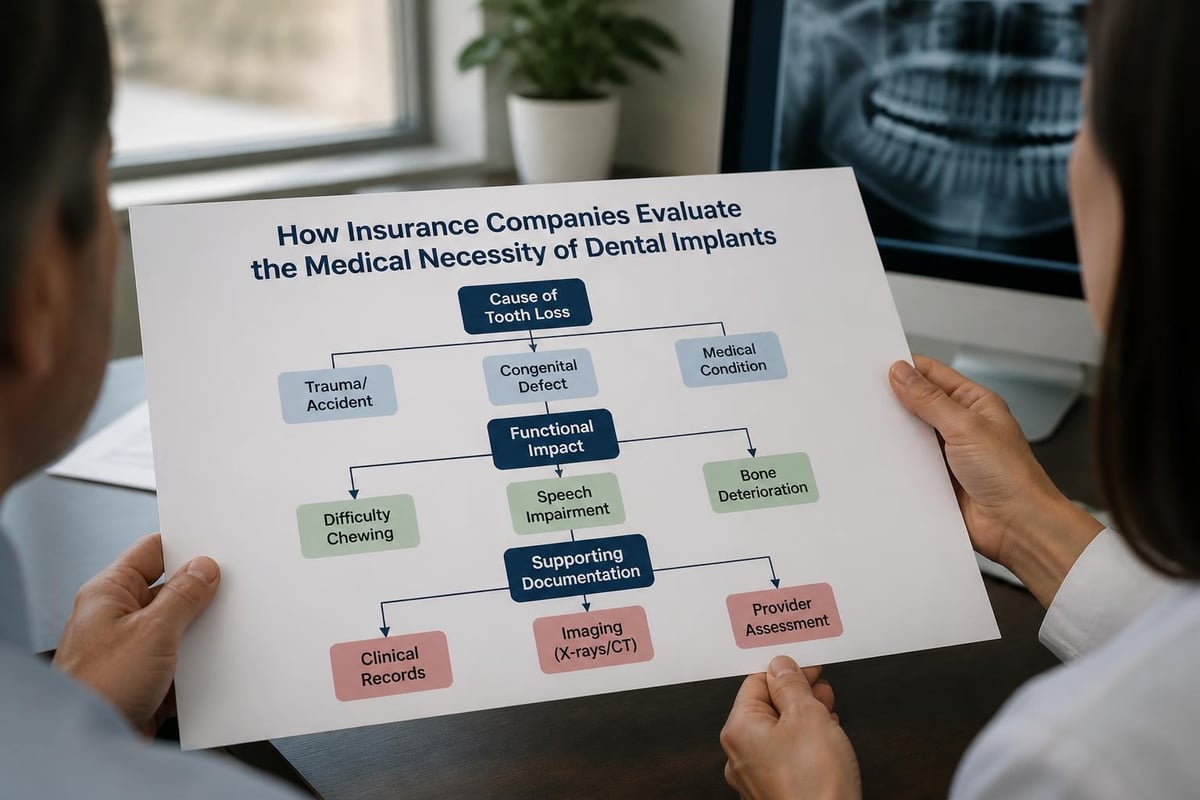
Insurance providers assess implant necessity through specific medical criteria before approving coverage. When you submit a claim, the insurer reviews documentation from your dentist to determine whether the procedure qualifies as medically necessary rather than purely cosmetic.
The evaluation process considers several factors:
- Cause of tooth loss (accident vs. decay vs. congenital absence)
- Impact on oral function (chewing ability, speech, jaw alignment)
- Alternative treatment viability (whether bridges or dentures would suffice)
- Supporting diagnostic records (X-rays, clinical photos, periodontal assessments)
Plans with more comprehensive major services coverage may approve implants when tooth loss resulted from accident or trauma rather than decay or periodontal disease. The American Dental Association advocacy resources provide detailed information about how coverage policies have evolved and what documentation strengthens approval likelihood.
Types of Dental Plans and Implant Coverage Differences
Not all dental insurance policies treat implant coverage identically. Understanding your specific plan type helps set realistic expectations about reimbursement levels and out-of-pocket costs.
Traditional PPO and HMO Plans
Preferred Provider Organization (PPO) plans offer the most flexibility for implant procedures. These plans allow you to visit any licensed dentist, though staying in-network provides better cost savings through pre-negotiated fee schedules.
| Plan Type | Implant Coverage | Annual Maximum | Network Restrictions |
|---|---|---|---|
| PPO | 0-50% after deductible | $1,500-$2,500 | Optional in-network savings |
| HMO | Rarely covered | $1,000-$1,500 | Must use network providers |
| Indemnity | 0-50% UCR-based | $2,000-$3,000 | Any licensed dentist |
| Discount Plans | No coverage (discounted fees) | N/A | Network-only pricing |
Health Maintenance Organization (HMO) dental plans rarely cover implants at all. These plans require you to select a primary dentist from their network and obtain referrals for specialist care. The lower premiums come with significant restrictions on covered procedures.
Employer-Sponsored vs. Individual Plans
Employer-sponsored dental plans generally provide better implant coverage than individual marketplace policies. Group plans spread risk across many employees, allowing insurers to include more comprehensive major services coverage.
Individual plans purchased directly from insurance companies or through the health insurance marketplace typically exclude implants entirely or limit coverage to specific circumstances. The Kaiser Family Foundation analysis of dental coverage trends highlights how fewer individual plans include major restorative procedures compared to group policies.
Key differences between plan types:
- Employer plans often have $2,000+ annual maximums
- Individual plans rarely exceed $1,500 annual caps
- Group policies may waive waiting periods for new hires
- Marketplace plans typically impose 12-24 month waiting periods for major procedures
What Dental Insurance Actually Covers During Implant Treatment
Even when your policy provides some implant coverage, understanding exactly which components receive reimbursement prevents billing surprises. The complete implant process involves multiple procedures, and insurance companies evaluate each component separately.
Covered vs. Non-Covered Components
A complete dental implant restoration includes several distinct phases that insurance companies assess individually for coverage eligibility.
Typically covered components (when implants have any coverage):
- Diagnostic X-rays and imaging (often 80-100% as diagnostic)
- Tooth extraction prior to implant placement (70-80% as basic procedure)
- Bone grafting when medically necessary (50% as major procedure)
- Temporary restoration during healing (50% as major procedure)
- Final crown restoration (50% as major procedure)
Rarely or never covered components:
- Titanium implant post placement (considered cosmetic foundation)
- Abutment connector piece (classified with post as elective)
- Surgical guides for precise placement
- Sedation dentistry beyond local anesthesia
- Same-day or immediate load implants (newer technology exclusions)
The question "does dental insurance cover dental implants" often receives a nuanced answer because while the surgical post placement typically goes uncovered, surrounding procedures may receive standard major services reimbursement. Understanding coverage for dental implants with insurance requires reviewing your specific policy's definition of excluded procedures.
Medical Insurance Coverage for Dental Implants
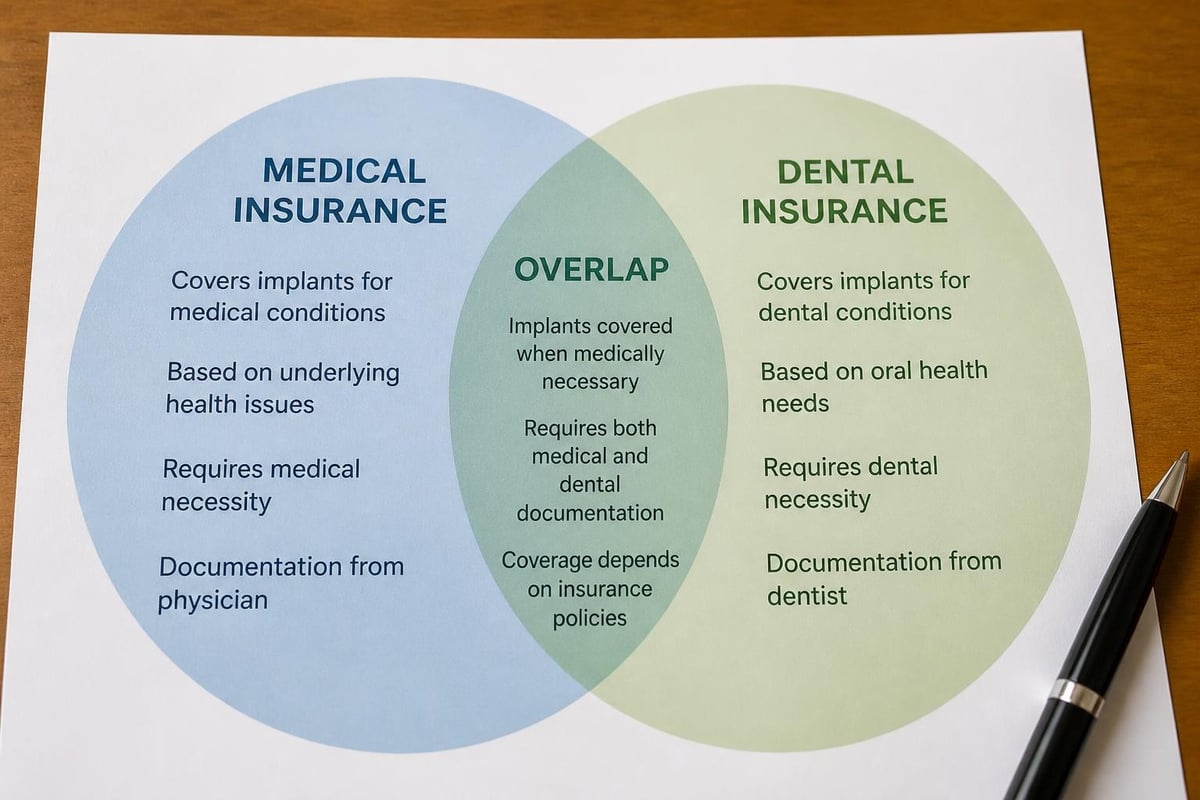
In rare circumstances, medical insurance rather than dental coverage may reimburse portions of implant treatment. This occurs when tooth loss stems from medical conditions or accidents rather than oral health issues.
Medical insurance might provide coverage when implants address:
- Congenital defects affecting jaw development or tooth formation
- Accident-related trauma requiring facial reconstruction
- Cancer treatment necessitating jaw bone removal and restoration
- Severe sleep apnea requiring oral appliances anchored to implants
Most medical policies, including Original Medicare, exclude routine dental procedures. However, the Medicare coverage guidelines clarify that certain hospital-based oral surgeries related to medical conditions may qualify for coverage under Part A. Medicare Advantage plans sometimes include limited dental benefits that traditional Medicare doesn't provide.
Maximizing Your Insurance Benefits for Dental Implants
Strategic planning allows you to extract maximum value from your dental insurance even when coverage remains limited. Patients who understand policy mechanics and timing often reduce their out-of-pocket expenses significantly.
Timing Your Treatment Across Benefit Years
Smart scheduling spreads implant phases across multiple benefit years, effectively doubling your annual maximum coverage. Since implant treatment naturally occurs in stages over several months, coordinating with your policy renewal date maximizes reimbursement.
Strategic treatment timeline example:
- November-December 2026: Complete diagnostic work, extraction, and bone grafting (use current year's maximum)
- January-February 2027: Place implant post after policy renews (use new year's maximum)
- July-August 2027: Complete final crown restoration (remaining benefits)
This approach allows you to access two or three years of annual maximums for a single implant procedure. For patients needing multiple implants, working with implant specialists who accept major PPO plans ensures optimal benefit coordination.
Pre-Authorization and Appeals Process
Submitting claims for pre-authorization before treatment begins clarifies exactly what your insurance will cover. This process involves your dentist submitting treatment plans, diagnostic records, and medical necessity justification to your insurance company for advance approval.
Pre-authorization provides several advantages:
- Written confirmation of coverage levels before incurring expenses
- Opportunity to appeal denials before treatment
- Accurate financial estimates for budgeting
- Documentation of medical necessity strengthening claims
When insurance companies deny implant coverage, the appeals process offers a second opportunity for approval. Successful appeals typically include additional documentation such as second opinions, functional assessments demonstrating chewing impairment, or medical records linking tooth loss to covered accidents. The National Institute of Dental and Craniofacial Research guidance on accessing dental care emphasizes the importance of thorough documentation when seeking coverage for advanced procedures.
If your dental insurance claim gets denied, don't accept the first decision as final. Insurance companies reverse approximately 30-40% of initial denials when patients submit comprehensive appeals with supporting clinical evidence.
Alternative Financing When Insurance Coverage Falls Short
Most patients discover that insurance alone won't cover their complete implant treatment costs. Understanding available alternatives helps you proceed with necessary dental care without compromising your financial stability.
Health Savings Accounts and Flexible Spending Accounts
Tax-advantaged medical savings accounts provide significant value for implant patients. Both Health Savings Accounts (HSAs) and Flexible Spending Accounts (FSAs) allow you to pay for dental implants with pre-tax dollars, effectively reducing costs by your marginal tax rate.
| Account Type | 2026 Contribution Limit | Tax Benefit | Rollover Rules |
|---|---|---|---|
| HSA (Individual) | $4,300 | Tax-free contributions, growth, and withdrawals | Unlimited rollover |
| HSA (Family) | $8,550 | Tax-free contributions, growth, and withdrawals | Unlimited rollover |
| FSA | $3,200 | Pre-tax contributions | Limited rollover ($640) |
| Dependent Care FSA | $5,000 | Pre-tax contributions | No rollover |
The IRS Publication 502 guidelines confirm that dental implants qualify as eligible medical expenses for both HSAs and FSAs. Contributing the maximum amount to these accounts before implant treatment reduces your effective cost by 22-37% depending on your tax bracket.
HSAs offer particular advantages because unused funds roll over indefinitely and earn investment returns. Patients planning implant treatment can contribute maximum amounts for several years, building substantial tax-free savings for their procedure.
Dental Savings Plans and Payment Programs
Patients exploring options for dental implants without insurance should investigate dental savings plans and in-office financing. These alternatives provide predictable costs without traditional insurance limitations.
Dental savings plans operate differently than insurance:
- Annual membership fee ($100-$200) provides access to discounted fee schedules
- No annual maximums, deductibles, or waiting periods
- Immediate eligibility for all procedures including implants
- Average savings of 20-50% off standard retail fees
In-office payment plans allow you to spread treatment costs over 12-24 months without interest when arranged directly with your dental provider. Many practices partner with healthcare financing companies offering promotional periods with 0% APR for qualified applicants.
Third-party financing options include:
- CareCredit (0% promotional periods up to 24 months)
- LendingClub Patient Solutions (fixed-rate loans)
- Proceed Finance (healthcare-specific lending)
- Traditional personal loans (credit union or bank financing)

Medicare, Medicaid, and Government Program Coverage
Government healthcare programs follow different rules regarding dental coverage, creating unique considerations for eligible populations seeking implant treatment.
Medicare Coverage Limitations
Original Medicare (Parts A and B) provides extremely limited dental coverage, typically excluding implants entirely. The AARP explanation of Medicare dental coverage clarifies that routine dental care including implants falls outside Medicare's scope unless directly related to covered medical procedures.
Medicare Part A might cover dental services only when:
- Jaw surgery becomes medically necessary for accident reconstruction
- Hospital admission is required for complex oral surgery due to underlying health conditions
- Dental examination occurs before heart valve replacement or organ transplant
Medicare Advantage plans (Part C) frequently include supplemental dental benefits that Original Medicare excludes. Approximately 85% of Medicare Advantage plans offer some dental coverage in 2026, though the scope varies significantly. Most limit coverage to preventive and basic services, with few extending meaningful benefits to implants.
Medicaid Dental Benefits for Adults
Medicaid dental coverage for adults varies dramatically by state. Texas Medicaid provides emergency dental services for adults but excludes most restorative procedures including implants. Children enrolled in Medicaid receive comprehensive dental benefits through the Early and Periodic Screening, Diagnostic and Treatment (EPSDT) program.
Some states with expanded adult Medicaid dental benefits may cover implants when medically necessary, particularly for patients with:
- Severe jaw bone loss affecting nutritional intake
- Facial trauma requiring reconstruction
- Congenital conditions affecting oral development
Patients considering implants should verify their state's specific Medicaid dental benefits and whether their situation qualifies for medical necessity exceptions.
Real Costs: What Texas Patients Actually Pay
Understanding real-world costs helps you budget accurately for implant treatment. While national averages provide baseline information, regional variations and individual circumstances significantly impact final expenses.
Average Implant Costs in Texas
Texas dental implant costs fall slightly below national averages due to lower overhead expenses compared to coastal metropolitan areas. Single-tooth implant restorations typically range from $2,800 to $5,500 depending on complexity and location.
Cost breakdown by implant treatment type:
- Single tooth implant with crown: $2,800-$5,500
- Implant-supported bridge (3-4 teeth): $6,000-$15,000
- All-on-4 full arch restoration: $18,000-$30,000 per arch
- All-on-6 full arch restoration: $22,000-$35,000 per arch
Geographic location within Texas influences pricing significantly. Urban areas like Austin and San Antonio generally command higher fees than smaller communities. However, practices in Beeville, Seguin, New Braunfels, Leander, and Converse often provide excellent value while maintaining high-quality care standards.
Out-of-Pocket Calculations with Insurance
When insurance provides 50% coverage for implant components up to your annual maximum, calculating actual out-of-pocket expenses requires accounting for multiple factors.
Example calculation for single implant with $1,500 annual maximum:
| Procedure Component | Retail Cost | Insurance Pays (50%) | Your Cost |
|---|---|---|---|
| Diagnostic imaging | $200 | $160 (80%) | $40 |
| Tooth extraction | $300 | $240 (80%) | $60 |
| Bone graft | $800 | $400 (50%) | $400 |
| Implant post | $1,800 | $0 (excluded) | $1,800 |
| Abutment | $500 | $250 (50%) | $250 |
| Crown | $1,400 | $450 (limited by max) | $950 |
| Total | $5,000 | $1,500 | $3,500 |
This example demonstrates how annual maximums limit reimbursement even when your policy theoretically covers 50% of major procedures. The actual coverage rarely exceeds your plan's annual cap regardless of total treatment costs.
Common Insurance Denial Reasons and Solutions
Understanding why insurance companies deny implant claims helps you address issues proactively and improve approval odds through proper documentation and appeals.
Top Reasons for Coverage Denials
Insurance companies reject implant claims for predictable reasons that careful planning can often prevent or overcome.
Most common denial justifications:
- Cosmetic classification (procedure deemed elective rather than medically necessary)
- Plan exclusions (policy specifically excludes implant coverage)
- Waiting periods (major services require 12-24 months of continuous coverage)
- Alternative treatment exists (bridges or dentures considered adequate)
- Pre-existing condition (tooth loss occurred before coverage began)
- Incomplete documentation (insufficient clinical records supporting necessity)
The classification of implants as cosmetic represents the most frequent denial reason. Successful appeals reframe the procedure as functionally necessary by documenting how tooth loss impairs chewing, nutrition, speech, or causes bone deterioration affecting facial structure.
Strengthening Your Coverage Case
Patients working proactively with their dental provider can build compelling cases for coverage approval. Strategic documentation and presentation significantly improve authorization likelihood.
Effective strategies for approval:
- Submit comprehensive clinical photos showing functional impairment
- Include bite analysis demonstrating occlusion problems from missing teeth
- Document failed alternatives (dentures causing pain or bone loss)
- Obtain specialist opinions supporting implant necessity
- Highlight accident or trauma as tooth loss cause when applicable
- Connect tooth loss to covered medical conditions when possible
Dental practices experienced in navigating insurance complexities provide valuable assistance throughout the approval process. Their expertise with documentation requirements and appeals procedures often makes the difference between denial and approval.
Frequently Asked Questions
Does dental insurance cover dental implants for seniors?
Most dental insurance policies cover implants for seniors at the same rate as younger adults, typically 0-50% depending on the plan. However, seniors on Medicare face additional challenges since Original Medicare excludes routine dental care including implants. Medicare Advantage plans may offer limited dental benefits, but comprehensive implant coverage remains rare. Seniors should explore supplemental dental insurance, dental savings plans, or consider financing alternatives to make implant treatment affordable.
What percentage do most dental plans cover for implants?
When dental insurance plans cover implants at all, most reimburse at the major procedures rate of 50% after you meet your deductible. However, this percentage applies only to covered components and remains subject to your annual maximum benefit of $1,000-$2,500. Many plans exclude the implant post entirely while covering surrounding procedures like extraction, bone grafting, and crown placement at 50%. Actual reimbursement rarely exceeds your annual maximum regardless of the stated coverage percentage.
How long is the waiting period for dental implant coverage?
Most dental insurance plans impose waiting periods of 12-24 months for major procedures including implants. Preventive services typically have no waiting period, basic procedures require 6 months of continuous coverage, and major services like implants require 12-24 months. Some employer-sponsored group plans waive waiting periods for new hires, while individual marketplace plans strictly enforce them. Patients should verify their specific plan's waiting period requirements before scheduling implant treatment to avoid coverage denials.
Can I use my FSA or HSA for dental implants?
Yes, dental implants qualify as eligible medical expenses for both Flexible Spending Accounts (FSA) and Health Savings Accounts (HSA). You can use pre-tax HSA or FSA funds to pay for any portion of implant costs not covered by insurance, effectively reducing your out-of-pocket expense by your marginal tax rate (typically 22-37%). HSAs offer additional advantages because funds roll over indefinitely, allowing you to save for several years before treatment. Contributing maximum amounts to these accounts before implant procedures provides significant tax savings.
What should I do if my dental insurance denies implant coverage?
When insurance denies your implant claim, request a detailed written explanation of the denial reason. Common grounds for appeal include submitting additional clinical documentation, specialist opinions supporting medical necessity, or evidence that alternative treatments failed or proved inadequate. Work with your dental provider to compile comprehensive records including X-rays, functional assessments, and clinical photos. Submit a formal appeal within the timeframe specified in your denial letter (typically 30-180 days). Statistics show that 30-40% of initial denials get reversed through the appeals process when patients provide thorough supporting documentation.
Are dental implants tax deductible?
Dental implants may be tax deductible as medical expenses if you itemize deductions and your total medical expenses exceed 7.5% of your adjusted gross income. The IRS allows deductions for dental treatments necessary to prevent or alleviate disease, including implants required for proper oral function. However, procedures deemed purely cosmetic don't qualify for deductions. Most patients find that using pre-tax HSA or FSA funds provides more immediate tax benefits than itemizing deductions, since you avoid paying taxes on contributed funds regardless of your total medical expenses.
How can I afford dental implants without insurance?
Patients without insurance coverage have several alternatives for affording implant treatment. Dental savings plans provide 20-50% discounts on implant procedures for annual membership fees of $100-$200. In-office payment plans spread costs over 12-24 months, often without interest when arranged directly with your provider. Healthcare financing companies like CareCredit offer promotional 0% APR periods up to 24 months for qualified applicants. Health Savings Accounts allow you to save pre-tax dollars for treatment. Many dental practices also offer seasonal promotions or package pricing that reduces total costs. Exploring alternative approaches to dental implants without insurance helps you find an affordable solution that fits your budget.
Does medical insurance ever cover dental implants?
Medical insurance rarely covers dental implants, but exceptions exist when tooth loss results from medical conditions rather than routine dental issues. Medical policies might provide coverage when implants address congenital defects, accident-related facial trauma, cancer treatment requiring jaw reconstruction, or severe medical conditions affecting oral function. Even in these circumstances, securing medical insurance approval requires extensive documentation proving the direct connection between the covered medical condition and the need for implants. Most routine tooth loss from decay or periodontal disease remains excluded from medical insurance coverage.
Making Informed Decisions About Implant Treatment
The question "does dental insurance cover dental implants" rarely has a simple yes or no answer. Coverage depends on your specific policy type, the circumstances surrounding tooth loss, and how effectively your dental provider documents medical necessity.
Key takeaways for Texas patients:
- Most traditional dental plans classify implants as major procedures with 0-50% coverage
- Annual maximum benefits typically limit reimbursement to $1,000-$2,500 regardless of total costs
- Strategic timing across benefit years and proper pre-authorization maximize insurance value
- Alternative financing through HSAs, FSAs, payment plans, and dental savings plans makes treatment affordable
- Government programs like Medicare and Medicaid provide minimal implant coverage with specific exceptions
Rather than letting insurance limitations prevent necessary treatment, successful patients explore multiple financing strategies and work with experienced dental providers who understand coverage complexities. The long-term benefits of dental implants often justify the initial investment, particularly when considering the lifetime costs of alternative treatments requiring regular replacement.
Understanding why dental implants represent a long-term investment helps you evaluate whether proceeding makes financial sense despite limited insurance coverage. Implants typically last 25+ years with proper care, while bridges and dentures require replacement every 7-15 years, creating higher cumulative costs over time.
Patients researching whether dental implants are worth the cost should consider both immediate expenses and long-term value. The functional restoration, bone preservation, and quality of life improvements often outweigh the financial investment, particularly when financing makes treatment accessible without depleting savings.
Understanding dental insurance coverage for implants empowers you to make informed decisions about your oral health while managing costs effectively. Whether your insurance provides partial coverage or excludes implants entirely, multiple financing alternatives make this transformative treatment accessible to Texas families. Dental Plus Clinic works with all major PPO insurance plans and offers flexible payment options to help you achieve a healthy, confident smile. Our experienced team at locations throughout Texas-including Beeville, Seguin, New Braunfels, Leander, and Converse-provides comprehensive consultations that clarify your insurance benefits and present all available financing solutions. Schedule your personalized implant consultation today to discover how we can restore your smile within your budget.