

Root canal therapy stands as one of the most common dental procedures performed in the United States, with approximately 15 million treatments completed annually. When tooth decay reaches the inner pulp, infection sets in, and pain becomes unbearable, a root canal often becomes necessary to save the natural tooth. The question that immediately follows diagnosis for most patients is straightforward: does dental insurance cover root canals? Understanding your coverage, expected costs, and potential out-of-pocket expenses can transform an emergency dental situation from financially overwhelming to manageable. This comprehensive guide explores how dental insurance typically handles endodontic treatment, what Texas families should expect when facing a root canal, and strategies to maximize your benefits while preserving your oral health.
Understanding Root Canal Coverage Under Dental Insurance
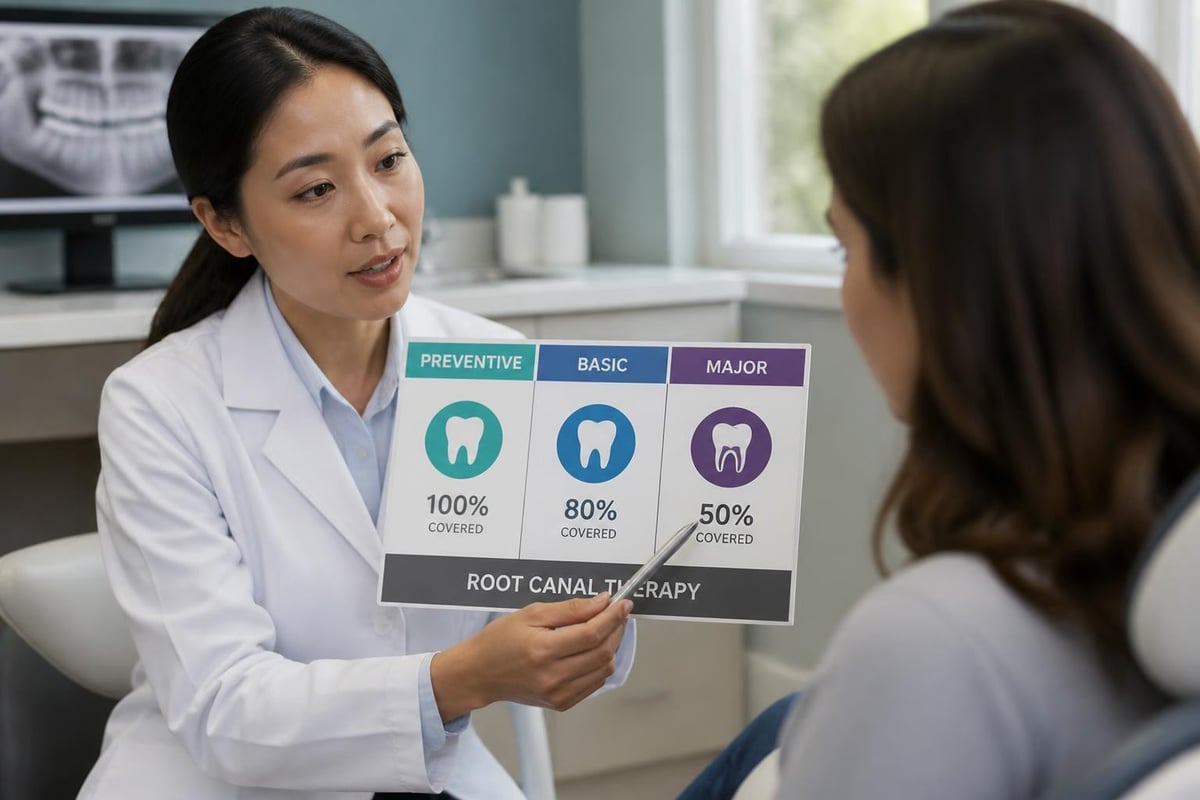
Does dental insurance cover root canals? The answer depends significantly on your specific plan type, coverage tier, and where you receive treatment. Most dental insurance policies categorize services into three main groups: preventive care (cleanings, exams), basic procedures (fillings, simple extractions), and major procedures (crowns, root canals, bridges).
Root canals typically fall under the major procedures category, which means insurance companies reimburse them at a lower percentage than preventive or basic services. According to the American Dental Association’s resources on dental insurance, most plans follow a structure that pays 100% for preventive care, 70-80% for basic procedures, and 50-60% for major procedures.
Typical Coverage Percentages by Plan Type
| Plan Type | Preventive Coverage | Basic Coverage | Major Coverage (Root Canals) |
|---|---|---|---|
| PPO Plans | 100% | 80% | 50% |
| HMO Plans | 100% | 80-100% | 50-80% |
| Indemnity | 80% | 50-80% | 50% |
| Discount Plans | N/A (Discounted Rates) | N/A (Discounted Rates) | N/A (Discounted Rates) |
The coverage percentage applies after you've met your annual deductible, which typically ranges from $50 to $150 per individual. For families in Texas cities like New Braunfels or Leander, understanding these tiers helps predict actual out-of-pocket costs when treatment becomes necessary.
What Factors Affect Root Canal Insurance Reimbursement
Multiple variables determine whether and how much your insurance will pay when you need endodontic treatment. The location of the affected tooth matters significantly because front teeth (anterior) root canals require less complex treatment than molars (posterior), resulting in different fee schedules.
Key factors influencing coverage:
- Tooth location: Anterior teeth typically cost $700-$1,000, while molars range from $1,000-$1,500
- In-network vs. out-of-network: In-network providers at Dental Plus Clinic locations accept negotiated rates, reducing your costs
- Annual maximum limits: Most plans cap benefits at $1,000-$2,000 per year
- Waiting periods: New policies often require 6-12 month waiting periods for major procedures
- Pre-authorization requirements: Some insurers require approval before treatment
If you've recently enrolled in dental insurance, waiting periods present a significant obstacle. Many Texas families discover that their new coverage won't pay for root canals performed within the first year. This scenario makes understanding how to manage costs when insurance is denied essential for protecting both your oral health and finances.
Annual Maximum Limitations
Nearly all dental insurance plans impose annual maximum benefits, typically ranging from $1,000 to $2,000 per covered individual. Once you've exhausted this limit through cleanings, fillings, or other procedures throughout the year, you'll pay 100% out-of-pocket for any additional treatment, including root canals.
For families requiring multiple dental procedures across several members, these maximums can be reached quickly. Strategic timing of treatments-spreading procedures across calendar years when possible-helps maximize benefits without sacrificing necessary care.
Breaking Down Root Canal Costs With and Without Insurance
Understanding the financial reality of root canal therapy requires examining both insured and uninsured scenarios. The national average cost for a root canal in 2026 ranges from $700 to $1,500 depending on tooth complexity, but Texas prices vary by location and provider.
Average root canal costs by tooth type:
- Anterior teeth (front): $700-$1,000
- Bicuspids (mid-mouth): $800-$1,200
- Molars (back teeth): $1,000-$1,500
These figures represent the total procedure cost before insurance reimbursement. When dental insurance covers root canals at the typical 50% rate, patients can expect to pay $350-$750 out-of-pocket, assuming they've met their deductible and haven't exceeded their annual maximum.
Real Cost Examples for Texas Families
Consider a Seguin family with a PPO dental plan offering 50% coverage for major procedures, a $100 deductible, and a $1,500 annual maximum. If a parent requires a molar root canal costing $1,400:
- Total procedure cost: $1,400
- Deductible applied: $100
- Insurance calculation base: $1,300
- Insurance pays (50%): $650
- Patient pays: $750 ($100 deductible + $650 coinsurance)
This scenario assumes no other major procedures have consumed the annual maximum. For comprehensive cost management strategies, Texas residents can explore options at our Seguin location where transparent pricing and multiple payment solutions help families afford necessary care.
Medicare, Medicaid, and Root Canal Coverage
Does dental insurance cover root canals for seniors on Medicare? Unfortunately, Original Medicare (Parts A and B) provides extremely limited dental coverage. According to official Medicare information on dental services, routine dental care including root canals, cleanings, and fillings fall outside standard Medicare coverage.
Medicare only covers dental services when they're deemed medically necessary and directly related to covered medical procedures. For example, dental examination before kidney transplantation or jaw surgery related to facial trauma might qualify, but routine endodontic treatment does not.
Medicare dental coverage realities:
- Original Medicare excludes routine dental procedures
- Medicare Advantage (Part C) plans may offer limited dental benefits
- Standalone dental insurance remains necessary for most seniors
- Medicaid coverage varies significantly by state
Texas Medicaid provides dental coverage for children through the Texas Health Steps program, which includes comprehensive services including root canals when medically necessary. Adult Medicaid recipients receive only emergency dental services in most cases, with root canals potentially covered if the tooth poses an immediate health risk.

Employer-Sponsored vs. Individual Dental Plans
The type of dental insurance you carry significantly impacts whether and how much coverage you'll receive for root canal therapy. Employer-sponsored group plans typically offer more comprehensive benefits at lower premiums compared to individual policies purchased through the marketplace or directly from insurers.
Employer Group Plans
Companies negotiating group dental coverage often secure better benefit structures. These plans commonly feature:
- Lower or no waiting periods for major procedures
- Higher annual maximums ($2,000-$3,000)
- Better coinsurance rates (60% instead of 50%)
- Reduced monthly premiums through employer contributions
- Broader networks of participating providers
Individual Marketplace Plans
According to Healthcare.gov’s dental coverage information, dental insurance operates differently in the Health Insurance Marketplace. Dental coverage for adults is optional and purchased separately from medical insurance, while pediatric dental benefits must be included in all qualified health plans.
Individual dental plans typically have:
- Strict waiting periods (12-24 months for major procedures)
- Lower annual maximums ($1,000-$1,500)
- Standard 50% coinsurance for root canals
- Higher monthly premiums relative to coverage
For Texas families comparing options, evaluating the total annual cost (premiums + expected out-of-pocket) against anticipated dental needs provides the clearest financial picture.
Strategies to Maximize Your Root Canal Coverage
Smart planning can substantially reduce your root canal expenses even with standard dental insurance. Understanding your policy's specific provisions and timing treatment strategically makes coverage work harder for your family.
Maximization strategies include:
- Schedule strategically: If you've nearly exhausted your annual maximum in November, consider postponing non-emergency treatment until January
- Verify network status: Confirm your dentist participates in-network; out-of-network visits typically reimburse at 30-40% instead of 50%
- Request pre-authorization: Submit treatment plans before proceeding to confirm coverage and avoid surprises
- Understand fee schedules: Insurers pay based on their fee schedule, not your dentist's actual charges
- Stack family benefits: If both spouses carry dental insurance, coordination of benefits may increase total coverage
| Strategy | Potential Savings | Implementation Difficulty |
|---|---|---|
| In-network provider | $200-$400 | Easy |
| Annual timing | $500-$1,000 | Moderate |
| Pre-authorization | Prevents denials | Easy |
| Dual coverage coordination | $100-$300 | Moderate |
Working with providers who accept multiple insurance plans, like those at Dental Plus Clinic’s Texas locations, simplifies the verification process and ensures maximum reimbursement through established relationships with major carriers.
Understanding Waiting Periods and Policy Exclusions
One of the most frustrating discoveries patients make when they need urgent dental care is that their relatively new insurance policy won't cover the procedure. Waiting periods represent a standard feature of dental insurance designed to prevent individuals from purchasing coverage only when they need expensive treatment.
Common Waiting Period Structures
Most dental insurance policies implement tiered waiting periods:
- Preventive care: No waiting period (immediate coverage)
- Basic procedures: 3-6 month waiting period
- Major procedures: 6-12 month waiting period
- Orthodontics: 12-24 month waiting period
If you've recently started a new job with dental benefits or purchased an individual policy, does dental insurance cover root canals immediately? The answer is typically no. You'll need to wait the specified period before major procedure coverage activates, though some employer plans waive waiting periods as a recruitment benefit.
Policy Exclusions to Watch
Beyond waiting periods, several exclusions might prevent root canal coverage:
- Pre-existing conditions: Some policies exclude treatment for conditions diagnosed before coverage began
- Alternative least expensive treatment (ALET): Insurers may only pay for extraction instead of root canal therapy
- Missing tooth clauses: Teeth lost before coverage began may not qualify for replacement procedures
- Cosmetic procedures: Treatment deemed purely cosmetic receives no coverage
Reading your Summary Plan Description (SPD) or Certificate of Coverage thoroughly helps identify these potential obstacles before you need urgent treatment.
What Happens When Insurance Denies Your Root Canal Claim
Claim denials occur for numerous reasons, from administrative errors to legitimate policy limitations. Understanding the appeals process and alternative payment options ensures you can still receive necessary treatment when your initial claim is rejected.
Common denial reasons include:
- Procedure performed during waiting period
- Annual maximum already exhausted
- Services deemed not medically necessary
- Out-of-network provider used without pre-authorization
- Incomplete or incorrect claim submission
When faced with denial, you have rights. Federal law requires insurers to provide clear written explanations for any denial, including specific policy language supporting their decision. Most carriers offer a formal appeals process where you can submit additional documentation, such as X-rays, clinical notes, and dentist justification for treatment necessity.

Alternative Payment Solutions
If appeals fail or you lack coverage entirely, several options help manage root canal costs:
- Payment plans: Many dental offices, including Dental Plus Clinic, offer interest-free financing for qualified patients
- Health Savings Accounts (HSA): Pre-tax dollars reduce the effective cost of treatment
- Dental discount plans: Annual membership programs provide 20-40% discounts on procedures
- Credit options: Healthcare-specific credit cards like CareCredit offer promotional financing periods
- Dental schools: Reduced-cost treatment performed by supervised students
Learning how to reduce costs for dental care becomes essential when insurance coverage falls short. The key priority remains receiving timely treatment, as delaying root canal therapy often leads to tooth loss, requiring more expensive replacement options.
Comparing Root Canal Coverage Across Major Insurance Carriers
Does dental insurance cover root canals consistently across all providers? While the fundamental structure remains similar, specific benefits vary considerably between carriers. Understanding these differences helps Texas families select optimal coverage during open enrollment periods.
Major Carrier Coverage Comparison
According to Delta Dental’s coverage guide, most major insurers classify root canals as major restorative procedures with 50% coinsurance after deductible. However, specifics differ:
Delta Dental PPO: Typically covers root canals at 50% with $1,500 annual maximum and 12-month waiting period for new enrollees
MetLife Dental: Standard plans offer 50% coverage with $1,000-$2,000 annual maximums; some employer plans provide enhanced 60% coverage
Cigna Dental: PPO plans generally reimburse 50% for endodontic treatment with 12-month waiting periods on individual policies
Guardian Dental: Coverage ranges from 50-80% depending on plan tier, with some plans treating root canals as basic rather than major procedures
Humana Dental: Standard 50% coverage for root canals with preventive-focused plans offering lower premiums but similar major procedure benefits
Families with access to multiple insurance options through Dental Plus Clinic can compare specific benefits during selection to optimize coverage for anticipated needs.
The Relationship Between Root Canals and Crown Coverage
Understanding whether dental insurance covers root canals requires examining the complete treatment picture. Root canal therapy alone rarely constitutes complete treatment-most teeth require crown placement afterward to protect the remaining structure and restore full function.
Complete Treatment Costs
A typical endodontic treatment sequence includes:
- Diagnostic X-rays: Usually covered as preventive (100%)
- Root canal therapy: Covered as major procedure (50%)
- Core buildup: May be covered separately at 50%
- Permanent crown: Covered as major procedure (50%)
The combined cost ranges from $1,500 to $3,000 depending on tooth location and complexity. With standard insurance paying 50% of major procedures, patients face $750-$1,500 out-of-pocket for complete treatment, assuming annual maximums aren't exceeded.
Cost breakdown example:
| Service | Typical Cost | Insurance Pays (50%) | Patient Pays |
|---|---|---|---|
| Root Canal (Molar) | $1,400 | $700 | $700 |
| Crown (Porcelain) | $1,200 | $600 | $600 |
| Total Treatment | $2,600 | $1,300 | $1,300 |
Some insurance plans treat the core buildup as a separate covered service, while others bundle it with the root canal. Verifying exactly what your plan covers before treatment prevents billing surprises and helps you budget accurately.
How Dental Discount Plans Compare to Insurance for Root Canals
For Texas families without traditional dental insurance-or those with coverage that's already exhausted annual maximums-dental discount plans present an alternative worth considering. These programs fundamentally differ from insurance but can provide substantial savings on root canal therapy.
Insurance vs. Discount Plans
Traditional dental insurance:
- Monthly premiums ($30-$60 individual)
- Annual deductibles ($50-$150)
- Percentage-based coverage
- Annual maximum limits
- Waiting periods for major procedures
- Claims processing and potential denials
Dental discount plans:
- Annual membership fee ($100-$200)
- No deductibles or claims
- Discounted fee schedules (20-60% off)
- No annual maximums
- No waiting periods
- Immediate activation
Does dental insurance cover root canals better than discount plans? For healthy individuals needing minimal care, traditional insurance often costs more than it saves. For those requiring extensive treatment including multiple root canals, insurance typically provides greater value despite limitations.
According to Consumer Reports’ dental care cost analysis, the average American spends approximately $670 annually on dental care. Comparing this figure against your insurance premiums plus out-of-pocket costs reveals whether your coverage delivers actual value.
Special Considerations for Children's Root Canal Coverage
Pediatric dental coverage operates under different rules than adult benefits, particularly for families obtaining insurance through the Health Insurance Marketplace. The Affordable Care Act mandates that all qualified health plans include pediatric dental benefits as an essential health benefit, though coverage can be purchased as a standalone policy.
Children's Root Canal Coverage Specifics
When primary (baby) teeth require root canal treatment-technically called pulpotomy or pulpectomy-insurance typically covers these procedures as basic or major services depending on the carrier. For permanent teeth in children and teenagers, coverage mirrors adult root canal benefits.
Pediatric endodontic coverage typically includes:
- Pulpotomy (baby tooth root canal): 70-80% coverage as basic procedure
- Pulpectomy (complete primary tooth treatment): 50-80% coverage
- Permanent tooth root canals: 50% coverage as major procedure
- Stainless steel crowns (primary teeth): 70-80% coverage
Texas families can explore pediatric dental health through programs like CHIP (Children's Health Insurance Program), which provides comprehensive dental benefits including necessary endodontic treatment for qualifying families. Understanding how to help your child avoid tooth decay reduces the likelihood of needing these procedures entirely.
Frequently Asked Questions About Root Canal Insurance Coverage
Does dental insurance cover root canals on front teeth differently than molars?
Yes, most insurance plans distinguish between anterior (front), bicuspid, and molar root canals. While coverage percentages remain constant at approximately 50%, the total procedure cost varies significantly. Front teeth root canals cost $700-$1,000 compared to $1,000-$1,500 for molars, resulting in lower out-of-pocket expenses for anterior treatment. The complexity difference reflects the number of canals being treated-front teeth typically have one canal while molars contain three or four.
Can I get dental insurance specifically for an upcoming root canal?
While you can purchase dental insurance at any time, waiting periods prevent using new coverage immediately for major procedures like root canals. Most policies impose 6-12 month waiting periods before covering endodontic treatment. If you need a root canal within the next few months, purchasing insurance now won't help with this procedure, though it may provide benefits for future dental needs. Alternative payment options like payment plans or dental discount programs activate immediately without waiting periods.
What happens if I need multiple root canals in the same year?
Your dental insurance will continue covering procedures at the specified percentage (typically 50%) until you exhaust your annual maximum benefit, usually $1,000-$2,000. Once you've reached this limit, you'll pay 100% out-of-pocket for additional treatment. For example, if two molar root canals totaling $2,800 are needed and your maximum is $1,500, insurance pays $750 per procedure (50% of each) until reaching $1,500 total, leaving you with a $1,300 balance to cover.
Does secondary dental insurance cover the remaining balance?
If you have dual dental coverage (for example, through your employer and your spouse's plan), coordination of benefits determines total reimbursement. The primary plan pays first according to its schedule, then the secondary plan may cover part or all of the remaining balance up to 100% of the procedure cost. However, secondary coverage won't necessarily pay the full remainder-it pays according to its own benefit structure. Combined coverage from both plans never exceeds the actual treatment cost.
Are there dental insurance plans that cover 100% of root canal costs?
Very few dental insurance plans provide 100% coverage for major procedures like root canals. Some premium employer-sponsored plans or union dental benefits might offer enhanced coverage up to 80%, but complete coverage remains rare. The insurance industry structures benefits to encourage preventive care (covered at 100%) while sharing costs for major procedures. Patients seeking comprehensive coverage should compare plan details during open enrollment, focusing on coinsurance percentages, annual maximums, and waiting periods rather than premium costs alone.
How do I verify my root canal coverage before scheduling treatment?
Contact your insurance carrier directly using the customer service number on your insurance card and ask specific questions: What percentage do you cover for endodontic treatment (CDT codes D3310-D3330)? What is my remaining annual maximum? Have I met my deductible? Are there any waiting periods or exclusions? Additionally, your dentist's office can perform a benefits verification and even submit a pre-authorization request that provides written confirmation of coverage before you proceed with treatment.
What should I do if my dentist isn't in my insurance network?
Seeing an out-of-network provider typically reduces reimbursement from 50% to 30-40% and may require you to pay upfront and file claims yourself. You have several options: find an in-network provider offering comparable care, ask your current dentist if they'll match in-network rates, verify whether your plan offers out-of-network benefits worth using, or consider whether the relationship and trust with your current provider justifies the additional expense. Dental Plus Clinic accepts major PPO plans and works with patients to maximize insurance benefits regardless of network status.
Can dental insurance deny coverage for a root canal even if I'm experiencing pain?
Yes, insurance companies can deny coverage based on policy terms regardless of your symptoms or pain level. Common denial reasons include services performed during waiting periods, procedures occurring after annual maximums are exhausted, teeth deemed not salvageable, or treatment classified as elective rather than emergency. However, your dentist can document medical necessity, provide X-rays showing infection, and advocate for approval through the appeals process. The urgency of your condition doesn't override policy limitations, but comprehensive documentation improves approval chances.
How does root canal coverage compare to tooth extraction coverage?
Most dental insurance plans cover simple extractions as basic procedures (70-80% reimbursement) while classifying root canals as major procedures (50% coverage). From an insurance perspective, extraction appears more cost-effective. However, this creates what's called the "alternative least expensive treatment" dilemma. While insurance might prefer covering extraction, preserving your natural tooth through root canal therapy provides superior long-term outcomes for your oral health, function, and aesthetics. Many patients choose root canal treatment despite higher out-of-pocket costs to maintain their natural dentition.
Are emergency root canals covered differently than scheduled procedures?
Emergency dental treatment follows the same coverage rules as scheduled procedures. Whether you need a root canal urgently on Saturday night or schedule it for next Tuesday, your insurance reimburses at the same percentage based on the procedure code, not the timing or circumstances. Emergency visits may involve additional fees for after-hours care, which might not be covered. If you're experiencing severe tooth pain requiring immediate attention, focus on getting treatment first-the coverage details remain constant regardless of urgency.
Planning for Root Canal Treatment When Insurance Is Limited
Texas families facing root canal therapy with limited or no insurance coverage shouldn't postpone necessary treatment. Untreated tooth infections spread to surrounding tissues, potentially causing serious health complications. Strategic planning makes treatment affordable while preserving your oral health.
Steps for managing root canal costs:
- Get accurate cost estimates: Request itemized treatment plans including all procedures (root canal, crown, buildup)
- Verify insurance benefits: Confirm exact coverage percentages, remaining maximums, and any applicable deductibles
- Explore payment options: Ask about in-house financing, third-party healthcare credit, or extended payment arrangements
- Consider timing: If non-emergency, determine whether waiting until the new calendar year maximizes insurance benefits
- Investigate alternatives carefully: Understand risks of delaying treatment or choosing extraction instead
Working with a dental practice that prioritizes transparent pricing and flexible payment solutions removes financial barriers to necessary care. The team at Dental Plus Clinic's five Texas locations helps patients navigate insurance complexities while ensuring access to pain-free, modern root canal therapy regardless of coverage limitations.
Protecting your long-term oral health requires balancing immediate costs against future complications. A root canal performed today prevents bone loss, bite problems, and the need for more expensive tooth replacement options like dental implants or bridges tomorrow.
Understanding whether dental insurance covers root canals and to what extent empowers Texas families to make informed decisions about their oral health without financial surprises. Most standard plans provide 50% coverage for endodontic treatment as a major procedure, subject to deductibles, annual maximums, and waiting periods. At Dental Plus Clinic, our patient-focused team across Beeville, Seguin, New Braunfels, Leander, and Converse locations works with all major insurance carriers to maximize your benefits while providing pain-free, modern root canal therapy. Whether you have comprehensive coverage or need flexible payment options, our commitment to transparent pricing and personalized treatment plans ensures you receive the care you need to preserve your natural smile for years to come.