
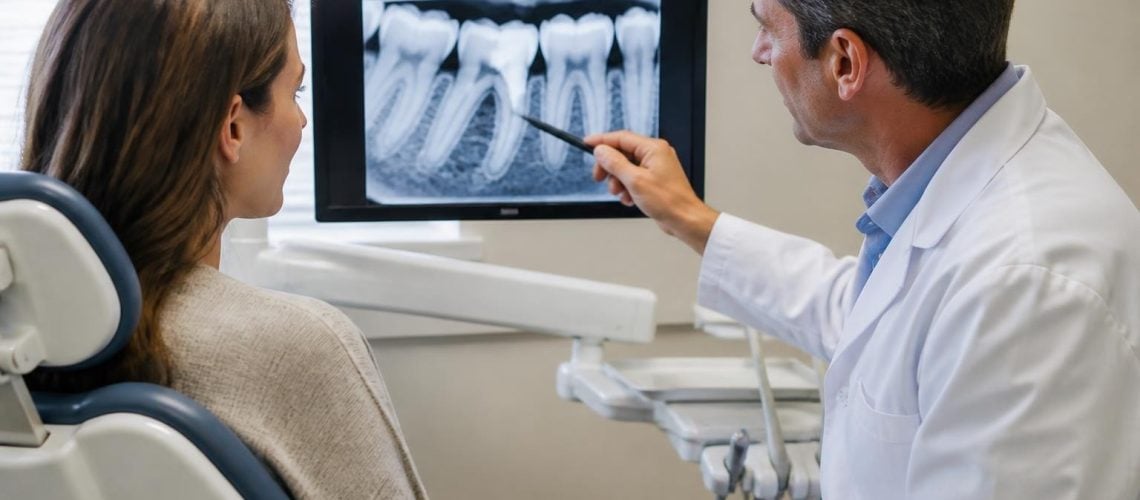
Understanding the financial commitment required for endodontic treatment is essential when facing tooth pain that won't go away. Root canal therapy remains one of the most effective ways to save a natural tooth, but questions about root canal cost often create anxiety alongside the dental discomfort itself. Many Texas families wonder whether this procedure fits their budget, what insurance will cover, and how pricing differs between providers. This comprehensive guide breaks down every aspect of endodontic treatment pricing, from base procedure fees to hidden costs, helping you make informed decisions about your oral health investment.
What Determines Root Canal Cost
The price you'll pay for endodontic therapy varies significantly based on multiple interconnected factors. Understanding these variables helps set realistic expectations and enables better financial planning for your dental care needs.
Tooth Location and Complexity
The specific tooth requiring treatment dramatically influences the final bill. Front teeth (incisors and canines) typically cost less because they contain a single root canal and are easier to access. Premolars sit in the middle price range with one or two canals, while molars command the highest fees due to their multiple roots and complex anatomy.
Root canal cost by tooth type typically ranges:
- Incisors: $700 to $1,100
- Canines: $800 to $1,200
- Premolars: $900 to $1,400
- Molars: $1,200 to $2,000
Lower teeth generally cost slightly less than upper teeth because of easier access and simpler canal systems. First molars often require more intricate treatment than second or third molars, particularly in the lower jaw where extra canals frequently exist.
The complexity extends beyond basic anatomy. Calcified canals, curved roots, previous dental work, or retreatment scenarios all increase the difficulty and time required, which directly affects pricing. A straightforward single-canal procedure might take 45 minutes, while a complicated four-canal molar could require two hours or more.
Geographic Location Differences
Where you receive treatment significantly impacts your out-of-pocket expenses. Urban centers typically charge more than rural areas due to higher overhead costs, including rent, utilities, and staff salaries. Within Texas alone, root canal cost varies considerably between major metropolitan areas and smaller communities.
Patients in Houston, Dallas, or Austin generally encounter prices 15-30% higher than those in smaller Texas cities like Beeville or Seguin. This geographic pricing disparity reflects local economic conditions, competition levels, and regional cost-of-living differences.
| Texas Region | Average Root Canal Range | Metropolitan Premium |
|---|---|---|
| Major Metro (Dallas, Houston) | $1,000 – $1,800 | 20-30% above state average |
| Mid-Size Cities (San Antonio) | $900 – $1,500 | 10-15% above state average |
| Smaller Communities | $750 – $1,300 | At or below state average |
The American Dental Association’s fee schedule data demonstrates these regional variations across different states and metropolitan areas, helping patients understand whether their quoted prices align with national benchmarks.

General Dentist vs Endodontist
Whether you receive treatment from a general dentist or endodontic specialist influences both cost and outcomes. General dentists handle many straightforward root canals and typically charge 10-20% less than specialists. However, endodontists complete advanced training exclusively in root canal therapy, using specialized equipment like surgical microscopes and rotary instrumentation.
Endodontists generally charge more because of their additional education, specialized equipment investment, and higher success rates for complex cases. For difficult situations involving molars, calcified canals, or retreatment, the extra cost often proves worthwhile through better long-term outcomes.
Many general dentists refer complicated cases to endodontists while handling simpler procedures themselves. This approach balances cost efficiency with treatment success, ensuring patients receive appropriate care matched to their specific clinical needs.
Insurance Coverage and Out-of-Pocket Expenses
Dental insurance significantly affects how much you'll actually pay for endodontic treatment. Most plans classify root canals as major restorative procedures, but coverage details vary widely between policies.
Typical Insurance Benefits
Standard dental insurance policies cover endodontic treatment at 50-80% after you've met your annual deductible. The percentage depends on your specific plan tier and whether you visit an in-network or out-of-network provider.
Common insurance coverage structure:
- Preventive care (cleanings, exams): 80-100%
- Basic procedures (fillings): 70-80%
- Major procedures (root canals, crowns): 50%
- Annual maximum benefit: $1,000-$2,000
The annual maximum creates a critical limitation. If you need multiple procedures in one year, you'll hit this ceiling quickly and pay entirely out-of-pocket for subsequent treatment. A molar root canal plus crown easily consumes most or all of a typical $1,500 annual maximum.
Choosing between in-network vs out-of-network dentists substantially impacts your final costs. In-network providers accept negotiated fees and file claims directly, while out-of-network treatment may require upfront payment and reimbursement submissions, often at lower coverage percentages.
Deductibles and Waiting Periods
Most dental plans impose an annual deductible ranging from $50 to $150 per person before insurance benefits activate. Family plans typically feature individual deductibles plus a family maximum that's lower than the sum of all members' individual deductibles.
Waiting periods create another financial consideration, especially for new insurance enrollees. Many plans require 6-12 months of coverage before major procedures qualify for benefits. This means signing up for insurance after discovering you need a root canal won't provide immediate financial relief.
Some strategies to navigate these limitations include:
- Timing elective treatment after deductible resets
- Spacing multiple procedures across calendar years
- Coordinating dual coverage if you have access to multiple plans
- Understanding your plan's specific waiting period exemptions
The KFF research on dental coverage reveals that approximately 74 million Americans lack dental insurance entirely, making out-of-pocket cost the only consideration for many patients seeking endodontic care.
Marketplace and Government Programs
The Healthcare.gov dental coverage options provide alternatives for those without employer-sponsored insurance, though standalone dental plans purchased through the marketplace often carry higher premiums relative to benefits compared to group coverage.
Medicaid dental benefits for adults vary dramatically by state. Texas offers limited adult dental coverage under Medicaid, primarily restricted to emergency extractions rather than restorative treatments like root canals. This policy framework pushes many low-income Texans toward extraction rather than tooth preservation.
Medicare generally excludes routine dental care, including root canals, unless the procedure relates directly to covered medical treatment. Some Medicare Advantage plans add dental benefits, but coverage remains limited compared to comprehensive dental insurance.
Additional Costs Beyond the Procedure
The root canal itself represents only part of your total treatment investment. Several related expenses must factor into your budget planning to avoid financial surprises.
Diagnostic Imaging and Consultation
Before treatment begins, your dentist needs diagnostic x-rays to assess the infection extent and plan the procedure. Standard digital x-rays cost $25-$50, while more detailed cone beam computed tomography (CBCT) scans range from $200-$500.
Initial consultation fees vary by practice. Some offices include this in the procedure cost, while others charge separately. Expect consultation fees between $50-$150 if billed independently.
Emergency visits for severe pain often carry additional fees. Weekend or after-hours emergency appointments may include surcharges of $100-$300 above regular pricing, though this investment provides crucial pain relief when you need it most.
Crown or Restoration Costs
A root canal removes infected pulp but leaves the tooth structure weakened and vulnerable to fracture. Most treated teeth, especially molars and premolars, require crowns for long-term protection and function.
Crown costs add significantly to total treatment expenses:
- Porcelain-fused-to-metal crowns: $800-$1,400
- All-ceramic crowns: $1,000-$2,000
- Gold crowns: $1,200-$2,500
Front teeth sometimes require only filling material rather than full coverage crowns, reducing this additional expense. Your dentist determines the appropriate restoration based on remaining tooth structure and functional demands.
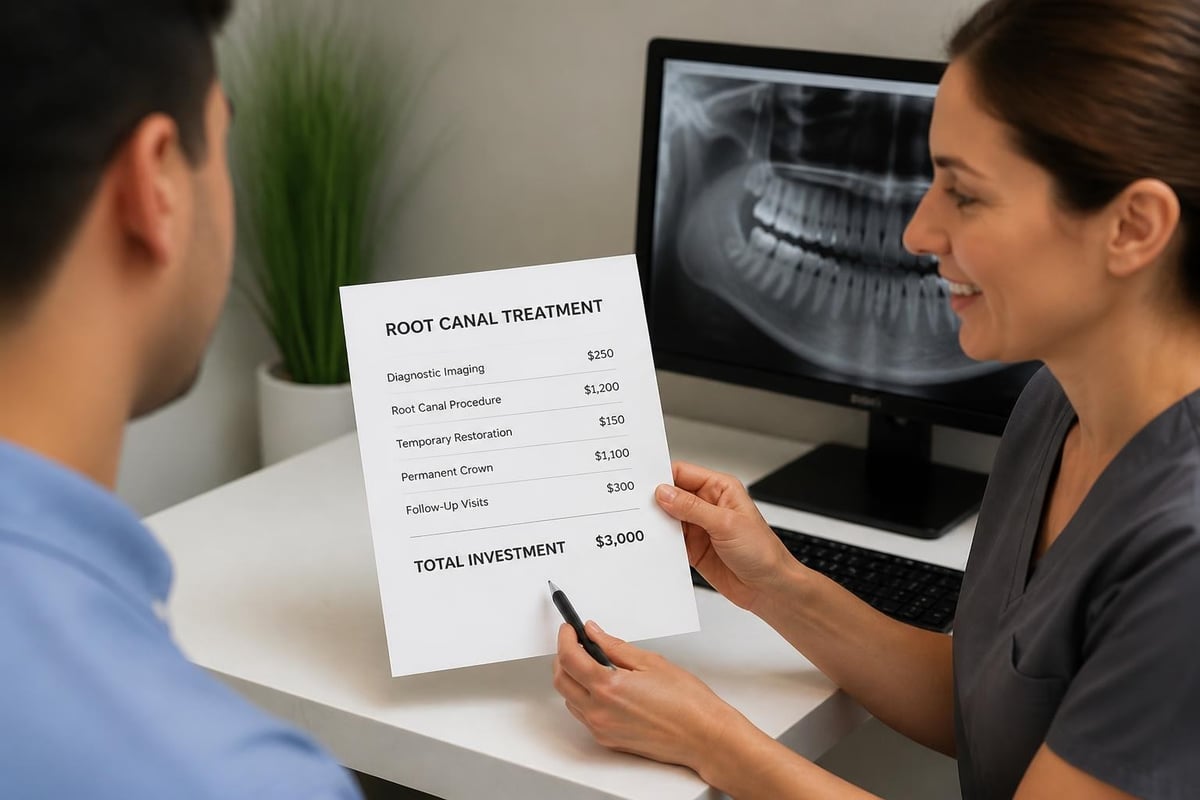
The combined root canal cost plus crown frequently totals $2,000-$3,500 for posterior teeth, making this a substantial dental investment that insurance annual maximums may not fully cover.
Follow-Up Appointments
Endodontic therapy typically requires multiple visits. The initial appointment focuses on cleaning and shaping canals, often with temporary filling placement. A second visit completes the permanent filling and restoration, though complex cases may need additional sessions.
Most practices include follow-up visits in the quoted procedure fee, but confirming this prevents billing surprises. Post-treatment evaluation appointments at 6-12 months check healing progress and typically cost $50-$100 if not included in the original fee.
Retreatment becomes necessary in roughly 5-10% of cases when initial therapy doesn't fully resolve infection. Retreatment costs 30-50% more than initial treatment because of increased complexity and time requirements.
Comparing Treatment Alternatives
Understanding how root canal therapy costs compare to alternative treatments helps you evaluate the true value proposition of saving versus extracting your natural tooth.
Root Canal vs Extraction
Simple extraction initially appears less expensive, ranging from $150-$400 for most teeth. However, this comparison ignores the long-term consequences and costs of missing teeth.
When you extract a tooth without replacement, neighboring teeth shift, opposing teeth over-erupt, and bone loss occurs in the extraction site. These changes create bite problems, accelerate additional tooth loss, and ultimately require more extensive (and expensive) treatment.
Research comparing root canal treatment versus extraction demonstrates that while extraction costs less initially, the total five-year costs including subsequent complications and tooth replacement often exceed root canal therapy expenses by 40-60%.
| Treatment Option | Initial Cost | 5-Year Total Cost | Teeth Preserved |
|---|---|---|---|
| Root Canal + Crown | $2,000-$3,500 | $2,200-$3,800 | Yes |
| Extraction Only | $150-$400 | $150-$400 | No |
| Extraction + Bridge | $1,800-$4,500 | $2,000-$5,000 | Adjacent teeth affected |
| Extraction + Implant | $3,500-$6,000 | $3,700-$6,500 | No |
Long-Term Value Considerations
Your natural teeth provide functionality that no replacement fully replicates. Root canal therapy preserves your natural tooth structure, maintaining proprioception (sensory feedback) that helps you chew efficiently and protects adjacent teeth.
Cost-effectiveness analyses comparing root canal treatment to implant-supported crowns show similar long-term costs but different risk profiles. Root canal success rates exceed 85% at ten years, while implants also demonstrate excellent longevity but require bone grafting in 30-40% of cases, adding significant expense.
The decision extends beyond pure economics. Quality of life factors including treatment time, surgical recovery, and preservation of natural dental anatomy all favor root canal therapy when the tooth can be successfully saved.
Patients exploring tooth replacement options should understand these economic and functional trade-offs before choosing extraction over endodontic treatment.
Payment Options and Financial Assistance
High dental costs shouldn't prevent necessary treatment. Multiple payment strategies help make root canal therapy financially accessible even without comprehensive insurance coverage.
Payment Plans and Financing
Most dental practices offer in-house payment plans spreading costs over 6-12 months, often without interest for qualified patients. These arrangements require a down payment, typically 20-30% of the total fee, with monthly installments covering the balance.
Third-party healthcare financing companies provide another option:
- CareCredit: 6-24 month interest-free periods for qualified applicants
- LendingClub: Flexible terms with competitive rates
- Alphaeon Credit: Healthcare-specific financing with promotional periods
These financing solutions perform credit checks and approve based on creditworthiness. Interest rates for extended payment terms typically range from 9-26% APR, making prompt repayment within promotional periods financially advantageous.
Dental Savings Plans
Dental discount plans offer an insurance alternative for patients without traditional coverage. Members pay annual fees of $100-$200 for individual plans or $150-$350 for family coverage, receiving 10-60% discounts on most procedures at participating dentists.
These plans work differently from insurance. You receive immediate access without waiting periods, no annual maximums limit your benefits, and pre-existing conditions don't affect eligibility. However, you must visit participating network dentists to receive discounted fees.
Root canal cost through discount plans typically decreases by 20-40%, though savings vary by specific plan and provider. Evaluating whether annual fees justify the savings requires calculating your expected dental needs for the year.
Dental Schools and Community Clinics
Teaching institutions offer substantially reduced fees because supervised dental students perform treatments. Root canal procedures at dental schools cost 30-60% less than private practice fees, though appointments take longer due to the educational environment.
Texas dental schools including UT Health San Antonio and Texas A&M College of Dentistry provide quality care at reduced costs. Wait times for appointments may extend several weeks, making these options better suited for non-emergency situations.
Community health centers throughout Texas offer sliding-scale fees based on income and family size. These federally qualified health centers prioritize underserved populations, making dental care accessible regardless of ability to pay.
Geographic Pricing in Texas Communities
Root canal cost varies across Texas cities and regions, reflecting local economic conditions, competition levels, and practice overhead differences.
Metropolitan vs Rural Pricing
Dental practices in Beeville, Seguin, and New Braunfels typically charge 15-25% less than Houston or Dallas counterparts for identical procedures. This pricing advantage helps patients in smaller communities access quality endodontic care without metropolitan price premiums.
Rural areas sometimes face provider shortages, potentially limiting options and reducing competitive price pressure. However, practices in these communities often maintain lower overhead costs and pass those savings to patients through more affordable fee schedules.
Multi-Location Practice Advantages
Dental practices with multiple locations often maintain consistent pricing across all offices, providing predictable costs whether you visit their Leander, Converse, or Seguin locations. This standardization eliminates geographic lottery in pricing and ensures equitable access to care.
Multi-location practices also leverage economies of scale, negotiating better supply prices and distributing administrative costs across broader patient bases. These operational efficiencies can translate to competitive pricing without compromising treatment quality or technology investments.
Patients benefit from flexible scheduling across locations, accessing appointments sooner by choosing the office with earliest availability rather than waiting longer at a single-location practice.
Understanding Your Treatment Quote
When receiving a root canal cost estimate, understanding exactly what the quote includes prevents misunderstandings and budget surprises.
Itemized Fee Breakdowns
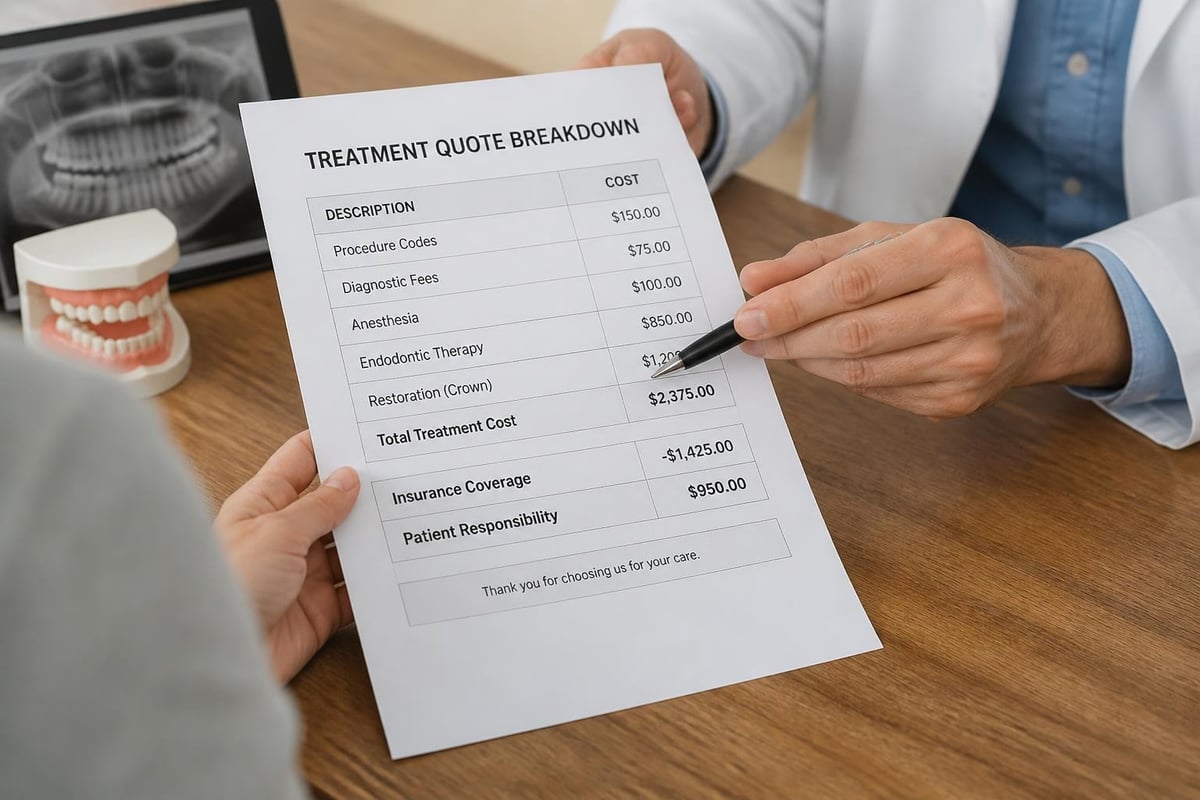
Request itemized estimates showing separate charges for each component. Professional root canal treatment quotes should list:
- Diagnostic imaging (periapical x-rays or CBCT)
- Local anesthesia administration
- Rubber dam isolation
- Access opening and canal negotiation
- Cleaning, shaping, and irrigation
- Obturation (canal filling)
- Temporary or permanent restoration
Practices using procedure codes from the ADA’s Current Dental Terminology (CDT) system provide transparent billing that insurance companies process efficiently. Common codes include D3310 (anterior root canal), D3320 (premolar), and D3330 (molar).
Questions to Ask Your Dentist
Before committing to treatment, clarify several key points:
- Does the quote include all necessary visits, or are follow-up appointments billed separately?
- What type of restoration is included (temporary filling, permanent filling, or crown)?
- Are x-rays and diagnostic tests incorporated in the procedure fee?
- What happens if complications arise requiring additional treatment?
- How long is the quote valid before fee adjustments?
Understanding your insurance coverage specifics helps too. Ask the office staff to verify your benefits, confirm in-network status, and provide estimated out-of-pocket costs after insurance pays its portion.
Comparing quotes between providers makes sense, but ensure you're comparing equivalent services. A lower quote excluding the permanent crown creates false economy compared to a comprehensive fee covering all necessary treatment components.
Insurance Plan Optimization Strategies
Maximizing your dental insurance benefits requires strategic planning and understanding of policy mechanics.
Timing Procedures Strategically
Dental insurance resets annually, typically January 1st for calendar-year plans. If you need multiple procedures, splitting them across two calendar years allows access to maximum benefits twice.
For example, completing the root canal in December and placing the crown in January lets each procedure access separate annual maximums. This strategy works particularly well when a single year's benefits won't cover both treatments.
Some Texas employers offer fiscal-year benefit periods starting at different times. Knowing your specific plan's renewal date enables better treatment timing for maximum financial advantage.
Coordinating Dual Coverage
Patients with access to two dental insurance policies (often through separate employers or a spouse's plan) can coordinate benefits for additional coverage. Primary insurance pays first according to its schedule, then secondary insurance covers remaining eligible expenses up to its limits.
Coordination of benefits rarely provides 100% coverage because both plans' annual maximums and coverage percentages still apply. However, dual coverage typically reduces out-of-pocket costs by 30-50% compared to single coverage.
Understanding which plan serves as primary versus secondary requires reviewing both policies' coordination-of-benefits provisions. Generally, your own employer's plan is primary, with a spouse's plan secondary.
Appealing Denied Claims
Insurance companies sometimes deny claims for reasons ranging from coding errors to medical necessity questions. Don't accept initial denials without investigation and appeal.
Common denial reasons include:
- Missing or incomplete documentation
- Pre-authorization not obtained
- Treatment deemed not medically necessary
- Out-of-network provider used when plan requires in-network
- Annual maximum already exhausted
Request detailed denial explanations, gather supporting clinical documentation from your dentist, and submit formal appeals with additional evidence. Success rates for appeals with proper clinical justification exceed 50%, making the effort worthwhile for expensive procedures.
Your dentist's office can provide narrative reports, x-rays, and clinical notes supporting medical necessity. This documentation strengthens appeals and demonstrates why the treatment couldn't reasonably be delayed or avoided.
Common Cost-Related Questions
How much should I expect to pay out-of-pocket?
Without insurance, expect to pay the full root canal cost ranging from $700-$2,000 depending on tooth type and location. With typical dental insurance providing 50% coverage on major procedures, your out-of-pocket portion typically ranges from $350-$1,000 for the root canal alone.
Remember to budget for the crown, which adds another $400-$1,000 after insurance coverage. Total out-of-pocket costs for root canal plus crown commonly reach $750-$2,000 with standard insurance, or $1,800-$4,000 without coverage.
Patient information from the American Dental Association provides additional context about treatment necessity and general cost considerations for those researching their options.
Why do prices vary so much between dentists?
Multiple factors create pricing variation. Dentist experience, practice overhead, geographic location, technology investments, and specialist training all influence fee structures. Practices using advanced equipment like surgical microscopes or rotary instrumentation often charge more but may deliver superior outcomes.
Insurance participation status affects pricing too. Practices accepting your insurance plan charge negotiated network rates, while out-of-network providers set their own fees. Non-participating dentists typically charge 20-40% more than in-network rates for the same procedure.
Practice philosophy matters as well. Some dentists price aggressively to build patient volume, while others charge premium rates reflecting specialized expertise or concierge-style service. Neither approach is inherently better, but understanding these differences helps you evaluate quotes appropriately.
Can I negotiate the price?
Many dental offices offer flexibility, particularly for uninsured patients paying in full. Cash discounts of 5-15% are common when you pay the entire fee upfront rather than using insurance or financing.
Practices sometimes negotiate fees for patients experiencing financial hardship, offering reduced rates or extended payment terms. This flexibility varies by office, but asking respectfully about options rarely hurts.
Be reasonable in negotiation requests. Dentists operate businesses with real overhead costs and can't provide services below cost indefinitely. However, many genuinely want to help patients access needed care and will work within reasonable parameters to make treatment affordable.
Is root canal treatment worth the cost?
For most patients, yes. Preserving your natural tooth maintains bone structure, prevents neighboring teeth from shifting, and provides better long-term function than alternatives. The success rate exceeds 85% at ten years, making root canal therapy a reliable investment.
Alternative approaches create different cost profiles. Extraction appears cheaper initially but often costs more over time when you factor in bone loss, shifting teeth, and eventual replacement needs. Dental implants cost more upfront and involve surgical procedures with recovery time.
The comparative cost-effectiveness research demonstrates that root canal treatment provides excellent value over five-to-ten-year periods, especially when you factor in quality-of-life considerations alongside pure economics.
What if I can't afford treatment right now?
Delaying necessary root canal treatment allows infection to worsen, potentially spreading to surrounding bone and tissues. This creates more extensive damage requiring costlier treatment or even hospitalization in severe cases.
If you truly can't afford immediate treatment, explore these options:
- Payment plans spreading costs over 6-12 months
- Healthcare credit cards with promotional interest-free periods
- Dental savings plans providing immediate discounts
- Dental school clinics offering reduced-fee treatment
- Community health centers with sliding-scale fees
Some practices offer emergency services stabilizing the infection temporarily while you arrange financing for definitive treatment. This approach isn't ideal but prevents acute complications when financial barriers exist.
Regional Cost Variations Across Texas
Texas's diverse geography and economy create notable pricing differences for dental procedures across the state's regions.
Major Metropolitan Areas
Houston, Dallas-Fort Worth, and Austin feature the state's highest dental costs, reflecting elevated commercial rents, higher staff salaries, and increased regulatory compliance expenses. Root canal cost in these metro areas typically runs 20-30% above the state average.
However, metropolitan areas also offer more provider choices, creating competitive pressure that can moderate pricing somewhat. Patients willing to travel to suburban or adjacent communities often find better rates than in urban cores.
Hill Country and Central Texas
Communities like New Braunfels, Seguin, and Leander in Central Texas offer balanced pricing that falls between major metro rates and rural community fees. These growing areas feature modern dental practices with current technology but maintain lower overhead than major cities.
The Hill Country's population growth has attracted well-trained dentists seeking quality-of-life benefits and business opportunities, creating healthy competition that benefits patients through reasonable pricing and access to qualified providers.
South and Coastal Texas
Areas like Beeville and Converse in South Texas typically feature the state's most affordable dental care pricing. Lower commercial rents, reduced competition for staff, and different patient demographic profiles all contribute to below-average costs.
These communities sometimes face provider shortages, particularly for specialists like endodontists. Patients may need to travel to larger cities for complex cases, though general dentists handle most routine root canal procedures competently.
Understanding these regional patterns helps you evaluate whether quoted prices align with local market conditions or represent outliers requiring additional investigation.
Special Considerations for Texas Families
Texas families face unique considerations when budgeting for dental care, particularly given the state's insurance landscape and diverse population needs.
Coverage for Children vs Adults
Most children in low-to-moderate-income Texas families access dental coverage through CHIP (Children's Health Insurance Program) or Medicaid, which cover root canal therapy when medically necessary. These programs make pediatric endodontic treatment affordable or free for qualifying families.
Adult coverage proves more challenging. Texas Medicaid provides minimal adult dental benefits, primarily emergency extractions rather than restorative treatments. This policy framework leaves many working adults without affordable access to root canal therapy, pushing them toward extraction and eventual tooth loss.
Finding the best dental insurance plans in Texas for your family requires comparing coverage levels, annual maximums, network sizes, and premium costs across available options. Family plans offering higher annual maximums and better major procedure coverage provide greatest value when multiple members need significant treatment.
Multi-Generational Planning
Families often face simultaneous dental needs across generations. Parents, children, and sometimes grandparents all require care, creating competing demands on limited insurance benefits and household budgets.
Strategic planning helps manage these demands:
- Prioritize treatment by urgency and pain level
- Coordinate insurance benefits across family members
- Time elective procedures to maximize annual benefit utilization
- Consider supplemental discount plans for uninsured family members
- Investigate multi-generational payment plans some practices offer
Pediatric Endodontics
Children's root canals differ from adult procedures and sometimes cost less due to simpler anatomy and smaller tooth structures. Primary (baby) teeth requiring root canal treatment receive pulpotomy procedures that are less extensive and less expensive than full endodontic therapy.
Permanent teeth in children and teenagers require standard root canal treatment, priced similarly to adult procedures. Early intervention prevents infection spread and preserves natural teeth critical for proper jaw development and adult tooth positioning.
Maximizing Value in Your Root Canal Investment
Beyond finding the lowest price, smart patients focus on obtaining the best value through quality care, comprehensive treatment, and long-term success.
Quality Indicators to Evaluate
Price shouldn't be your only decision factor. Consider these quality indicators when selecting a provider:
- Technology: Digital x-rays reduce radiation exposure; rotary instrumentation improves canal shaping; surgical microscopes enhance visualization
- Credentials: Continuing education participation, professional memberships, specialty training
- Success rates: Ask about retreatment frequency and long-term outcomes
- Patient reviews: Online testimonials and ratings from previous patients
- Infection control: Sterilization protocols and safety measures
- Communication: Clear explanations, treatment options discussion, cost transparency
Practices invested in modern technology and ongoing education often charge modestly higher fees but deliver better outcomes that reduce long-term costs through fewer failures and complications.
Comprehensive Care Approach
The best value comes from comprehensive treatment addressing all aspects of your dental health, not just isolated problems. Root canal therapy saves an infected tooth, but surrounding dental issues need attention too.
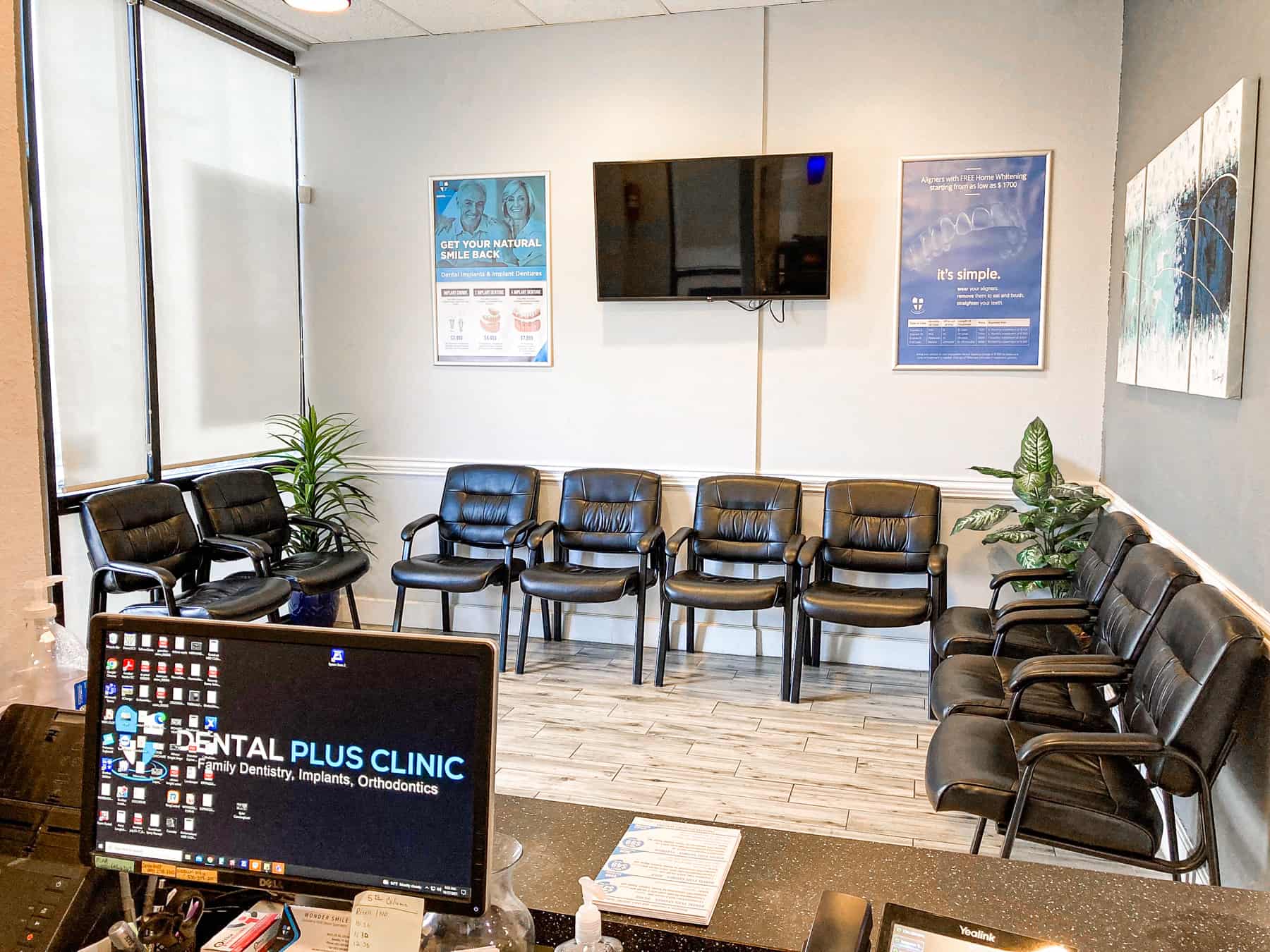
Practices like Dental Plus Clinic offering complete oral health services provide coordinated care that prevents future problems and maximizes your overall dental health investment. Comprehensive exams identify issues early when treatment costs less and success rates are higher.
This whole-health approach includes:
- Preventive care reducing future emergency treatment needs
- Patient education empowering better home care habits
- Risk assessment identifying factors that threaten dental health
- Coordinated treatment planning sequencing procedures for optimal outcomes and budget management
Long-Term Maintenance
Successful root canal therapy provides decades of service with proper care. Following post-treatment instructions, maintaining excellent oral hygiene, attending regular checkups, and protecting treated teeth with appropriate restorations all maximize your investment's longevity.
Crowning posterior teeth after root canal treatment isn't optional cosmetic enhancement; it's essential structural protection preventing fractures that necessitate extraction. Investing in proper restoration immediately saves money and heartache compared to losing the tooth later through neglect.
Annual dental exams catch potential problems early. Small issues addressed promptly cost less than major problems requiring extensive treatment. This preventive mindset provides the best return on your dental care investment.
Emergency vs Planned Treatment Cost Differences
The urgency of your dental situation significantly impacts final costs and payment options available.
Emergency Treatment Premiums
Severe tooth pain demands immediate attention regardless of timing. Emergency appointments during evenings, weekends, or holidays often carry surcharges of $100-$300 above regular fees.
Despite higher emergency costs, delaying treatment when you're experiencing severe pain, swelling, or fever risks serious complications including infection spread to adjacent tissues or systemic involvement requiring hospitalization. Emergency root canal cost remains far less than emergency room visits and subsequent surgical intervention.
Many practices offering emergency dental care prioritize rapid pain relief, sometimes performing initial treatment to stabilize the situation before scheduling follow-up completion at regular rates.
Planned Treatment Advantages
Scheduling root canal therapy before pain becomes unbilateral offers several advantages:
- Lower fees without emergency surcharges
- Better appointment time selection
- More opportunity to explore payment options
- Time to verify insurance benefits and maximize coverage
- Reduced stress and better decision-making capacity
Regular dental checkups identify teeth requiring root canal treatment before symptoms develop. Early intervention when infection remains contained often allows simpler, faster, and less expensive treatment than waiting until severe symptoms force emergency care.
Proactive patients working with practices providing comprehensive preventive care save money long-term through early problem detection and timely treatment before situations become urgent.
Technology's Impact on Root Canal Cost and Success
Modern endodontic technology improves treatment outcomes while influencing pricing structures in complex ways.
Advanced Equipment Investment
Practices using surgical microscopes, digital imaging, rotary instrumentation, and apex locators invest $50,000-$150,000 in specialized endodontic equipment. These capital investments require cost recovery through procedure fees, potentially increasing the root canal cost by 10-20% compared to practices using traditional techniques.
However, advanced technology improves success rates, reduces treatment time, and enhances patient comfort. The value proposition often justifies modest price premiums through better long-term outcomes and fewer retreatment needs.
| Technology | Benefit | Typical Cost Impact |
|---|---|---|
| Surgical microscope | Better visualization, higher success rates | +15-20% |
| Rotary instrumentation | Faster treatment, improved canal shaping | +5-10% |
| Digital x-rays | Reduced radiation, immediate results | +5-8% |
| Apex locator | Accurate canal length measurement | +3-5% |
Digital Dentistry Integration
Digital workflows incorporating 3D imaging, electronic records, and computer-aided treatment planning streamline appointments and improve diagnostic accuracy. While initial technology investment costs are substantial, operational efficiencies eventually benefit patients through reduced chair time and improved communication.
Cone beam computed tomography (CBCT) provides three-dimensional views of tooth anatomy, revealing complex canal systems and anatomical variations traditional x-rays miss. This enhanced visualization prevents missed canals that cause treatment failure, though CBCT scans cost $200-$500 compared to $25-$50 for standard x-rays.
The investment in advanced imaging proves worthwhile for complex cases where three-dimensional anatomy understanding becomes critical for success. Dentists typically reserve CBCT for complicated situations rather than routine cases, balancing diagnostic benefits against cost.
International Price Comparisons
Understanding how U.S. root canal costs compare to international pricing provides perspective, particularly for patients near the Mexican border considering dental tourism.
Public Health System Models
Countries with robust public dental coverage demonstrate dramatically different pricing structures. The NHS root canal treatment fees in the United Kingdom classify endodontic therapy under Band 2 treatment, currently costing patients approximately £73.50 regardless of tooth type or complexity.
This government-subsidized pricing reflects completely different healthcare philosophy and funding mechanisms than U.S. private-pay models. While appealing on surface level, NHS waiting times for non-emergency treatment extend weeks or months, and patients cannot choose their provider within the public system.
Medical Tourism Considerations
Mexican border cities advertise root canal treatment at 40-60% below U.S. prices, attracting Texas residents seeking affordable care. While some border dentists provide excellent service, medical tourism carries risks including limited recourse for complications, quality variation, and challenges with follow-up care.
Travel costs, time away from work, and coordination difficulties partially offset savings. Additionally, U.S. dental insurance rarely covers treatment outside the country, eliminating coverage benefits that reduce domestic treatment costs.
Patients considering international treatment should thoroughly research providers, understand total costs including travel, and have plans for managing complications after returning home.
Understanding root canal cost empowers you to make informed decisions about preserving your natural teeth while managing your dental health budget effectively. By evaluating treatment options, maximizing insurance benefits, exploring payment plans, and prioritizing quality care, you can access the endodontic treatment you need without financial stress. At Dental Plus Clinic, we provide transparent pricing, flexible payment options, and comprehensive root canal therapy using advanced technology across our five convenient Texas locations in Beeville, Seguin, New Braunfels, Leander, and Converse. Contact us today to discuss your specific situation and discover how we can help you save your tooth and your smile.