
When a dental emergency strikes at midnight or during the weekend, panic often sets in. Should you rush to the emergency room or find an emergency dentist? This critical decision affects not only your treatment outcome but also your wallet and recovery timeline. Understanding the differences between emergency dentist vs ER care can save you hours of wait time, thousands of dollars, and ensure you receive the most appropriate treatment for your specific dental crisis. For Texas families navigating sudden dental pain, swelling, or trauma, knowing where to turn makes all the difference in achieving rapid relief and proper healing.
Understanding the Fundamental Differences
Emergency departments and emergency dental clinics serve distinct purposes in healthcare delivery. Recognizing these core differences helps patients make informed decisions during stressful moments.
What Emergency Rooms Can and Cannot Do
Hospital emergency rooms excel at stabilizing life-threatening conditions and managing medical complications. ER physicians receive extensive training in trauma, infections, and systemic diseases, but dental-specific procedures fall outside their primary expertise.
Emergency rooms typically provide:
- Pain management through prescription medications
- Antibiotic treatment for spreading infections
- Management of uncontrolled bleeding
- Treatment for facial fractures or jaw trauma
- Evaluation of potential airway compromise
- Assessment of systemic complications
However, most ERs cannot perform definitive dental treatments. They lack the specialized equipment, materials, and trained dental professionals needed for procedures like root canals, extractions, or reimplanting knocked-out teeth. According to clinical guidance on dental emergencies, emergency departments primarily focus on ruling out serious medical conditions and providing temporary symptom relief.
What Emergency Dentists Offer
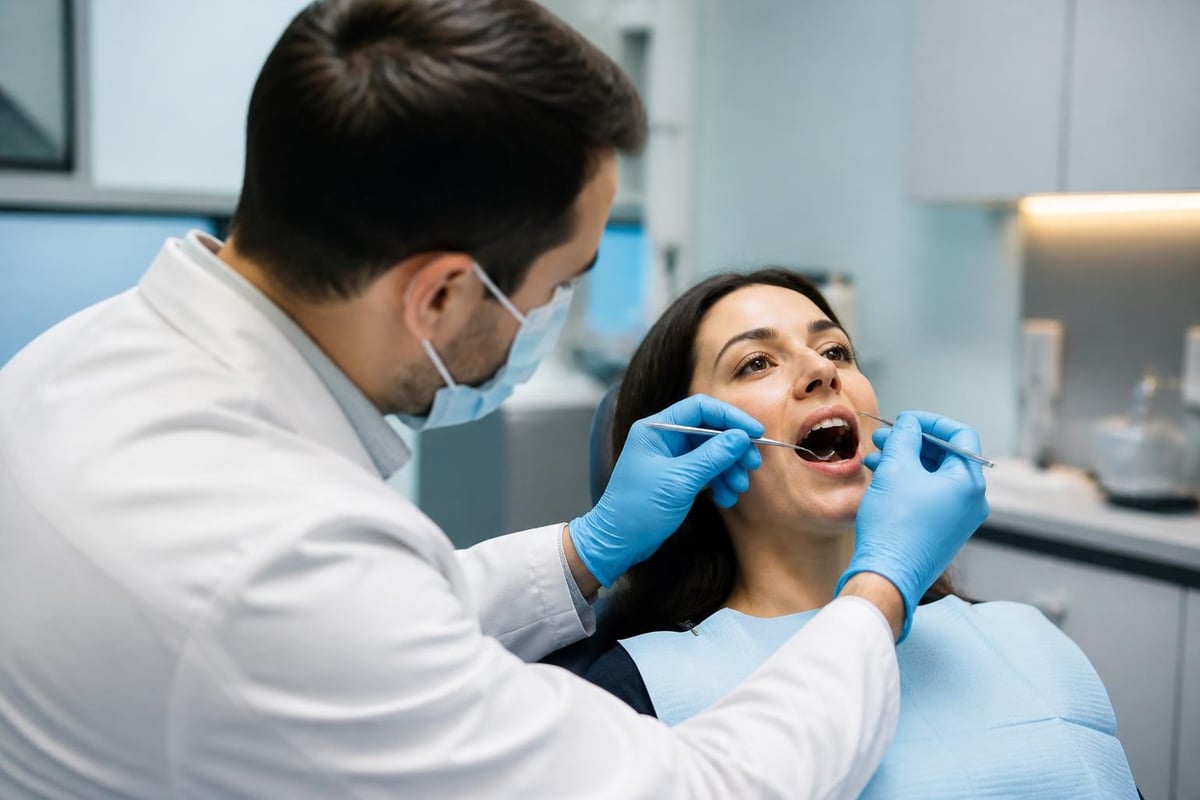
Emergency dentists provide comprehensive dental care specifically designed to address oral health crises. These professionals possess the training, tools, and experience to diagnose and treat the root cause of dental problems, not just manage symptoms.
Emergency dental services include:
- Immediate pain relief at the source
- Tooth reimplantation for avulsions
- Emergency root canal therapy
- Abscess incision and drainage
- Temporary and permanent restorations
- Repair of broken or fractured teeth
- Treatment of soft tissue injuries
- Splinting of loose or displaced teeth
Emergency dentists can address the actual dental problem, preventing complications and often eliminating the need for follow-up emergency care. Understanding your toothache becomes easier when professionals with dental expertise evaluate your condition rather than general emergency medicine physicians.
Specific Scenarios: When to Choose Which Option
Different dental emergencies require different levels and types of care. Making the right choice depends on understanding the nature and severity of your specific situation.
Clear Emergency Room Situations
Certain conditions require immediate hospital evaluation regardless of dental involvement. These situations involve potential threats to life, airway, or overall health.
Visit the emergency room immediately for:
- Uncontrolled bleeding that doesn't stop after 15 minutes of pressure
- Swelling that affects breathing or swallowing
- Jaw fracture or suspected broken facial bones
- Severe trauma involving unconsciousness or head injury
- Infections spreading to the eye, neck, or floor of mouth
- High fever (over 101°F) with facial swelling
- Difficulty opening your mouth or breathing
These scenarios require the comprehensive diagnostic capabilities and life-saving interventions available in hospital settings. The emergency room staff can quickly assess whether your condition threatens vital functions and coordinate with specialists if needed.
Clear Emergency Dentist Situations
Most dental emergencies benefit from immediate dental expertise rather than emergency room care. These conditions require specific dental procedures that ERs cannot provide.
| Dental Emergency | Emergency Dentist Treatment | Why Not ER |
|---|---|---|
| Knocked-out tooth | Reimplantation within 1 hour | ER cannot reimplant teeth |
| Severe toothache | Root canal or extraction | ER only provides pain medication |
| Broken tooth | Restoration or crown | ER cannot rebuild teeth |
| Lost filling/crown | Temporary or permanent replacement | ER lacks dental materials |
| Dental abscess (localized) | Drainage and root canal | ER drains but cannot treat cause |
The International Association of Dental Traumatology guidelines emphasize that dental avulsions require reimplantation within 60 minutes for optimal outcomes. This window makes emergency dental care essential rather than optional for tooth trauma.
Gray Area Situations
Some scenarios fall into a middle ground where the decision depends on timing, severity, and available resources. These situations require judgment calls based on specific circumstances.
Consider these factors when deciding:
- Time of occurrence: During business hours, contact your regular dentist first; after hours, assess severity before choosing
- Pain level: Severe, unmanageable pain may warrant ER visit if no emergency dentist is available
- Swelling progression: Rapidly expanding swelling suggests infection spread requiring ER evaluation
- Immune status: Patients with diabetes, heart conditions, or compromised immunity should err toward ER for infections
- Available resources: If no emergency dentist is accessible within reasonable time, ER becomes necessary
Understanding how tooth infections spread helps gauge urgency and appropriate care setting.
Cost Considerations: Financial Impact of Your Decision
Healthcare costs vary dramatically between emergency rooms and dental clinics. Understanding these differences helps families make financially responsible decisions without compromising care quality.
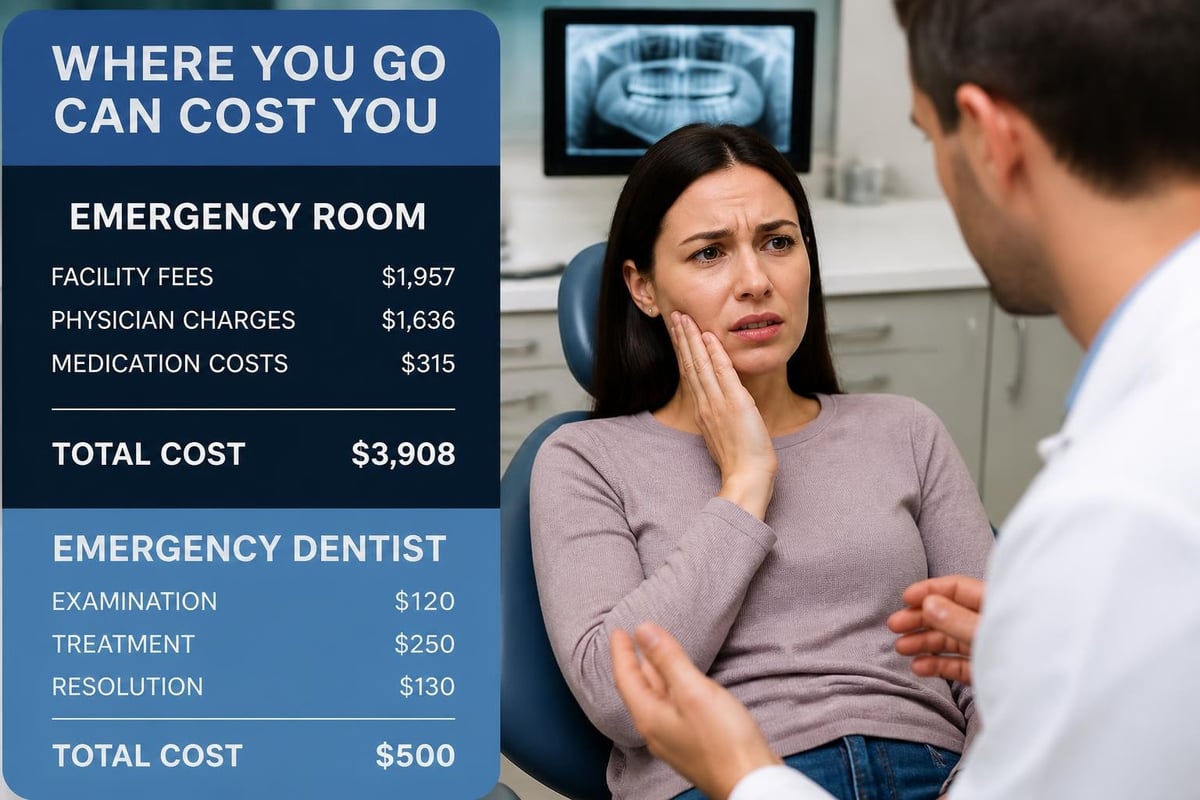
Emergency Room Costs for Dental Problems
Hospital emergency department visits carry substantial price tags, especially for conditions that require only basic interventions. A systematic review of preventable emergency department visits revealed that dental-related ER visits often cost patients significantly more than comparable dental office treatment.
Typical ER costs for dental emergencies:
- Facility fees: $500-$3,000
- Physician evaluation: $200-$500
- Imaging (if needed): $150-$400
- Prescriptions: $20-$150
- Total average: $1,000-$4,000
These costs apply even when the ER can only provide temporary relief. Patients then face additional dental expenses when they visit a dentist for definitive treatment within days or weeks. This double-payment scenario makes the emergency dentist vs ER decision financially significant.
Emergency Dental Visit Costs
Emergency dental care typically costs less than ER visits while providing comprehensive treatment. The investment addresses the actual problem rather than just managing symptoms.
Common emergency dental costs:
- Emergency examination: $75-$250
- X-rays: $25-$200
- Tooth extraction: $150-$400
- Emergency root canal: $600-$1,500
- Temporary crown: $200-$500
- Total average: $300-$2,000
Most emergency dental treatments fall below ER visit costs while solving the problem completely. Patients avoid double-paying and resolve their emergency in a single visit. When considering the best dental insurance plans in Texas, many policies cover emergency dental care more comprehensively than ER visits for dental problems.
Insurance Coverage Differences
Insurance reimbursement patterns differ substantially between medical and dental emergencies. Understanding your coverage helps avoid unexpected bills.
Medical insurance and ER visits:
- Usually covers ER visits as medical emergencies
- May apply high deductibles or copays ($100-$500+)
- Often categorizes dental pain as non-emergent, reducing coverage
- Typically doesn't cover follow-up dental treatment
Dental insurance and emergency care:
- Covers emergency dental visits under urgent care benefits
- Often waives or reduces copays for true emergencies
- Includes diagnostic and treatment costs
- Provides comprehensive care in single visit
Many families benefit from understanding in-network versus out-of-network dentists to maximize insurance benefits during emergencies.
Wait Times and Treatment Efficiency
Time matters significantly in dental emergencies. Treatment delays can worsen outcomes, increase pain, and complicate recovery.
Emergency Room Wait Times
Hospital emergency departments triage patients based on medical urgency. Dental problems typically receive lower priority unless they involve airway compromise, severe trauma, or systemic infection.
Typical ER experience for dental emergencies:
- Initial triage: 15-30 minutes
- Waiting room: 2-6 hours average
- Physician evaluation: 15-30 minutes
- Diagnostic tests: 30-90 minutes
- Treatment/prescriptions: 15-30 minutes
- Total time: 3-8 hours
This extended timeline causes unnecessary suffering when emergency dental care could provide faster relief. Patients often spend half a day in the ER only to receive pain medication and instructions to see a dentist within 24-48 hours.
Emergency Dental Appointment Efficiency
Emergency dentists structure their practices to accommodate urgent cases quickly. Many clinics maintain same-day appointment availability and streamlined treatment protocols.
Typical emergency dental visit timeline:
- Phone triage and scheduling: 5-15 minutes
- Arrival and intake: 10-15 minutes
- Examination and diagnosis: 15-30 minutes
- Treatment completion: 30-90 minutes
- Total time: 1-2.5 hours
Emergency dental care typically resolves issues in a fraction of ER wait time. Patients receive definitive treatment rather than temporary symptom management, eliminating the need for follow-up emergency visits.
Quality of Care and Treatment Outcomes
The expertise level and available interventions directly impact healing and long-term results. Choosing the right care setting affects not just immediate relief but also future oral health.
Limitations of ER Dental Treatment
Emergency room physicians excel in their specialty but lack specific training in dental procedures. This expertise gap limits treatment options and potentially compromises outcomes for dental-specific problems.
Most emergency departments cannot reimplant knocked-out teeth, perform root canals, or provide permanent restorations. Clinical guidance from the American Dental Association notes that emergency departments should primarily stabilize patients and facilitate appropriate dental referrals rather than attempt definitive dental treatment.
Common ER limitations include:
- No dental specialists on staff
- Limited dental equipment and materials
- Inability to perform tooth-saving procedures
- Temporary solutions requiring dental follow-up
- Higher infection and complication risks from delayed definitive care
Patients who visit the ER for dental emergencies often experience recurring problems when they delay or avoid subsequent dental treatment.
Advantages of Specialized Dental Emergency Care
Emergency dentists bring focused expertise, specialized equipment, and comprehensive treatment capabilities to urgent dental situations. This specialization translates to better outcomes and faster recovery.
Benefits of emergency dental care:
- Immediate access to dental specialists
- Complete diagnostic imaging capabilities
- Tooth-preserving treatment options
- Prevention of future complications
- Same-visit problem resolution
- Continuity of care for follow-up needs
The ability to address root causes rather than just symptoms prevents escalation and reduces total healthcare utilization. When dentists manage dental emergencies appropriately, patients avoid multiple visits, repeated pain episodes, and progressive damage.
Common Dental Emergencies and Proper Response
Understanding specific emergency scenarios helps families respond appropriately when crises occur. Quick, correct action often determines treatment success.
Knocked-Out Permanent Tooth
Dental avulsions represent true time-sensitive emergencies where minutes matter. Immediate proper handling and rapid reimplantation dramatically improve tooth survival rates.
Immediate steps:
- Find the tooth and handle it by the crown only
- Rinse gently with milk or saline if dirty (never scrub)
- Try to reinsert into the socket if possible
- If reinsertion isn't possible, store in milk, saline, or saliva
- Call emergency dentist immediately
- Transport to dental office within 30-60 minutes
The IADT guidelines provide evidence-based protocols showing that teeth reimplanted within one hour have significantly higher success rates than those delayed beyond this window. This timing makes emergency dental care essential and ER visits inappropriate for tooth avulsions.
Severe Toothache or Abscess
Dental infections cause intense pain and can spread to surrounding tissues if untreated. Recognizing infection signs helps determine appropriate care urgency.
Warning signs requiring immediate attention:
- Severe, throbbing pain that prevents sleep
- Visible swelling on gums, face, or neck
- Fever or general illness feeling
- Difficulty swallowing or breathing
- Foul taste or drainage from tooth area
Localized abscesses without systemic symptoms typically warrant emergency dental care rather than ER visits. Dentists can drain infections, perform root canals, or extract problematic teeth while addressing the infection source. Managing tooth pain effectively requires professional dental intervention for lasting relief.
Broken or Fractured Teeth
Tooth fractures range from minor chips to severe breaks exposing nerves. Response urgency depends on fracture extent and pain level.
| Fracture Type | Symptoms | Urgency Level | Appropriate Care |
|---|---|---|---|
| Minor chip | No pain, cosmetic only | Low | Regular dental appointment |
| Crack/craze line | Possible sensitivity | Low-Medium | Dental evaluation within days |
| Moderate fracture | Pain with pressure/temperature | Medium-High | Emergency dental visit |
| Severe fracture | Exposed nerve, severe pain | High | Immediate emergency dental care |
| Root fracture | Mobility, pain when chewing | High | Emergency dental evaluation |
Emergency dentists can assess fracture depth, provide immediate pain relief, and perform restorations ranging from bonding to crowns. These treatments preserve teeth and prevent infection entry through exposed dental structures.
Soft Tissue Injuries
Cuts to lips, tongues, cheeks, or gums can bleed profusely and require careful evaluation. Determining severity helps direct appropriate care.
Self-care for minor soft tissue injuries:
- Apply gentle pressure with clean gauze for 10-15 minutes
- Use cold compress to reduce swelling
- Rinse mouth with mild saltwater solution
- Monitor for continued bleeding or increasing pain
Seek emergency dental care if:
- Bleeding doesn't stop after 15 minutes of pressure
- Laceration appears deep or gaping
- Foreign objects are embedded
- Injury involves tooth damage as well
Visit emergency room if:
- Bleeding is profusely uncontrolled
- Injury resulted from major trauma
- Facial bones may be involved
- Patient shows signs of shock
Geographic Access and After-Hours Availability
Location and timing significantly influence the emergency dentist vs ER decision. Understanding local resources helps families prepare before emergencies occur.
Finding Emergency Dental Care in Texas
Texas families benefit from multiple emergency dental options across major cities and surrounding communities. Dental Plus Clinic operates five locations throughout Texas, providing accessible emergency care in Beeville, Seguin, New Braunfels, Leander, and Converse. This geographic coverage ensures families throughout central and south Texas can access specialized dental emergency services.
Strategies for locating emergency dental care:
- Establish care with a dental practice before emergencies arise
- Ask your regular dentist about after-hours emergency protocols
- Research local emergency dental clinics and save contact information
- Verify which locations offer true 24-hour emergency services
- Check whether your dental insurance covers specific emergency providers
Having this information readily available prevents panic-driven poor decisions during actual emergencies. Families who know where to turn for dental emergencies experience better outcomes and lower stress.
After-Hours Emergency Protocols
Dental emergencies don't respect business hours. Understanding how practices handle after-hours situations helps families access appropriate care promptly.
Many dental practices, including Dental Plus Clinic, maintain emergency contact systems for established patients. These protocols typically include answering services, on-call dentists, or partnerships with emergency dental facilities.
Questions to ask your dental practice:
- How do I reach someone for dental emergencies after hours?
- Do you provide emergency appointments on weekends?
- What situations constitute true dental emergencies?
- If you don't offer after-hours emergency care, which facility do you recommend?
- How quickly can emergency appointments typically be scheduled?
Clinical guidance on emergency treatment recommends that dental practices maintain systems for advising patients during emergencies, even when offices are closed.
Preparing for Dental Emergencies
Proactive preparation reduces panic and improves outcomes when dental crises occur. Families who plan ahead navigate emergencies more effectively.
Building a Dental Emergency Kit
Maintaining basic supplies at home enables appropriate first response while arranging professional care. A well-stocked emergency kit serves families during critical first moments.
Essential items for dental emergency kits:
- Dentist contact information and after-hours numbers
- Clean gauze pads for bleeding control
- Small container with lid for storing knocked-out teeth
- Dental wax for covering broken tooth edges
- Over-the-counter pain reliever (acetaminophen or ibuprofen)
- Cold compress or ice pack
- Saline solution for rinsing
- Temporary dental cement (available at pharmacies)
Store these items together in an accessible location and ensure all family members know where to find them. Periodically check expiration dates on medications and replace as needed.
Preventive Measures
Many dental emergencies result from preventable conditions. Regular dental care and protective measures significantly reduce emergency risk.
Prevention strategies include:
- Maintain regular dental check-ups every six months
- Address tooth decay and gum disease promptly
- Wear mouthguards during sports activities
- Avoid chewing ice, hard candy, or other tooth-damaging items
- Don't use teeth as tools to open packages or bottles
- Manage teeth grinding with night guards if necessary
Families who invest in preventive care experience fewer emergencies and better overall oral health. Regular visits allow dentists to identify and treat problems before they escalate into urgent situations requiring emergency intervention.
Educating Family Members
Everyone in the household should understand basic dental emergency protocols. This knowledge proves especially important for children who may experience dental trauma during play or sports.
Teach family members to:
- Recognize signs of dental emergencies
- Know when to seek immediate care versus waiting
- Understand proper handling of knocked-out teeth
- Apply appropriate first aid for dental injuries
- Remain calm and follow emergency action plans
Children who understand these concepts can advocate for themselves when parents aren't immediately present, such as during school activities or sports events.
Long-Term Implications of Emergency Care Decisions
The emergency dentist vs ER choice affects not only immediate relief but also future dental health. Understanding these long-term consequences helps families make decisions aligned with overall wellness goals.
Impact on Tooth Survival
Delayed or inappropriate emergency response often determines whether damaged teeth can be saved. Permanent tooth loss carries lifelong consequences including altered bite, jaw bone deterioration, and need for costly replacement options.
Emergency dental care optimizes tooth preservation through immediate specialized intervention. Dentists can perform procedures like root canals, splinting, or reimplantation that save teeth ER physicians cannot provide. When families choose appropriate emergency dental care, they invest in long-term oral health rather than accepting preventable tooth loss.
Understanding tooth replacement options highlights the value of preserving natural teeth whenever possible through proper emergency response.
Preventing Chronic Dental Problems
Untreated or inadequately treated dental emergencies often evolve into chronic conditions requiring extensive ongoing care. Infections that receive only antibiotic treatment without addressing the source tooth frequently recur, sometimes with antibiotic resistance.
Potential complications from inadequate emergency care:
- Recurring infections requiring multiple antibiotic courses
- Spread of infection to adjacent teeth
- Bone loss around affected teeth
- Development of cysts or abscesses
- Eventual tooth loss requiring replacement
- Bite changes affecting jaw function
Emergency dentists address root causes during initial treatment, preventing these cascading complications. Comprehensive emergency dental care often costs less long-term than repeated ER visits plus eventual extensive dental rehabilitation.
Building Ongoing Dental Relationships
Patients who establish care with dental practices before emergencies arise receive more coordinated, effective emergency treatment. Dentists familiar with patients' dental history, previous treatments, and specific anatomical considerations provide more personalized emergency care.
Regular patients typically receive priority scheduling for emergencies and benefit from continuity of care during follow-up. This relationship-based approach contrasts sharply with episodic ER care where physicians have no prior knowledge of dental history or ongoing treatment plans.
Frequently Asked Questions
Can the emergency room pull a tooth?
Most emergency rooms cannot and will not perform tooth extractions. ER physicians lack the specialized training, equipment, and dental licensure required for extractions. They can prescribe pain medication and antibiotics for infected teeth but will refer patients to dentists for definitive treatment. Emergency dental clinics provide extraction services when teeth cannot be saved, making them the appropriate choice for problems requiring tooth removal.
How much does an emergency dental visit cost compared to the ER?
Emergency dental visits typically range from $300-$2,000 depending on required treatment, while ER visits for dental problems average $1,000-$4,000 just for evaluation and temporary symptom management. Emergency dental care costs less overall because it provides definitive treatment in one visit rather than requiring subsequent dental appointments after ER stabilization. Patients who choose emergency dentists avoid double-paying for both ER evaluation and necessary dental treatment.
What qualifies as a dental emergency?
True dental emergencies include knocked-out permanent teeth, uncontrolled bleeding, severe pain that prevents sleep or normal function, rapidly spreading swelling, dental abscesses with fever, and fractured teeth exposing nerves. These situations require same-day professional intervention to prevent complications and preserve oral health. Less urgent issues like minor chips, lost fillings without pain, or mild sensitivity can typically wait for regular dental appointments within a few days.
Will my medical insurance cover emergency dental care?
Medical insurance typically covers ER visits but rarely covers dental treatment even when dental problems cause the ER visit. Dental insurance generally provides better coverage for emergency dental care including diagnostic, treatment, and follow-up services. Some situations involving trauma or infections spreading beyond dental structures may qualify for medical coverage, but most straightforward dental emergencies receive better financial coverage through dental insurance when treated by emergency dentists.
How quickly should I seek care for a knocked-out tooth?
Knocked-out permanent teeth require professional care within 30-60 minutes for optimal reimplantation success. Every minute that passes reduces the likelihood of successful reattachment. Contact an emergency dentist immediately, keep the tooth moist in milk or saliva, and transport to the dental office as quickly as possible. Emergency rooms cannot reimplant teeth, making them inappropriate for dental avulsion emergencies despite the urgent timeframe.
What should I do while waiting for emergency dental care?
For pain, take over-the-counter pain relievers according to package directions. For bleeding, apply gentle pressure with clean gauze for 10-15 minutes. For swelling, use cold compresses on the outside of your face. For knocked-out teeth, store in milk and keep moist. For broken teeth, save fragments and rinse your mouth gently. Avoid eating on the affected side and don't apply aspirin directly to gums as this causes tissue burns.
Do emergency dentists work on weekends and holidays?
Many emergency dental practices maintain weekend and holiday availability, though hours may be limited compared to weekdays. Some practices offer true 24-hour emergency coverage while others provide on-call services for established patients. Call your regular dental office to learn their specific emergency protocols, or research dedicated emergency dental clinics in your area that advertise extended hours. Dental Plus Clinic locations throughout Texas provide emergency dental services to accommodate urgent needs beyond standard business hours.
Can a regular dentist handle emergencies or do I need a specialist?
Most general dentists can handle common dental emergencies including tooth pain, infections, fractures, and lost restorations. They receive training in emergency care as part of their dental education and maintain equipment for urgent procedures. Specialized emergencies like complex facial trauma or unusual conditions may require oral surgeons or other specialists, but your general dentist can provide initial stabilization and appropriate referrals when specialized care is necessary.
When should I absolutely go to the ER instead of an emergency dentist?
Visit the emergency room immediately for uncontrolled bleeding that doesn't stop after 15 minutes, swelling that affects breathing or swallowing, suspected jaw or facial bone fractures, severe head trauma accompanying dental injury, high fever with rapidly spreading facial swelling, or signs of serious infection spreading to eyes or neck. These conditions involve potential airway compromise or life-threatening complications requiring hospital-level emergency care beyond what dental offices can provide.
How can I find an emergency dentist near me in Texas?
Research emergency dental options before emergencies occur by asking your regular dentist about after-hours protocols, searching online for "emergency dentist" plus your city name, checking dental practice websites for emergency service information, and saving contact numbers in your phone. Dental Plus Clinic serves families throughout Texas with locations in Beeville, Seguin, New Braunfels, Leander, and Converse, providing accessible emergency dental care across central and south Texas regions.
Making the right choice between emergency dentist vs ER care protects both your oral health and financial wellbeing during dental crises. Emergency dentists provide specialized, definitive treatment for most dental problems while emergency rooms serve best for life-threatening medical complications. When dental emergencies strike your family, Dental Plus Clinic stands ready with five convenient Texas locations offering comprehensive emergency dental services, modern technology, and patient-focused care to resolve your urgent dental needs quickly and affordably.