

Every parent dreads that moment when their child takes a tumble on the playground, crashes into a coffee table, or catches an elbow during playtime and loses a tooth. Understanding what to do if knocks out baby tooth can mean the difference between panic and calm, informed action. While baby teeth naturally fall out over time, a traumatic injury that knocks one out prematurely requires immediate attention and proper care. This comprehensive guide provides parents across Texas and beyond with evidence-based steps to handle this common childhood emergency, minimize complications, and protect your child's developing smile.
Understanding Baby Tooth Injuries and Why They Matter
Baby teeth serve critical functions beyond just helping children chew food. These primary teeth act as placeholders for permanent teeth, guide jaw development, support proper speech development, and contribute to facial structure. When trauma occurs and a baby tooth is knocked out, the response differs significantly from adult tooth avulsion.
According to clinical research on traumatic injuries to primary dentition, dental trauma affects approximately 30% of children before age seven. The most common causes include falls, sports injuries, playground accidents, and collisions during active play. Understanding the nature of these injuries helps parents respond appropriately.
Key Differences Between Baby and Permanent Teeth
Unlike permanent teeth, baby teeth should never be reimplanted if completely knocked out. This critical distinction exists because reimplantation can damage the developing permanent tooth bud underneath. The risk of infection, ankylosis, or disruption to the successor tooth far outweighs any benefit of replacing the primary tooth.
Parents should focus on:
- Controlling bleeding and managing pain
- Preserving the knocked-out tooth for dental examination
- Scheduling prompt professional evaluation
- Monitoring for infection or complications
- Understanding long-term implications for permanent teeth
Immediate Steps: What to Do If Knocks Out Baby Tooth
The first moments after a dental injury can be overwhelming. Following a clear action plan helps ensure your child receives proper care while avoiding common mistakes that could complicate treatment.
Step 1: Stay Calm and Comfort Your Child
Your reaction sets the tone for how your child will respond to the injury. Children take emotional cues from their parents, so maintaining composure helps reduce fear and anxiety. Speak in a soothing voice, offer reassurance, and provide physical comfort through hugs or holding.
Step 2: Assess the Injury Severity
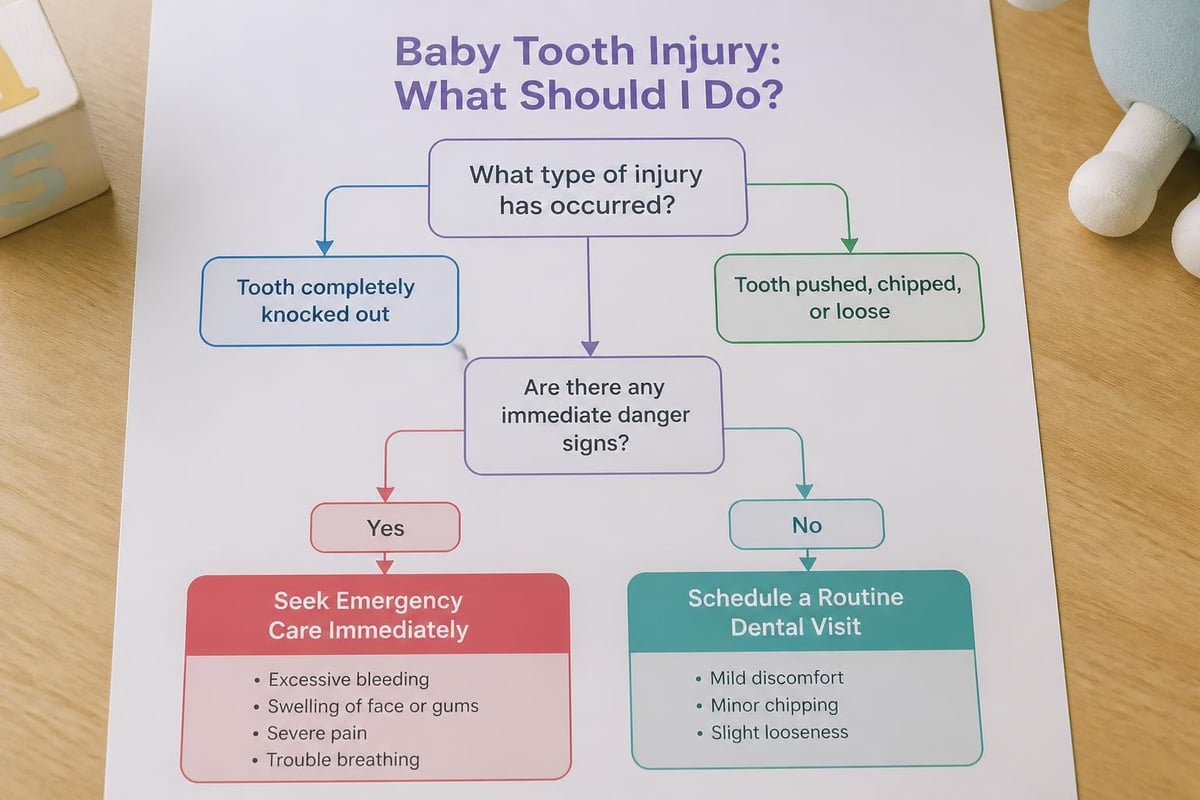
Quickly evaluate the situation to determine if immediate emergency room care is necessary versus a prompt dental visit. According to HealthyChildren.org guidelines for tooth injuries, you should seek emergency medical attention if:
- Excessive bleeding that doesn't stop after 10 minutes of pressure
- Signs of head injury, concussion, or loss of consciousness
- Difficulty breathing or swallowing
- Facial bone fractures or jaw misalignment
- Multiple teeth knocked out or severe facial trauma
For isolated baby tooth avulsion without these complications, focus on dental care rather than emergency room treatment.
Step 3: Control Bleeding
Have your child bite down gently on a clean gauze pad, washcloth, or moistened tea bag over the bleeding socket. Apply steady, gentle pressure for 10-15 minutes. If bleeding persists beyond 15 minutes of continuous pressure, contact your dentist or seek emergency care.
Important bleeding control tips:
- Keep your child sitting upright or with head slightly elevated
- Avoid letting them lie flat, which can cause choking on blood
- Do not allow excessive rinsing, which dislodges the forming clot
- Apply cold compress to outside of cheek to reduce swelling
Step 4: Manage Pain and Swelling
Age-appropriate pain management helps keep your child comfortable while awaiting professional care. Acetaminophen or ibuprofen (following pediatric dosing guidelines) can reduce pain and inflammation. Apply a cold compress or ice pack wrapped in a thin cloth to the affected area for 10 minutes on, 10 minutes off.
| Pain Management Options | Age Guidelines | Frequency |
|---|---|---|
| Acetaminophen | 2+ months | Every 4-6 hours |
| Ibuprofen | 6+ months | Every 6-8 hours |
| Cold compress | All ages | 10 min intervals |
| Popsicles/ice chips | 2+ years | As desired |
Step 5: Preserve the Tooth
Even though the baby tooth won't be reimplanted, bring it to your dental appointment. The dentist needs to examine it to confirm the entire tooth came out, including the root. A broken root fragment left in the socket can cause infection.
Handle the tooth by the crown (white part), not the root. Rinse it gently with water if dirty, but don't scrub. Store it in:
- A small container of milk
- Saline solution
- The child's saliva (in a clean container)
- Commercial tooth preservation solution if available
Never store a knocked-out tooth in tap water, as this can damage the root surface cells.
When to Contact Your Dentist Immediately
Knowing what to do if knocks out baby tooth includes understanding the urgency of professional dental care. Contact your dentist the same day the injury occurs, even if it happens after hours. Most dental practices, including facilities offering emergency dental care, provide urgent appointment slots or after-hours emergency numbers.
Same-Day Dental Visit Indicators
Schedule an immediate appointment if your child experiences:
- Complete tooth avulsion (tooth knocked entirely out)
- Tooth displacement, loosening, or change in position
- Tooth fracture or chip exposing inner layers
- Bleeding from the gums that continues beyond initial control
- Visible damage to surrounding teeth
- Cuts or lacerations to lips, tongue, or gums requiring sutures
What the Dentist Will Examine
During the emergency visit, the dental professional conducts a thorough examination to assess:
- Completeness of avulsion – Verifying the entire tooth including root came out
- Socket condition – Checking for bone fractures or retained fragments
- Adjacent teeth – Evaluating neighboring teeth for damage
- Soft tissue injuries – Examining gums, lips, tongue, and cheeks
- Bite alignment – Ensuring remaining teeth meet properly
- Radiographic assessment – X-rays to evaluate developing permanent teeth
The International Association of Dental Traumatology guidelines recommend comprehensive documentation and follow-up protocols for all traumatic dental injuries in children.
Common Complications and What Parents Should Monitor
After the initial injury and dental visit, vigilant monitoring helps catch potential complications early. Understanding what to watch for empowers parents to seek timely intervention when necessary.
Infection Warning Signs
Dental socket infections can develop within days of the injury. Contact your dentist immediately if you notice:
- Fever above 100.4°F (38°C)
- Increasing pain after initial improvement
- Swelling that worsens or spreads
- Pus or discharge from the socket
- Foul odor or taste
- Red streaks radiating from the injury site
Impact on Permanent Teeth
The most significant concern with baby tooth trauma involves potential damage to the developing permanent tooth underneath. According to research published in the Journal of the Michigan Dental Association, approximately 12-69% of traumatic injuries to primary teeth can affect permanent successors.
Potential permanent tooth complications include:
- Enamel defects or discoloration
- Crown or root malformation
- Delayed eruption or eruption disturbances
- Complete loss of the permanent tooth bud
- Positioning problems requiring orthodontic correction
Regular follow-up appointments allow your dentist to monitor permanent tooth development through clinical examination and periodic X-rays.
Speech and Development Considerations
Premature loss of front baby teeth can temporarily affect speech development, particularly with sounds like "f," "v," "th," and "s." Most children adapt quickly, and speech typically normalizes as they grow and permanent teeth emerge. If you have concerns about speech development, your dentist can coordinate care with a pediatric speech therapist.
Treatment Options and Follow-Up Care
Understanding what to do if knocks out baby tooth extends beyond the immediate emergency to comprehensive follow-up care. Treatment approaches depend on the child's age, which tooth was lost, and the specific circumstances of the injury.
No Reimplantation Protocol
As emphasized by the American Academy of Pediatric Dentistry guidelines, baby teeth should not be reimplanted after complete avulsion. This protocol protects the developing permanent tooth and prevents complications like:
- Damage to the permanent tooth bud
- Ankylosis (fusion of tooth to bone)
- Infection spreading to developing structures
- Root resorption complications
- Interference with natural permanent tooth eruption
Space Maintenance Considerations
When a baby tooth is lost significantly before its natural shedding time, dentists evaluate whether space maintenance is necessary. Space maintainers are custom appliances that hold the gap open until the permanent tooth is ready to erupt.
| Age at Loss | Front Teeth | Back Teeth | Space Maintainer Needed |
|---|---|---|---|
| Under 3 years | Usually not required | May be needed | Case-by-case |
| 3-5 years | Rarely needed | Often recommended | Moderate likelihood |
| 5+ years | Not needed | Sometimes needed | Lower likelihood |
For families seeking pediatric dentistry services in Texas, comprehensive evaluation determines the best course of action for your child's specific situation.
Monitoring Schedule
Follow-up appointments typically occur at:
- 1 week post-injury – Initial healing assessment
- 4-6 weeks – Socket healing confirmation
- 6 months – Permanent tooth development check
- Annual intervals – Until permanent tooth erupts
Dietary Modifications During Healing
For the first few days after injury, soft foods minimize discomfort and protect the healing socket:
- Yogurt, pudding, and smoothies
- Mashed potatoes and soft pasta
- Scrambled eggs and soft proteins
- Soups and broths (not too hot)
- Soft fruits like bananas and applesauce
Avoid hard, crunchy, sticky, or acidic foods that could irritate the injury site.
Prevention Strategies to Protect Baby Teeth
While knowing what to do if knocks out baby tooth is essential, prevention remains the best approach. Implementing protective measures significantly reduces dental injury risk during your child's active years.
Sports Safety Measures
Athletic mouthguards provide critical protection for children participating in sports. Custom-fitted guards from your dentist offer superior protection compared to store-bought options, though properly fitted boil-and-bite versions provide reasonable protection.
High-risk activities requiring mouthguards:
- Contact sports (football, hockey, lacrosse)
- Basketball and soccer
- Baseball and softball
- Skateboarding and rollerblading
- Martial arts and boxing
- Gymnastics and cheerleading
Home Safety Modifications
Common household hazards contribute to many childhood dental injuries. Childproofing measures include:
- Corner guards on sharp furniture edges
- Non-slip mats in bathtubs and showers
- Safety gates at stairs for toddlers
- Padding on fireplace hearths
- Supervision during active play
- Removing tripping hazards from play areas

Teaching Safe Behavior
Age-appropriate safety education helps children develop awareness:
- Walking (not running) indoors
- Using playground equipment properly
- Wearing helmets during biking and skating
- Avoiding using teeth as tools
- Being aware of surroundings during play
- Understanding consequences of rough play
Special Situations and Unique Circumstances
Certain scenarios require modified approaches when dealing with baby tooth trauma. Understanding these variations ensures appropriate response regardless of circumstances.
Partial Avulsion and Loosened Teeth
Not all dental trauma results in complete tooth loss. If the tooth remains in place but appears loose or displaced:
- Do not touch or manipulate – Let the dentist reposition if needed
- Soft diet – Minimize pressure on the affected tooth
- Avoid biting on that side – Prevent further displacement
- Same-day dental visit – Professional assessment is still necessary
Loosened baby teeth may tighten naturally over 2-4 weeks, or your dentist may recommend extraction if severe mobility poses a choking hazard.
Multiple Teeth Injured
When trauma affects several teeth simultaneously, comprehensive evaluation becomes even more critical. Multiple tooth injuries may indicate more severe facial trauma requiring coordination between dental and medical professionals.
Tooth Fragments and Fractures
If only part of the tooth breaks off while the root remains:
- Collect all visible fragments
- Rinse the child's mouth gently with water
- Apply cold compress for swelling
- Seek dental care the same day
- Save fragments in milk or saline
Depending on the extent of the fracture and the child's age, treatment options range from smoothing sharp edges to extraction.
Injuries with Unknown Tooth Location
Sometimes the knocked-out tooth cannot be found (swallowed, lost at the scene, etc.). The NHS Wales guidance on knocked-out teeth emphasizes the importance of dental examination even without the tooth. X-rays determine whether the tooth was:
- Completely avulsed and lost
- Swallowed or aspirated
- Intruded (pushed up into the gum)
Swallowed baby teeth typically pass harmlessly through the digestive system, but aspirated teeth (breathed into airways) require immediate medical attention.
Long-Term Outlook and Permanent Tooth Development
Parents understandably worry about how baby tooth loss affects their child's future smile. While trauma carries some risk, most children experience normal permanent tooth development with appropriate monitoring and care.
Permanent Tooth Eruption Timeline
Understanding typical eruption patterns helps set realistic expectations:
| Baby Tooth Location | Typical Loss Age | Permanent Tooth Eruption |
|---|---|---|
| Lower central incisors | 6-7 years | 6-7 years |
| Upper central incisors | 6-7 years | 7-8 years |
| Lower lateral incisors | 7-8 years | 7-8 years |
| Upper lateral incisors | 7-8 years | 8-9 years |
When a baby tooth is knocked out prematurely, permanent tooth eruption may occur earlier than typical timing, remain on schedule, or occasionally be delayed.
Success Rates and Outcomes
Research indicates that most children who experience baby tooth avulsion develop healthy permanent teeth. Success factors include:
- Age at injury – Older children closer to natural shedding have better outcomes
- Injury severity – Isolated avulsion versus complex trauma
- Prompt professional care – Same-day evaluation and monitoring
- Compliance with follow-up – Regular monitoring until permanent tooth erupts
When Additional Treatment Becomes Necessary
Some situations require intervention as the permanent tooth develops:
- Orthodontic evaluation – If teeth shift into the gap
- Space maintenance – For premature loss of back teeth
- Cosmetic solutions – Temporary options if front teeth lost early
- Surgical exposure – If permanent tooth fails to erupt properly
Facilities offering comprehensive pediatric dentistry services coordinate multidisciplinary care when complex treatment becomes necessary.
Frequently Asked Questions About Knocked-Out Baby Teeth
Should I try to put a baby tooth back in if it gets knocked out?
No, never attempt to reimplant a baby tooth. Unlike permanent teeth, which can sometimes be successfully reimplanted, putting a baby tooth back in can damage the developing permanent tooth underneath and increase infection risk. Focus on controlling bleeding, managing pain, and seeing a dentist promptly.
How long does it take for the socket to heal after a baby tooth is knocked out?
The visible gum tissue typically heals within 7-10 days, while complete socket healing occurs over 4-6 weeks. During this time, soft tissue fills the gap, and bone remodels beneath the surface. Your dentist will monitor healing progress at follow-up appointments to ensure proper recovery.
Will my child's permanent tooth be affected if their baby tooth was knocked out?
There is some risk of permanent tooth involvement, with studies showing 12-69% of primary tooth trauma can affect developing permanent teeth. However, most children develop normal permanent teeth. Potential effects range from minor enamel discoloration to more significant developmental issues. Regular monitoring allows early detection and management of any complications.
Can my child eat normally after losing a baby tooth from trauma?
Initially, stick to soft foods for the first few days while the socket heals and discomfort subsides. Gradually reintroduce regular foods as your child feels comfortable. Avoid extremely hot, cold, hard, or sticky foods during the first week. Most children return to normal eating within 1-2 weeks as the area heals.
Is a knocked-out baby tooth considered a dental emergency?
Yes, a knocked-out baby tooth requires same-day dental evaluation, though it differs from adult tooth emergencies. While the tooth won't be reimplanted, professional assessment ensures no root fragments remain, evaluates adjacent teeth, checks for bone injury, and establishes a monitoring plan for permanent tooth development. Contact your dentist immediately after the injury occurs.
How much does emergency dental care for a knocked-out baby tooth cost?
Emergency examination and X-rays typically range from $150-$400 without insurance, though costs vary by location and treatment complexity. Many dental insurance plans cover emergency visits and necessary radiographs. For families concerned about dental insurance coverage, discussing financial options with your dental provider before emergencies arise helps with planning.
What should I do if my child knocks out a tooth after dental office hours?
Call your dentist's after-hours emergency number, which most practices provide on their voicemail or website. Many dentists offer emergency appointments outside regular hours for urgent situations. If you cannot reach your dentist and the injury is severe (excessive bleeding, head trauma, multiple teeth involved), visit an urgent care facility or emergency room. For isolated baby tooth avulsion with controlled bleeding, manage at home overnight and call your dentist first thing in the morning.
Can a knocked-out baby tooth grow back?
No, once a baby tooth is completely knocked out, it will not regrow. Baby teeth don't regenerate like some other body tissues. The gap remains until the permanent tooth erupts, which may be several years depending on the child's age at injury. In the meantime, your dentist monitors the space and determines if any intervention is needed.
How do I prevent my child from knocking out their baby teeth?
While not all accidents are preventable, several measures reduce risk: ensure mouthguard use during sports, childproof your home with corner guards and safety gates, supervise active play, teach safe behavior, maintain regular dental check-ups to identify teeth at risk, and create safe play environments. Children with protruding front teeth face higher injury risk and may benefit from early orthodontic evaluation.
Will my child need braces if they lose a baby tooth early from trauma?
Not necessarily. Many children who lose baby teeth prematurely never require braces. However, early tooth loss can sometimes allow adjacent teeth to drift into the gap, potentially causing crowding when permanent teeth erupt. Your dentist monitors tooth positioning during regular check-ups and refers for orthodontic evaluation if spacing issues develop. Some children may need a space maintainer to prevent tooth movement.
Emotional Support and Helping Your Child Cope
Dental trauma affects more than just physical health. Many children develop anxiety about dental visits or fear recurring injuries after a traumatic tooth loss. Parents play a crucial role in emotional recovery alongside physical healing.
Addressing Dental Anxiety
Create positive associations with dental care:
- Praise your child for their bravery during treatment
- Read children's books about dental visits
- Use age-appropriate language avoiding scary words
- Allow comfort items during appointments
- Consider child life specialists for severe anxiety
- Choose a pediatric dentist experienced with traumatized children
Managing Self-Consciousness
Children who lose front teeth early sometimes feel self-conscious about their appearance:
- Normalize the gap as temporary and natural
- Point out other children who've lost teeth
- Emphasize what makes them special beyond appearance
- Discuss how many children lose teeth early
- Consider temporary cosmetic options if significantly distressed
- Focus on the exciting permanent tooth coming soon
Building Resilience
Help your child process the trauma constructively:
- Listen to their feelings without dismissing concerns
- Explain what happened in age-appropriate terms
- Involve them in safety planning to prevent future injuries
- Celebrate healing milestones
- Maintain routines and normalcy
- Seek professional counseling if trauma symptoms persist
Coordinating Care Across Multiple Providers
Complex dental injuries sometimes require coordination between various healthcare professionals. Understanding the care team helps navigate the system effectively.
Primary Care Physician Role
Your pediatrician may need involvement for:
- Head injury evaluation after significant trauma
- Infection management requiring antibiotics
- Pain management for severe discomfort
- Tetanus vaccination status verification
- Overall health assessment
Dental Specialist Referrals
Your general dentist may refer to specialists including:
- Pediatric dentists – Child-focused care with specialized training
- Oral surgeons – Complex extraction or bone injury management
- Orthodontists – Space maintenance or alignment issues
- Endodontists – Root canal therapy if needed for adjacent teeth
School and Childcare Communication
Inform teachers and caregivers about your child's injury:
- Dietary restrictions during healing
- Activity limitations if recommended
- Signs of complications to watch for
- Emergency contact information
- Medication administration if needed during school hours
For families utilizing comprehensive care at facilities like those offering dental services across Texas locations, coordinated provider networks streamline communication and ensure consistent treatment approaches.
Regional Considerations for Texas Families
Families across Texas, from Beeville to Leander, face unique considerations when handling dental emergencies. Understanding regional resources and planning ahead ensures prompt care regardless of your location.
Access to Emergency Dental Care
Urban areas like New Braunfels, Seguin, and Converse typically offer multiple emergency dental options with extended hours. Rural communities may have limited after-hours availability, making advance planning essential. Identify your local emergency dental provider and save contact information before emergencies arise.
Travel and Distance Factors
In less densely populated areas, reaching emergency dental care may require significant travel time. When knowing what to do if knocks out baby tooth, Texas families should:
- Keep a dental emergency kit in the vehicle
- Know the location of the nearest emergency dental clinic
- Have contact information for multiple dental providers
- Understand when to seek medical emergency room care versus dental care
- Consider telehealth consultation options for initial guidance
Insurance and Coverage Variations
Texas dental insurance plans vary significantly in emergency coverage. Review your policy before emergencies to understand:
- Emergency visit coverage and copays
- Out-of-network provider options
- Prior authorization requirements
- Coverage limits for trauma-related treatment
- Whether dental insurance covers various treatments your child may need
Understanding what to do if knocks out baby tooth transforms a frightening emergency into a manageable situation where you can confidently protect your child's oral health and developing smile. While baby tooth trauma requires immediate attention, proper care and professional monitoring ensure most children experience excellent long-term outcomes. Whether you're in Beeville, Seguin, New Braunfels, Leander, or Converse, Dental Plus Clinic provides comprehensive emergency dental care and pediatric dentistry services with compassionate professionals who understand the unique needs of Texas families. Our experienced team offers same-day emergency appointments, advanced diagnostic technology, and personalized treatment plans to guide your child through recovery and ensure healthy permanent tooth development.