
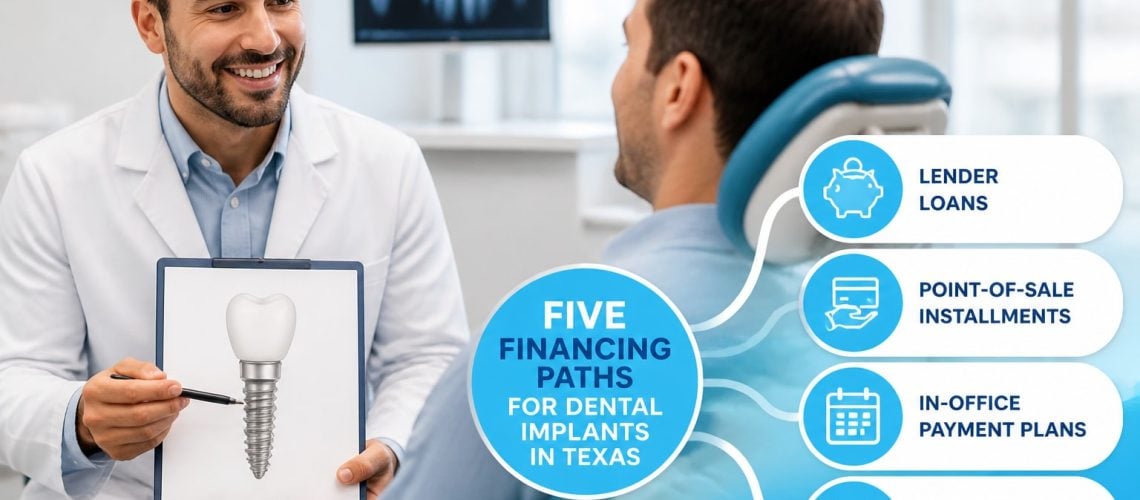
Dental implants financing in Texas usually means a monthly installment loan or an in-office payment plan, and most families with fair credit can find at least one workable option. Single implants often run several thousand dollars, so spreading the cost over a longer term can turn a large one-time bill into a manageable monthly budget. This guide covers five specific ways to pay, what each one requires, and how to choose between them.
For families in Seguin, Converse, Beeville, New Braunfels and Leander, the practical question is rarely whether implants are worth it. It is how to fit the cost around mortgage payments, school expenses and everything else a household carries. The five options below are ordered so you can compare them quickly.
What Dental Implants Cost in Texas Before You Finance
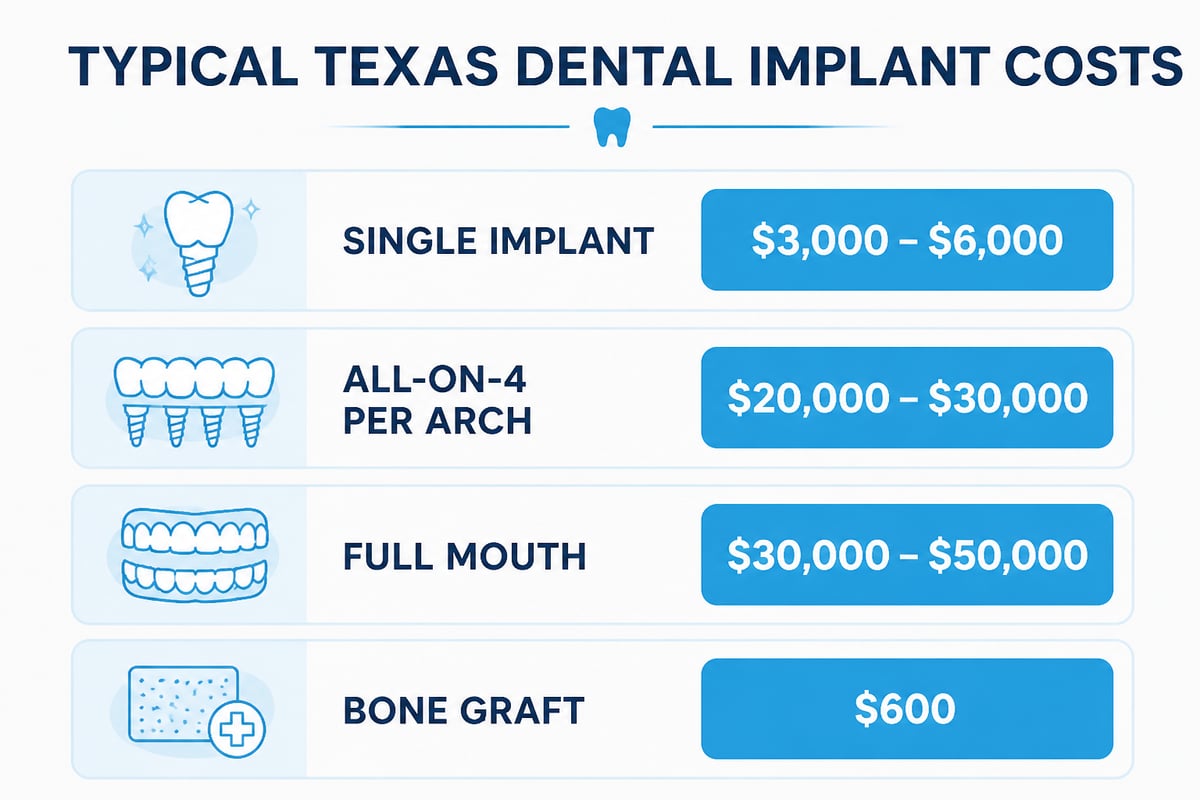
Dental implants in Texas often cost several thousand dollars per tooth, and full-mouth treatment can run to tens of thousands. Knowing the range first helps you size a loan correctly.
Published figures from Texas practices show the spread:
- A Dallas oral-surgery practice lists single implants starting at $3,000 and full-mouth implants starting at $20,000, and gives national ranges of $4,000 to $6,500 and $30,000 to $36,000 respectively.
- A Houston implant practice lists single implants at $3,000 to $5,500, All-on-4 at $20,000 to $30,000 per arch, and full-mouth implants at $30,000 to $50,000.
- American First Finance estimates single implants at $3,100 to $5,800 and full-mouth restorations at $24,000 to $50,000 or more.
Extra procedures change the total. A Texas practice reports bone grafts at about $600, which matters if the jaw has lost volume. Our guide to bone grafting for dental implants explains when one is needed, so you can include it in your loan amount from the start.
1. LendingClub Patient Solutions
LendingClub Patient Solutions is a patient loan product that offers loans from $500 to $65,000, which can cover a range of treatment sizes. It is the right fit when you want predictable payments over a longer period. The $500 floor also means you can finance a smaller piece of treatment, such as a bone graft at about $600 or a crown, without borrowing more than you need. At the upper end, the loan ceiling can cover a complete restoration with a single loan instead of stacking several smaller ones.
Key specs:
- Loan amounts from $500 to $65,000
- APRs from about 3.99% up to 30.99%
- Terms from 6 to 84 months
- Prequalification does not affect your credit score; a credit check occurs once you select a plan
- No down payment, no prepayment penalty and no deferred interest
Approximate cost: Your APR depends on credit and the plan you select. At the low end, a longer term keeps payments modest; at the high end, interest adds meaningfully to the total, so compare the total repayment amount, not only the monthly figure. A useful habit is to prequalify, then look at the same loan amount across several terms. A 6-month term and an 84-month term produce very different monthly payments and very different interest totals, and seeing both side by side shows how much you are paying for flexibility. Because there is no prepayment penalty, you can also choose a longer term for a lower required payment and then pay extra when your budget allows, shortening the loan without any fee.
Best use: A single implant with a crown, or a larger multi-implant case, where a term of several years makes the payment fit a family budget. No deferred-interest clause means no retroactive interest surprise if you miss a promotional deadline.
Verdict: The strongest choice for larger treatment plans and patients who value a long, flexible term.
2. Sunbit
Sunbit is point-of-sale installment financing that you apply for through a participating dental office, with financing up to about $20,000. It suits smaller to mid-sized implant treatment plans. Because the application happens at the practice, you can review an itemized treatment plan with the coordinator and apply in the same visit, which keeps the amount you request tied to a real, written estimate. A $20,000 ceiling can comfortably cover a single implant, and it can also stretch to a two- or three-implant case when the total stays under the limit.
Key specs:
- Financing up to about $20,000
- Up to a 24-month 0% promotional APR listed
- Soft credit check listed for the initial application
- Applied for at the practice during treatment planning
Approximate cost: The 0% promotional window can make the effective cost very low if you pay on schedule. Confirm the exact terms offered to you before signing, since the promotional rate and length depend on approval. The math is simple to test: a $4,800 implant spread over a full 24 months at 0% comes to $200 a month with no interest added. If your offer comes with a shorter window or a nonzero rate, divide the total by the number of months and compare it with what you can comfortably pay, then ask what happens to the balance once the promotional period ends.
Best use: A single implant or a two-implant case in the $3,000 to $10,000 range that you can realistically pay off within the promotional period. A soft check lets you see an offer without a hard inquiry first.
Verdict: A good fit for moderate budgets where fast repayment is realistic.
3. Proceed Finance
Proceed Finance offers healthcare financing up to about $75,000, which is a high ceiling among the lenders here. That makes it relevant when treatment goes beyond a single tooth. Full-mouth implant figures published by Texas practices reach $30,000 to $50,000, and a higher limit leaves room for those totals plus add-on procedures, which matters because a full restoration rarely involves the implants alone. Extractions, grafting and temporary teeth can each add to the final figure.
Key specs:
- Financing up to about $75,000
- Soft credit check listed
Best use: Full-mouth rehabilitation, All-on-4 treatment on one or both arches, or a case that combines extractions, bone grafting and implants. If you are financing full-arch work, the amount alone rules out many point-of-sale options, so a higher limit matters. A Houston practice lists All-on-4 at $20,000 to $30,000 per arch, so treating both arches can land well into five figures. A single loan sized for that total is simpler to manage than two separate financing agreements, and a soft check lets you see whether an offer fits before any hard inquiry.
Verdict: The practical pick when your treatment plan is large and a lower-limit product would fall short.
4. Cherry
Cherry is point-of-sale installment financing with plans listed from 0% to 35.99% APR and a soft credit check. It is built for patients who want to apply quickly at the dental office. Because the plans are tied to the practice, the application is usually completed alongside the treatment discussion, and a soft check means you can see what is on offer before deciding whether to proceed. That speed is useful when a surgical date is already being scheduled and you want the payment question settled in the same visit.
Key specs:
- Point-of-sale installment plans
- APRs listed from 0% to 35.99%
- Soft credit check listed
Approximate cost: The wide APR range means your outcome varies sharply by credit profile. A strong profile may land near the low end, while a thin or damaged file could see a much higher rate. Look at the full repayment total before accepting. To see the gap, consider a $5,000 balance: at 0% the total repaid is exactly $5,000, while a plan near 35.99% adds substantial interest over the same schedule. That difference can exceed the cost of a bone graft, so the rate you are actually quoted deserves more attention than the range printed on the lender's page.
Best use: Patients who want a quick office-based application and may have a mixed credit history, since the range of plans may accommodate more profiles. If your offer comes in near the top of the range, compare it against another lender before committing.
Verdict: A flexible option for varied credit, provided you check the rate you are actually offered.
5. In-Office Payment Plans and Dental Plus Clinic Implant Options
An in-office payment plan lets you pay the clinic directly in installments, often without a third-party lender. It is worth asking about before you apply anywhere, because it can mean no credit pull and no outside fees. The structure is usually straightforward: the practice divides an agreed total into scheduled payments, and you deal with one billing contact for the whole course of treatment. That arrangement tends to work best for patients whose total is modest or who can repay within a few months, since practices generally cannot carry very large balances for years the way a lender can.
Some Texas practices structure this simply. One reports an in-house plan that divides the total into 3 to 4 interest-free payments. Terms vary widely from office to office, so treat that as an example of the model rather than a standard. Applied to a single-implant figure, a total split into four payments with no interest is easy to budget around a household's regular expenses.
At Dental Plus Clinic, pricing is shared ahead of treatment so there are no surprises, and you can discuss payment arrangements at the visit. Review the clinic's dental implants service for single-tooth and multi-tooth options, and its All-on-4 hybrid dental implants for full-arch replacement. For current payment arrangements, ask the office directly or use the clinic's contact page.
Best use: Patients who prefer one point of contact for treatment and billing, or who want to avoid a lender's credit review.
Verdict: Always ask first; the answer may save you an application.
Side-by-Side Comparison of the Financing Options
The table below summarizes the specs listed above, and your actual offer depends on approval.
| Option | Amount available | Listed APR or promo | Credit check | Best for |
|---|---|---|---|---|
| LendingClub Patient Solutions | $500 to $65,000 | About 3.99% to 30.99%; terms 6 to 84 months | Prequalify without score impact; check on plan selection | Larger loans, long terms |
| Sunbit | Up to about $20,000 | Up to 24-month 0% promo listed | Soft check listed | Smaller to mid-sized cases |
| Proceed Finance | Up to about $75,000 | Not listed here | Soft check listed | Full-mouth or All-on-4 |
| Cherry | Not listed here | 0% to 35.99% | Soft check listed | Varied credit profiles |
| In-office plan (Dental Plus Clinic) | Confirm with the office | Confirm with the office | Confirm with the office | Direct billing, no lender |
Is It Hard to Get Financing for Dental Implants?
Getting financing for dental implants is usually not hard, but approval and rate depend on your credit, income and the amount you request. Many dental lenders use a soft credit check for prequalification, so you can see likely terms before any hard inquiry.
Lenders typically weigh:
- Credit history and current score
- Verifiable income and employment
- Existing debt relative to income
- The loan amount compared with your ability to repay
Smaller requests are easier to approve than very large ones. If a single lender declines you, another may approve, since their underwriting differs.
What Credit Score Do You Need to Finance Dental Implants?
There is no single minimum score, because each lender sets its own standards. Higher scores generally earn lower APRs, such as the low end of LendingClub's 3.99% to 30.99% range, while lower scores may still be approved at higher rates, as with Cherry's range reaching 35.99%.
To improve your odds:
- Prequalify first with lenders that use a soft check, so your score is not affected while you compare.
- Pay down revolving balances if you can, since utilization influences your score.
- Document your income clearly, including recent pay stubs.
- Consider a co-signer if your own profile is thin.
- Request a smaller amount by phasing treatment if the full plan is out of reach.
Can I Get Dental Implants and Pay Monthly?
Yes, you can get dental implants and pay monthly through an installment loan, a point-of-sale plan, or an in-office arrangement. Monthly payments are the standard way patients handle implant costs.
Monthly cost depends on three variables: the amount financed, the APR and the term. As a rough illustration, a $4,500 implant spread over 36 months at 0% works out to $125 a month, while the same amount at a higher APR will cost more each month and in total. Always compare the total repayment, not only the payment.
If implants are part of a larger plan, our guide to the cost of dental implants with insurance shows how any benefits you have can reduce the amount you need to finance.
Can I Put Dental Implants on a Payment Plan?
You can put dental implants on a payment plan, either through a lender the office works with or an arrangement made directly with the practice. Ask which options the office offers before treatment is scheduled.
Questions to ask any office:
- Is there a plan with no interest, and for how long?
- Is there a fee to open the plan or any prepayment penalty?
- Does the plan cover bone grafting and the crown, or only the implant post?
- What happens if a payment is late?
For a wider overview of how patient lenders and healthcare credit cards work, the American Dental Association’s guide to patient financing options is a useful reference.
How to Choose the Right Dental Implants Financing for Your Family
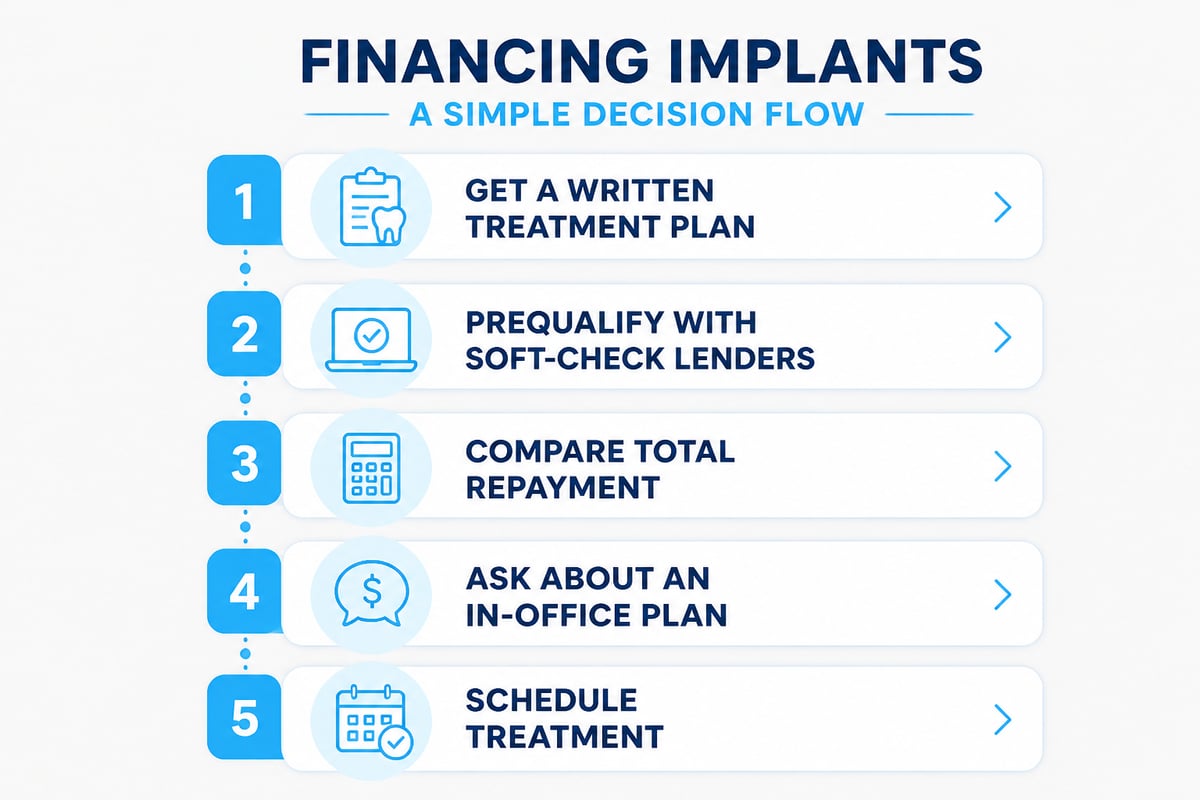
Choose by matching the amount you need to a lender's range, then compare total repayment rather than the monthly payment alone. A short checklist keeps the decision simple.
- Under about $5,000: A promotional window or an in-office plan can keep interest low if you repay quickly.
- Mid-sized amounts: LendingClub or Sunbit, depending on how long you need to repay.
- Large amounts, such as full-arch work: LendingClub or Proceed Finance, whose higher ceilings can accommodate them.
- Uncertain credit: Prequalify with soft-check lenders and compare offers side by side.
Think about the treatment itself too. Choosing the cheapest option is not always the lowest long-term cost, a point covered in our comparison of cheap vs premium dental implants. If cost is the main barrier, the page on affordable dental implants outlines how treatment can be planned to fit a budget.
Common Objections About Financing Implants
Most hesitation falls into three concerns, and each has a practical answer.
"I don't want to take on debt." Compare the cost of waiting. Missing teeth can lead to bone loss and more complex work later, which raises the bill; see our explanation of dental implants and bone loss. A 0% plan paid on schedule adds no interest at all.
"My credit isn't great." Soft-check prequalification lets you see offers without a score impact. A co-signer or a smaller, phased treatment plan can also help.
"Implants cost too much compared with alternatives." Bridges and dentures have lower upfront prices, but long-term value differs. Our guides on dental implants vs bridges and whether dental implants are worth the cost lay out the tradeoffs.
FAQ
Does dental insurance cover implants?
Coverage varies by plan, and many plans limit or exclude implants while covering related procedures such as extractions or crowns.
What if I don't have insurance?
You can still finance treatment.
Where can I get dental implants near me in Texas?
Dental Plus Clinic has five Texas locations: Beeville, Seguin, New Braunfels, Leander and Converse.
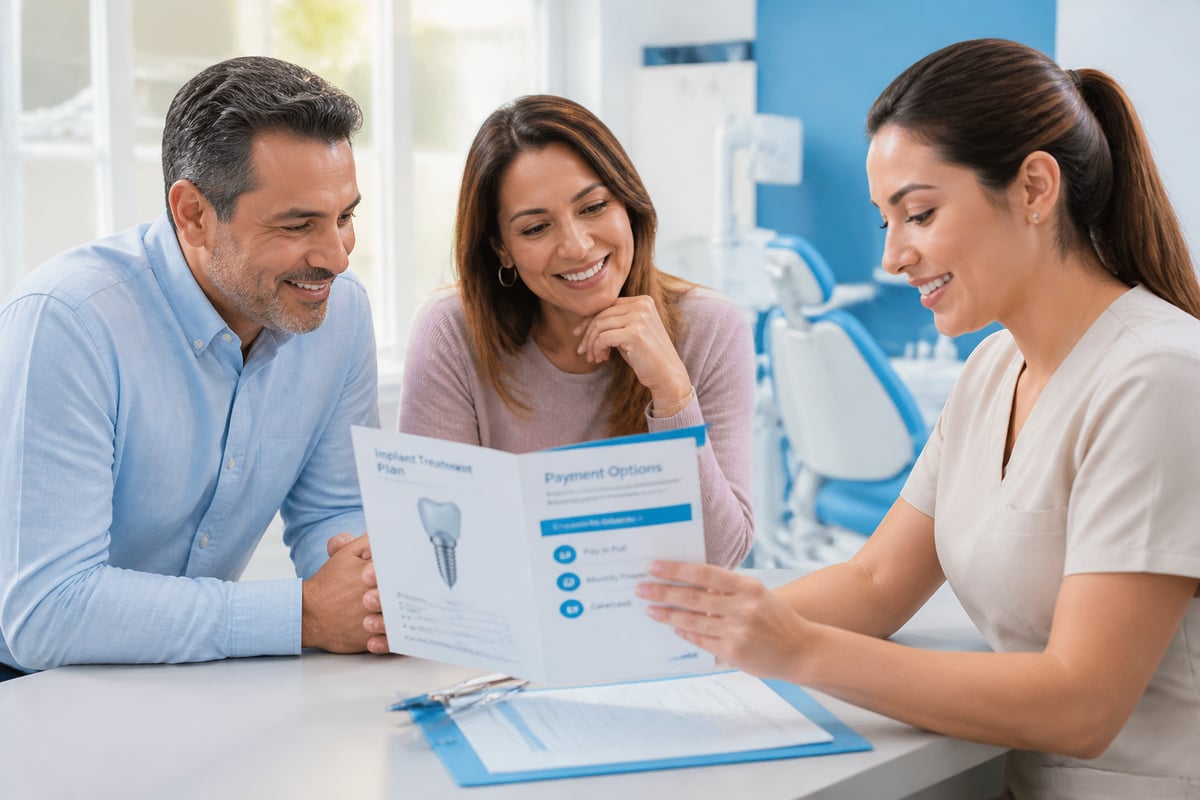
Start by requesting a written, itemized treatment plan so you know the exact amount to finance, then prequalify with one or two of the soft-check lenders above before you commit. Dental Plus Clinic shares pricing ahead of treatment, offers dental implants with in-house crowns, and can walk you through your options at the office nearest you, so book an appointment with Dental Plus Clinic to get your plan and payment questions answered in one visit.