

Understanding dental insurance coverage can feel overwhelming, especially when trying to determine which services are fully covered and which require out-of-pocket expenses. Many patients face confusion about coverage percentages, annual maximums, and waiting periods, leading to unexpected bills after dental visits. Knowing the specifics of your dental plan empowers you to make informed decisions about your oral health care, schedule treatments strategically, and budget appropriately for procedures that require higher patient contributions. This comprehensive guide explains how dental insurance works, what services typically receive full coverage, and the common limitations you should understand before your next appointment.
How Dental Insurance Coverage Works
Dental insurance operates differently from traditional medical insurance, focusing on preventive care rather than emergency treatment. Most dental plans structure coverage in tiers, with preventive services receiving the highest percentage of coverage and major procedures requiring larger patient contributions. This approach encourages regular dental visits and early intervention to prevent costly treatments later.
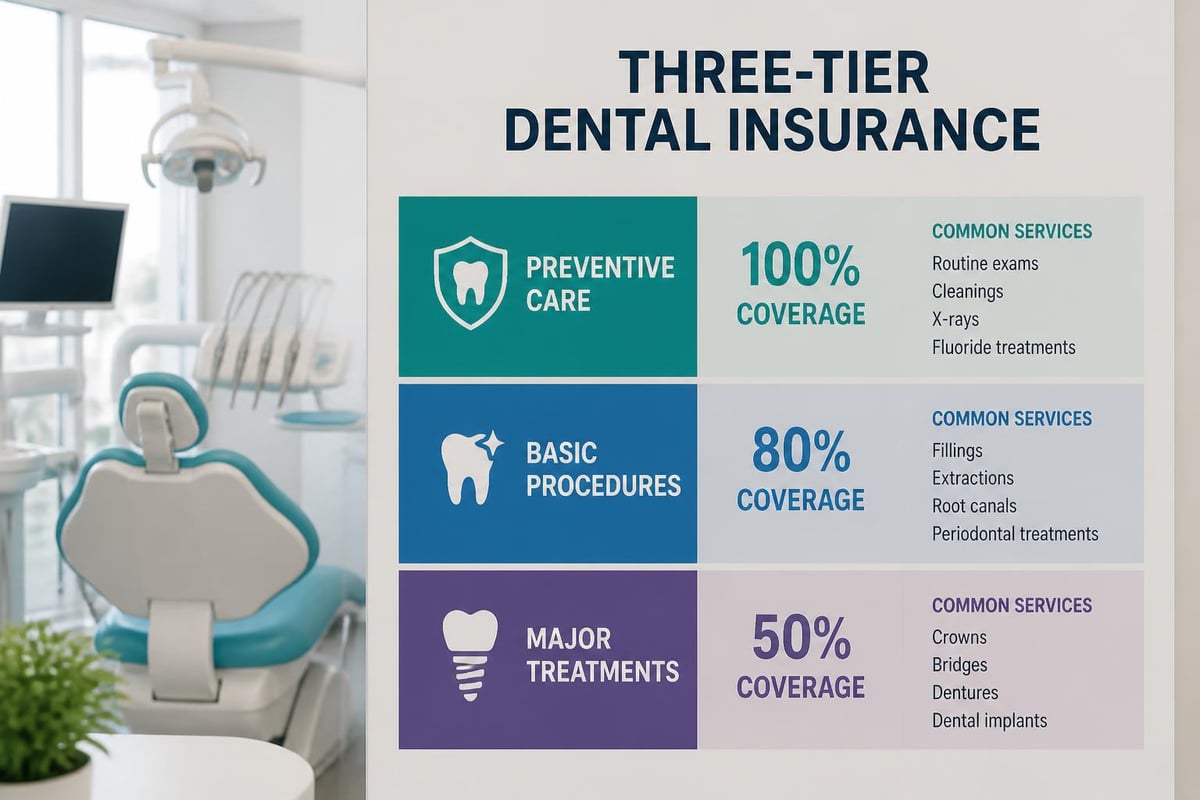
The typical coverage structure divides services into three categories:
- Preventive services: Usually covered at 80-100%
- Basic procedures: Typically covered at 70-80%
- Major treatments: Generally covered at 50%
Understanding how dental insurance works helps patients plan their dental care throughout the year. Plans also include annual maximums, which cap the total amount the insurance company will pay in a given year. Once you reach this limit, you become responsible for 100% of additional costs until the next benefit year begins.
The Role of Deductibles and Copayments
Before your dental insurance coverage begins paying for services, you may need to meet an annual deductible. This amount varies by plan but typically ranges from $50 to $150 per individual. Some plans waive deductibles for preventive services, meaning your cleanings and checkups receive full coverage from the first visit.
Copayments represent your portion of treatment costs after the insurance pays its percentage. For example, if your plan covers basic fillings at 80% and the procedure costs $200, you would pay $40 while the insurance covers $160. These predictable cost-sharing arrangements help patients budget for dental care while maintaining access to necessary treatments.
What Dental Services Are Covered at 100%
Most dental insurance plans provide full coverage for preventive services, recognizing that regular maintenance prevents expensive problems. These services form the foundation of good oral health and help detect issues before they require extensive treatment. Choosing a dental clinic that accepts insurance ensures you maximize these benefits without surprise costs.
Routine Examinations and Cleanings
Comprehensive oral examinations typically receive 100% dental insurance coverage twice per year. During these visits, dentists evaluate your overall oral health, check for cavities, assess gum condition, and screen for oral cancer. The examination provides a complete picture of your dental wellness and identifies potential concerns early.
Professional cleanings, also called prophylaxis, remove plaque and tartar buildup that regular brushing cannot eliminate. Most plans cover two cleanings annually at 100%, though some allow additional cleanings for patients with periodontal disease. These preventive visits cost nothing out-of-pocket when you stay within your plan's frequency limits.
| Preventive Service | Typical Coverage | Annual Frequency |
|---|---|---|
| Comprehensive Exam | 100% | 2 visits |
| Routine Cleaning | 100% | 2 visits |
| Dental X-rays | 80-100% | Once per year |
| Fluoride Treatment | 100% | Children under 18 |
| Sealants | 80-100% | Children's molars |
Diagnostic X-rays and Imaging
Dental x-rays help identify problems invisible during visual examinations, including cavities between teeth, bone loss, and impacted teeth. Bitewing x-rays, which show upper and lower back teeth, receive full or near-full coverage once per year under most plans. Full mouth x-rays, typically needed every three to five years, may have slightly lower coverage percentages.
Panoramic x-rays provide a complete view of your entire mouth, jaw, and surrounding structures. While these advanced images offer comprehensive diagnostic information, coverage percentages vary by plan, with some providing 100% coverage and others requiring patient cost-sharing. Always verify your specific plan's imaging coverage before scheduling advanced diagnostic procedures.
Understanding Basic Procedure Coverage
Basic dental procedures address common problems like cavities and minor gum issues. While not covered at 100%, these services typically receive 70-80% dental insurance coverage, making them affordable for most patients. The American Dental Association provides insights into typical dental plan benefits and limitations that affect basic procedure coverage.
Fillings and Simple Extractions
Dental fillings restore teeth damaged by decay, preventing further deterioration and preserving tooth structure. Most insurance plans cover fillings at 70-80% regardless of material, though some plans differentiate between amalgam (silver) and composite (tooth-colored) fillings. Understanding these distinctions helps you discuss options with your dentist and anticipate costs.
Simple tooth extractions remove severely damaged or problematic teeth that cannot be saved. These procedures receive similar coverage percentages as fillings, typically 70-80% of the allowed amount. The extraction category includes fully erupted teeth that can be removed without surgical intervention, differentiating them from surgical extractions that may fall under major services.
Common basic procedures and typical coverage:
- Composite fillings: 70-80% coverage
- Amalgam fillings: 70-80% coverage
- Simple extractions: 70-80% coverage
- Root canal therapy: 70-80% coverage
- Periodontal scaling: 70-80% coverage
Root Canals and Periodontal Treatment
Root canal therapy saves infected teeth by removing damaged pulp and sealing the tooth's interior. Despite their reputation as major procedures, most insurance plans classify root canals as basic services, providing 70-80% coverage. This classification makes preserving natural teeth financially accessible compared to extraction and replacement options.
Periodontal scaling and root planing treat gum disease by removing bacteria and smoothing root surfaces. These deep cleaning procedures extend below the gumline and require more time than routine cleanings. Coverage typically falls in the 70-80% range, though frequency limitations may apply. Some plans require documentation of periodontal disease before approving coverage for these therapeutic treatments.
Major Dental Treatments and Coverage Limits
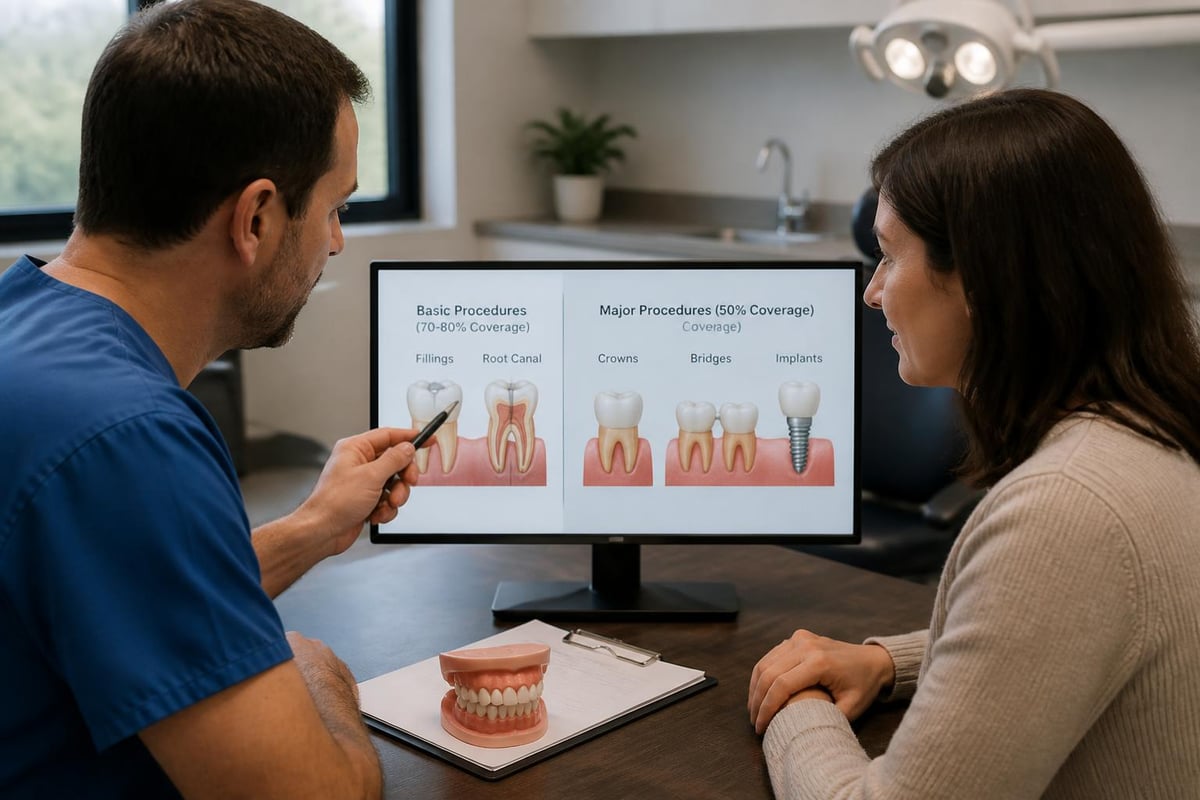
Major dental treatments represent the most expensive category, typically covered at 50% by standard dental insurance coverage. These procedures restore significant damage, replace missing teeth, or provide extensive reconstructive work. Understanding dental insurance versus dental savings plans helps patients evaluate the best financial approach for major treatments.
Crowns, Bridges, and Dentures
Dental crowns cap damaged teeth, providing strength and protection while restoring appearance. Insurance companies typically cover crowns at 50% when deemed medically necessary rather than purely cosmetic. Plans often impose frequency limitations, such as one crown per tooth every five to seven years, preventing coverage for elective replacements.
Bridges replace missing teeth by anchoring artificial teeth to adjacent natural teeth. These restorations maintain bite alignment and prevent remaining teeth from shifting. With 50% coverage, bridges represent a significant investment, though less expensive than individual dental implants. Fixed bridges typically receive better coverage than removable partial dentures.
| Major Treatment | Coverage Percentage | Frequency Limitation | Waiting Period |
|---|---|---|---|
| Crown | 50% | Every 5-7 years | 6-12 months |
| Bridge | 50% | Once per missing tooth | 6-12 months |
| Dentures | 50% | Every 5-8 years | 6-12 months |
| Implants | 0-50% | Varies by plan | 12-24 months |
Complete and partial dentures replace multiple missing teeth, restoring function and aesthetics. Full dentures receive 50% coverage under most plans, with replacement allowed every five to eight years. This frequency limitation accounts for normal wear and the need for periodic adjustments as gum tissue changes over time.
Dental Implant Coverage Challenges
Dental implants represent the gold standard for tooth replacement, but coverage remains inconsistent across plans. Some insurers exclude implants entirely, considering them cosmetic or elective. Other plans provide 50% coverage up to the annual maximum, though this may not significantly reduce the total cost given implant expenses.
When comparing options like All-on-4 versus All-on-6 dental implants, understanding your specific plan's implant coverage becomes critical. Many patients discover that dental insurance coverage for implants applies only to the crown portion, not the surgical placement or abutment. This partial coverage still provides some financial relief while requiring substantial out-of-pocket investment.
Strategies for managing major treatment costs:
- Schedule treatments across benefit years to maximize annual maximums
- Verify pre-authorization before beginning expensive procedures
- Request itemized treatment plans showing insurance portions
- Consider payment plans for patient responsibility amounts
- Explore supplemental coverage or discount programs for major work
Annual Maximums and Coverage Restrictions
Annual maximums represent the total amount your dental insurance coverage will pay in a calendar or benefit year. Once you reach this limit, you assume 100% responsibility for additional treatment costs until the maximum resets. Most plans set maximums between $1,000 and $2,000, amounts that have remained relatively stagnant despite rising dental care costs.
Planning Around Annual Limits
Strategic treatment planning helps maximize your dental insurance coverage across multiple years. For extensive work requiring several major procedures, splitting treatments between December and January allows you to utilize two years of benefits. This approach effectively doubles your coverage by accessing consecutive annual maximums.
Understanding your remaining annual maximum before scheduling major work prevents unexpected costs. Many dental offices verify benefits and provide estimates showing insurance portions and patient responsibilities. This transparency helps you make informed decisions about timing and treatment sequencing for optimal financial outcomes.
Patients who exhaust their annual maximum mid-year face difficult choices about postponing necessary treatment or paying entirely out-of-pocket. Finding a dentist that accepts dental insurance in Texas who works with you on treatment timing can significantly reduce financial burden while maintaining oral health.
Waiting Periods for Major Services
Most dental insurance plans impose waiting periods before covering major services, typically ranging from six to twelve months after enrollment. These waiting periods prevent individuals from purchasing insurance only when facing expensive treatment needs. Preventive and basic services usually have no waiting periods or very short ones.
Common waiting period structures:
- Preventive services: No waiting period
- Basic procedures: 0-6 month waiting period
- Major treatments: 6-12 month waiting period
- Orthodontics: 12-24 month waiting period
Understanding these restrictions when selecting or changing insurance prevents coverage surprises. Some employer-sponsored plans waive waiting periods for continuous coverage transitions, but individual plans typically enforce full waiting periods. Planning dental work around these timelines ensures you receive maximum benefit from your dental insurance coverage.
What Medicare and Medicaid Cover
Traditional Medicare provides limited dental insurance coverage, creating challenges for retirees and disabled individuals. According to Medicare’s dental coverage policies, the program covers dental services only when integral to covered medical procedures or provided as part of hospital inpatient care. Routine dental care, examinations, cleanings, and most treatments receive no Medicare coverage.
Medicare Advantage Dental Benefits
Medicare Advantage plans often include supplemental dental benefits not available through Original Medicare. These plans may cover preventive services, basic procedures, and even major treatments, though coverage percentages and annual maximums vary significantly between plans. Reviewing Medicare.gov’s explanation of dental services helps beneficiaries understand their options.
The dental benefits in Medicare Advantage plans typically mirror private dental insurance structures, with tiered coverage percentages and annual maximums. However, these benefits may come with network restrictions, requiring you to visit specific dentists to receive coverage. Comparing plans during the annual enrollment period ensures you select coverage matching your dental health needs.
Medicaid Dental Coverage for Adults
Medicaid dental benefits for adults vary dramatically by state, with some providing comprehensive coverage and others offering only emergency services. Texas Medicaid, for example, provides limited adult dental coverage focused primarily on pain relief and infection control. Children receive more extensive coverage through the Early and Periodic Screening, Diagnostic and Treatment (EPSDT) program.
Understanding your state's Medicaid dental benefits prevents assumptions about coverage availability. Many adults discover that routine preventive care and restorative treatments require out-of-pocket payment or alternative coverage solutions. State-specific resources from sources like the Washington State Office of the Insurance Commissioner provide detailed information about local coverage options.

Common Exclusions and Limitations
Even comprehensive dental insurance coverage includes exclusions and limitations that affect your benefits. Understanding these restrictions prevents surprise denials and helps you plan for costs the insurance will not cover. The American Dental Association addresses common insurance issues that frequently affect patients seeking care.
Cosmetic Procedures and Elective Treatments
Most dental insurance plans exclude purely cosmetic procedures, considering them elective rather than medically necessary. Teeth whitening, veneers for aesthetic improvement, and cosmetic bonding typically receive no coverage regardless of patient desire for these services. The distinction between cosmetic and restorative work sometimes creates gray areas requiring insurance review.
For example, a crown may be necessary to restore a broken tooth or purely to improve appearance. The former receives coverage while the latter does not. Documentation from your dentist explaining medical necessity helps secure approval for borderline cases. When considering aesthetic improvements like veneers, understanding these limitations helps you budget appropriately.
Commonly excluded services:
- Professional teeth whitening and bleaching
- Cosmetic veneers without functional purpose
- Gum recontouring for aesthetic reasons
- Replacement of lost or stolen dental appliances
- Experimental or investigational treatments
Pre-existing Conditions and Missing Tooth Clauses
Some dental insurance plans include missing tooth clauses that exclude coverage for replacing teeth lost before insurance effective dates. This limitation particularly affects patients who delayed tooth replacement and later obtained coverage expecting to receive benefits for replacement options. Understanding these clauses before enrollment prevents costly surprises.
Pre-existing condition limitations may also affect treatment for ongoing dental problems. While less common in dental insurance than medical coverage, some plans impose waiting periods or coverage exclusions for conditions diagnosed before enrollment. Reading policy documents carefully and asking specific questions during plan selection helps identify these potential obstacles.
Orthodontic Coverage Considerations
Orthodontic treatment receives separate consideration in most dental insurance coverage structures, often with lifetime maximums rather than annual limits. Children's orthodontic care typically receives better coverage than adult treatment, with many plans covering 50% of costs up to a lifetime maximum of $1,500 to $2,000. Understanding the importance of orthodontics helps families prioritize this care.
Age Restrictions and Treatment Types
Many dental plans limit orthodontic coverage to dependent children under age 18 or 19, excluding adult orthodontic treatment entirely. This age restriction reflects traditional views of orthodontics as primarily pediatric care, though adult treatment has become increasingly common. Plans offering adult orthodontic coverage typically apply the same lifetime maximum as children's benefits.
Treatment type may also affect coverage, with traditional metal braces receiving full consideration while clear aligners like Invisalign face restrictions. Some plans specifically exclude clear aligner systems or cover them at lower percentages than conventional braces. Verifying your plan's specific orthodontic provisions before beginning treatment prevents financial surprises during the multi-year process.
According to FAIR Health’s discussion of dental coverage, orthodontic benefits often require separate deductibles and may impose strict payment schedules tied to treatment progress rather than allowing lump-sum payments.
Lifetime Maximums and Payment Structures
Orthodontic lifetime maximums typically range from $1,000 to $3,000, with $1,500 being most common. This amount applies across the patient's entire life under that plan, not renewing annually like regular dental benefits. Once exhausted, no additional orthodontic coverage becomes available regardless of treatment needs.
Payment typically follows treatment progress, with insurance companies paying their portion in installments as the orthodontist completes specific milestones. This structure protects insurers if patients change plans mid-treatment but can complicate financial planning. Understanding payment timing helps families budget monthly orthodontic costs accurately throughout the treatment period.
Network Restrictions and Provider Choices
Dental insurance coverage often depends on using in-network providers who have contracted with your insurance company for specific fee schedules. In-network dentists agree to accept reduced fees in exchange for patient referrals, resulting in lower out-of-pocket costs. Out-of-network providers may charge higher fees, with insurance covering only a portion based on "usual and customary" rates.
PPO, HMO, and Indemnity Plans
Preferred Provider Organization (PPO) plans offer the most flexibility, allowing you to visit any dentist while providing higher coverage percentages for in-network providers. You can see out-of-network dentists, though your costs increase due to balance billing. This flexibility makes PPO plans popular despite typically higher premiums.
Health Maintenance Organization (HMO) dental plans require you to select a primary care dentist from the network and obtain referrals for specialist care. These plans offer lower premiums and copayments but restrict your provider choices significantly. Coverage typically does not apply to out-of-network care except for true emergencies.
| Plan Type | Provider Choice | Referrals Required | Out-of-Network Coverage | Premium Cost |
|---|---|---|---|---|
| PPO | Any dentist | No | Reduced coverage | Higher |
| HMO | Network only | Yes | Emergency only | Lower |
| Indemnity | Any dentist | No | Same as in-network | Highest |
Indemnity plans, becoming increasingly rare, allow you to visit any dentist with consistent coverage percentages regardless of network status. These plans typically carry the highest premiums but provide maximum flexibility for patients with established dentist relationships or specific care preferences.
Impact on Treatment Access
Network restrictions significantly affect your ability to access specialized care and preferred providers. Patients with complex needs requiring specialists may face limited options under restrictive networks, particularly in rural areas. Before selecting a plan, verify that your current dentist participates or that adequate in-network alternatives exist near you.
Understanding the public’s misunderstanding of dental insurance helps explain why many patients experience frustration with network limitations and coverage denials. Unlike medical insurance, dental insurance coverage rarely includes emergency out-of-network provisions, leaving patients responsible for significant costs if they require urgent care while traveling or cannot access network providers.
Maximizing Your Dental Insurance Benefits
Strategic use of dental insurance coverage ensures you receive maximum value while maintaining optimal oral health. Planning your dental care calendar around benefit structures, understanding coverage percentages, and timing major work appropriately all contribute to reduced out-of-pocket expenses and better financial outcomes.
Timing Treatments for Maximum Coverage
Schedule preventive visits early in the benefit year to identify problems before they require expensive treatment. Using your two covered cleanings strategically, such as every six months, maintains good oral health while maximizing benefits. If your dentist identifies issues during these visits, you have remaining annual maximum to address them.
For extensive treatment plans requiring multiple major procedures, work with your dentist to sequence treatments across benefit years. Beginning work in November or December and completing it in January or February allows you to access two years of annual maximums. This strategic timing can save thousands of dollars on complex cases requiring multiple crowns, implants, or other major work.
Tips for maximizing dental insurance coverage:
- Use all preventive benefits early each year
- Schedule comprehensive exams to catch problems early
- Request pre-authorization for major procedures
- Split extensive treatment across benefit years
- Understand your remaining annual maximum before scheduling work
- Keep detailed records of treatments and payments
- Appeal denied claims when services seem appropriately covered
Understanding Pre-authorization Requirements
Many insurance plans require pre-authorization before covering major dental treatments, allowing them to review medical necessity and approve coverage before you incur expenses. Failing to obtain pre-authorization may result in claim denials, leaving you responsible for the full cost despite having dental insurance coverage.
The pre-authorization process typically takes two to three weeks, requiring your dentist to submit treatment plans, x-rays, and narratives explaining why the procedure is necessary. The insurance company reviews these materials and issues an approval with the covered amount or a denial with explanation. This advance knowledge helps you budget accurately and avoid surprise bills.
Working with dental offices experienced in insurance matters streamlines this process and improves approval rates. Offices that regularly handle insurance claims understand documentation requirements and can provide compelling justifications for necessary treatments. Their expertise benefits patients through faster approvals and higher success rates on complex cases.
Financial Alternatives When Coverage Falls Short
Even comprehensive dental insurance coverage may not adequately address all your oral health needs, particularly for major treatments or when you have exhausted annual maximums. Understanding alternative payment options ensures you can access necessary care regardless of insurance limitations. Exploring options like reducing costs for dental care provides additional strategies for affordable treatment.
Dental Savings Plans and Discount Programs
Dental savings plans operate differently from traditional insurance, offering discounted fees for members who pay an annual subscription. These plans negotiate reduced rates with participating dentists, typically saving 10-60% on various procedures. While not insurance, they provide predictable costs and can supplement existing dental insurance coverage for services with high patient responsibilities.
Discount programs work particularly well for major treatments like implants, orthodontics, or extensive cosmetic work that insurance covers minimally or excludes entirely. The combination of insurance for preventive and basic care with discount plans for major work often provides better value than insurance alone. Comparing total costs across different approaches helps identify the most economical solution for your specific situation.
Payment Plans and Healthcare Financing
Many dental practices offer in-house payment plans allowing you to spread treatment costs over several months without interest. These arrangements typically require a down payment followed by monthly installments, making expensive procedures manageable without large lump-sum payments. In-house financing often provides more flexible terms than outside lenders, particularly for established patients.
Third-party healthcare financing companies like CareCredit provide credit specifically for medical and dental expenses. These programs often feature promotional periods with zero interest if you pay the balance within specified timeframes, typically 6-24 months depending on the amount financed. Reading terms carefully prevents surprise interest charges if you cannot meet the promotional payoff schedule.
Alternative payment strategies:
- Healthcare credit cards with promotional interest rates
- Health Savings Accounts (HSAs) for tax-advantaged payments
- Flexible Spending Accounts (FSAs) through employers
- Dental school clinics offering reduced-cost care
- Community health centers with sliding fee scales
- Negotiated cash discounts for paying in full
Special Considerations for Families
Family dental insurance coverage requires understanding how benefits apply across multiple members and how plan structures affect children versus adults. Most family plans include individual deductibles and a family maximum deductible, after which all covered family members receive benefits without additional deductible requirements. This structure benefits larger families with multiple members needing care.
Children's Coverage and Pediatric Benefits
Children typically receive enhanced preventive benefits under dental insurance coverage, including fluoride treatments through age 18 and sealants for permanent molars. These additional preventive services reflect the importance of establishing good oral health habits early and protecting developing teeth from decay. Taking advantage of these benefits prevents cavities and reduces future treatment needs.
Pediatric orthodontic coverage provides significant value for families with children requiring braces or other corrective appliances. Starting treatment at optimal ages, typically between 10-14 years old, maximizes both clinical outcomes and insurance benefits. Understanding your plan's orthodontic provisions early allows you to plan financially for treatment costs over the multi-year period.
Teaching children about avoiding tooth decay complements preventive benefits by establishing habits that minimize future dental problems. Regular use of covered preventive services combined with good home care creates the foundation for lifelong dental health.
Coordination of Benefits with Multiple Plans
Families with access to dental insurance coverage through multiple employers must coordinate benefits to maximize coverage. The primary plan pays first according to its benefits structure, then the secondary plan covers remaining eligible expenses up to 100% of allowed charges. This coordination can eliminate patient responsibility for many services.
Determining primary versus secondary coverage follows specific rules, typically designating the plan covering the patient as an employee as primary over plans covering them as a dependent. For children covered under both parents' plans, the "birthday rule" usually applies, making the plan of the parent with the earlier birthday in the calendar year primary.
Filing claims with both insurers requires submitting the primary plan's explanation of benefits to the secondary plan along with the original claim. While this process adds administrative steps, the potential for zero out-of-pocket costs on covered services makes it worthwhile for families with dual coverage options.
Handling Claim Denials and Appeals
Claim denials occur for various reasons, from simple administrative errors to disagreements about medical necessity. Understanding denial reasons and appeal processes protects your right to dental insurance coverage for appropriate treatments. Most denials fall into categories that can be addressed through proper documentation or procedural corrections.
Common Denial Reasons
Frequency limitations cause denials when patients seek services more often than plan provisions allow. For example, requesting a third cleaning in one year when your plan covers only two typically results in denial. These denials are straightforward and usually cannot be appealed successfully unless extenuating circumstances exist, such as periodontal disease requiring additional cleanings.
Medical necessity denials require more complex responses, as insurance companies question whether the treatment is essential rather than elective. Your dentist's documentation supporting the procedure's necessity becomes critical in appeals. Detailed narratives explaining why alternatives would be inadequate and how the treatment addresses specific health concerns strengthen appeal success rates.
Steps for successful claim appeals:
- Review the denial explanation carefully to understand the reason
- Contact your dentist's office to discuss the denial
- Request detailed documentation supporting medical necessity
- Submit a formal written appeal with supporting evidence
- Follow up regularly on appeal status
- Escalate to state insurance commissioners if necessary
- Consider external review options for final denials
Documentation and Appeal Procedures
Successful appeals require comprehensive documentation demonstrating why the service qualifies for dental insurance coverage under your plan provisions. X-rays, clinical photographs, periodontal charts, and detailed narratives from your dentist provide compelling evidence of medical necessity. The stronger your documentation, the higher your likelihood of reversal.
Most insurance companies require appeals within specific timeframes, typically 60-180 days from the denial date. Missing these deadlines may forfeit your appeal rights regardless of the claim's merit. Understanding your plan's specific appeal procedures and adhering to all requirements maximizes your chances of successful reversal and payment.
Persistent appeals sometimes proceed through multiple levels, from initial reconsideration to formal administrative reviews and potentially external independent reviews. While this process can be time-consuming, significant treatment costs justify the effort. Many patients successfully overturn denials through systematic appeals with proper documentation.
Understanding dental insurance coverage empowers you to make informed decisions about your oral health care while managing costs effectively. By knowing what services receive full coverage, how to maximize your annual benefits, and when alternative payment options make sense, you can maintain excellent dental health without financial stress. At Dental Plus Clinic, our team helps patients navigate insurance complexities, verify benefits before treatment, and access comprehensive dental care across our five Texas locations. Whether you need routine preventive care or advanced restorative treatments, Dental Plus Clinic works with you to maximize your insurance benefits and create affordable treatment solutions that prioritize your oral health and overall wellness.