

Understanding whether your dental insurance will cover dentures is crucial for anyone facing tooth loss or planning for tooth replacement. Many patients find themselves needing dentures but uncertain about what their insurance plan will actually pay. The question "does dental insurance cover dentures" comes up frequently at dental practices across Texas, especially among seniors and adults who've experienced significant tooth loss due to decay, gum disease, or injury. The answer isn't always straightforward, as coverage varies dramatically based on your insurance type, plan limitations, waiting periods, and annual maximums. This comprehensive guide will walk you through everything you need to know about denture coverage, costs, and alternatives available to Texas families.
Understanding Dental Insurance Coverage for Dentures
Dental insurance policies typically categorize procedures into three main classes: preventive, basic, and major services. Dentures fall into the major services category, which generally receives the lowest level of coverage compared to preventive care like cleanings and exams.
Most dental insurance plans operate on a percentage-based reimbursement structure. While preventive services might be covered at 100% and basic procedures at 70-80%, major services like dentures typically receive only 50% coverage. This means that even with insurance, you'll likely be responsible for half the total cost.
Coverage Percentages Across Different Plan Types
| Plan Type | Preventive Coverage | Basic Coverage | Major Coverage (Dentures) | Annual Maximum |
|---|---|---|---|---|
| PPO Plans | 100% | 80% | 50% | $1,000-$2,000 |
| HMO Plans | 100% | 80% | 50% | $1,000-$1,500 |
| Discount Plans | 10-60% discount | 10-60% discount | 10-60% discount | No maximum |
| Medicare Original | Not covered | Not covered | Not covered | N/A |
| Medicare Advantage | Varies | Varies | 0-50% | Varies by plan |
The American Dental Association explains typical dental plan benefits and limitations, noting that major services like dentures almost always come with waiting periods and are subject to annual maximums.

Does Dental Insurance Cover Dentures Under Medicare and Medicaid?
Original Medicare does not cover dentures in most situations. According to Medicare.gov’s official guidance on dental services, routine dental care including dentures, fillings, and tooth extractions are explicitly excluded from coverage. This leaves millions of seniors without coverage for these essential services.
However, some exceptions exist:
- Medicare Advantage plans may offer dental benefits including partial denture coverage
- Medicaid programs in certain states provide denture coverage for eligible individuals
- Medically necessary dental care connected to covered medical procedures may qualify
State-by-State Medicaid Coverage Variations
Medicaid dental benefits, including denture coverage, vary significantly across states. Kaiser Family Foundation tracks state-by-state Medicaid dental benefits, revealing that while some states offer comprehensive denture coverage, others provide emergency-only services.
In Texas, Medicaid dental coverage for adults is limited. Adults typically receive only emergency extractions, which makes planning for dentures particularly challenging for low-income families. Children under Medicaid receive more comprehensive coverage through the Early and Periodic Screening, Diagnostic and Treatment (EPSDT) benefit.
For patients exploring tooth replacement options for seniors, understanding these coverage limitations is essential for financial planning.
Types of Dentures and Insurance Coverage Differences
Not all dentures are covered equally by insurance plans. Understanding the differences helps you anticipate your out-of-pocket costs and plan accordingly.
Complete (Full) Dentures
Full dentures replace all teeth in the upper or lower jaw. Most insurance plans that cover dentures will cover complete dentures at the major services level (typically 50%). The average cost for complete dentures ranges from $1,300 to $3,200 per arch before insurance.
What insurance typically covers:
- Conventional full dentures (after healing from extractions)
- Immediate dentures (placed immediately after tooth removal)
- Standard acrylic denture materials
What insurance rarely covers:
- Premium denture materials
- Implant-supported dentures
- Same-day denture services beyond standard protocols
Partial Dentures
Partial dentures fill gaps when some natural teeth remain. Insurance coverage for partials follows similar rules to full dentures, though some plans classify simple partials as basic services with higher reimbursement rates.
The distinction matters financially:
- Cast metal partial dentures: Usually covered at 50% as major services
- Flexible partial dentures: May not be covered at all (considered cosmetic)
- Flipper teeth (temporary partials): Sometimes covered as a temporary solution
Premium vs. Economy Dentures
Insurance plans typically cover only the cost of economy or standard dentures. If you choose premium dentures with advanced materials, better aesthetics, or specialized fabrication, you'll pay the difference out of pocket.
| Denture Type | Average Cost | Typical Insurance Payment (50%) | Patient Responsibility |
|---|---|---|---|
| Economy Dentures | $600-$1,200 | $300-$600 | $300-$600 |
| Mid-Range Dentures | $1,300-$2,500 | $650-$1,250 | $650-$1,250 |
| Premium Dentures | $2,500-$5,000 | $650-$1,250 | $1,850-$3,750 |
| Implant-Supported | $4,000-$8,000+ | $0-$2,000 | $4,000-$6,000+ |
Most insurance plans have a predetermined allowable fee schedule. Even if your dentist charges more, the insurance will only pay their scheduled amount.
Waiting Periods and Annual Maximums
Two critical policy features significantly impact whether does dental insurance cover dentures effectively for your situation: waiting periods and annual maximums.
Waiting Periods Explained
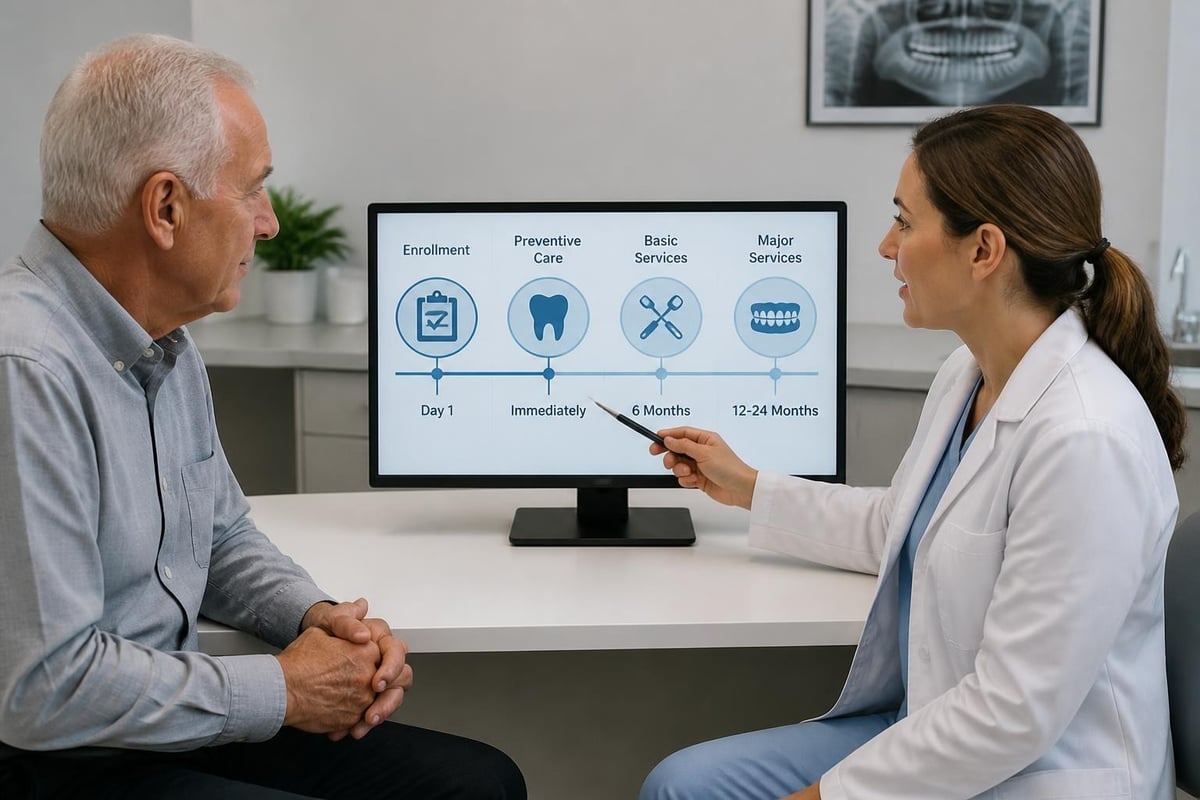
Waiting periods prevent people from purchasing insurance only when they need expensive work done. For major services like dentures, waiting periods typically range from 6 to 24 months.
Common waiting period structures:
- No waiting period: Preventive services (cleanings, exams)
- 6-month waiting period: Basic services (fillings, simple extractions)
- 12-24 month waiting period: Major services (dentures, crowns, bridges)
This means if you enroll in a new dental plan in January 2026 with a 12-month waiting period for major services, you won't receive coverage for dentures until January 2027. Planning ahead is essential.
Annual Maximum Limitations
Nearly all dental insurance plans impose an annual maximum, the total amount the insurance will pay for all covered services in a calendar year. Once you reach this limit, you're responsible for 100% of additional costs until the next year begins.
Typical annual maximums range from $1,000 to $2,000. Consider this scenario:
Example: Your plan has a $1,500 annual maximum and covers dentures at 50%. Full upper and lower dentures cost $5,000.
- Insurance will pay: $1,500 (hits annual maximum)
- You pay: $3,500
If you also needed other dental work that year (cleanings, fillings), those expenses count toward your maximum, leaving even less for dentures.
Common Insurance Plan Types and Denture Coverage
Understanding your specific plan type helps answer does dental insurance cover dentures for your situation. Different insurance structures handle coverage differently.
Preferred Provider Organization (PPO) Plans
PPO plans offer the most flexibility. You can visit any dentist, but you'll save money by choosing in-network providers who've agreed to discounted fee schedules.
Denture coverage characteristics:
- 50% coverage for in-network dentures
- Reduced coverage (30-40%) for out-of-network providers
- Access to negotiated rates even for your portion
- Annual maximums apply
At Dental Plus Clinic’s locations accepting major PPO plans, patients benefit from pre-negotiated rates that reduce overall costs even before insurance applies.
Health Maintenance Organization (HMO) Plans
HMO dental plans require you to select a primary care dentist from the network. You must receive all care from this dentist except in emergencies.
Advantages:
- Lower monthly premiums
- No deductibles
- Predictable copayments
Disadvantages:
- Very limited provider choice
- Must stay in-network for any coverage
- Referrals required for specialists
Dental Discount Plans
Technically not insurance, discount plans provide reduced fees at participating dentists. You pay an annual membership fee and receive 10-60% discounts on all services.
These plans have no waiting periods and no annual maximums, making them attractive for people who need dentures quickly. However, savings depend entirely on the participating dentist's fee schedule.
Medicare Advantage and Dental Benefits
While Original Medicare does not cover routine dental care, many Medicare Advantage (Part C) plans include dental benefits. Approximately 90% of Medicare Advantage plans offered some level of dental coverage in 2026.
What Medicare Advantage might cover:
- Routine preventive care (cleanings, exams)
- Basic restorative work (fillings)
- Major services including dentures (limited)
Coverage varies dramatically between plans. Some offer robust dental benefits with $2,500-$3,000 annual maximums, while others provide only preventive care. The CMS guidance on Medicare dental coverage clarifies when dental services may be covered as part of medically necessary care.
Choosing a Medicare Advantage Plan for Denture Coverage
If you're enrolling in Medicare Advantage and anticipate needing dentures, compare plans carefully:
- Annual dental maximum: Look for plans with at least $2,000-$3,000 maximums
- Major services coverage: Confirm dentures are covered and at what percentage
- Waiting periods: Some MA plans impose waiting periods for major work
- Network dentists: Ensure your preferred dentist participates
- Premium costs: Balance monthly premiums against dental benefits
For Texas residents, plan options vary by county. Those in the Seguin area or other Dental Plus Clinic locations should verify network participation before enrolling.
Marketplace Plans and ACA Dental Coverage
Adult dental coverage through the Health Insurance Marketplace (HealthCare.gov) works differently than medical insurance. Dental coverage is not automatically included in Marketplace health plans.
Standalone Dental Plans
You can purchase separate dental insurance through the Marketplace. These plans follow the same coverage tiers as private dental insurance:
- Preventive services: High coverage (80-100%)
- Basic services: Moderate coverage (60-80%)
- Major services including dentures: Lower coverage (40-50%)
Important note: Pediatric dental coverage is considered an essential health benefit under the ACA, but adult dental coverage is optional. This means children's dental needs, potentially including dentures after severe trauma, receive more comprehensive protection.
Out-of-Pocket Costs and Financial Planning
Even when does dental insurance cover dentures, substantial out-of-pocket expenses remain. Understanding total costs helps you plan financially.
Complete Cost Breakdown
Initial costs:
- Diagnostic exams and X-rays: $100-$300
- Tooth extractions (if needed): $75-$300 per tooth
- Bone recontouring or alveoplasty: $500-$1,500
- Immediate or temporary dentures: $500-$1,500
Denture costs:
- Economy complete dentures: $600-$1,200 per arch
- Mid-range complete dentures: $1,300-$2,500 per arch
- Premium complete dentures: $2,500-$5,000 per arch
Ongoing costs:
- Denture adjustments: $50-$200 per visit
- Relines (every 2-3 years): $200-$500
- Replacements (every 5-8 years): Full denture cost
Tax-Advantaged Payment Options
The IRS allows dental expenses including dentures to qualify for tax deductions and tax-advantaged accounts. Strategies include:
Health Savings Accounts (HSAs):
- Use pre-tax dollars for dentures and related expenses
- Available with high-deductible health plans
- Funds roll over year to year
Flexible Spending Accounts (FSAs):
- Pre-tax contributions reduce taxable income
- "Use it or lose it" annual structure
- Plan denture work to maximize FSA funds
Medical Expense Deductions:
- Deduct dental expenses exceeding 7.5% of adjusted gross income
- Include all related costs (exams, extractions, dentures, adjustments)
- Keep detailed receipts and documentation
For many Texas families, combining insurance coverage with tax-advantaged accounts makes dentures more affordable. Learning how to reduce costs for dental care provides additional strategies.
Alternatives to Traditional Insurance Coverage
When traditional insurance doesn't adequately cover dentures, several alternatives exist.
Dental Savings Plans
These membership programs provide discounted rates at participating providers. Monthly fees range from $10-$30 for individuals and $15-$50 for families.
Benefits:
- No waiting periods
- No annual maximums
- Immediate eligibility
- Discounts on all procedures
Drawbacks:
- Must use network dentists
- Discounts vary by provider
- You pay most costs out-of-pocket
Dental Schools and Training Programs
Accredited dental schools offer services performed by supervised students at significantly reduced rates. Dentures through dental schools can cost 30-60% less than private practices.
Considerations:
- Longer appointment times
- Multiple visits required
- Student competency varies
- Faculty supervision ensures quality
In Texas, dental schools in Houston, San Antonio, and Dallas offer these programs. The National Institute of Dental and Craniofacial Research provides guidance on finding low-cost dental care, including dental school clinics and community health centers.
Payment Plans and Financing
Many dental practices offer in-house payment plans or work with third-party financing companies. These options allow you to spread denture costs over months or years.
Common financing options:
- In-house payment plans: Interest-free installments directly through the dental office
- CareCredit: Healthcare credit card with promotional periods
- LendingClub: Personal loans for healthcare expenses
- Prosper Healthcare Lending: Specialized dental financing

Maximizing Your Denture Insurance Benefits
Strategic planning helps you get the most value from your dental insurance when you need dentures.
Timing Your Treatment
Split treatment across calendar years: If your denture procedure requires extractions, healing time, and denture fabrication, schedule strategically to maximize two years of benefits.
Example strategy:
- Year 1: Use annual maximum for extractions, bone recontouring, immediate dentures
- Year 2: Use next year's maximum for permanent dentures
This approach effectively doubles your insurance benefit from $1,500 to $3,000.
Coordinate with Spouse's Insurance
If both spouses have dental insurance, coordination of benefits rules determine how claims are processed. Primary and secondary insurance can sometimes cover more of the total cost.
Steps to coordinate benefits:
- Determine which policy is primary
- Submit claim to primary insurance first
- Submit remaining balance to secondary insurance
- Receive additional coverage up to secondary plan limits
Pre-Authorization and Treatment Planning
Always request pre-authorization before beginning denture treatment. This process provides:
- Written confirmation of coverage
- Exact benefit amounts
- Identification of exclusions
- Verification of remaining annual maximum
- Documentation for appeals if needed
Pre-authorization prevents surprises and allows you to plan financially before committing to treatment.
Frequently Asked Questions
Does dental insurance cover dentures for seniors on Medicare?
Original Medicare does not cover dentures. However, Medicare Advantage plans frequently include dental benefits that may cover a portion of denture costs, typically 50% up to the plan's annual maximum. Coverage varies significantly between plans, so comparing options during enrollment is essential.
How long do I have to have dental insurance before it covers dentures?
Most dental insurance plans impose waiting periods of 12 to 24 months for major services like dentures. Some plans offer immediate coverage for preventive and basic services but delay major service coverage to prevent adverse selection. Check your specific policy's waiting period requirements before enrolling.
Are implant-supported dentures covered by dental insurance?
Traditional dental insurance rarely covers implant-supported dentures, as implants are often classified as cosmetic or elective procedures. Some plans may cover the denture portion while excluding the implants themselves. For details on dental implants and insurance coverage, specialized consultation is recommended.
What if my annual maximum isn't enough to cover dentures?
If your denture costs exceed your annual maximum, consider splitting treatment across two calendar years, combining coverage with an HSA or FSA, negotiating a payment plan, or exploring dental discount programs. Some patients also qualify for community health center programs or dental school services at reduced rates.
Can I deduct denture expenses on my taxes?
Yes, denture expenses qualify as deductible medical expenses if your total medical and dental costs exceed 7.5% of your adjusted gross income. Keep detailed records of all related expenses, including consultations, extractions, denture fabrication, adjustments, and travel to appointments.
Do all dentists accept the same insurance for dentures?
No, dentists participate in different insurance networks. PPO plans allow you to visit any dentist but provide better benefits for in-network providers. HMO plans require you to stay within the network entirely. Always verify your dentist participates in your specific plan before beginning treatment.
Evaluating Long-Term Tooth Replacement Options
While this guide focuses on traditional dentures, understanding all tooth replacement options helps you make informed decisions about your oral health investment.
Comparing Dentures to Dental Implants
Many patients ask whether they should pursue dentures or dental implants. The choice involves considering upfront costs, long-term value, and insurance coverage.
| Factor | Traditional Dentures | Dental Implants |
|---|---|---|
| Initial Cost | $1,000-$5,000 | $15,000-$40,000+ |
| Insurance Coverage | Often 50% covered | Rarely covered |
| Lifespan | 5-8 years | 15-25+ years |
| Bone Preservation | No | Yes |
| Stability | Moderate | Excellent |
| Maintenance | Regular adjustments, relines | Minimal |
For patients wondering are dental implants worth the cost, the long-term value proposition often favors implants despite higher upfront expenses and limited insurance coverage.
Advanced Implant Solutions
Modern options like All-on-4 or All-on-6 implants provide permanent, fixed tooth replacement using fewer implants than traditional methods. While insurance coverage remains limited, understanding All-on-4 vs All-on-6 dental implants helps patients evaluate whether these advanced solutions fit their needs and budgets.
For those without insurance coverage, dental implants without insurance remain accessible through financing, payment plans, and practice-specific promotions.
Getting Dentures Without Insurance
Approximately 74 million Americans lack dental insurance. For these individuals, accessing affordable dentures requires creative strategies and community resources.
Community Health Centers
Federally Qualified Health Centers (FQHCs) and community dental clinics offer services on sliding fee scales based on income. Many Texas communities, including areas around Beeville, Converse, Leander, New Braunfels, and Seguin, have these resources available.
Finding community resources:
- Contact local health departments
- Search the HRSA health center directory
- Call 211 for community assistance information
- Contact dental societies for referral programs
Dental Charity Programs
Several organizations provide free or reduced-cost dental care to those in need:
Donated Dental Services (DDS): Serves people with permanent disabilities, elderly individuals, or those medically fragile who cannot afford care
Dental Lifeline Network: Connects vulnerable people with comprehensive treatment donated by volunteer dentists
Mission of Mercy events: Free dental clinics held periodically across the country, including Texas locations
Remote Area Medical (RAM): Traveling clinic providing free dental care in underserved areas
Negotiating with Dental Practices
Many dental practices offer discounts for cash-paying patients or those without insurance. Strategies include:
- Ask about cash discounts: Some practices offer 10-20% off for immediate payment
- Request payment plans: Interest-free installments make treatment affordable
- Inquire about practice promotions: Seasonal offers or new patient specials
- Be upfront about budget: Dentists can often suggest economical alternatives
At Dental Plus Clinic locations across Texas, the team works with patients to find affordable solutions that fit their budgets while maintaining quality care standards.
Making an Informed Decision About Dentures
Understanding does dental insurance cover dentures is just the first step. Making the right choice for your oral health involves considering your specific situation, insurance coverage, budget, and long-term goals.
Questions to Ask Your Dentist
Before proceeding with denture treatment, ask your dental care provider:
- What type of denture is best for my situation?
- What is the total cost including all appointments and adjustments?
- How much will my insurance cover based on pre-authorization?
- What payment options or financing do you offer?
- How long will the dentures last before replacement?
- What maintenance and adjustment costs should I expect?
- Are there alternative treatments I should consider?
Questions to Ask Your Insurance Company
Contact your insurance provider to clarify:
- Does my plan cover dentures, and at what percentage?
- Is there a waiting period I must satisfy first?
- How much of my annual maximum have I used this year?
- Which dentists in my area participate in my network?
- Are there any exclusions or limitations specific to dentures?
- Does my plan cover denture adjustments and relines?
- What documentation do I need to submit for pre-authorization?
Creating Your Dental Budget
Develop a realistic budget for your denture treatment:
Step 1: Get written estimates from your dentist including all procedures
Step 2: Request pre-authorization from insurance for exact coverage amounts
Step 3: Calculate your out-of-pocket responsibility
Step 4: Explore payment options (HSA, FSA, financing, payment plans)
Step 5: Build in contingency for adjustments and future maintenance
Understanding the cost of dental implants with insurance provides helpful context for comparing different tooth replacement options and their financial implications.
The Role of Preventive Care in Reducing Future Costs
While this article focuses on denture coverage, the most cost-effective strategy is preventing tooth loss in the first place. Dental insurance typically covers preventive care at 100%, making regular maintenance financially accessible.
Preventive Services Covered by Most Plans
- Biannual cleanings and exams: Detect problems early when treatment is simpler and less expensive
- Fluoride treatments: Strengthen enamel and prevent decay
- Dental X-rays: Identify hidden issues before they become serious
- Oral cancer screenings: Early detection saves lives and costs
Long-Term Cost Comparison
| Approach | Annual Cost | 20-Year Cost |
|---|---|---|
| Preventive Care Only | $200-$400 | $4,000-$8,000 |
| Delayed Care + Major Work | $500-$5,000 | $30,000-$100,000+ |
| Prevention + Early Treatment | $400-$1,000 | $8,000-$20,000 |
Investing in preventive care and addressing dental issues early dramatically reduces the likelihood of needing extensive tooth replacement later. For families, teaching children proper oral hygiene through preventing tooth decay in children creates lifelong habits that minimize future dental expenses.
How Dental Plus Clinic Supports Patients with Insurance
Understanding insurance coverage is complex, but you don't have to navigate it alone. Dental Plus Clinic's experienced team helps patients maximize their benefits and access affordable care.
Insurance Verification and Pre-Authorization
The administrative team at Dental Plus Clinic:
- Verifies coverage before your appointment
- Submits pre-authorizations for major procedures
- Explains your benefits in plain language
- Provides written estimates of your responsibility
- Helps coordinate benefits if you have multiple policies
Flexible Payment Options
Beyond insurance coverage, Dental Plus Clinic offers:
- In-house payment plans for qualified patients
- Acceptance of FSA and HSA cards
- Partnerships with healthcare financing companies
- Seasonal promotions and new patient offers available at Dental Plus Clinic promotions
Comprehensive Treatment Planning
Rather than simply addressing immediate needs, Dental Plus Clinic develops comprehensive treatment plans that:
- Consider your budget and insurance coverage
- Phase treatment to maximize benefits across calendar years
- Present multiple options at different price points
- Prioritize essential procedures while planning for future care
- Incorporate the latest dental implant technology when appropriate
State-Specific Resources for Texas Residents
Texas residents have access to specific programs and resources for dental care, including denture coverage.
Texas Medicaid Dental Programs
While Texas Medicaid adult dental coverage is limited, understanding available benefits helps eligible residents:
Children's coverage (CHIP and Medicaid): Comprehensive dental benefits including tooth replacement after trauma or severe decay
Adult emergency coverage: Emergency extractions and pain relief, but limited restorative coverage
Pregnant women: Expanded dental coverage during pregnancy and 60 days postpartum through Healthy Texas Women
Texas Department of State Health Services Resources
The Texas DSHS maintains a network of community dental clinics across the state. These clinics serve uninsured and underinsured residents on sliding fee scales.
Regional Dental Society Programs
Local dental societies in areas served by Dental Plus Clinic (San Antonio Dental Society, Texas Hill Country Dental Society) often maintain referral lists for charitable care and reduced-fee programs.
Recent Changes in Dental Insurance Coverage
The dental insurance landscape continues evolving, with several trends affecting denture coverage in 2026.
Increased Telehealth Options
Many insurance plans now cover virtual dental consultations for treatment planning and follow-up. While you can't receive dentures remotely, telehealth appointments help:
- Reduce travel time and costs
- Facilitate pre-treatment consultations
- Enable convenient follow-up check-ins
- Provide access to specialists in remote areas
Expanded Medicare Advantage Dental Benefits
Competition among Medicare Advantage plans has driven dental benefit expansions. More 2026 plans offer:
- Higher annual maximums ($2,500-$3,500)
- Reduced or eliminated waiting periods
- Coverage for additional procedures
- Lower copayments for major services
Growing Emphasis on Value-Based Care
Some innovative insurance models now focus on outcomes rather than procedures, incentivizing preventive care that reduces the need for major services like dentures. These plans may offer enhanced preventive benefits to maintain natural teeth longer.
Understanding Your Insurance Policy Documents
Reading insurance policies can be overwhelming, but understanding key terms helps you determine does dental insurance cover dentures under your specific plan.
Essential Policy Terms
Deductible: Amount you pay out-of-pocket before insurance benefits begin (common in medical/dental combined plans but less common in standalone dental insurance)
Coinsurance: Your percentage of costs after the deductible (typically 50% for dentures)
Copayment: Fixed dollar amount you pay for specific services
Annual maximum: Total amount the insurance pays in a calendar year
Lifetime maximum: Rare in modern policies, but some plans limit total lifetime benefits
Allowable fee: Insurance company's predetermined rate for procedures, regardless of what dentist charges
UCR (Usual, Customary, and Reasonable): What insurance deems appropriate based on geographic area pricing
Reading Your Explanation of Benefits (EOB)
After receiving dental care, your insurance sends an EOB showing:
- Services provided
- Amount billed by the dentist
- Allowable amount per insurance
- Insurance payment amount
- Your responsibility
- Remaining annual maximum
Understanding EOBs helps you verify correct payment and track your annual maximum usage.
Building a Long-Term Oral Health Strategy
Whether or not does dental insurance cover dentures adequately in your situation, creating a comprehensive oral health strategy protects your investment and overall wellbeing.
Denture Maintenance and Care
Proper denture care extends their lifespan and reduces replacement costs:
- Clean dentures daily with specialized cleaners
- Remove dentures at night to let gum tissue rest
- Schedule regular dental check-ups every six months
- Get professional relines every 2-3 years
- Replace dentures every 5-8 years or as recommended
Monitoring Oral Health Changes
Regular dental visits catch issues early:
- Gum disease affecting denture fit
- Bone loss requiring denture adjustments
- Oral cancer and other conditions
- Nutritional deficiencies affecting oral tissues
Planning for Future Needs
Even with dentures, oral health needs continue. Set aside funds for:
- Regular dental exams and cleanings
- Denture adjustments and repairs
- Potential upgrades to better-fitting dentures
- Possible transition to implant-supported solutions
- Treatment for remaining natural teeth (if partial dentures)
Understanding whether does dental insurance cover dentures requires examining your specific plan details, waiting periods, annual maximums, and coverage percentages. While most plans cover dentures at 50% as major services, significant out-of-pocket costs remain, making financial planning essential for Texas families considering tooth replacement options.
At Dental Plus Clinic, our experienced team helps patients navigate insurance coverage, maximize benefits, and access affordable denture solutions across our five Texas locations in Beeville, Converse, Leander, New Braunfels, and Seguin. Whether you have comprehensive insurance, Medicare Advantage, or no coverage at all, we work with you to develop a treatment plan that fits your oral health needs and budget. Contact Dental Plus Clinic today to schedule a consultation and learn about your denture options and available payment plans.