

Understanding whether your dental insurance covers tooth extractions can feel overwhelming, especially when facing an unexpected dental emergency or planning a necessary procedure. Many patients across Texas ask: does dental insurance cover tooth extractions, and the answer depends on several factors including your policy type, the reason for extraction, and whether the procedure is considered simple or surgical. This comprehensive guide breaks down everything you need to know about extraction coverage, out-of-pocket costs, and how to maximize your insurance benefits when you need a tooth removed.
Understanding Dental Insurance Coverage for Extractions
Most dental insurance plans do provide coverage for tooth extractions, but the extent of that coverage varies significantly based on your specific policy and the type of extraction required. Dental insurance typically categorizes procedures into three main groups: preventive, basic, and major services.
Tooth extractions generally fall into the basic procedures category, which means they receive moderate coverage compared to preventive care like cleanings. However, surgical extractions or extractions requiring specialized techniques may be classified as major procedures, affecting your coverage percentage and out-of-pocket expenses.
How Insurance Companies Classify Extractions
Insurance providers evaluate extractions based on complexity and medical necessity:
- Simple extractions: Removing visible teeth that are fully erupted, typically covered at 70-80% after deductible
- Surgical extractions: Removing impacted teeth, broken teeth below the gum line, or teeth requiring bone removal, usually covered at 50-60%
- Medically necessary extractions: Procedures required for overall health (infection, cysts, preparation for other treatments)
- Elective extractions: Removals for cosmetic or non-urgent reasons, which may have limited or no coverage
The question "does dental insurance cover tooth extractions" requires understanding these distinctions because your reimbursement rate directly correlates to how your insurer classifies the procedure.
Types of Dental Insurance Plans and Extraction Coverage
Different insurance structures handle extraction coverage in unique ways. Knowing your plan type helps set realistic expectations for what you'll pay versus what insurance covers.
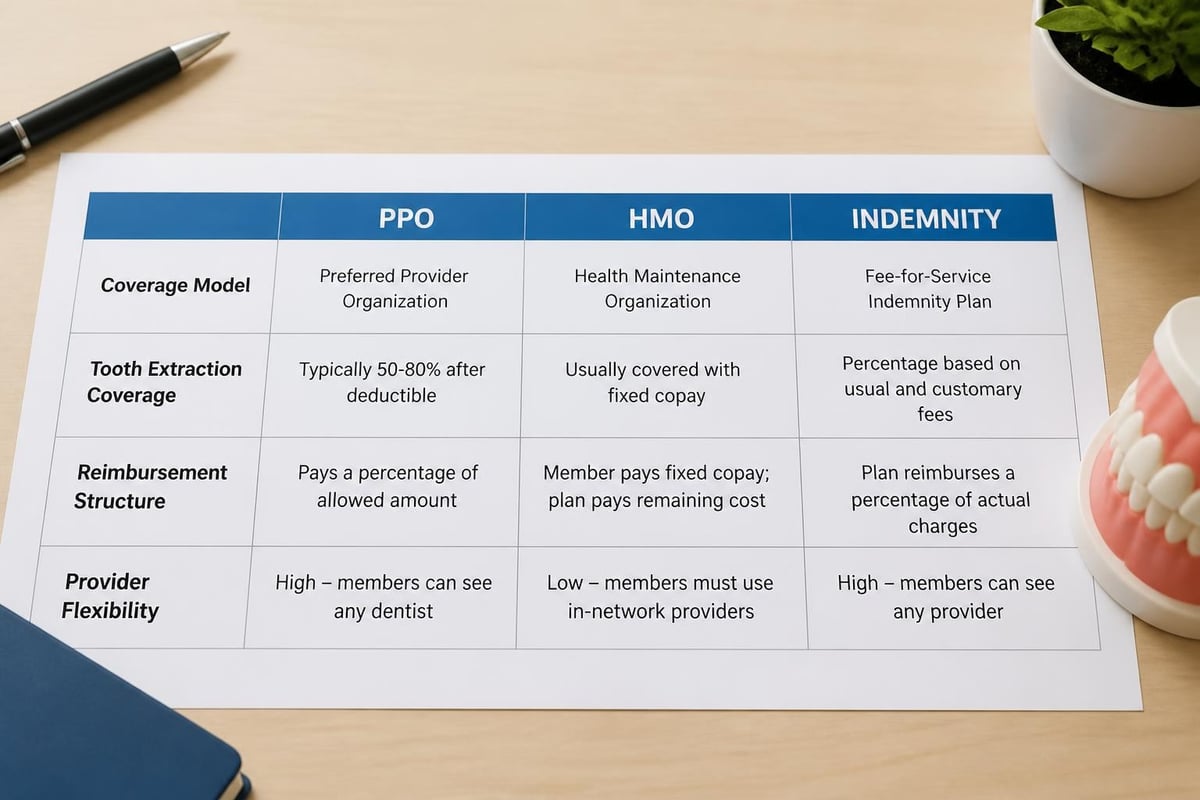
| Plan Type | Extraction Coverage | Network Requirements | Annual Maximum |
|---|---|---|---|
| PPO (Preferred Provider Organization) | 70-80% basic, 50% major | In-network discounts, out-of-network allowed | $1,000-$2,000 typically |
| HMO (Health Maintenance Organization) | Fixed copay per extraction | Must use network dentists | Often no annual maximum |
| Indemnity (Fee-for-Service) | 50-80% based on usual/customary fees | No network restrictions | $1,000-$1,500 typically |
| Discount Plans | No insurance coverage, just reduced fees | Must use network providers | Not applicable |
PPO Coverage for Tooth Extractions
PPO plans offer the most flexibility and are common among Texas families. When you visit participating providers like Dental Plus Clinic, you benefit from pre-negotiated rates that reduce your overall costs.
For a simple extraction at an in-network dentist, you might pay $75-$150 out-of-pocket after insurance covers their portion. Surgical extractions could cost $200-$400 depending on complexity and your specific plan's major procedure coverage.
HMO and Managed Care Plans
HMO dental plans operate differently from traditional insurance. Instead of percentage-based reimbursement, you pay a predetermined copayment for specific procedures. A simple extraction might have a $25-$50 copay, while surgical extractions could range from $75-$150.
The trade-off is network restriction. You must visit contracted dentists, but many patients find the predictable costs beneficial when budgeting for dental care.
What Factors Affect Extraction Coverage
Beyond plan type, several variables determine whether and how much insurance pays for your tooth extraction. Understanding these factors helps you advocate for maximum benefits.
Medical Necessity vs. Elective Procedures
Insurance companies prioritize coverage for medically necessary extractions. If your dentist documents that a tooth poses health risks due to severe decay, infection, abscess formation, or crowding that prevents proper hygiene, insurers are more likely to provide robust coverage.
Conversely, extracting a healthy tooth for purely cosmetic spacing or preventive removal of asymptomatic wisdom teeth may face coverage limitations or denials.
Annual Maximums and Deductibles
Most dental insurance policies impose annual maximum benefits between $1,000 and $2,000. Once you've used this amount in a calendar year, you pay 100% of additional costs until the next benefit period begins January 1st.
Deductibles also impact your immediate out-of-pocket expense. Common deductibles range from $50-$100 per individual or $150-$300 per family annually. You must satisfy this deductible before insurance begins paying their percentage.
If you need multiple extractions or other dental work, strategic timing across benefit years can maximize coverage. For families in Texas seeking comprehensive dental care, planning procedures around benefit periods makes financial sense.
Waiting Periods for New Policies
Many dental insurance plans impose waiting periods before covering basic or major procedures:
- Preventive care: Immediate coverage or no waiting period
- Basic procedures (including simple extractions): 3-6 month waiting period
- Major procedures (surgical extractions): 6-12 month waiting period
These waiting periods prevent people from purchasing insurance only when they need expensive work. If you anticipate needing an extraction, enrolling in coverage well before the procedure becomes urgent saves money.
Medicare, Medicaid, and Government Program Coverage
Government insurance programs handle dental coverage differently than private plans, and understanding these distinctions matters for eligible Texas residents.
Medicare and Tooth Extractions
Traditional Medicare Parts A and B generally do not cover dental care, including tooth extractions. The Centers for Medicare & Medicaid Services explains that routine dental services fall outside Medicare's scope.
However, limited exceptions exist. Medicare may cover extractions when they're integral to covered medical procedures, such as:
- Removing teeth before radiation treatment for head/neck cancer
- Extractions performed during an inpatient hospital stay for complex medical conditions
- Emergency dental care required to stabilize a medical condition
Some Medicare Advantage (Part C) plans include dental benefits that cover extractions. These bundled plans vary widely, so reviewing specific coverage details is essential.
Medicaid Dental Coverage for Extractions
Texas Medicaid provides comprehensive dental coverage for children under 21 through the Texas Health Steps program, including tooth extractions when medically necessary. Adult Medicaid dental benefits are more limited but typically cover emergency extractions to relieve pain or infection.
The American Dental Association’s Medicaid fee schedule resource provides state-specific information about covered procedures and reimbursement rates, helping patients understand what to expect from their Medicaid benefits.

Marketplace Plans and the Affordable Care Act
Dental coverage through the Health Insurance Marketplace operates under unique rules that affect extraction coverage.
Standalone Dental Plans vs. Embedded Coverage
When shopping on HealthCare.gov, you'll find two options: standalone dental plans purchased separately from medical coverage, or embedded dental benefits included in certain health plans.
Standalone dental plans typically offer more comprehensive coverage for procedures like extractions, while embedded benefits may provide only limited or pediatric-focused dental care.
Adult dental coverage through Marketplace plans varies considerably, with extraction benefits ranging from minimal coverage to comprehensive major procedure benefits similar to employer-sponsored insurance.
Breaking Down Extraction Costs With and Without Insurance
Understanding actual costs helps you budget appropriately and evaluate whether your insurance provides meaningful value.
Average Costs for Different Extraction Types
National averages for tooth extractions in 2026 show significant variation based on complexity:
| Extraction Type | Without Insurance | With Insurance (70% coverage) | Patient Pays |
|---|---|---|---|
| Simple extraction (single tooth) | $150-$300 | Insurance pays $105-$210 | $45-$90 |
| Surgical extraction (non-impacted) | $250-$450 | Insurance pays $175-$315 | $75-$135 |
| Impacted wisdom tooth | $350-$600 | Insurance pays $175-$300 (50% coverage) | $175-$300 |
| Multiple teeth (4+ extractions) | $800-$2,000+ | Varies by annual maximum | $400-$1,000+ |
These figures represent typical costs at dental practices across Texas. Your actual expenses depend on your dentist's fees, your geographic location, and procedure complexity.
Additional Costs Beyond the Extraction
Patients often overlook associated expenses that accompany tooth removal:
- Consultation and X-rays: $75-$200 (may be separate from extraction coverage)
- Anesthesia or sedation: $50-$500 depending on type (local vs. IV sedation)
- Bone grafting (if needed for future implant): $300-$800 (usually classified as major procedure)
- Follow-up visits: Typically included in extraction fee
- Replacement tooth options: Bridges, implants, or dentures (separate major procedures)
When considering tooth replacement after extraction, understanding how insurance covers both the extraction and subsequent restoration helps you plan the complete treatment journey financially.
Special Circumstances: When Medical Insurance Covers Extractions
In certain situations, tooth extractions fall under medical insurance rather than dental coverage. This distinction significantly impacts reimbursement and out-of-pocket costs.
Extractions Related to Medical Conditions
Major health insurance carriers like Aetna provide clinical policy guidelines explaining when oral surgery qualifies for medical benefits. Extractions may be covered under medical insurance when related to:
- Tumors, cysts, or neoplasms requiring tooth removal
- Traumatic injuries from accidents necessitating extraction
- Infections that have spread beyond the tooth itself (cellulitis, osteomyelitis)
- Preparations for chemotherapy or radiation therapy
- Congenital or developmental conditions affecting jaw structure
The American Dental Association’s guidance on coordination of benefits explains how dental and medical insurance interact when both might apply. Proper coding and documentation become crucial to ensure correct claim processing.
Documentation Requirements for Medical Coverage
For medical insurance to cover a tooth extraction, your dentist or oral surgeon must provide detailed records demonstrating medical necessity:
- Comprehensive diagnosis linking the dental issue to a medical condition
- Medical history showing how the extraction relates to overall health treatment
- Imaging studies (CT scans, MRIs) documenting pathology beyond routine dental disease
- Treatment notes explaining why extraction is medically necessary versus elective
Patients should request that their provider submit claims to both medical and dental insurance when appropriate, maximizing potential reimbursement through proper coordination of benefits.
Wisdom Teeth Removal and Insurance Coverage
Wisdom teeth extractions represent one of the most common dental procedures, yet coverage varies substantially across insurance plans.
Age-Related Coverage Differences
Many insurance policies provide better coverage for wisdom teeth removal in younger patients (late teens to early twenties) compared to adults over 25. Insurers consider prophylactic removal of impacted wisdom teeth more justifiable when performed before complications develop.
For young adults requiring wisdom teeth removal, timing the procedure while still covered under a parent's insurance plan can save hundreds to thousands of dollars compared to waiting until individual coverage begins.
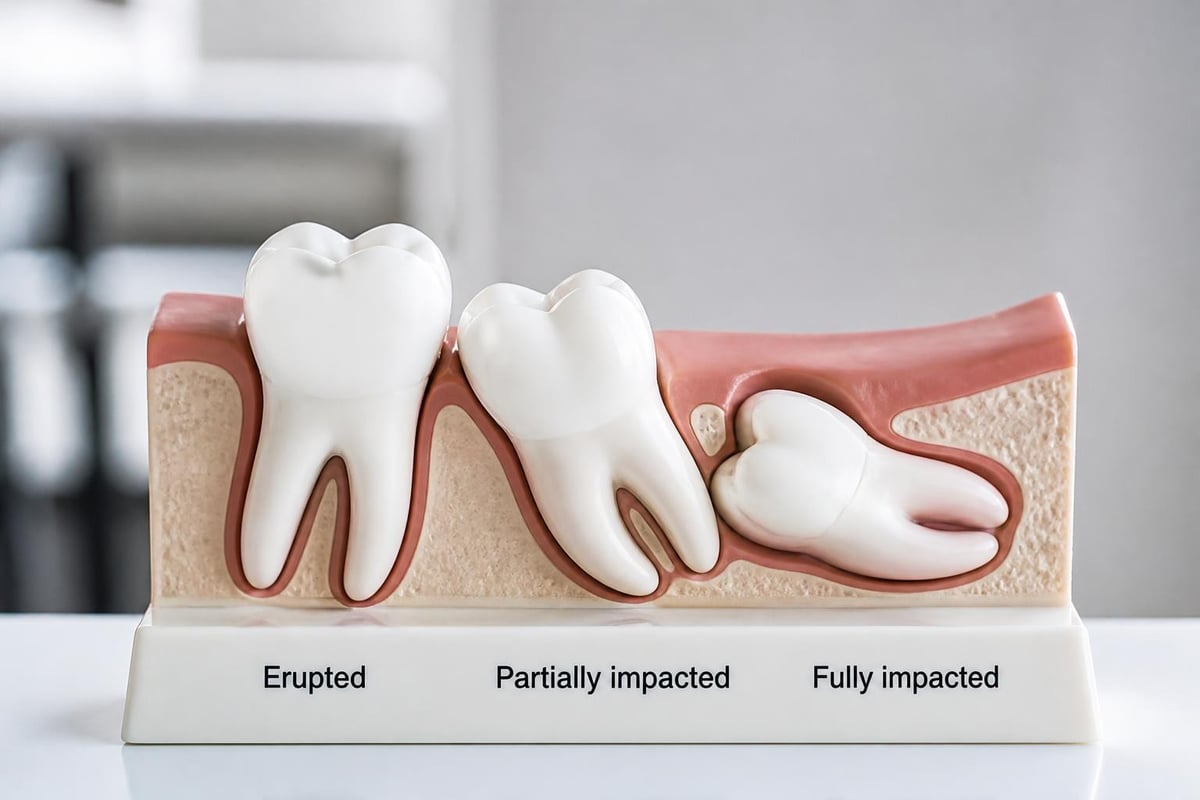
Impacted vs. Erupted Wisdom Teeth
The position and condition of wisdom teeth significantly affect coverage levels:
- Fully erupted wisdom teeth that are easily accessible may be classified as simple extractions with higher coverage percentages
- Partially impacted teeth breaking through the gum line typically receive moderate coverage as surgical extractions
- Fully impacted teeth requiring bone removal and surgical sectioning usually fall under major procedures with 50% coverage or less
Some policies specifically exclude coverage for asymptomatic impacted wisdom teeth, considering preventive removal an elective procedure. Documenting symptoms like pain, infection, or crowding improves approval chances.
Navigating Pre-Authorization and Claim Denials
Maximizing your extraction coverage requires understanding insurance administrative processes and knowing how to appeal denials effectively.
Pre-Authorization Process
Many insurance companies require pre-authorization (also called predetermination) before covering surgical extractions or multiple teeth removals. This process involves:
- Your dentist submits treatment plans, X-rays, and clinical justification to your insurance company
- The insurer reviews the request and issues a coverage decision within 2-3 weeks
- You receive a breakdown of estimated coverage and your expected out-of-pocket costs
- You can proceed with treatment knowing your financial responsibility
Pre-authorization doesn't guarantee payment but provides a reliable estimate of coverage. Skipping this step for major procedures can result in unexpected bills if the insurer later determines the extraction wasn't covered.
Common Reasons for Claim Denials
Understanding why extraction claims get denied helps you avoid these pitfalls:
- Missing or damaged teeth documented in prior exams (insurer questions when decay/damage occurred)
- Insufficient documentation of medical necessity
- Services performed during waiting periods
- Annual maximum benefits already exhausted
- Out-of-network providers when plan requires network use
- Procedure codes that don't match the documented treatment
If your extraction claim is denied, you have appeal rights. Request a detailed explanation of the denial, gather supporting documentation from your dentist, and submit a formal appeal highlighting why the extraction met coverage criteria.
Maximizing Your Extraction Coverage Benefits
Strategic planning helps you get the most value from your dental insurance when extractions become necessary.
Timing Procedures Around Benefit Periods
If your annual maximum is nearly exhausted late in the year, consider delaying non-urgent extractions until January when benefits reset. Conversely, if you haven't used benefits this year and need multiple extractions, completing them before year-end maximizes current coverage.
For patients requiring extensive work including extractions followed by dental implants, spacing treatments across benefit years can reduce out-of-pocket expenses significantly.
Using In-Network Providers
Choosing dentists who participate in your insurance network provides substantial savings beyond coverage percentages:
- Pre-negotiated fee schedules below standard retail rates
- Lower or waived deductibles at in-network providers
- Simplified claims processing with direct billing
- Better coverage percentages (network vs. out-of-network differentials)
Dental Plus Clinic accepts major PPO insurance plans across our five Texas locations, helping families in Beeville, Seguin, New Braunfels, Leander, and Converse maximize their dental benefits while receiving quality care.
Combining Insurance with Other Savings Options
When insurance doesn't cover the full extraction cost, additional savings strategies include:
- Health Savings Accounts (HSAs) or Flexible Spending Accounts (FSAs): Use pre-tax dollars for out-of-pocket dental expenses
- Payment plans: Many dental practices offer interest-free financing for balances not covered by insurance
- Dental discount plans: Supplement insurance with membership programs offering additional percentage savings
- Tax deductions: The IRS allows deductions for qualifying medical and dental expenses exceeding 7.5% of adjusted gross income
For patients without dental insurance, exploring affordable dental care options ensures access to necessary extractions without prohibitive costs.
Frequently Asked Questions About Extraction Coverage
Does dental insurance cover emergency tooth extractions?
Yes, most dental insurance plans cover emergency extractions when documented as urgent care to relieve pain, infection, or trauma. Emergency procedures typically receive the same coverage percentage as planned extractions (70-80% for basic, 50% for surgical), though some plans waive waiting periods for true dental emergencies. Contact your insurance provider and dentist immediately when emergencies occur to understand coverage and expedite pre-authorization if required.
How much does tooth extraction cost with insurance?
With insurance, patients typically pay $45-$150 for simple extractions after coverage applies, and $150-$400 for surgical extractions depending on their plan's major procedure coverage percentage. Total out-of-pocket costs depend on your deductible, annual maximum remaining, network status, and specific procedure complexity. Request a pre-treatment estimate from your dentist's office to know exact costs before proceeding.
Will insurance cover extractions for braces or orthodontics?
Insurance may cover extractions performed to create space for orthodontic treatment, but coverage varies by plan. Some policies classify orthodontic-related extractions as part of basic dental care (70-80% coverage), while others consider them elective with reduced or no coverage. Orthodontic insurance benefits are often separate from general dental coverage with their own maximums and limitations. Verify coverage details specifically for orthodontic extractions before treatment.
Can I get a tooth extracted without dental insurance?
Absolutely. Patients without insurance can receive tooth extractions at most dental practices, with costs ranging from $150-$600 depending on extraction complexity. Many dentists, including Dental Plus Clinic, offer payment plans, financing options, or discount programs for uninsured patients. Community health centers and dental schools also provide lower-cost extraction services for those facing financial barriers.
What happens if my insurance denies coverage for an extraction?
If your extraction claim is denied, first request a detailed written explanation from your insurance company identifying the specific denial reason. Work with your dentist's office to gather supporting documentation addressing the denial basis, such as additional X-rays, clinical notes, or medical necessity justification. Submit a formal appeal through your insurance company's process, typically within 180 days of the denial. Many denials are overturned upon appeal with proper documentation.
Do all dental insurance plans have waiting periods for extractions?
Not all plans impose waiting periods, but they're common. Employer-sponsored group insurance often waives waiting periods, providing immediate coverage for extractions. Individual policies purchased directly typically include 3-6 month waiting periods for basic procedures like extractions. Waiting periods prevent individuals from purchasing insurance only when they need expensive work. Review your policy documents or contact your insurance representative to understand specific waiting period requirements.
Understanding Your Policy Details
Taking time to thoroughly review your dental insurance policy prevents surprises when you need an extraction. Key documents to examine include:
- Summary of Benefits: Outlines coverage percentages for preventive, basic, and major procedures
- Schedule of Allowances: Lists specific procedures with corresponding coverage amounts or percentages
- Exclusions and Limitations: Details what services aren't covered and any frequency limits
- Annual Maximum Benefits: States the total amount your plan pays per year before you're responsible for 100%
- Network Directory: Identifies participating dentists offering in-network rates
Most insurance companies provide these documents through online portals, and your human resources department can provide copies if you have employer-sponsored coverage.
Questions to Ask Your Insurance Provider
Before scheduling an extraction, contact your insurance company directly to clarify:
- What percentage does my plan cover for simple extractions? Surgical extractions?
- How much of my annual maximum have I used this year?
- Is pre-authorization required for the specific extraction my dentist recommends?
- Does my dentist participate in the plan's network?
- What is my current deductible status, and does it apply to extractions?
Insurance representatives can provide this information quickly, giving you confidence in your financial planning before proceeding with treatment.
Alternative Coverage Options for Extractions
When traditional dental insurance doesn't meet your needs, alternative coverage models offer different value propositions.
Dental Savings Plans
Unlike insurance, dental savings plans operate as membership programs offering percentage discounts on dental procedures at participating providers. Members pay an annual fee ($100-$200) and receive 10-60% discounts on all services, including extractions.
These plans benefit individuals who:
- Don't have employer-sponsored insurance
- Face waiting periods with new insurance policies
- Have exceeded annual maximum benefits
- Need extensive work beyond typical insurance coverage limits
Dental savings plans provide immediate access without waiting periods, though they require upfront payment with discounted rates rather than insurance reimbursement.
Direct Primary Care Dentistry Models
Some dental practices now offer membership-based care similar to concierge medicine. Patients pay monthly or annual fees ($200-$500) receiving unlimited preventive care and significant discounts on procedures like extractions.
This model works well for families seeking predictable dental expenses and priority scheduling without insurance complexity.
International Comparison: How Other Countries Handle Extraction Coverage
For perspective, understanding how other healthcare systems approach dental coverage is enlightening. In the United Kingdom, the NHS dental treatment system categorizes all dental work including extractions into three bands with fixed patient charges regardless of the number of treatments needed within that band. This provides predictable costs but limited provider choice compared to the U.S. insurance market's flexibility.
Planning for Extraction and Replacement
Smart extraction planning considers not just the immediate procedure but long-term oral health implications.
The Importance of Tooth Replacement
While insurance may cover extraction, leaving the gap unfilled creates future problems:
- Adjacent teeth shift into the empty space causing bite misalignment
- Opposing teeth over-erupt affecting jaw function
- Bone loss occurs in the extraction site within months
- Increased stress on remaining teeth can lead to additional dental issues
Discussing tooth replacement options with your dentist before extraction helps you plan financially for the complete treatment, including how insurance covers bridges, implants, or dentures.
Multi-Phase Treatment Planning
When extraction is part of comprehensive dental restoration, strategic planning maximizes insurance benefits:
Phase 1: Extraction and healing (typically 3-6 months)
Phase 2: Bone grafting if needed for future implant
Phase 3: Implant placement or bridge preparation
Phase 4: Final restoration crown or prosthetic placement
By spacing phases across benefit years and understanding how each step is classified (basic vs. major procedure), you can optimize insurance coverage and minimize total out-of-pocket expenses.
Making Informed Decisions About Extractions
Beyond insurance considerations, making the right choice about whether to extract a tooth requires comprehensive evaluation.
When to Extract vs. Save a Tooth
Dentists generally prioritize saving natural teeth when possible, but extraction becomes the better option when:
- Tooth decay extends beyond repairable limits
- Root fractures compromise structural integrity
- Severe periodontal disease has destroyed supporting bone
- Infection doesn't respond to root canal treatment
- Orthodontic treatment plans require space creation
- Impacted wisdom teeth risk damage to adjacent teeth
Conservative dentists explore all options including root canals, crowns, or periodontal therapy before recommending extraction. Seeking a second opinion on extraction recommendations ensures you're making the best decision for long-term oral health.
Understanding Your Dentist's Treatment Plan
A thorough extraction consultation should include:
- Detailed explanation of why extraction is recommended versus alternative treatments
- Discussion of extraction technique (simple vs. surgical)
- Review of what happens if the tooth isn't extracted (risks of delaying)
- Tooth replacement options and timing
- Complete cost breakdown including insurance coverage estimates
At Dental Plus Clinic locations throughout Texas, our dental professionals provide transparent treatment planning, helping you understand both clinical and financial aspects of recommended extractions.
Working With Your Dental Provider on Insurance Matters
Your dentist's office staff plays a crucial role in maximizing insurance benefits and minimizing your financial stress.
What Dental Office Insurance Coordinators Do
Most dental practices employ insurance coordinators who:
- Verify your coverage before appointments
- Submit pre-authorizations for planned extractions
- Code procedures correctly to maximize reimbursement
- File claims on your behalf with proper documentation
- Follow up on claim processing and resolve billing issues
- Provide accurate cost estimates based on your specific benefits
Building a good relationship with your dental office's insurance coordinator ensures smooth processing and helps identify cost-saving opportunities within your coverage.
Being Your Own Insurance Advocate
While dental offices provide valuable assistance, patients should also:
- Keep copies of all insurance communications and explanations of benefits
- Track annual maximum usage throughout the year
- Review bills for accuracy before payment
- Question charges or coverage decisions that seem incorrect
- Contact insurance companies directly when discrepancies arise
Proactive engagement with both your dental provider and insurance company produces the best outcomes when navigating extraction coverage.
The Real Answer: Does Dental Insurance Cover Tooth Extractions?
The comprehensive answer to "does dental insurance cover tooth extractions" is yes, but with important qualifications. Most dental insurance plans provide coverage for medically necessary extractions, with reimbursement percentages ranging from 50-80% depending on extraction complexity and your specific policy classification.
Simple extractions typically receive better coverage (70-80%) as basic procedures, while surgical extractions often fall under major procedures with 50% coverage. Your actual out-of-pocket costs depend on multiple factors including deductibles, annual maximums, network participation, waiting periods, and proper documentation of medical necessity.
Understanding your specific policy details, working collaboratively with your dental provider, and planning treatments strategically around benefit periods helps you maximize coverage and minimize unexpected expenses. Whether you need a single emergency extraction or multiple wisdom teeth removed, taking time to verify coverage before proceeding ensures financial predictability.
For Texas families seeking comprehensive dental care with insurance assistance, choosing an experienced provider who accepts major insurance plans and offers transparent cost estimates makes the extraction process significantly less stressful. The question isn't just whether insurance covers extractions, but how to leverage your benefits most effectively to maintain optimal oral health while managing costs responsibly.
Understanding your extraction coverage options and maximizing available insurance benefits ensures you receive necessary dental care without financial strain. Dental Plus Clinic works with all major PPO insurance plans and provides detailed cost estimates before treatment, helping Texas families across our five locations access quality dental care affordably. Whether you need an emergency extraction, wisdom teeth removal, or are planning comprehensive dental restoration, our experienced team guides you through both clinical and insurance aspects of your care. Contact Dental Plus Clinic today to schedule a consultation and learn exactly what your insurance covers for the dental treatments you need.