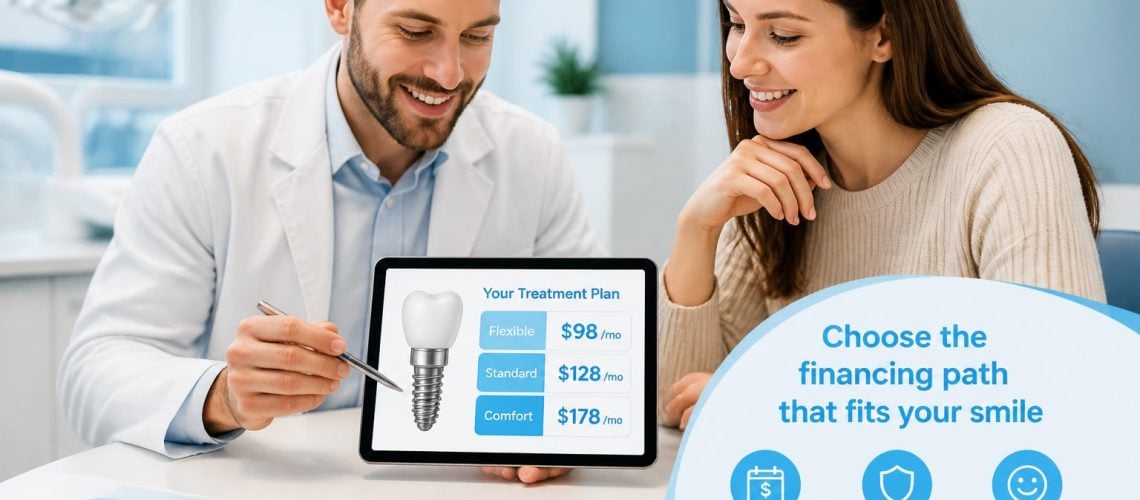
Financing for teeth implants usually comes down to four routes: a third-party healthcare lender, a personal loan, a payment plan through the dental office, or a discount plan combined with a smaller loan. Most patients qualify for at least one of them, and several lenders let you check your rate with a soft credit check before you commit.
The cost is the reason this matters. Implant costs are commonly reported at $3,000 to $4,500 per tooth, and costs vary by treatment and provider. For adults in Seguin, Converse, Beeville, New Braunfels and Leander who are missing several teeth or living with loose dentures, that total can feel out of reach in a single payment. Spreading it across a fixed term is often what makes treatment possible. The five options below are laid out with their limits and terms so you can compare them before you sit down for a consultation.
What to Know Before You Compare Financing for Teeth Implants
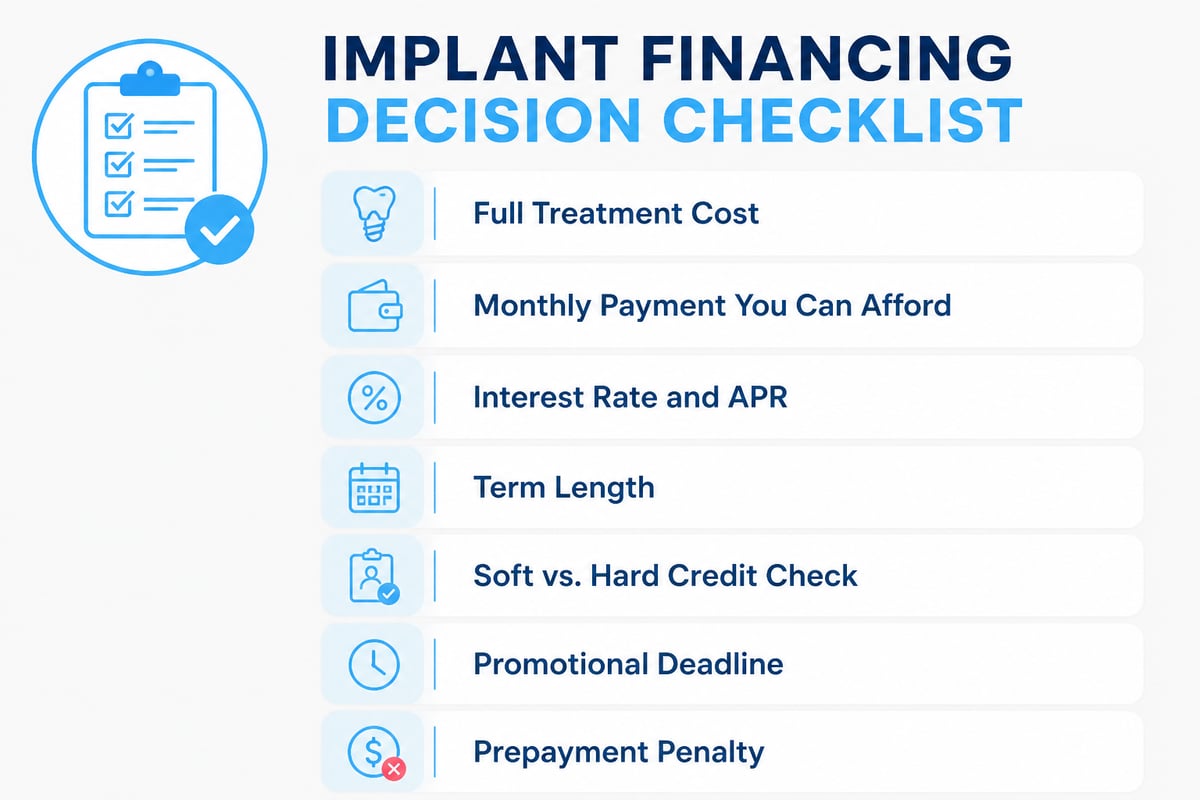
Before choosing a lender, settle three numbers: the full treatment cost, the monthly payment you can carry, and the total you will repay after interest.
Start with the treatment plan. A single implant, several implants, and a full-arch restoration produce very different totals. Bone grafting or sedation can add to the figure, so ask for the complete plan in writing. Dental Plus Clinic shares pricing ahead of treatment, which lets you bring an exact number to any lender instead of an estimate.
Then weigh these factors for every option:
- Interest rate and APR: the yearly cost of borrowing, including fees.
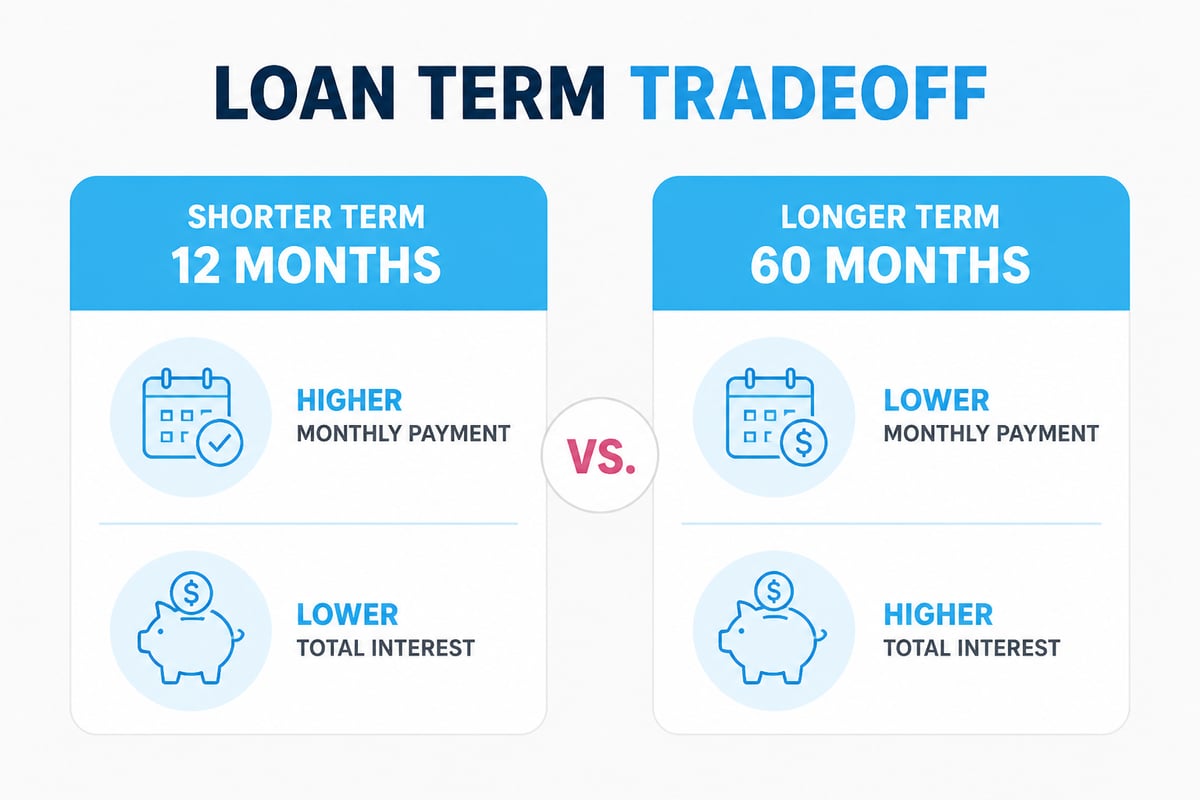
- Term length: longer terms lower the payment but raise total interest.
- Credit check type: a soft check does not affect your score; a hard check can.
- Promotional periods: zero-interest offers can reverse into back-dated interest if the balance is not cleared on time.
- Prepayment rules: whether you can pay early without a penalty.
That last promotional point deserves attention. Smile Generation notes that deferred-interest financing can accrue interest if the balance is not paid by the promotional deadline, so divide the balance by the number of promotional months and confirm you can meet that payment.
1. Proceed Finance
Proceed Finance is a dental installment lender suited to large implant cases, with a maximum financing amount of $75,000 and terms up to 144 months.
- Key specs: soft credit check for prequalification; fixed-term installment loan; terms up to 144 months.
- Approximate cost: the rate and payment depend on your credit profile and the amount financed; pricing is not shown in the research, so request your offer directly.
- Best use: patients financing multiple implants or full-arch treatment who want a fixed monthly payment spread over a long term.
A long term keeps the monthly figure low, but it also stretches the interest period. If you choose a 144-month term, check whether early payoff is free so you can shorten it later. The $75,000 ceiling sits at the high end of what implant financing offers. Because the check is soft, you can see an offer without a hard inquiry on your report. Compare that offer against a shorter term, since the same balance repaid over 60 months costs less in total interest. Ask whether the lender pays the practice directly, so your treatment total is settled before you begin.
Verdict: a strong fit for high-cost cases where the lowest possible monthly payment is the priority.
2. LendingClub Patient Solutions
LendingClub Patient Solutions is a healthcare financing program for dental procedures, including implants, with a maximum financing amount of $65,000 and a soft credit check.
- Key specs: patient financing for dental work; soft credit check; amounts up to $65,000.
- Approximate cost: rates and terms are set per applicant and are not listed in the research; confirm them in your prequalification offer.
- Best use: patients who want predictable payments for multi-implant treatment or other larger dental expenses.
The appeal here is predictability. A fixed payment you can plan around is easier to defend in a household budget than a revolving card balance. At $65,000, the ceiling comfortably covers several implants at the reported $3,000 to $4,500 per tooth, with room left for grafting or sedation if those are part of the plan. Since terms are set per applicant, the practical step is to prequalify and read the repayment schedule line by line. Personal loans commonly run two to seven years, so compare this offer against that range to judge whether the term is competitive. A soft check lets you do that comparison without any score impact.
Verdict: a dependable middle option for multi-implant plans where steady payments matter more than a promotional rate.
3. PatientFi
PatientFi provides dental and healthcare financing with a maximum financing amount of $60,000, a soft credit check, and a 12-month promotional offer listed.
- Key specs: dental and healthcare financing; soft credit check; amounts up to $60,000; 12-month promotional offer listed.
- Approximate cost: pricing is not shown in the research; the promotional terms are worth reading closely.
- Best use: patients financing several implants or full-arch treatment who want to compare promotional financing against a standard loan.
Promotional offers can lower your cost if you clear the balance within the window. If you cannot, compare the standard terms before you accept. Smile Generation cautions that deferred-interest financing can accrue interest if the balance is not paid by the promotional deadline, so confirm exactly how this offer is structured. A practical test is to divide the treatment total by 12 and see whether that monthly figure fits your budget. On a $4,000 implant, that is roughly $333 a month before any interest. If the number is too high, a longer standard term from another lender may cost you less overall. Because the healthcare focus extends beyond dental, the same approval can sometimes serve other medical expenses.
Verdict: worth a prequalification when you expect to pay down a large share of the balance within a year.
4. Cherry
Cherry (Cherry Technologies, Inc.) is a point-of-sale installment lender with a maximum financing amount of $50,000, a soft credit check, and terms up to 60 months.
- Key specs: point-of-sale installment financing; soft-check prequalification; terms up to 60 months; amounts up to $50,000.
- Approximate cost: rates vary by applicant and are not shown in the research.
- Best use: patients who want installment payments and a soft-check prequalification option for a single implant or a moderate treatment plan.
A 60-month cap keeps total interest lower than a 144-month loan, in exchange for a higher monthly payment. That tradeoff suits a patient who would rather finish paying sooner. Five years falls inside the two-to-seven-year range typical of personal loans, and well beyond the 12 to 24 months typical of dental-office plans. The $50,000 ceiling is the lowest of the four lenders here, but it still covers a multi-implant case at the reported per-tooth average. Point-of-sale financing means the application can happen at the practice, so you can prequalify while reviewing your written treatment plan. Check whether the payment you are quoted covers the entire plan, not just the first phase.
Verdict: a good pick for mid-sized treatment totals where a five-year payoff is realistic.
5. Dental Plus Clinic Implant Plans: Dental Implants
Dental Plus Clinic's Dental Implants service uses titanium posts placed in the jaw as artificial tooth roots to support crowns, bridges or dentures, and the clinic shares pricing before treatment begins.
- Key specs: each office provides comprehensive treatment, so no referral is needed; crowns, bridges and implants are made in house, which speeds delivery; one-on-one attention to understand your needs.
- Approximate cost: quoted before treatment; contact your nearest location for the figure that applies to your plan.
- Best use: patients who want to settle the treatment total first, then match it to a lender or payment arrangement with exact numbers in hand.
This is not a loan product. It is the starting point for every option above, because a written, upfront quote is what lets you compare lenders accurately. Patient testimonials describe clear, upfront treatment costs and a relaxed, comfortable visit. To ask what payment arrangements the clinic supports, call your local office or review affordable dental implants first. Because treatment happens under one roof, you avoid separate bills from a referred specialist, which keeps the amount you finance closer to a single, known figure. In-house crown and bridge fabrication also means fewer outside lab charges appearing after you have already borrowed. Bring the written quote to each lender you prequalify with, so every offer is built on the same number.
Verdict: the right first step when you want a firm treatment price before you apply anywhere.
Comparison of the Financing Options
| Option | Max amount | Credit check | Term | Best for |
|---|---|---|---|---|
| Proceed Finance | $75,000 | Soft | Up to 144 months | Large or full-arch cases |
| LendingClub Patient Solutions | $65,000 | Soft | Set per applicant | Predictable multi-implant payments |
| PatientFi | $60,000 | Soft | 12-month promo listed | Comparing promotional offers |
| Cherry | $50,000 | Soft | Up to 60 months | Single or moderate treatment plans |
| Dental Plus Clinic Dental Implants | Quoted before treatment | Not applicable | Not applicable | Getting an exact price first |
Will Dentists Do Payment Plans for Implants?
Yes, many dental offices offer payment plans for implants, though the terms are usually shorter than a bank loan. Office plans commonly require repayment within 12 to 24 months, while personal loans commonly offer terms of two to seven years.
That gap shapes the monthly payment. A $12,000 treatment over 24 months costs far more each month than the same amount over 60 months, even before interest. If the in-office window is too short for your budget, a longer-term lender may be the better fit.
Ask the office these questions:
- Is the plan interest-free, or is there a rate?
- Is a down payment required?
- What happens if a payment is late?
- Can the plan cover bone grafting or sedation, or only the implant?
You can also review the clinic's guidance on reducing dental care costs before you decide.
How Much Does Dental Insurance Pay for Implants?
Dental insurance often pays a limited share of implant costs, and some plans exclude implants or cap yearly benefits at a modest amount. Where coverage exists, it is often applied to the crown or to related work such as extractions rather than the full procedure.
Two practical steps help. First, request a pre-treatment estimate from your insurer using the codes on your treatment plan. Second, check the annual maximum, because a low cap is used up quickly. Seniors weighing coverage can read the clinic's page on using insurance for dental implants.
A discount plan is a different tool. Smile Generation advertises its dental plan at 20% to 50% off major services, including implants, and notes it is a discount plan rather than insurance. A discount can reduce the amount you finance in the first place.
Are Dental Implants Worth the Money?
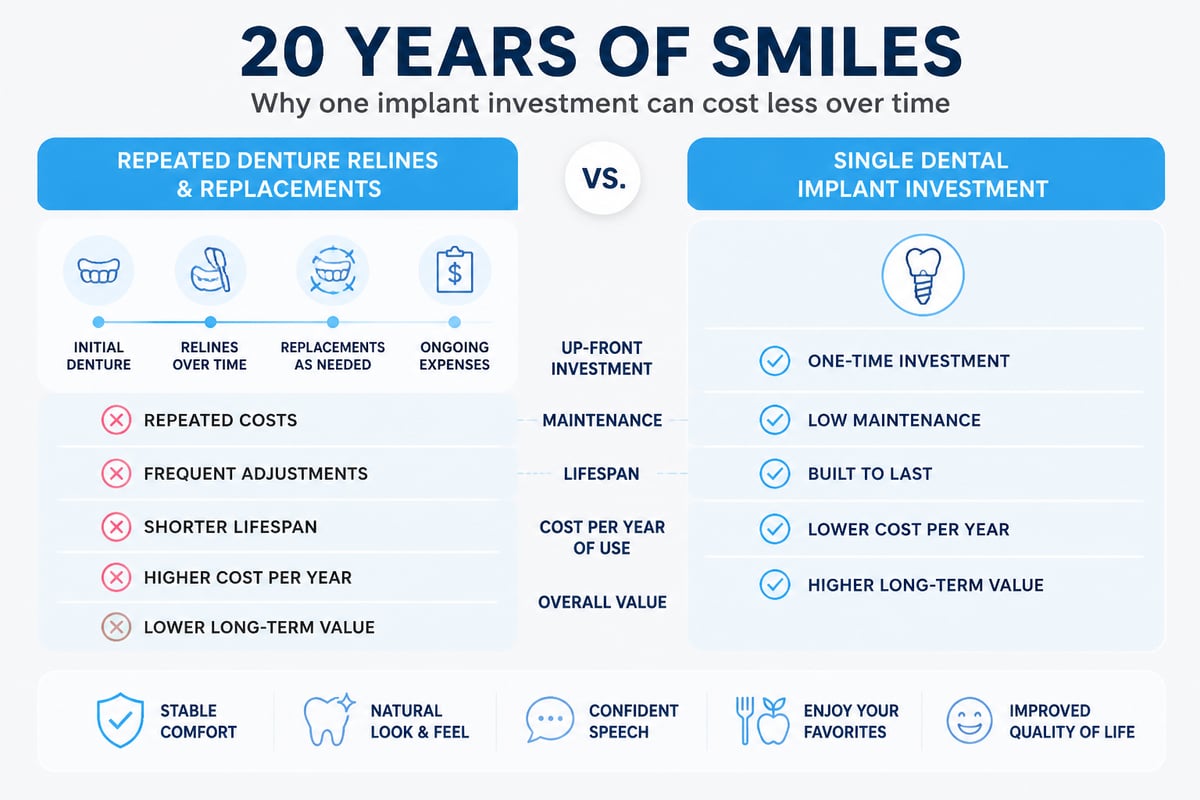
For many adults replacing missing teeth, implants can be worth the cost because they are designed to last for many years, help protect the jaw, and avoid the repeat expense of relining or replacing dentures. The purchase price is higher up front, but the cost per year of use can be lower.
Consider what you gain:
- Teeth that stay fixed in place, so eating is easier.
- No adhesives, which matters for anyone tired of loose dentures.
- A look and feel close to natural teeth.
If you are weighing alternatives, the clinic's comparison of dental implants versus dentures and its piece on why implants are a long-term investment lay out the tradeoffs. Financing turns that long-term value into a payment you can manage today.
How to Lower the Amount You Need to Finance
The simplest way to cut your monthly payment is to reduce the principal before you borrow. A smaller balance means less interest across any term.
Several approaches work together:
- Phase the treatment. Replace the most urgent teeth first and schedule the rest later.
- Use a discount plan. Savings of 20% to 50% on major services, where available, shrink the balance.
- Pay a down payment. Even a modest amount lowers the loan and sometimes the rate.
- Apply tax-advantaged funds. Health savings and flexible spending accounts can often cover dental costs; confirm eligibility with your plan administrator.
- Match the plan to your need. A full-arch option is not always required. The clinic's pages on single tooth versus multiple implants and mini versus traditional implants can help you size the plan correctly.
For broader ideas, Smile Generation's article on managing dental costs on a budget covers financing, credit cards and in-office plans.
Financing for a Full-Arch Treatment Like All-on-4
Financing a full-arch restoration is different from financing a single tooth because the total is larger and the lender limits matter. Lenders with higher ceilings, such as Proceed Finance at $75,000, tend to fit these cases better than those capped at $50,000.
Dental Plus Clinic offers All-on-4 Hybrid Dental Implants, which use four strategically placed implants to hold a hybrid denture firmly in place without adhesives. For adults with failing or ill-fitting dentures, this can replace a full arch in fewer implants than a traditional approach.
When financing a full arch, keep these points in mind:
- Ask whether extractions, bone grafting or sedation are included in the quote.
- Confirm the lender will cover the full amount, not only part of it.
- Compare a long term against a shorter one, and decide whether early payoff is allowed.
Our guides to All-on-4 dental implants and full mouth dental implants explain what each plan includes, which helps you request an accurate number.
Overcoming Common Objections to Financing
Most hesitation about borrowing for implants falls into a few concerns, and each has a practical answer.
"A credit check will hurt my score." Several lenders listed here use a soft check for prequalification, which does not affect your credit score. Smile Generation describes its own marketplace the same way, with a soft credit check that does not affect the credit score.
"I will end up paying too much." Compare total repayment, not only the monthly figure. A longer term lowers the payment and raises the interest, so pick the shortest term your budget supports.
"I have limited credit." Prequalifying with several lenders costs nothing when each uses a soft check, and approval odds differ between them. A co-applicant can also strengthen an application.
"I am not sure I need implants." A consultation answers that before any financing decision.
A Realistic Example: Financing One Implant Over Different Terms
A single implant at the reported average of roughly $4,000 shows how the term changes the monthly burden. These figures ignore interest to keep the comparison simple, so real payments will be higher.
| Term | Approximate monthly payment (before interest) |
|---|---|
| 12 months | About $333 |
| 24 months | About $167 |
| 60 months | About $67 |
A 12-month in-office plan finishes quickly but demands a larger payment. A 60-month loan is gentler monthly, though interest adds to the total. Your own budget, not the lender's headline term, should decide which row fits.
Steps to Apply for Implant Financing
Applying for implant financing takes five steps, and you can finish most of them before your first procedure.
- Book a consultation and get a written treatment plan with the full price.
- Review your budget and decide the monthly payment you can sustain.
- Prequalify with two or three lenders that use soft checks, and compare the offers side by side.
- Check for deferred interest, fees and prepayment rules in each offer.
- Accept the offer that gives the lowest total cost you can comfortably repay, then schedule treatment.
Texas patients can start at a nearby office. Dental Plus Clinic has locations in Seguin, Converse, Beeville and New Braunfels, plus Leander, so a consultation is close to home. If anxiety is a barrier, ask about sedation dentistry for implants.
FAQ
How does a low credit score affect implant financing?
A lower score can mean a higher rate or a smaller approved amount, but it rarely rules out every lender. Prequalifying through soft checks lets you see real offers without a score impact, and a co-applicant or a larger down payment can improve your terms.
Can I finance implants if I need bone grafting first?
Often yes, as long as the grafting is part of the same written treatment plan. Ask for a single quote that includes every procedure so the lender finances the full amount.
Is a longer loan term always the better choice?
No. A longer term lowers your monthly payment but increases the total interest you repay. Choose the shortest term your budget supports, and confirm there is no penalty for paying early.
Your next step is to request a written implant quote, since an exact number makes every lender comparison accurate. Dental Plus Clinic can walk you through treatment options such as Dental Implants with pricing shared before treatment, so you can plan with confidence at any of its five Texas locations in Beeville, Seguin, New Braunfels, Leander and Converse. To get started, Book Appointment at the office nearest you and bring your questions about payment.