
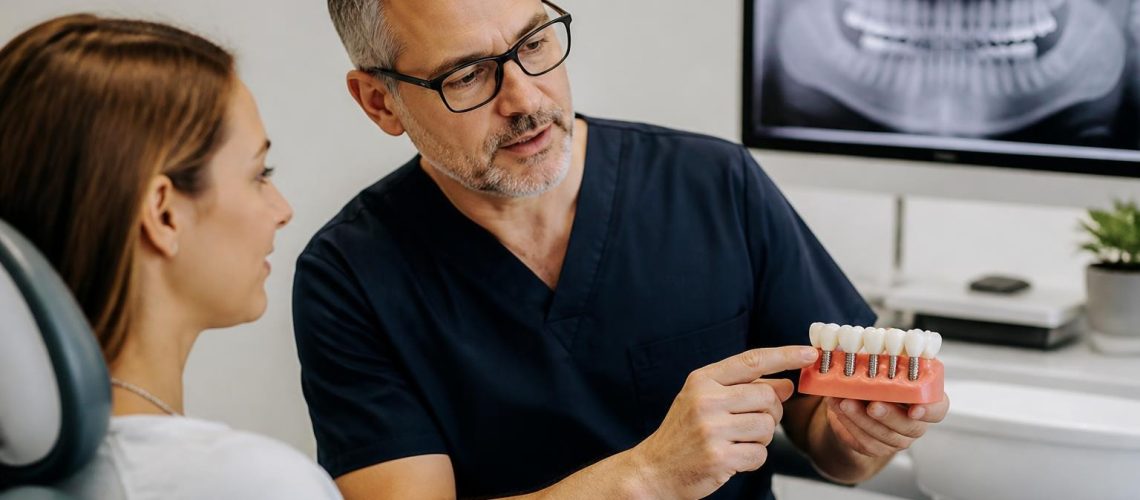
Missing one or more teeth can significantly impact your quality of life, affecting everything from your ability to eat comfortably to your confidence when you smile. As dental implant technology continues to advance in 2026, understanding the difference between single tooth implant vs multiple implants becomes crucial for making informed decisions about your oral health. Whether you're dealing with one missing tooth or several, the treatment approach varies considerably in terms of procedure complexity, recovery time, and long-term outcomes.
Understanding the Fundamental Differences
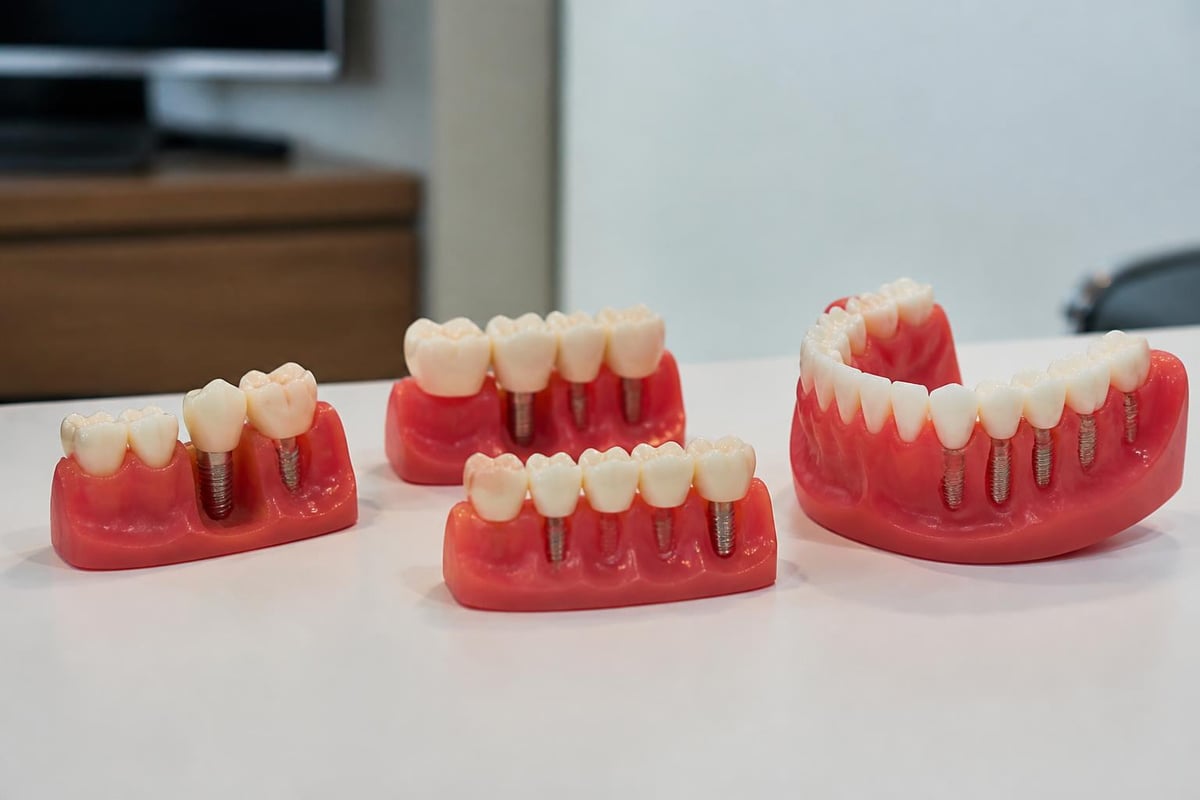
The choice between a single tooth implant and multiple implants depends on several factors specific to your dental situation. A single tooth implant involves placing one titanium post into your jawbone to replace an individual missing tooth, while multiple implants can address several missing teeth either through individual placements or bridge-supported restorations.
Single tooth implants function as standalone replacements that don't require altering adjacent healthy teeth. The implant serves as an artificial root, topped with an abutment and custom crown that matches your natural teeth perfectly.
Multiple implants offer several configuration options depending on how many teeth you're missing and where they're located. You might receive individual implants for each missing tooth, or your dentist might recommend an implant-supported bridge where two or more implants support several replacement teeth.
Key Structural Variations
The anatomical approach differs significantly between these two treatment types:
- Single implant: One surgical site, one healing period, one restoration
- Multiple implants: Several surgical sites requiring coordinated planning
- Implant bridges: Fewer implants supporting multiple crowns
- Full arch solutions: Comprehensive restoration using strategic implant placement
According to research on consecutive tooth replacement, using separate single-tooth implants for consecutive missing teeth shows favorable outcomes but requires careful consideration of marginal bone levels and spacing.
Clinical Factors That Guide Treatment Selection
Several clinical considerations determine whether single tooth implant vs multiple implants represents the optimal approach for your situation. Your dentist at Dental Plus Clinic will evaluate these factors during your comprehensive examination.
Bone Density and Volume Assessment
Bone quality plays a pivotal role in implant success regardless of quantity. However, multiple implant cases often present unique challenges:
| Factor | Single Tooth Implant | Multiple Implants |
|---|---|---|
| Bone assessment sites | One location | Multiple areas requiring evaluation |
| Grafting likelihood | Lower if tooth recently lost | Higher probability in multiple sites |
| Healing complexity | Straightforward | Coordinated across sites |
| Long-term stability | Depends on one site | Distributed load bearing |
When you're missing multiple teeth, bone loss typically accelerates in those areas. This means you might need bone grafting procedures before implant placement, extending your overall treatment timeline. The latest dental implant technology has made these procedures more predictable and comfortable than ever before.
Location and Spacing Considerations
The position of your missing teeth dramatically influences treatment planning:
- Front teeth (anterior region): Aesthetics take priority, often requiring individual implants for optimal gum contours
- Back teeth (posterior region): Functional requirements dominate, making implant bridges sometimes more practical
- Consecutive missing teeth: May benefit from bridge designs reducing the number of surgical sites
- Scattered missing teeth: Typically require individual implant placements
Experts compare these approaches noting that functional considerations, bone quality, and long-term maintenance needs all factor into the decision-making process.
Treatment Timeline and Recovery Differences
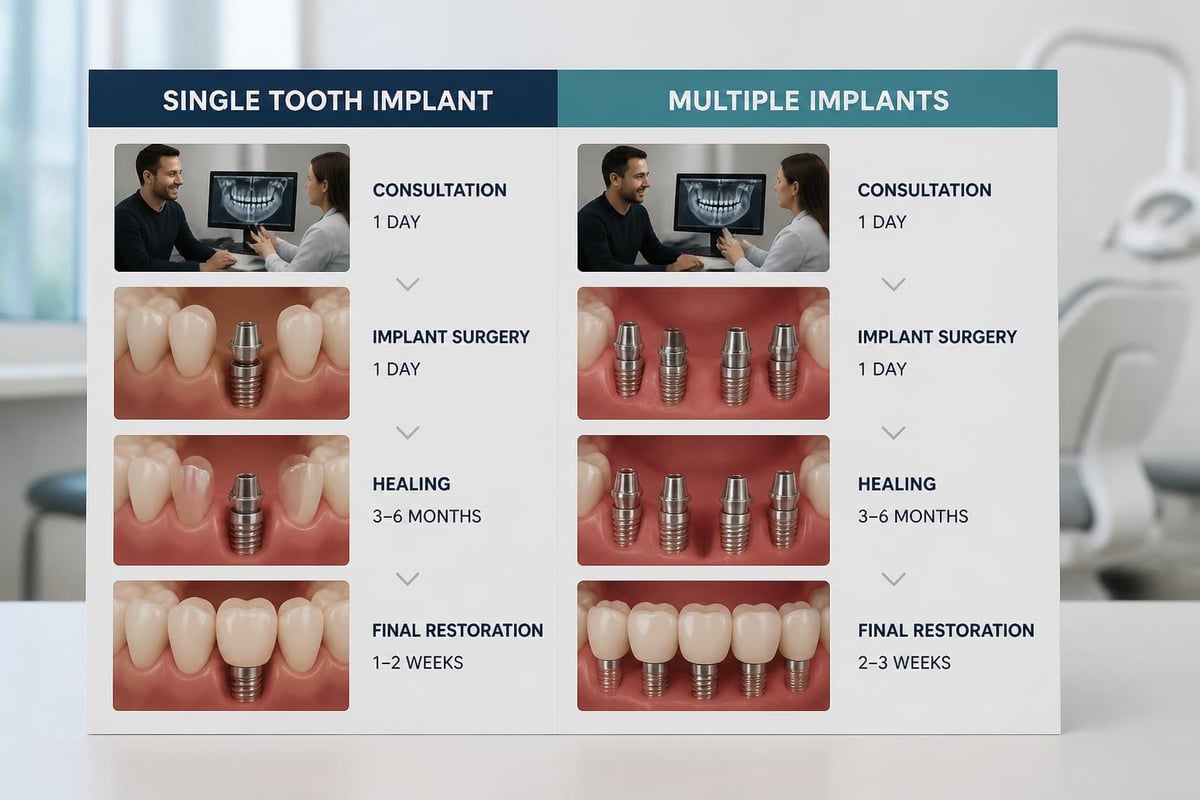
Understanding the time commitment for single tooth implant vs multiple implants helps you plan accordingly and set realistic expectations for your restoration journey.
Single Tooth Implant Timeline
The process for replacing one tooth typically follows this sequence:
- Initial consultation and imaging (1-2 visits)
- Implant placement surgery (1 appointment, 1-2 hours)
- Osseointegration period (3-6 months)
- Abutment placement (1 appointment)
- Final crown placement (1-2 appointments)
Total timeline: 4-8 months from start to finish, depending on healing response and whether bone grafting is required.
Multiple Implants Timeline
Replacing several teeth adds complexity and typically extends the treatment period:
- Comprehensive planning with 3D imaging (2-3 visits)
- Bone grafting if needed (adds 4-6 months)
- Multiple implant placement (1-2 surgical appointments)
- Extended healing period (4-6 months)
- Impression and fabrication (2-3 appointments)
- Final restoration delivery (1-2 appointments)
Total timeline: 6-12 months or longer, with variables including healing capacity, number of implants, and restoration complexity.
Recovery intensity also differs between approaches. A single implant procedure involves localized discomfort managed with over-the-counter pain relievers. Multiple implant surgery requires more extensive post-operative care, potentially including prescription pain management and dietary modifications for a longer period.
Financial Investment and Cost Analysis
Cost represents a significant consideration when evaluating single tooth implant vs multiple implants. Understanding the financial landscape helps you budget appropriately and explore payment options.
Single Tooth Implant Costs in 2026
For one tooth replacement, expect these approximate ranges in Texas:
- Implant post and surgery: $1,500-$2,500
- Abutment: $500-$800
- Custom crown: $1,200-$2,000
- Total per tooth: $3,200-$5,300
These figures vary based on location, with urban areas like Austin (near our Leander location) sometimes commanding higher fees than smaller communities.
Multiple Implants Cost Considerations
The economics change significantly when replacing several teeth:
| Configuration | Approximate Cost Range | Cost Per Tooth |
|---|---|---|
| 2-3 individual implants | $8,000-$16,000 | $4,000-$5,300 |
| Implant-supported bridge (2 implants, 3-4 teeth) | $6,000-$12,000 | $1,500-$3,000 |
| All-on-4 full arch | $20,000-$30,000 | $1,000-$1,500 |
| Full mouth reconstruction | $40,000-$80,000+ | Varies widely |
Important cost factors that affect your final investment include:
- Pre-surgical bone grafting requirements
- Type of anesthesia selected (local vs. sedation)
- Material choices for restorations (porcelain, zirconia, etc.)
- Complexity of your specific case
- Geographic location and provider experience
Many patients find that understanding dental insurance coverage helps offset these expenses. Some plans cover a portion of implant procedures, particularly when tooth loss results from accident or medical necessity rather than cosmetic preference.
Aesthetic Outcomes and Natural Appearance
Both single tooth implant vs multiple implants can deliver exceptional aesthetic results when properly planned and executed. However, the approaches differ in achieving natural-looking outcomes.
Creating Natural Gum Contours
Single implants excel at reproducing natural gum architecture around individual teeth. Your periodontist can carefully position the implant to support healthy tissue growth, creating the small peaks and valleys (papillae) between teeth that characterize a youthful, natural smile.
Multiple implant restorations present greater challenges in this area. When several teeth are missing consecutively, achieving ideal gum contours between each restoration becomes more complex. Implant-supported bridges might sacrifice some interdental papilla height, though skilled practitioners can minimize this aesthetic compromise.
Matching Your Natural Teeth
Modern dental laboratories create incredibly lifelike crowns that blend seamlessly with your existing teeth:
- Color matching: Multi-layered porcelain replicates the translucency and color variations of natural enamel
- Shape customization: Each crown is designed to match the contours and proportions of your natural dentition
- Surface texture: Minute detailing creates the characteristic light-reflecting properties of real teeth
- Size and alignment: Restorations are precisely calibrated to your bite and facial proportions
For multiple implants, maintaining consistency across several restorations requires exceptional laboratory craftsmanship. The advantage is that your dentist can address minor imperfections in your natural teeth during the restoration process, potentially improving your overall smile aesthetics.
Exploring zirconia as a material option offers additional benefits for both single and multiple implant cases, providing strength and natural translucency that mimics tooth structure.
Maintenance Requirements and Long-Term Care
Success with dental implants depends significantly on proper maintenance. The care requirements for single tooth implant vs multiple implants share similarities but also have distinct considerations.
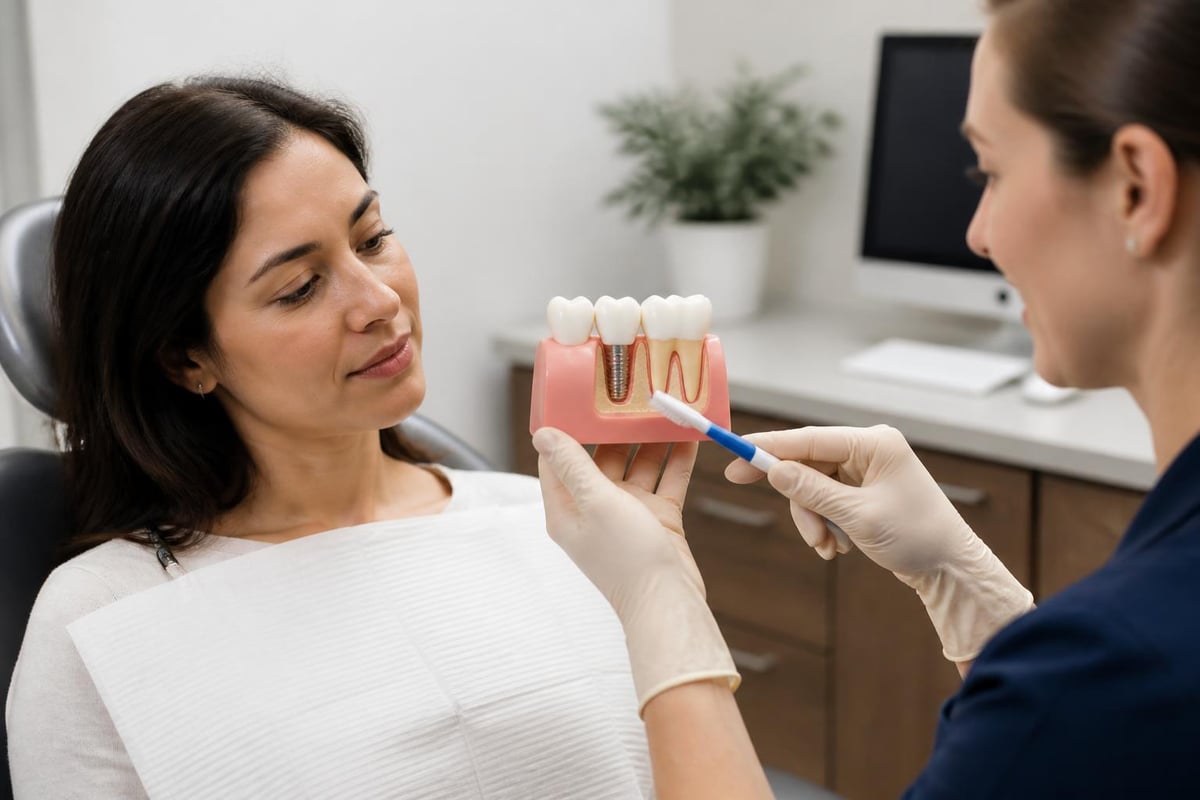
Daily Home Care Protocols
For single implants, your oral hygiene routine incorporates these elements:
- Brushing twice daily with a soft-bristled toothbrush
- Daily flossing around the implant crown
- Using specialized interdental brushes for hard-to-reach areas
- Regular antimicrobial mouth rinse to control bacteria
For multiple implants, particularly bridge-supported restorations, additional tools become necessary:
- Water flossers to clean beneath bridge pontics
- Floss threaders for accessing areas under connected crowns
- Proxy brushes in various sizes for different interdental spaces
- Antibacterial gel application around implant sites
The cleaning challenge increases proportionally with the number of implants and the complexity of your restoration. Patients with implant-supported bridges report spending an additional 5-10 minutes daily on oral hygiene compared to single implant maintenance.
Professional Monitoring and Checkups
Both treatment types require regular professional care:
- Dental examinations every 6 months to assess implant stability
- Professional cleanings with implant-safe instruments
- Radiographic monitoring annually or as recommended
- Bite adjustments if needed to prevent excessive forces
- Replacement of worn components (screws, abutments) as necessary
According to comprehensive comparisons of implant approaches, long-term success rates remain high for both options when patients adhere to recommended maintenance protocols. Single implants show 5-year success rates exceeding 95%, while properly maintained multiple implant cases achieve similar outcomes.
Functional Performance and Chewing Efficiency
Restoring proper chewing function ranks among the primary goals when considering single tooth implant vs multiple implants. The functional outcomes differ based on several factors.
Bite Force Distribution
Single tooth implants restore approximately 80-90% of natural chewing force in that location. The implant transfers forces directly into the jawbone, mimicking how natural tooth roots function. This stimulation helps preserve bone density and prevents the deterioration common with other tooth replacement options.
Multiple implants distribute chewing forces across several points of contact with your jawbone. This can be advantageous when replacing molars, which bear the greatest chewing loads. Detailed analysis of treatment options shows that strategic implant placement can actually improve overall bite stability compared to pre-treatment conditions.
Eating Restrictions and Dietary Freedom
One significant advantage of implant-based solutions over removable dentures is dietary freedom. However, some differences exist:
- Single implants: Few restrictions after healing, eat normally with confidence
- Multiple implants (individual): Similar freedom to single implants once integrated
- Implant bridges: Slight caution with extremely hard or sticky foods
- Full arch restorations: Some permanent dietary modifications may apply
Most patients with either single or multiple implants report substantial improvement in their ability to enjoy foods they'd avoided with missing teeth or temporary solutions.
Common Concerns and Patient Objections
When evaluating single tooth implant vs multiple implants, patients frequently raise specific concerns that deserve thorough examination.
"The Process Seems Too Long"
Reality: While implant treatment requires patience, the timeline reflects biological healing processes that cannot be rushed safely. The osseointegration period allows your bone to fuse with the titanium implant, creating the stable foundation necessary for long-term success.
Solution perspective: Consider that this temporary inconvenience delivers decades of reliable function. Temporary restorations can maintain aesthetics during healing, and many patients report the wait is worthwhile given the superior outcomes compared to alternative treatments.
"Can I Afford Multiple Implants?"
Reality: The upfront cost for multiple implants represents a significant investment, potentially ranging from several thousand to tens of thousands of dollars.
Solution perspective: Evaluate cost-per-year over the lifespan of your restoration. Implants lasting 20-30 years or more offer better value than bridges requiring replacement every 10-15 years. Additionally, many dental practices offer financing plans that make treatment accessible through manageable monthly payments. Strategies for reducing dental care costs can help you explore affordable options.
"What If My Body Rejects the Implants?"
Reality: True biological rejection of titanium implants is extremely rare, occurring in less than 2% of cases. Titanium is biocompatible, meaning your body accepts it readily.
Actual risks that concern patients include:
- Failed osseointegration: Occurs in approximately 5% of cases
- Infection at the surgical site: Preventable with proper post-operative care
- Nerve damage: Rare when proper planning and imaging are utilized
- Sinus complications: Specific to upper posterior implants
Research comparing single versus multiple tooth implants indicates that failure rates remain low across both categories when performed by experienced practitioners using modern techniques.
Alternative Treatment Comparisons
Understanding single tooth implant vs multiple implants also requires comparing these options against alternative tooth replacement methods.
Traditional Dental Bridges
For single tooth replacement, traditional bridges require grinding down adjacent healthy teeth to serve as anchors. This irreversible modification sacrifices tooth structure that can never be restored. Multiple missing teeth might be addressed with longer span bridges, but these place additional stress on supporting teeth and don't prevent bone loss underneath the pontics (artificial teeth).
Advantages of implants over bridges:
- Preserve adjacent healthy tooth structure
- Prevent jawbone deterioration through stimulation
- Easier to clean and maintain long-term
- Don't require replacement as frequently
- Feel and function more like natural teeth
Our comprehensive comparison of dental implants versus bridges explores these differences in greater detail.
Removable Partial Dentures
For multiple missing teeth, removable partial dentures represent the most economical short-term solution. However, they come with significant drawbacks:
- Unstable and potentially uncomfortable
- Require removal for cleaning
- Can accelerate bone loss
- Metal clasps may be visible when smiling
- Need replacement every 5-7 years
- Restrict dietary choices
When partials make sense: They can serve as temporary solutions while you save for implants or as transitional appliances during the healing phase.
All-on-4 and Full Arch Solutions
When comparing multiple individual implants against All-on-4 dental implants, the choice depends on how many teeth you're missing. The All-on-4 versus single implants comparison reveals that full arch replacements offer advantages when you're missing most or all teeth in an arch, potentially reducing costs and treatment time compared to individual implant placement.
Making Your Decision: Practical Considerations
Several practical factors should influence your choice between single tooth implant vs multiple implants beyond purely clinical considerations.
Your Overall Health Status
Certain medical conditions affect implant success rates:
- Uncontrolled diabetes: May slow healing and increase infection risk
- Smoking: Significantly reduces success rates for both single and multiple implants
- Osteoporosis medications: Some bisphosphonates complicate implant surgery
- Immune system disorders: May affect osseointegration capacity
Your dentist will conduct a thorough medical history review before recommending treatment. In some cases, addressing underlying health issues before proceeding with implants optimizes outcomes.
Time Availability and Lifestyle
Working professionals often prefer staging multiple implant procedures to minimize time away from work. A single tooth implant might require only one or two days off for surgery and immediate recovery. Multiple implants could demand more significant time commitments, though many patients successfully manage treatment around their schedules.
Travel considerations matter for patients visiting from outside the immediate area. Our Seguin location and other Texas facilities accommodate out-of-area patients by consolidating appointments when possible.
Future Dental Health Projections
Consider your long-term oral health trajectory:
- Additional teeth at risk: If other teeth show signs of failing, comprehensive planning might save money and time by addressing multiple issues simultaneously
- Age considerations: Younger patients investing in implants can expect decades of service, making the investment particularly worthwhile
- Family history: Genetic predisposition to dental problems might influence whether individual or comprehensive restoration makes sense
Frequently Asked Questions
How painful is getting single tooth implant vs multiple implants?
Most patients report that implant surgery involves less discomfort than anticipated. Single tooth implant placement typically causes mild to moderate soreness for 3-5 days, manageable with over-the-counter pain relievers. Multiple implants involve more surgical sites, potentially extending recovery discomfort to 7-10 days. However, modern anesthesia techniques and post-operative medications ensure comfort throughout the process.
Can I get all my implants placed in one appointment?
Yes, in many cases. If you're receiving multiple implants and your bone quality supports it, simultaneous placement is often possible and preferred. This approach reduces the total number of surgical appointments and can shorten overall treatment time. Your dentist will evaluate whether your specific situation allows for this efficiency.
How long do dental implants actually last?
With proper care, dental implants can last 25 years or longer, with many lasting a lifetime. The crown on top typically needs replacement every 10-15 years due to normal wear, but the implant post itself rarely requires replacement. Success rates remain above 95% at the 10-year mark for both single tooth implant vs multiple implants when maintained properly.
Will people be able to tell I have dental implants?
No. Modern dental implants are virtually indistinguishable from natural teeth when properly crafted and placed. The crown matches your natural tooth color, shape, and translucency. Even dentists sometimes have difficulty identifying well-made implant restorations without x-rays. The question of implant visibility concerns many patients, but advances in materials and techniques have made detection essentially impossible.
What happens if an implant fails?
Implant failure is uncommon but manageable when it occurs. If an implant doesn't integrate properly or develops problems later, your dentist can remove it, allow the area to heal, and place a new implant. Most failures happen early in the process before final restoration. Late failures often relate to infection (peri-implantitis) or excessive forces, both preventable with proper care and regular monitoring.
Do I need an implant for every missing tooth?
Not necessarily. While replacing each missing tooth with an individual implant represents the ideal in many situations, implant-supported bridges can restore multiple teeth using fewer implants. For example, two implants can support a bridge replacing three or four consecutive teeth. Your dentist will recommend the optimal configuration based on your specific anatomy and functional needs, as discussed in detailed comparisons of implant strategies.
How do I know if I'm a good candidate for dental implants?
Good candidates for dental implants typically have adequate bone density, healthy gums, and overall good health. Non-smokers or those willing to quit during treatment heal more predictably. Even if you've been told you lack sufficient bone, modern grafting techniques can often create the foundation necessary for successful implant placement. A comprehensive evaluation provides definitive answers about your candidacy.
Special Considerations for Different Age Groups
The decision between single tooth implant vs multiple implants varies across different life stages, with unique factors affecting each demographic.
Young Adults (18-35)
Advantages of early implant treatment:
- Decades of functional service from the investment
- Prevention of bone loss that accelerates with age
- Preservation of facial structure and aesthetics
- No impact on adjacent healthy teeth
Challenges: Younger patients sometimes face greater difficulty with insurance coverage, as policies may categorize implants as elective. However, understanding your dental insurance options helps navigate coverage denials.
For young adults missing multiple teeth due to congenital absence, trauma, or severe decay, comprehensive implant treatment prevents the cascade of problems that tooth loss creates over time.
Middle-Aged Adults (35-60)
This demographic represents the largest segment of implant recipients. Often, tooth loss results from:
- Failed root canal treatments
- Fractured teeth with poor prognosis
- Advanced periodontal disease
- Long-term consequences of previous dental work
Strategic planning becomes crucial: Should you replace only currently missing teeth, or address questionable teeth simultaneously? Comprehensive assessment of oral health factors helps determine whether staged or comprehensive treatment serves you best.
Seniors (60+)
Older patients might wonder if dental implants make sense at their life stage. The answer is typically yes, provided overall health supports the procedure:
- Life expectancy: With average life expectancy extending into the 80s, even a 70-year-old can expect 10-20+ years of implant service
- Quality of life: The ability to eat comfortably and smile confidently profoundly impacts wellness at any age
- Bone preservation: Implants prevent the facial collapse associated with long-term tooth loss
Some seniors benefit from full mouth dental implants rather than individual replacements, especially when wearing dentures for years has significantly reduced bone volume.
The Role of Technology in Treatment Planning
Advanced technology has transformed how dentists approach single tooth implant vs multiple implants, improving outcomes and patient experience.
3D Imaging and Cone Beam CT
Three-dimensional imaging allows precise evaluation of:
- Bone density and volume at potential implant sites
- Anatomical structures requiring protection (nerves, sinuses)
- Optimal implant angles and depths for long-term stability
- Need for supplementary procedures like bone grafting
This technology proves particularly valuable for multiple implant cases where coordinating several placements demands exceptional precision.
Computer-Guided Implant Surgery
Surgical guides created from digital planning ensure implants are placed exactly as designed:
- Reduces surgical time and trauma
- Minimizes human error
- Allows for minimally invasive flapless techniques in many cases
- Improves predictability of aesthetic outcomes
Digital Impressions and Custom Restorations
Modern implant dentistry often eliminates uncomfortable traditional impressions. Digital scanners create precise 3D models of your mouth, which are used to design custom abutments and crowns with exceptional accuracy. This technology benefits both single and multiple implant cases by improving fit and reducing the number of adjustment appointments.
Staying current with technological advances ensures you receive treatment incorporating the most effective, comfortable methods available.
Real Patient Scenarios and Outcomes
Understanding how single tooth implant vs multiple implants work in practice helps clarify your options through concrete examples.
Case Study: Single Front Tooth Replacement
Sarah, a 28-year-old teacher from New Braunfels, lost a front tooth in a cycling accident. A traditional bridge would have required damaging two healthy adjacent teeth. She chose a single tooth implant, which was completed over five months. The implant seamlessly matched her natural teeth, and she reported complete satisfaction with both aesthetics and function. Three years later, her implant remains indistinguishable from natural teeth.
Case Study: Multiple Posterior Tooth Restoration
Michael, a 52-year-old from Beeville, had lost three consecutive molars due to failed root canals and fractures over several years. After evaluation, his dentist recommended two implants supporting a three-unit bridge rather than three individual implants. This approach reduced costs by approximately 30% while providing excellent functional restoration for chewing. The bridge has performed flawlessly for four years with proper maintenance.
Case Study: Comprehensive Smile Restoration
Jennifer, a 61-year-old retiree in Converse, faced extensive tooth loss from long-term periodontal disease. Rather than continuing with problematic partial dentures, she opted for comprehensive treatment involving six upper implants and five lower implants supporting fixed bridges. While the investment and treatment time were substantial, she describes the transformation as life-changing, allowing her to eat foods she'd avoided for years and smile confidently in social situations.
These scenarios illustrate how various implant approaches address different clinical situations, with outcomes tailored to individual needs and circumstances.
Preparing for Your Consultation
When you're ready to explore whether single tooth implant vs multiple implants suits your situation, proper preparation maximizes the value of your consultation.
Information to Gather
Medical history documentation:
- Current medications and supplements
- Chronic health conditions
- Previous surgeries or complications
- Allergies to medications or materials
Dental history details:
- Previous dental treatments and their outcomes
- Current symptoms or concerns
- Timeline of tooth loss
- Any previous complications with dental procedures
Questions to Ask Your Dentist
Come prepared with specific questions addressing your concerns:
- Based on my situation, do you recommend single implants, an implant bridge, or another configuration?
- What is my total treatment timeline from consultation to final restoration?
- What are the total costs, and what payment or financing options do you offer?
- What is your success rate with cases similar to mine?
- How do you handle complications if they arise?
- What temporary solutions will I have during the healing period?
- How will this treatment affect my daily life during recovery?
Setting Realistic Expectations
Understanding that dental implant treatment represents a process rather than a quick fix helps maintain perspective throughout your journey. The investment of time and money delivers long-term benefits that other tooth replacement options simply cannot match. Whether you need one implant or several, the result restores not just teeth, but confidence, function, and quality of life.
Taking the Next Step Toward Restoration
The journey from tooth loss to complete restoration with dental implants involves careful planning, skilled execution, and committed maintenance. Whether single tooth implant vs multiple implants better suits your needs depends on your unique clinical situation, financial considerations, and personal preferences.
Key decision factors to weigh include:
- Number and location of missing teeth
- Condition of remaining natural teeth
- Bone density and volume at potential implant sites
- Budget and available financing
- Timeline flexibility
- Aesthetic priorities versus functional needs
- Long-term oral health goals
Both single and multiple implant approaches offer proven, reliable solutions that can last decades with proper care. The technology, materials, and techniques available in 2026 make this an excellent time to address tooth loss definitively rather than settling for compromise solutions.
Taking action begins with education and consultation. Research your options, understand the process, and connect with experienced professionals who can evaluate your specific situation. The information you've gained here provides a foundation for productive conversations with your dental team about restoring your smile and oral function.
Choosing between a single tooth implant or multiple implants represents an important decision that affects your oral health, appearance, and quality of life for years to come. At Dental Plus Clinic, our experienced team uses advanced technology and personalized treatment planning to help Texas families achieve healthy, confident smiles through comprehensive implant solutions. With convenient locations in Beeville, Seguin, New Braunfels, Leander, and Converse, we're ready to evaluate your unique situation and recommend the approach that best serves your needs. Schedule your consultation with Dental Plus Clinic today and take the first step toward permanent tooth replacement that looks, feels, and functions like your natural teeth.