
Modern orthodontic treatment has evolved dramatically, offering patients discreet alternatives to traditional braces. Clear aligners have become increasingly popular for adults and teens seeking to straighten their teeth without visible metal brackets. Understanding the clear aligner treatment timeline helps patients set realistic expectations and commit to the process with confidence. At Dental Plus Clinic, we recognize that every patient wants to know one critical question: how long will this transformation take? The answer depends on multiple factors, including the complexity of your case, your compliance with wearing the aligners, and your unique dental anatomy.
Understanding the Clear Aligner Treatment Timeline
The clear aligner treatment timeline from initial consultation to final results typically spans between six months and two years. This range reflects the significant variation in individual orthodontic needs. Some patients require minor adjustments to correct slight spacing issues, while others need comprehensive treatment to address complex bite problems or severe crowding.
Several primary factors influence treatment duration:
- Severity of misalignment and bite issues
- Patient compliance with wearing aligners 20-22 hours daily
- Age and bone density affecting tooth movement speed
- Previous orthodontic treatment history
- Specific treatment goals and desired outcomes
The complexity of your dental concerns serves as the primary determinant of treatment length. Minor corrections might require as few as 10-15 aligner trays, while comprehensive cases could need 40 or more sets of aligners.
Average Treatment Durations by Case Complexity
Different orthodontic issues require varying amounts of time to correct effectively. Understanding where your case falls on the complexity spectrum helps establish reasonable timeline expectations.
| Case Complexity | Typical Duration | Number of Aligners | Common Issues Addressed |
|---|---|---|---|
| Mild | 6-12 months | 10-20 trays | Minor spacing, slight crowding |
| Moderate | 12-18 months | 20-30 trays | Moderate crowding, gaps, minor bite issues |
| Comprehensive | 18-24 months | 30-50+ trays | Severe crowding, significant bite correction |
Patients with mild alignment issues often see their treatment completed within the shorter timeframe. These cases typically involve minor spacing adjustments or slight rotations that respond quickly to gentle, consistent pressure.
Initial Consultation and Treatment Planning Phase
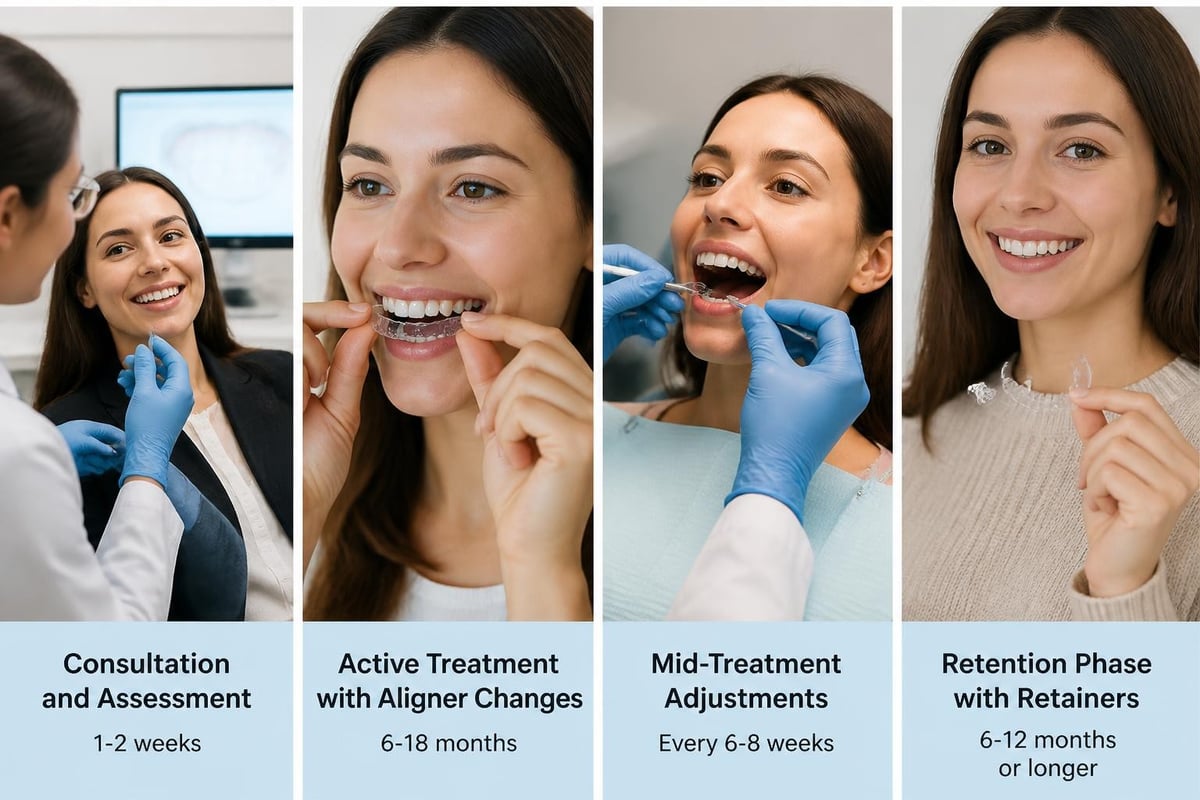
Your clear aligner journey begins with a comprehensive evaluation at one of our Texas locations. This initial phase, lasting approximately two to three weeks, establishes the foundation for your entire treatment plan. During your first visit to Dental Plus Clinic, our orthodontic team conducts thorough examinations, including digital scans, photographs, and X-rays.
The diagnostic process generates precise 3D models of your teeth and jaw structure. These digital impressions eliminate the need for uncomfortable traditional molds while providing exceptional accuracy. Our specialists analyze your bite, tooth positions, and facial structure to create a customized treatment roadmap.
Digital Treatment Simulation
Advanced software creates a virtual representation of your teeth movement throughout the entire treatment process. This technology allows you to preview your expected results before committing to treatment. The simulation demonstrates how your teeth will shift with each aligner set, providing visual confirmation of the treatment plan.
The planning phase includes:
- Comprehensive oral health assessment
- Digital scanning and imaging
- Treatment goal discussion
- Timeline estimation based on your specific case
- Cost breakdown and insurance coverage review
Manufacturing your custom aligners typically takes two to three weeks after treatment approval. This production time allows the laboratory to fabricate each tray with precision, ensuring optimal fit and effectiveness.
Active Treatment Phase: Week by Week
The active treatment phase represents the core of your clear aligner treatment timeline. Most patients change to a new set of aligners every one to two weeks, depending on their specific protocol. Each aligner applies controlled pressure to specific teeth, gradually shifting them into proper alignment.
During the first 48 hours with each new aligner set, patients typically experience mild pressure or tightness. This sensation confirms the aligners are working effectively. The discomfort usually subsides quickly as teeth begin responding to the gentle force.
Monthly Progress and Adjustment Appointments
Regular check-ins ensure your treatment progresses according to plan. These appointments, scheduled every six to eight weeks, allow our team to monitor tooth movement and make necessary adjustments. Unlike traditional braces requiring frequent tightening appointments, clear aligner check-ups are typically brief and straightforward.
What happens during progress appointments:
- Visual and digital assessment of tooth movement
- Delivery of your next series of aligner sets
- Evaluation of compliance and wear patterns
- Discussion of any concerns or questions
- Refinement planning if needed
How clear aligners work involves applying precise, calculated forces to teeth, triggering biological responses in the surrounding bone. This process, called bone remodeling, allows teeth to move through the jawbone gradually. The controlled nature of this movement ensures safety and stability.

Factors That Accelerate or Delay Treatment
Your clear aligner treatment timeline can vary significantly based on personal factors and habits. Understanding these variables empowers you to optimize your treatment experience and potentially shorten the overall duration.
Compliance: The Critical Success Factor
Wearing your aligners for the prescribed 20-22 hours daily represents the single most important factor in treatment success. Each hour below this threshold can extend your overall treatment time. Patients who consistently wear their aligners as directed typically complete treatment faster than those with sporadic compliance.
Removing aligners only for eating, drinking anything other than water, and oral hygiene maintains optimal treatment momentum. Some patients find it helpful to track their wear time using smartphone apps or aligner timers.
Common compliance challenges include:
- Social events and dining out
- Forgetfulness or inconsistent routines
- Discomfort leading to premature removal
- Travel disrupting normal schedules
The detailed breakdown of treatment durations emphasizes that even small deviations from the wear schedule can compound over weeks and months. A patient removing aligners an extra two hours daily could add several months to their treatment timeline.
Age and Biological Factors
Younger patients often experience faster tooth movement due to higher bone density turnover rates. Adolescents and young adults in their teens and twenties may complete treatment more quickly than older patients with the same severity of misalignment.
However, age should not discourage adults from pursuing clear aligner treatment. Patients in their 40s, 50s, and beyond achieve excellent results, though treatment may require slightly more time. Understanding the importance of orthodontics extends beyond aesthetics to include improved oral health and function at any age.
Complexity of Tooth Movement Required
Different types of orthodontic corrections require varying amounts of time. Simple spacing corrections typically proceed faster than rotational movements or bite corrections.
| Movement Type | Relative Speed | Typical Timeline Impact |
|---|---|---|
| Closing small gaps | Fastest | Minimal extension |
| Straightening alignment | Moderate | Standard timeline |
| Rotating molars | Slower | May add 2-4 months |
| Bite correction | Slowest | May add 4-8 months |
Vertical movements and severe rotations challenge even the most advanced aligner systems. These movements may require additional refinement trays or supplementary orthodontic aids like attachments or elastics.
Mid-Treatment Refinements and Adjustments
Approximately 60-70% of clear aligner patients require at least one refinement phase during treatment. These adjustments address teeth that haven't moved as predicted or fine-tune results to achieve optimal alignment. Refinements are a normal part of the clear aligner treatment timeline, not an indication of failure.
When refinement becomes necessary, your orthodontist takes new impressions or scans to capture your current tooth positions. The updated digital models allow for creation of additional aligner sets targeting remaining imperfections. Refinement phases typically add two to six months to the overall timeline.
Attachments and Auxiliary Aids
Small tooth-colored attachments bonded to specific teeth provide additional leverage for challenging movements. These composite bumps give aligners better grip, enabling more complex corrections. While attachments are discreet, they represent an important tool for comprehensive treatment success.
Common auxiliary aids include:
- Elastics for bite correction
- Precision cuts in aligners for specific movements
- Temporary anchorage devices for complex cases
- Interproximal reduction (IPR) to create space
Interproximal reduction involves carefully removing tiny amounts of enamel between teeth to create necessary space. This conservative procedure allows alignment without extractions in many cases. The process is quick, painless, and preserves tooth structure while facilitating movement.
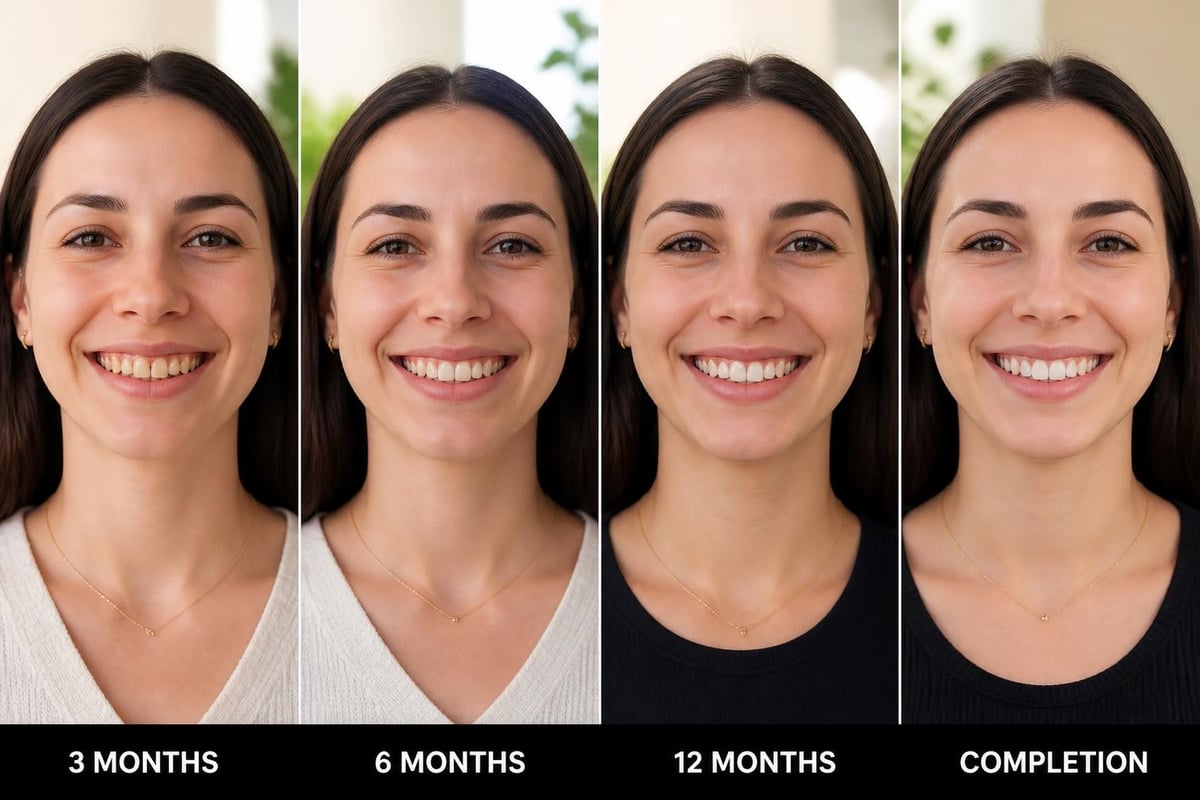
When Results Become Visible
Most patients notice initial changes within the first four to six weeks of treatment. These early improvements often involve the front teeth, which tend to move more quickly than molars. The psychological boost from seeing early progress helps maintain motivation throughout the longer treatment journey.
When patients can expect to see results varies based on the specific movements being addressed first in their treatment sequence. Some plans prioritize visible anterior teeth early, while others must address foundational bite issues before cosmetic improvements become apparent.
Three-Month Progress Checkpoint
By the three-month mark, most patients experience noticeable improvements. Photographs comparing your smile to pre-treatment images reveal changes that daily viewing in the mirror might not capture. This milestone often coincides with receiving positive comments from friends and family who notice your improving smile.
Tracking your progress through monthly photographs provides valuable motivation. Many patients create digital albums documenting their transformation, which helps maintain compliance during challenging periods.
Halfway Through Treatment
Reaching the midpoint of your clear aligner treatment timeline represents a significant achievement. By this stage, major movements are often underway, and your smile shows substantial improvement. However, the remaining treatment time focuses on refinement and precision, ensuring your bite functions properly and your smile appears balanced.
Mid-treatment characteristics include:
- Visible alignment improvements in front teeth
- Reduced crowding or gap closure
- Improved bite function during chewing
- Growing confidence in your smile appearance
Maintaining compliance becomes especially important during the second half of treatment. Some patients feel tempted to discontinue treatment early when visible improvements occur, but completing the full treatment plan ensures stability and prevents relapse.
The Final Stages and Retention Phase
As you approach your final aligner sets, the focus shifts from major movements to fine-tuning and detailing. These last adjustments perfect your bite relationship and ensure teeth settle into their optimal positions. The final phase of your clear aligner treatment timeline proves just as critical as the initial stages.
Your orthodontist conducts a comprehensive final evaluation to confirm treatment goals have been met. This assessment examines tooth positions, bite relationships, and overall facial aesthetics. If any minor imperfections remain, a brief refinement with a few additional aligners may be recommended.
Transitioning to Retainers
Retention represents the permanent phase of orthodontic treatment. After teeth reach their desired positions, retainers prevent them from shifting back toward their original locations. The retention protocol typically begins immediately after completing your final aligner set.
Two primary retainer options exist:
- Fixed retainers: Thin wires bonded behind teeth provide permanent retention
- Removable retainers: Clear trays or wire retainers worn during sleep
Most orthodontists recommend wearing removable retainers full-time for the first three to six months after treatment completion. This intensive retention period allows bone and soft tissues to stabilize around teeth in their new positions. Subsequently, nighttime wear maintains results indefinitely.
Understanding dental night guard insurance coverage can help with retention costs, as some insurance plans classify retainers similarly to night guards for coverage purposes.
Treatment Timeline Variations by Age Group
Different age groups experience unique considerations affecting their clear aligner treatment timeline. While the technology works effectively across all ages, biological and lifestyle factors create variation in treatment experiences.
Teenagers and Young Adults
Adolescent patients often benefit from faster treatment due to active bone growth and remodeling. However, compliance challenges may extend treatment if teenagers inconsistently wear their aligners. Parental involvement and monitoring help ensure successful outcomes within predicted timelines.
Young adult patients in their twenties typically demonstrate excellent compliance while still benefiting from relatively rapid tooth movement. This age group often achieves optimal results within standard timeline predictions.
Adults in Their 30s Through 50s
Adult patients represent the fastest-growing demographic for clear aligner treatment. These individuals typically demonstrate exceptional compliance and commitment to their treatment plans. While tooth movement may occur slightly more slowly than in younger patients, the difference rarely extends treatment significantly.
Many adults pursue orthodontic treatment for the first time in this age range, motivated by career advancement or personal confidence goals. The discreet nature of clear aligners makes them ideal for professional environments.
Patients Over 60
Older adults successfully complete clear aligner treatment, though timelines may extend modestly due to decreased bone density turnover rates. Patience and consistent aligner wear remain the keys to success. Many seniors find that improving their smile enhances quality of life and social confidence during retirement years.
Comparing Treatment Timelines Across Orthodontic Options
Understanding how clear aligner treatment timelines compare to alternative orthodontic approaches helps patients make informed decisions. Each treatment modality offers distinct advantages and typical duration ranges.
| Treatment Type | Average Duration | Visibility | Convenience | Best For |
|---|---|---|---|---|
| Clear Aligners | 12-24 months | Very discreet | High | Mild to moderate cases |
| Traditional Braces | 18-36 months | Highly visible | Lower | All complexities |
| Lingual Braces | 18-36 months | Hidden | Moderate | All complexities |
| Accelerated Orthodontics | 3-8 months | Varies | Moderate | Minor corrections |
Clear aligners offer comparable or slightly longer timelines than traditional braces for many cases, with the advantage of removability and aesthetics. The detailed overview of treatment phases demonstrates that modern aligner technology can address increasingly complex cases that once required traditional brackets.
Optimizing Your Treatment Timeline
Patients who want to complete their clear aligner treatment timeline as efficiently as possible can implement several strategies to support optimal progress. While biological factors remain beyond control, behavioral choices significantly impact treatment duration.
Maintaining Consistent Wear Schedules
Developing consistent routines around aligner wear prevents compliance lapses. Keeping your aligner case with you at all times ensures you replace aligners immediately after meals. Setting phone reminders helps establish the habit of consistent 22-hour daily wear.
Effective compliance strategies include:
- Wearing aligners during all waking hours except meals
- Limiting snacking to reduce removal frequency
- Carrying a travel toothbrush for quick cleaning after eating
- Using aligner tracking apps to monitor wear time
- Planning social events around aligner schedules
Attending All Scheduled Appointments
Regular progress appointments allow your orthodontist to identify and address issues before they cause significant delays. Missing appointments can result in wearing the wrong aligner sets or continuing with a treatment plan that requires adjustment.
Our team at locations including Leander and Converse works with patients to schedule appointments at convenient times, minimizing conflicts with work and personal commitments.
Practicing Excellent Oral Hygiene
Maintaining healthy teeth and gums throughout treatment prevents interruptions due to cavities or periodontal issues. Dental problems requiring treatment can delay aligner progression while restorative work is completed. Brushing after every meal before reinserting aligners prevents plaque accumulation and maintains optimal oral health.
Technology Advances Affecting Treatment Speed
Recent innovations in clear aligner technology have enabled faster, more predictable tooth movement. These advances benefit patients pursuing treatment in 2026 with shortened timelines and improved outcomes compared to earlier aligner generations.
Enhanced Material Properties
Modern aligner materials deliver more consistent forces over longer periods, maintaining effectiveness between changes. These improved polymers resist wear better, allowing some treatment protocols to extend wear time per aligner set from one week to ten days or even two weeks without compromising results.
Precision Attachment Design
Computer-optimized attachment shapes and placements enhance the efficiency of specific tooth movements. These refinements reduce the number of aligner sets required for complex corrections, potentially shortening overall treatment duration by several months.
AI-Powered Treatment Planning
Artificial intelligence systems analyze millions of previous cases to predict tooth movement patterns with exceptional accuracy. This technology helps orthodontists create more efficient treatment sequences, reducing the likelihood of mid-treatment refinements that extend timelines.
Technological benefits include:
- More accurate initial treatment predictions
- Reduced need for refinement phases
- Optimized tooth movement sequences
- Better outcome visualization for patients
Managing Expectations Throughout Your Journey
Setting realistic expectations about your clear aligner treatment timeline prevents frustration and maintains motivation. Understanding that orthodontic treatment represents a gradual process helps patients commit to the full duration required for optimal results.
The comprehensive timeline overview emphasizes that rushing treatment or skipping steps compromises final outcomes. Teeth moved too quickly may not stabilize properly, increasing relapse risk after treatment completion.
Celebrating Milestone Achievements
Breaking your treatment into smaller milestones makes the overall timeline feel more manageable. Celebrating when you reach aligner number 10, complete your first refinement, or pass the halfway point maintains positive momentum.
Sharing progress photos on social media or with friends provides external validation and encouragement. Many patients find that documenting their journey creates accountability that improves compliance.
Addressing Setbacks Constructively
Occasional setbacks occur in most orthodontic journeys. Lost or damaged aligners, temporary compliance lapses, or unexpected refinements can extend your clear aligner treatment timeline. Addressing these situations promptly and without self-criticism helps minimize their impact.
Contacting your orthodontist immediately when problems arise prevents small issues from becoming significant delays. Our team provides replacement aligners quickly and offers guidance for getting back on track efficiently.
Financial Considerations and Treatment Duration
Treatment timeline directly affects the financial investment required for clear aligner therapy. Longer treatments typically involve more aligner sets, additional appointments, and extended monitoring periods. Understanding these cost implications helps patients budget appropriately.
Most dental practices, including Dental Plus Clinic, offer flexible payment plans that spread treatment costs across the duration of care. These arrangements make comprehensive orthodontic treatment accessible regardless of timeline length. Exploring savings options can help reduce overall treatment expenses.
Insurance Coverage and Timeline Impact
Dental insurance plans with orthodontic benefits typically provide coverage based on total treatment cost rather than duration. However, longer treatments may span multiple benefit years, requiring coordination between annual maximum allowances. Understanding your specific coverage details prevents surprise expenses.
Some insurance plans impose age restrictions or lifetime orthodontic maximums that affect coverage regardless of treatment length. Reviewing your policy details before beginning treatment clarifies financial expectations throughout your clear aligner treatment timeline.
Real Patient Experiences and Timeline Expectations
Hearing from actual patients who have completed clear aligner treatment provides valuable perspective on realistic timeline expectations. While individual experiences vary, common patterns emerge that help prospective patients understand what to anticipate.
Many patients report that treatment feels longer during the first few months as they adjust to wearing aligners and maintaining compliance. However, time seems to accelerate during the middle and final phases as visible improvements become apparent and the routine becomes habitual.
Common patient observations include:
- Initial adjustment period feeling challenging but temporary
- Noticeable improvements boosting motivation around month three
- Middle phase progressing quickly with established routines
- Final months feeling fastest despite detail-oriented work
- Retention transition easier than expected
The FAQ about treatment duration addresses concerns patients commonly express during consultations. Understanding that temporary discomfort and initial compliance challenges represent normal experiences helps new patients persevere through early treatment phases.
Post-Treatment Maintenance and Long-Term Timeline
The clear aligner treatment timeline doesn't truly end when your last aligner is removed. Maintaining results requires lifelong commitment to retention protocols and regular dental care. This extended timeline ensures your investment in orthodontic treatment provides permanent benefits.
Retention Protocol Timeline
Years 1-2 after treatment: Full-time retainer wear (removing only for eating and cleaning) or nighttime wear as directed
Years 3-5 after treatment: Consistent nighttime retainer wear to maintain stability
Year 6 and beyond: Continued nighttime wear several times weekly, with some patients wearing retainers every night indefinitely
Retention requirements vary based on individual factors including age at treatment, severity of original misalignment, and biological tendency toward relapse. Your orthodontist provides personalized retention guidance based on your specific case characteristics.
Long-Term Dental Health Monitoring
Regular dental check-ups every six months ensure your orthodontic results remain stable while monitoring overall oral health. These appointments allow early detection of any shifting that might require intervention. Maintaining relationships with providers at locations like New Braunfels or Beeville ensures continuity of care throughout your dental health journey.
Patients who complete orthodontic treatment often demonstrate improved oral hygiene habits that benefit long-term dental health. Straight teeth are easier to clean effectively, reducing cavity and gum disease risk throughout life.
Special Considerations for Complex Cases
Patients with comprehensive orthodontic needs face longer clear aligner treatment timelines but can still achieve exceptional results. Complex cases require patience, realistic expectations, and potentially additional orthodontic aids beyond aligners alone.
Severe Crowding and Extractions
Cases involving tooth extractions to create space extend treatment timelines significantly. The extraction sites require healing time before orthodontic movement begins, and closing extraction spaces demands additional months. However, extraction cases often produce dramatic transformations worth the extended timeline investment.
Bite Correction Requirements
Correcting overbites, underbites, crossbites, or open bites represents the most time-intensive orthodontic work. These corrections affect how teeth fit together functionally, requiring precise, gradual movements that cannot be rushed. Patients pursuing bite correction should expect timelines toward the longer end of typical ranges.
Combination Treatments
Some complex cases benefit from combining clear aligners with other orthodontic appliances. Temporary use of palatal expanders, bite turbos, or other devices before beginning aligner treatment can improve overall efficiency. While adding upfront time, these combination approaches may reduce total treatment duration compared to aligners alone.
The step-by-step overview of treatment phases demonstrates how complex cases are broken into manageable stages, each with specific goals and timeline predictions.
Making the Decision to Begin Treatment
Understanding the clear aligner treatment timeline empowers you to make informed decisions about pursuing orthodontic care. While the commitment spans months or years, the benefits of a properly aligned smile extend throughout your lifetime.
Consider your personal circumstances, lifestyle factors, and treatment goals when evaluating whether clear aligner treatment fits your current life stage. The discreet nature and convenience of aligners make them compatible with virtually any professional or social situation.
Questions to Ask During Consultation
Treatment-specific timeline questions:
- What is the estimated duration for my specific case?
- How many aligner sets will my treatment require?
- What factors might extend or shorten my timeline?
- How frequently will progress appointments occur?
- What happens if I need refinements?
Your consultation appointment provides opportunity to discuss all concerns and clarify expectations before committing to treatment. Transparent communication with your orthodontic team establishes the foundation for a successful treatment experience.
Weighing Timeline Against Benefits
While treatment duration represents an important consideration, focusing exclusively on timeline can overlook the transformative benefits orthodontic care provides. Improved confidence, better oral health, enhanced facial aesthetics, and proper bite function offer value that extends far beyond the treatment period.
Many patients reflect that their clear aligner treatment timeline passed more quickly than anticipated once they established consistent routines. The gradual nature of tooth movement means you adapt to changes progressively rather than experiencing dramatic overnight transformations.
Understanding your clear aligner treatment timeline from consultation through retention helps you approach orthodontic care with realistic expectations and confidence. While treatment duration varies based on individual factors, consistent compliance and regular monitoring optimize results within predicted timeframes. If you're ready to transform your smile with personalized orthodontic care, the experienced team at Dental Plus Clinic offers comprehensive clear aligner services across our five Texas locations, combining advanced technology with patient-focused care to help you achieve the healthy, confident smile you deserve.