
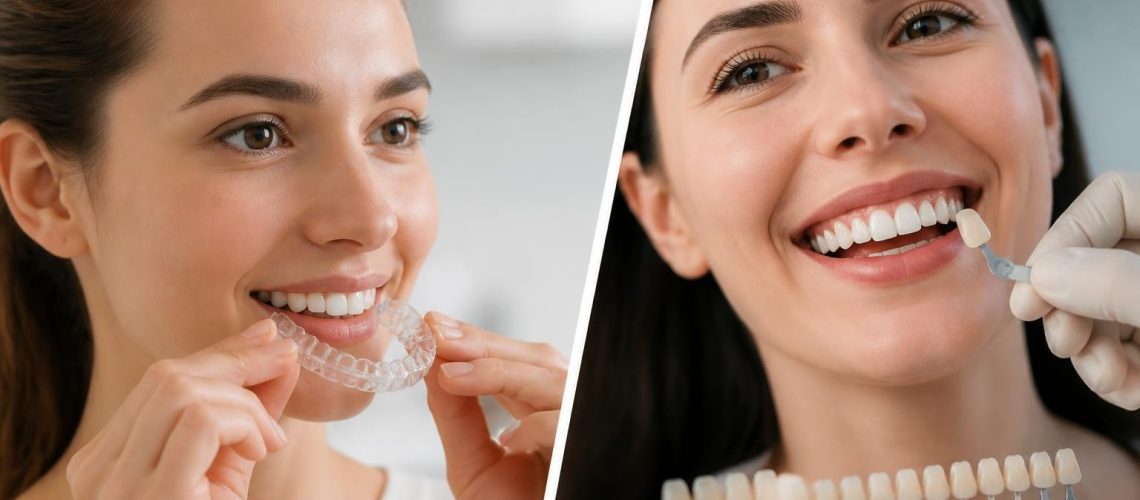
When considering options for transforming your smile, understanding the fundamental differences between clear aligners vs veneers becomes essential for making an informed decision about your dental treatment. These two popular cosmetic dental solutions serve distinct purposes and address different dental concerns, yet patients often confuse them or wonder which option best suits their specific needs. While both treatments can dramatically enhance your smile's appearance, they work through entirely different mechanisms and achieve results in vastly different ways. At Dental Plus Clinic, we help patients across Texas navigate these choices with personalized consultations that consider individual dental health, aesthetic goals, and long-term oral wellness.
Understanding the Core Differences Between Treatment Approaches
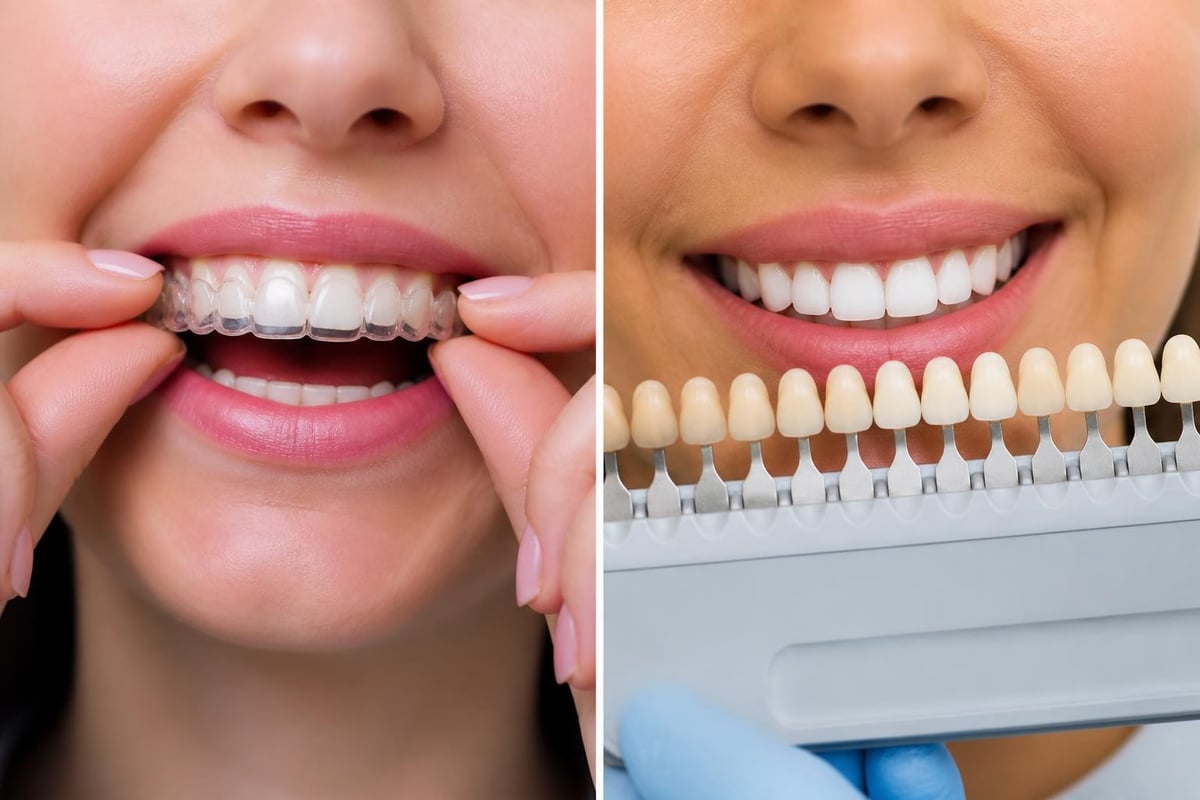
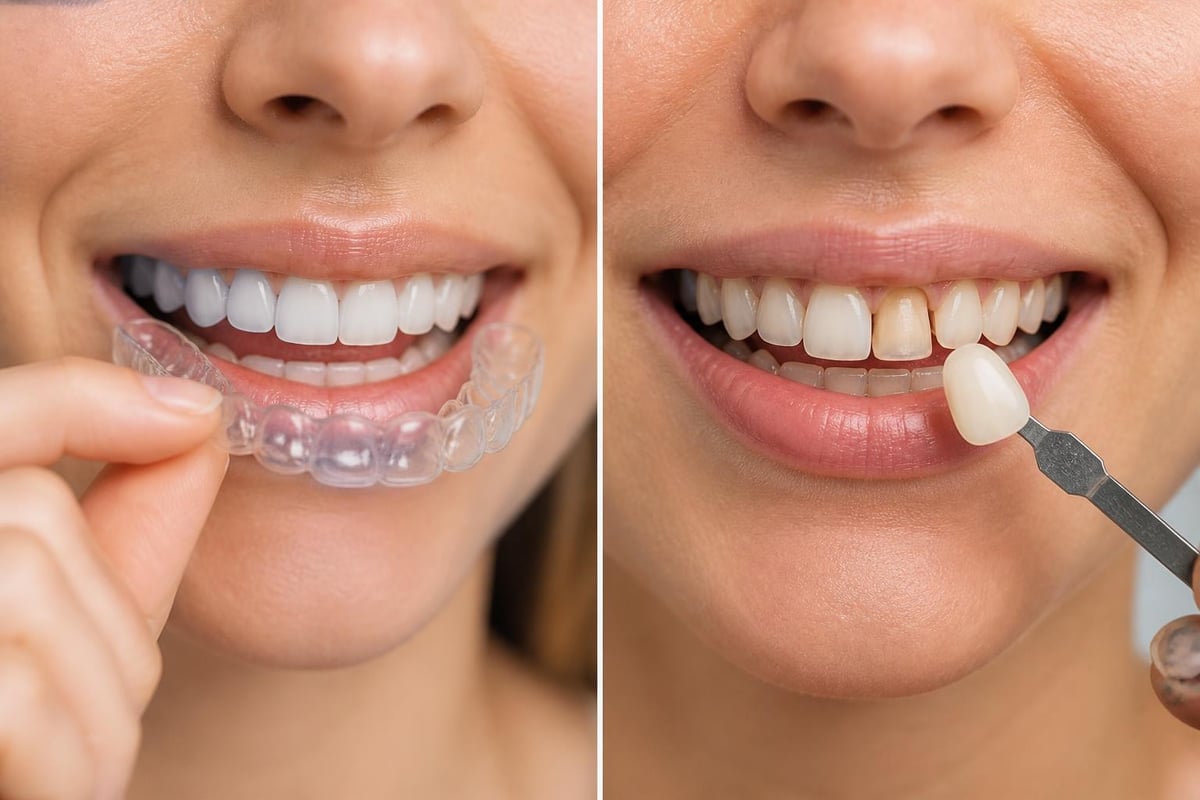
The primary distinction when comparing clear aligners vs veneers lies in what each treatment fundamentally accomplishes. Clear aligners represent an orthodontic solution designed to physically move teeth into proper alignment over time. These removable, transparent trays apply controlled pressure to gradually shift teeth into their ideal positions, correcting misalignment, gaps, crowding, and bite issues.
Veneers, conversely, function as a purely cosmetic solution. These thin shells of porcelain or composite resin bond directly to the front surface of teeth, masking imperfections rather than correcting underlying structural issues. Veneers can instantly transform the appearance of teeth that are discolored, chipped, slightly misaligned, or irregularly shaped.
Treatment Goals and Suitable Candidates
Clear aligners address orthodontic concerns by correcting the actual position of teeth within the jaw. Ideal candidates for clear aligner treatment include patients with:
- Mild to moderate crowding or spacing issues
- Overbite, underbite, or crossbite conditions
- Rotated or tilted teeth
- Desire to maintain natural tooth structure
According to research on clear aligner effectiveness, these orthodontic devices have proven successful in treating various malocclusions when appropriate case selection occurs.
Veneers target cosmetic imperfections without changing tooth position. Suitable veneer candidates typically have:
- Permanently stained or discolored teeth resistant to whitening
- Chipped or cracked teeth requiring aesthetic repair
- Slightly misaligned teeth where full orthodontic treatment seems excessive
- Gaps between teeth that patients want immediately closed
- Worn or irregularly shaped teeth needing aesthetic enhancement
Treatment Process and Timeline Considerations
The journey through treatment differs significantly between these two options, affecting both time commitment and lifestyle adjustments during the process.
Clear Aligner Treatment Process
Clear aligner treatment begins with comprehensive dental examination, digital impressions, and treatment planning. Modern orthodontic treatment planning systems now incorporate artificial intelligence to optimize aligner design and predict tooth movement patterns with increasing accuracy.
Treatment Steps:
- Initial consultation and digital scanning of teeth
- Custom treatment plan development showing projected tooth movement
- Fabrication of sequential aligner sets (typically 20-50 sets)
- Wearing each aligner set for 1-2 weeks, 20-22 hours daily
- Regular progress check-ups every 6-8 weeks
- Retention phase with retainers to maintain results
The mechanics of clear aligner treatments involve precise three-dimensional tooth movements, requiring patient compliance with wear schedules to achieve predicted outcomes.
Treatment duration typically ranges from 6 to 18 months, depending on complexity. Minor corrections may complete in as few as three months, while comprehensive cases requiring significant tooth movement can extend beyond two years.
Veneer Application Process
Veneer placement represents a more invasive but faster cosmetic transformation. The process requires removing a small amount of tooth enamel to accommodate the veneer thickness, making this decision essentially irreversible.
Veneer Placement Timeline:
- Consultation and shade selection (1 appointment)
- Tooth preparation and temporary veneer placement (1 appointment)
- Custom veneer fabrication in dental laboratory (1-2 weeks)
- Final veneer bonding and adjustments (1 appointment)
The entire veneer process typically completes within 2-3 weeks across just 2-3 dental visits, offering dramatically faster results than orthodontic treatment. For patients at our Leander location or any of our Texas clinics, this accelerated timeline appeals to those seeking immediate smile transformation.
Cost Analysis and Financial Planning
Financial considerations play a significant role in treatment selection, with both options representing substantial investments in oral health and aesthetics.
| Cost Factor | Clear Aligners | Veneers |
|---|---|---|
| Average Treatment Cost | $3,000 – $8,000 | $1,000 – $2,500 per tooth |
| Number of Teeth Typically Treated | Full arch or both arches | 6-10 teeth (smile zone) |
| Total Investment Range | $3,000 – $8,000 | $6,000 – $25,000 |
| Insurance Coverage Potential | Possible partial coverage | Rarely covered (cosmetic) |
| Payment Plans | Commonly available | Often available |
Understanding whether dental insurance covers clear aligners helps patients plan financially for orthodontic treatment. Many insurance plans classify clear aligners similarly to traditional braces, potentially offering some coverage for patients under 18 or providing adult orthodontic benefits.
Veneers typically receive no insurance coverage as they're classified as elective cosmetic procedures. However, patients can explore savings options and financing programs that make both treatments more accessible.
Long-Term Value Considerations
When evaluating clear aligners vs veneers from a value perspective, consider longevity and maintenance requirements. Clear aligners produce permanent orthodontic changes that remain stable with proper retention, though retainers require indefinite use to prevent relapse.
Veneers last approximately 10-15 years with proper care before requiring replacement. This ongoing maintenance cost adds to the long-term investment, as veneers eventually need replacement due to normal wear or bonding failure.
Oral Health Impact and Preservation of Natural Teeth
The impact on dental health and tooth structure represents a critical consideration when comparing these treatment modalities.
Preserving Natural Tooth Structure
Clear aligners work entirely without altering natural tooth structure. The removable aligners simply guide teeth into proper positions without requiring any enamel removal, drilling, or permanent modifications. This conservative approach preserves maximum natural tooth structure while achieving orthodontic correction.
This advantage aligns with modern dentistry's emphasis on importance of orthodontics in maintaining long-term oral health rather than merely masking problems cosmetically.
Veneers necessitate removing 0.5-0.7 millimeters of enamel from the tooth's front surface to create space for the veneer without making teeth appear bulky. This permanent alteration means treated teeth will always require some form of coverage moving forward. Once enamel is removed, it cannot regenerate, making veneer placement an irreversible commitment.
Impact on Bite Function and Alignment
Clear aligners improve bite function by correcting malocclusion, which can reduce jaw pain, improve chewing efficiency, and decrease wear on teeth. Properly aligned teeth distribute biting forces evenly, potentially preventing future dental problems.
Veneers do not correct underlying bite issues. In fact, applying veneers to significantly misaligned teeth can sometimes create or worsen bite problems, placing stress on the temporomandibular joint and increasing fracture risk for the veneers themselves.
Maintenance Requirements and Lifestyle Considerations
Daily care requirements and lifestyle adjustments differ substantially between these treatment options, influencing patient satisfaction and treatment success.
Living with Clear Aligners
Clear aligner treatment demands considerable patient compliance and lifestyle modification throughout the treatment period:
Daily Maintenance Requirements:
- Wearing aligners 20-22 hours daily for optimal results
- Removing aligners before eating or drinking anything except water
- Brushing teeth after every meal before reinserting aligners
- Cleaning aligners daily with gentle soap and water
- Storing aligners in protective case when removed
- Avoiding hot beverages while wearing aligners (can warp plastic)
These requirements can feel restrictive, particularly in social situations involving meals or drinks. However, the removability offers advantages for special occasions and oral hygiene that fixed braces cannot provide.
Caring for Veneers
Veneers require less day-to-day adjustment but need careful protection to maximize longevity:
- Avoiding extremely hard foods that could crack veneers
- Using night guards if you grind teeth during sleep
- Maintaining excellent oral hygiene to protect underlying teeth
- Avoiding staining substances on composite veneers
- Regular dental check-ups to monitor veneer integrity
- Being cautious with biting forces on front teeth
Understanding what cosmetic dentists can do helps patients prepare realistic expectations for veneer maintenance and longevity.
Aesthetic Outcomes and Smile Transformation Potential
Both treatments deliver impressive aesthetic improvements, though they achieve results through fundamentally different means.
Natural Appearance Considerations
Clear aligners produce results that maintain the natural character of your teeth. Since treatment simply repositions existing teeth, the final smile retains your natural tooth shape, size, and color. This approach appeals to patients wanting improvement while preserving their unique smile characteristics.
The gradual transformation also allows family, friends, and colleagues to adjust to your evolving smile naturally, without the dramatic overnight change that veneers create.
Veneers offer complete control over final tooth appearance, allowing patients to select ideal shade, shape, and size within reasonable parameters. This customization capability enables dramatic transformations that address multiple cosmetic concerns simultaneously, such as color, shape, length, and minor positioning issues.
| Aesthetic Factor | Clear Aligners | Veneers |
|---|---|---|
| Color Improvement | No (requires separate whitening) | Yes (customizable shade) |
| Shape Modification | No (maintains natural shape) | Yes (complete customization) |
| Size Adjustment | No | Yes (within anatomical limits) |
| Alignment Correction | Yes (true orthodontic movement) | Limited (masks minor misalignment) |
| Speed of Results | Gradual (months to years) | Immediate (2-3 weeks) |
| Naturalness | Maintains individual characteristics | Can appear uniform |
Addressing Specific Cosmetic Concerns
For patients primarily concerned with tooth position, gaps, or crowding, clear aligners provide the most appropriate solution. Comparing clear aligners vs Invisalign helps patients understand options within the aligner category itself.
For those with severely discolored teeth, significant chips or cracks, or desire for comprehensive smile redesign, veneers offer capabilities that orthodontics alone cannot achieve. Research comparing veneers and clear aligners emphasizes selecting treatment based on primary concerns.
Combining Treatments for Comprehensive Results
Some patients discover that neither option alone fully addresses their smile concerns, leading to combination treatment approaches that leverage the strengths of both modalities.
Sequential Treatment Planning
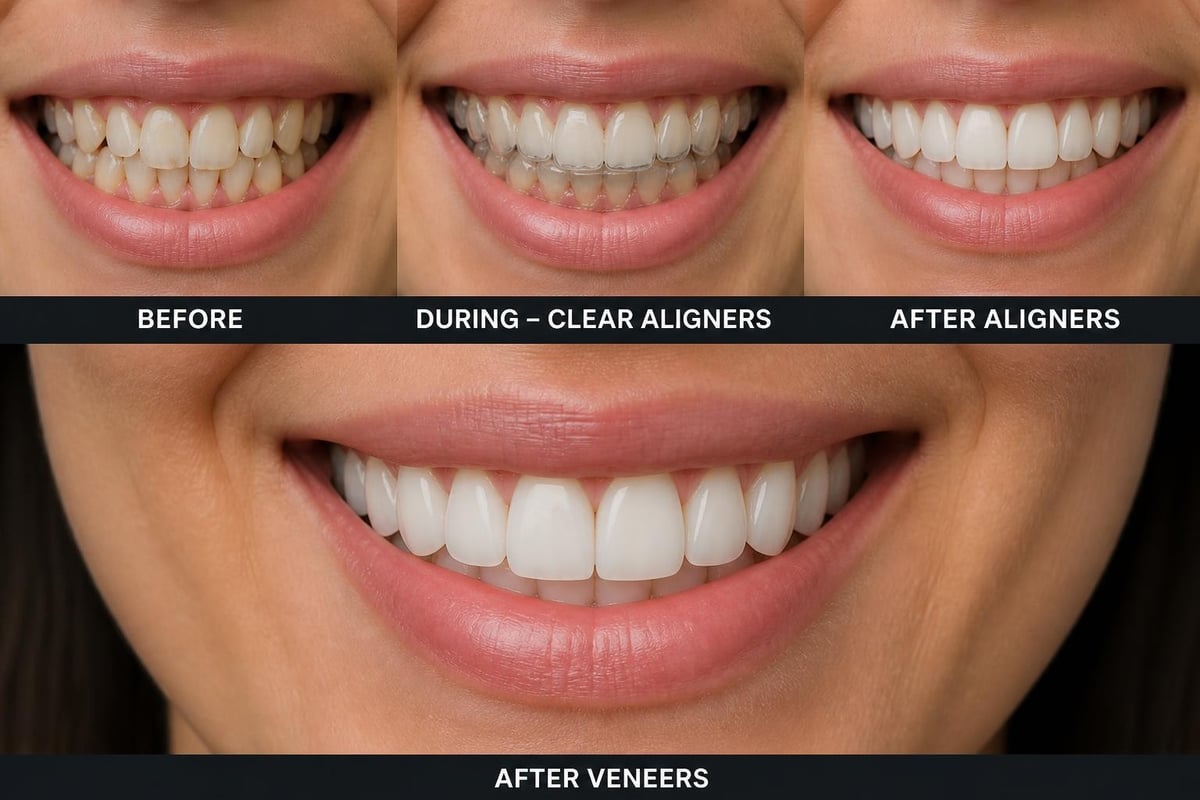
The most common combination approach involves completing clear aligner treatment first to establish proper tooth positioning, followed by veneer placement to achieve ideal aesthetics. This sequence ensures:
- Teeth align properly before cosmetic enhancement
- Veneers can be designed for optimally positioned teeth
- Bite function improves before aesthetic modifications
- Long-term stability of both orthodontic and cosmetic results
This comprehensive approach typically extends treatment timeline and increases total investment, but delivers superior outcomes for patients with both orthodontic and significant cosmetic concerns.
Partial Treatment Options
Some patients benefit from clear aligners on certain teeth while receiving veneers on others. For example, using aligners to correct posterior bite issues while placing veneers only on front teeth that have intrinsic discoloration or damage that orthodontics cannot address.
Consulting with experienced cosmetic dentists at locations like our New Braunfels office ensures coordinated treatment planning that sequences procedures optimally and considers both functional and aesthetic outcomes.
Special Considerations for Different Age Groups
Age-related factors influence treatment selection, with clear aligners vs veneers offering different advantages depending on patient life stage.
Treatment for Young Adults
Patients in their late teens and twenties often prioritize clear aligners because:
- Teeth and supporting bone remain responsive to orthodontic movement
- Treatment addresses underlying structural issues rather than masking them
- Natural teeth remain intact for decades of future use
- Costs may receive insurance support when treatment begins before age 18
- Lifestyle flexibility of removable aligners suits active social lives
Young adults should consider that veneers will require replacement multiple times throughout their lives, potentially at ages 35, 50, and 65, accumulating significant long-term costs.
Middle-Aged Patient Considerations
Patients in their thirties through fifties often weigh different priorities:
- Career and social obligations may make speed a priority
- Years of wear, staining, or damage may have accumulated
- Bone density changes can slow orthodontic movement
- Desire for dramatic transformation rather than gradual improvement
- Financial stability may enable comprehensive cosmetic investment
For this demographic, veneers often appeal due to rapid results and ability to address multiple aging-related concerns simultaneously. However, clear aligners remain appropriate when orthodontic issues cause functional problems or when preserving natural teeth is paramount.
Senior Patient Options
Older adults considering smile enhancement face unique circumstances:
- Gum recession or bone loss may complicate orthodontic treatment
- Existing dental work may limit veneer candidacy
- Slower metabolic processes can extend aligner treatment duration
- Functional concerns like chewing efficiency may outweigh pure aesthetics
- Bite problems may contribute to jaw pain or headaches
Understanding the benefits of clear aligners helps seniors evaluate whether orthodontic correction addresses health concerns beyond cosmetics.
Making Your Decision: Key Questions to Consider
Choosing between clear aligners vs veneers requires honest assessment of priorities, expectations, and circumstances. Ask yourself these essential questions:
About Your Primary Concerns:
- Are your teeth misaligned, crooked, or have gaps that bother you functionally?
- Do you primarily dislike the color, shape, or size of your teeth?
- Are you experiencing bite problems, jaw pain, or uneven tooth wear?
- Do you want to preserve your natural tooth structure?
About Your Timeline and Commitment:
- Can you commit to wearing aligners 20-22 hours daily for months?
- Do you need results quickly for an upcoming event or personal milestone?
- Are you willing to maintain careful oral hygiene throughout treatment?
- Can you attend regular dental appointments for monitoring?
About Long-Term Considerations:
- Do you understand that veneers eventually need replacement?
- Are you prepared to wear retainers indefinitely after aligner treatment?
- How important is preserving maximum natural tooth structure?
- What is your long-term vision for your oral health?
When patients at our Seguin location or other Texas offices work through these questions during consultations, treatment recommendations become much clearer and more aligned with individual values and circumstances.
Professional Evaluation and Treatment Planning
The most reliable way to determine which option suits your needs involves comprehensive professional evaluation. Dentists assess factors invisible to patients, including:
- Extent of malocclusion and orthodontic needs
- Bone density and gum health
- Existing dental work that may complicate treatment
- Bite relationship and jaw function
- Tooth structure thickness and enamel quality
- Long-term prognosis for different treatment approaches
Advanced diagnostic tools like digital impressions, 3D imaging, and bite analysis provide objective data that guides treatment recommendations. Detailed comparisons of clear aligners and veneers confirm that proper case selection dramatically influences treatment success.
What to Expect During Consultation
A thorough consultation for evaluating clear aligners vs veneers typically includes:
- Medical and dental history review to identify factors affecting treatment options
- Clinical examination assessing tooth position, bite, and oral health
- Digital imaging creating precise records of current tooth positions
- Treatment simulation showing projected outcomes for different approaches
- Cost estimation with financing options and insurance consideration
- Timeline discussion setting realistic expectations for treatment duration
Patients visiting our Converse dental office or any of our Texas locations receive this comprehensive evaluation, ensuring treatment recommendations rest on thorough assessment rather than assumptions.
Potential Complications and Risk Factors
Understanding potential challenges associated with each treatment helps patients make fully informed decisions and prepare realistic expectations.
Clear Aligner Treatment Challenges
While generally safe and predictable, clear aligner treatment can encounter complications:
- Compliance issues where inadequate wear time extends treatment or compromises results
- Attachment complications where tooth-colored bumps bonded to teeth cause discomfort
- Root resorption in rare cases where tooth roots shorten during movement
- Relapse potential if retainers aren't worn as prescribed after treatment
- Limitations with severe cases requiring traditional braces or surgical intervention
Research examining clear aligners versus veneers for crooked teeth notes that severe crowding or complex bite issues may exceed clear aligner capabilities, necessitating alternative approaches.
Veneer-Related Concerns
Veneers carry different risk considerations:
- Irreversible tooth alteration from necessary enamel removal
- Sensitivity particularly immediately after preparation and permanently in some cases
- Fracture or chipping especially with excessive biting forces
- Bonding failure requiring veneer replacement or repair
- Color mismatch over time as natural teeth change but veneers remain static
- Underlying tooth decay if oral hygiene falters around veneer margins
Discussing the pros and cons of clear aligners versus veneers with dental professionals ensures patients understand and accept these potential outcomes before committing to treatment.
Insurance Coverage and Financial Accessibility
Navigating dental insurance for cosmetic procedures requires understanding coverage distinctions between orthodontic and cosmetic treatments.
Insurance Considerations for Clear Aligners
Many dental insurance plans provide orthodontic benefits that may apply to clear aligner treatment:
- Dependent coverage often includes orthodontic benefits for patients under 18
- Adult orthodontic benefits sometimes available with comprehensive plans
- Lifetime maximum typically $1,000-$2,000 when orthodontic coverage exists
- Medical necessity sometimes enables coverage when bite issues affect health
Patients should investigate their specific plan details and discuss coverage with insurance representatives before beginning treatment.
Financial Planning for Veneers
Veneers rarely receive insurance coverage as they're classified as elective cosmetic procedures. However, exceptions occasionally occur:
- Structural damage from trauma may qualify for partial coverage
- Developmental abnormalities causing functional problems might receive consideration
- Medical necessity documented due to severe wear or acid erosion
Most patients fund veneer treatment through:
- Personal savings or budgeting
- Dental financing plans with monthly payment options
- Healthcare credit cards offering promotional interest rates
- Flexible spending accounts or health savings accounts
Exploring how to reduce costs for dental care helps patients maximize available resources and minimize out-of-pocket expenses for either treatment option.
Real Patient Scenarios and Treatment Selection
Examining hypothetical patient scenarios illustrates how different circumstances lead to different treatment recommendations when comparing clear aligners vs veneers.
Scenario One: Young Professional with Crowded Teeth
Sarah, 28, works in corporate sales and wants a more confident smile. Her teeth are moderately crowded with slight overlap, but she has naturally white teeth without damage.
Recommended Treatment: Clear aligners
Rationale: Sarah's primary issue is tooth position, not appearance. Clear aligners will create proper alignment while preserving her healthy natural teeth, providing long-term structural improvement rather than cosmetic coverage.
Scenario Two: Middle-Aged Patient with Discolored, Worn Teeth
Michael, 52, has years of coffee staining and worn edges on his front teeth from grinding. His teeth are reasonably straight but appear aged and dull.
Recommended Treatment: Veneers (possibly with night guard)
Rationale: Michael's concerns are cosmetic rather than orthodontic. Veneers can restore ideal tooth shape, length, and color simultaneously, providing dramatic rejuvenation that whitening and bonding cannot achieve.
Scenario Three: Teen with Gap and Discoloration
Jennifer, 16, has a prominent gap between her front teeth and one discolored front tooth from childhood trauma.
Recommended Treatment: Clear aligners followed by single veneer
Rationale: Clear aligners will close the gap orthodontically. After stabilization, one veneer can address the discolored tooth while maintaining natural appearance for remaining teeth.
Scenario Four: Bride-to-Be with Minor Misalignment
Amanda, 29, is getting married in three months and wants quickly improved smile aesthetics. She has slight overlapping on her front teeth.
Recommended Treatment: Veneers (with understanding of limitations)
Rationale: While clear aligners would provide superior long-term correction, the timeline doesn't permit orthodontic treatment. Veneers can mask minor misalignment quickly, though Amanda should understand this cosmetically addresses rather than corrects the underlying position issues.
These scenarios demonstrate that clear aligners vs veneers selection depends on individual circumstances, priorities, and constraints rather than one option being universally superior.
Long-Term Smile Maintenance After Treatment
Successful treatment outcomes require ongoing maintenance and care specific to each treatment type.
Maintaining Clear Aligner Results
After completing active aligner treatment, long-term success depends on:
Retention Protocol:
- Wearing retainers as prescribed (typically nightly indefinitely)
- Replacing retainers when they wear out (every 1-2 years)
- Attending annual check-ups to monitor tooth stability
- Addressing any shifting immediately rather than waiting
Ongoing Oral Health:
- Maintaining excellent brushing and flossing habits
- Professional cleanings every six months
- Addressing new dental issues promptly
- Avoiding habits that could shift teeth (thumb sucking, tongue thrusting)
Proper retention ensures that orthodontic investment provides lasting benefits throughout life.
Preserving Veneer Quality and Longevity
Veneer maintenance focuses on protecting these delicate restorations from damage and monitoring underlying tooth health:
Protective Measures:
- Using custom night guards to protect against grinding forces
- Avoiding using front teeth to bite extremely hard objects
- Being cautious with ice, hard candy, and bones
- Choosing composite-safe toothpaste if you have composite veneers
Monitoring and Professional Care:
- Six-month dental examinations to check veneer integrity
- Professional cleanings that avoid damaging veneer surfaces
- Monitoring gum health around veneer margins
- Addressing any chipping, discoloration, or bonding issues promptly
Patients who invest in veneers at our Beeville location or other offices receive detailed maintenance instructions that maximize restoration longevity.
Alternative and Complementary Treatment Options
Sometimes clear aligners vs veneers represents a false dichotomy, as other treatments may better address specific concerns or work synergistically with these options.
Teeth Whitening as Complementary Treatment
Professional whitening often complements clear aligner treatment, as orthodontics corrects position while whitening enhances color. This combination achieves comprehensive aesthetic improvement while preserving natural tooth structure.
Whitening before veneer placement ensures surrounding natural teeth match the veneer shade selected, creating cohesive overall appearance.
Dental Bonding for Minor Corrections
Composite bonding offers a middle ground for patients with minor chips, small gaps, or slight shape irregularities. This conservative, reversible treatment costs less than veneers while providing immediate cosmetic improvement without enamel removal.
Orthodontic Alternatives
Traditional braces remain the gold standard for complex orthodontic cases that exceed clear aligner capabilities. Patients with severe bite problems, significant rotations, or complex tooth movements may achieve superior results with conventional orthodontics.
Combinations for Comprehensive Transformation
Comprehensive smile makeovers may incorporate multiple treatments:
- Clear aligners for orthodontic correction
- Professional whitening for color enhancement
- Selective veneers on teeth with intrinsic damage
- Bonding for minor shape refinements
- Gum recontouring to improve tooth proportions
This multifaceted approach addresses every aspect of smile aesthetics while minimizing invasive procedures where possible. Detailed analysis of advantages and disadvantages of both options helps patients understand how combining treatments may optimize outcomes.
Choosing between clear aligners vs veneers ultimately depends on your specific dental concerns, aesthetic goals, timeline, and values regarding tooth preservation. Both treatments deliver transformative results when properly selected and executed, with clear aligners excelling at orthodontic correction and veneers providing rapid cosmetic enhancement. Whether you need orthodontic realignment, cosmetic transformation, or a combination approach, Dental Plus Clinic offers expert guidance and personalized treatment planning at our five convenient Texas locations to help you achieve the confident, healthy smile you deserve.