
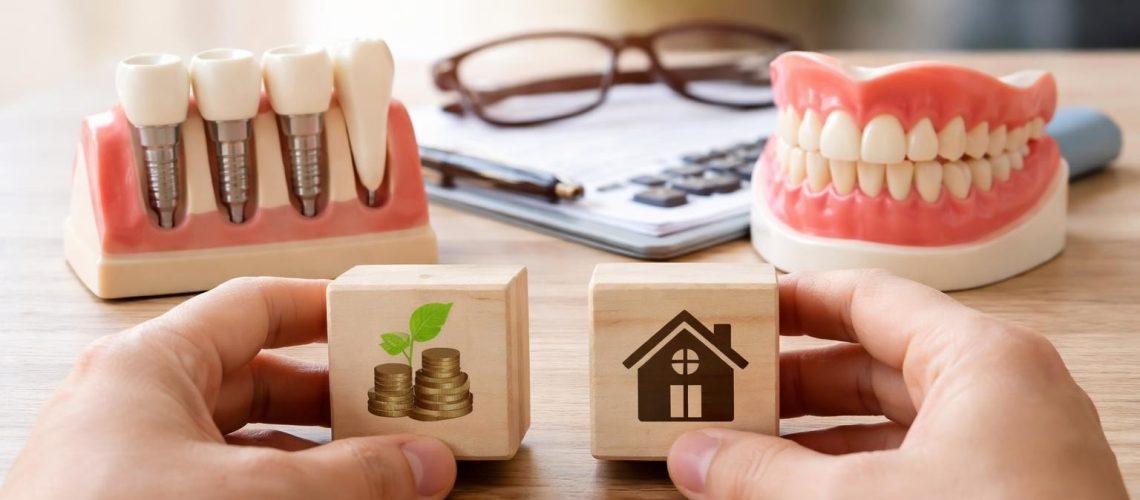
Choosing the right tooth replacement solution can feel overwhelming, especially when you’re weighing the long-term investment against immediate affordability. For Texas families facing tooth loss, the dental implants vs dentures decision represents more than just a dental procedure; it’s about quality of life, confidence, and preserving your oral health for decades to come. Whether you’re a parent researching options for aging family members or an adult considering your own tooth replacement needs, understanding the fundamental differences between these two solutions will help you make an informed decision that aligns with your lifestyle, budget, and health goals.
Understanding Your Tooth Replacement Options
When confronted with missing teeth, most patients discover they have two primary pathways: dental implants or dentures. Each solution offers distinct advantages and limitations that affect everything from your daily routine to your long-term oral health.
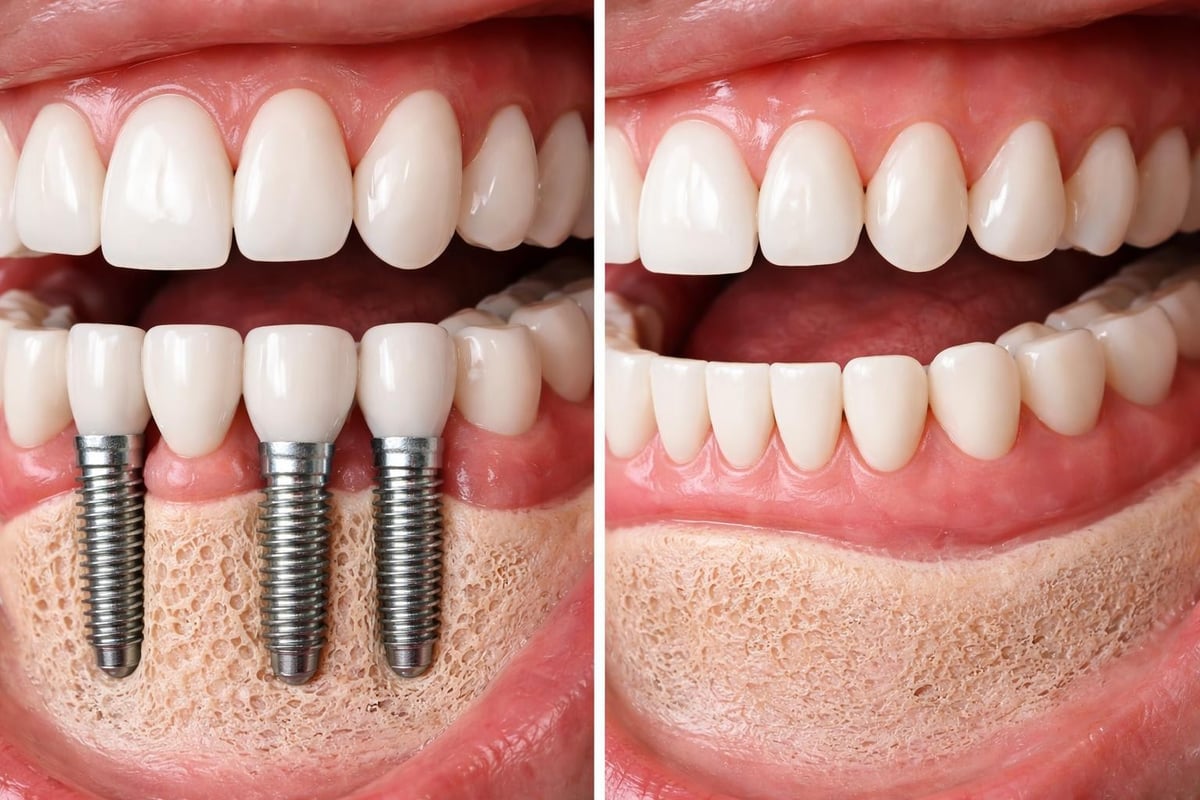
Dental implants function as artificial tooth roots surgically placed into your jawbone. These titanium posts fuse with your bone through a process called osseointegration, creating a permanent foundation for replacement teeth. The dental implant procedure typically involves multiple appointments over several months, but results in a restoration that looks, feels, and functions like natural teeth.
Dentures, conversely, are removable prosthetic devices designed to replace missing teeth and surrounding tissues. They rest on your gums and, in the case of full dentures, create suction against the roof of your mouth or lower gum ridge. Modern dentures have evolved significantly from the artificial-looking teeth of decades past, offering improved aesthetics and functionality.
The dental implants vs dentures debate extends beyond simple aesthetics. Your choice impacts bone health, dietary freedom, maintenance requirements, and overall satisfaction with your smile restoration.
What Makes Each Solution Unique
Dental implants integrate with your jawbone structure, which prevents the bone deterioration that naturally occurs after tooth loss. This biological integration means implants stimulate your jaw just like natural tooth roots, maintaining facial structure and preventing the sunken appearance often associated with long-term denture wear.
Traditional dentures address tooth loss without surgical intervention. They’re removable, adjustable, and can be fabricated relatively quickly. For patients with significant bone loss, health conditions that complicate surgery, or budget constraints, dentures provide an accessible solution that restores both function and appearance.
Cost Comparison: Initial Investment and Long-Term Value
The financial aspect of the dental implants vs dentures decision requires examining both upfront costs and lifetime expenses. Many Texas families initially gravitate toward dentures based on lower initial pricing, but a comprehensive cost analysis reveals surprising insights.
Upfront Expenses
| Treatment Type | Initial Cost Range | Timeline | Insurance Coverage |
|---|---|---|---|
| Single Implant | $3,000 – $4,500 | 3-6 months | Limited to partial |
| Full Arch Implants | $20,000 – $45,000 | 6-12 months | Rarely covered |
| Partial Denture | $1,000 – $3,000 | 4-6 weeks | Often 50% covered |
| Full Denture Set | $2,000 – $8,000 | 6-10 weeks | Usually 50% covered |
According to a comprehensive comparison of dentures and implants, the initial cost difference appears substantial. However, dentures require replacements every 5-7 years, while dental implants can last 25 years or longer with proper care.
Long-Term Financial Considerations
Denture wearers face ongoing expenses that accumulate significantly over time:
- Replacement dentures every 5-7 years
- Annual relines and adjustments
- Adhesive products and cleaning solutions
- Repairs for cracks, chips, or broken clasps
- Dietary supplements to compensate for nutritional limitations
A 10-year cost analysis demonstrates that dental implants often become more cost-effective after 10-15 years when accounting for denture replacements and maintenance. For younger patients, this financial advantage becomes even more pronounced over a lifetime.
At Dental Plus Clinic locations throughout Texas, we help patients explore financing options and insurance benefits that make both solutions accessible. Many patients discover that flexible payment plans transform implants from seemingly unaffordable to financially manageable.
Health and Functionality Differences
The dental implants vs dentures decision profoundly affects your daily life, from what you eat to how you speak and socialize. Understanding these functional differences helps you prioritize what matters most for your lifestyle.
Eating and Dietary Freedom
Dental implants restore approximately 90% of your natural chewing force. You can confidently bite into apples, enjoy corn on the cob, and eat crusty bread without hesitation. This dietary freedom extends beyond convenience; it supports proper nutrition and digestive health.
Dentures restore roughly 25-30% of natural biting force. Many wearers avoid certain foods:
- Hard or sticky candies
- Whole nuts and seeds
- Raw vegetables like carrots
- Tough cuts of meat
- Popcorn and chips
This dietary restriction can lead to nutritional deficiencies over time, as denture wearers often shift toward softer, processed foods that lack essential vitamins and minerals.
Speech and Confidence
Implant-supported teeth function identically to natural teeth for speech. There’s no adjustment period, no clicking sounds, and no concerns about your teeth shifting while talking.
Dentures require an adaptation period during which you may experience:
- Altered pronunciation of certain sounds
- Excess saliva production
- Clicking or shifting during conversation
- Self-consciousness in social situations
Most patients adapt within a few weeks, but approximately 20% continue experiencing speech difficulties long-term, according to dental prosthetics research.
Bone Health and Facial Structure
One of the most significant differences in the dental implants vs dentures comparison involves jawbone preservation. When you lose a tooth, the underlying bone begins deteriorating immediately without the stimulation provided by tooth roots. This process, called resorption, continues throughout your life.
The benefits of dental implants include halting bone loss by providing the mechanical stimulation your jaw needs. Dentures, unfortunately, accelerate bone loss because they apply pressure to gum tissues while providing no root stimulation. Over years, this creates a characteristic sunken facial appearance that can age patients prematurely.
Maintenance Requirements and Daily Care
Your daily routine changes differently depending on which tooth replacement option you choose. The dental implants vs dentures decision affects everything from morning preparation to bedtime rituals.
Caring for Dental Implants
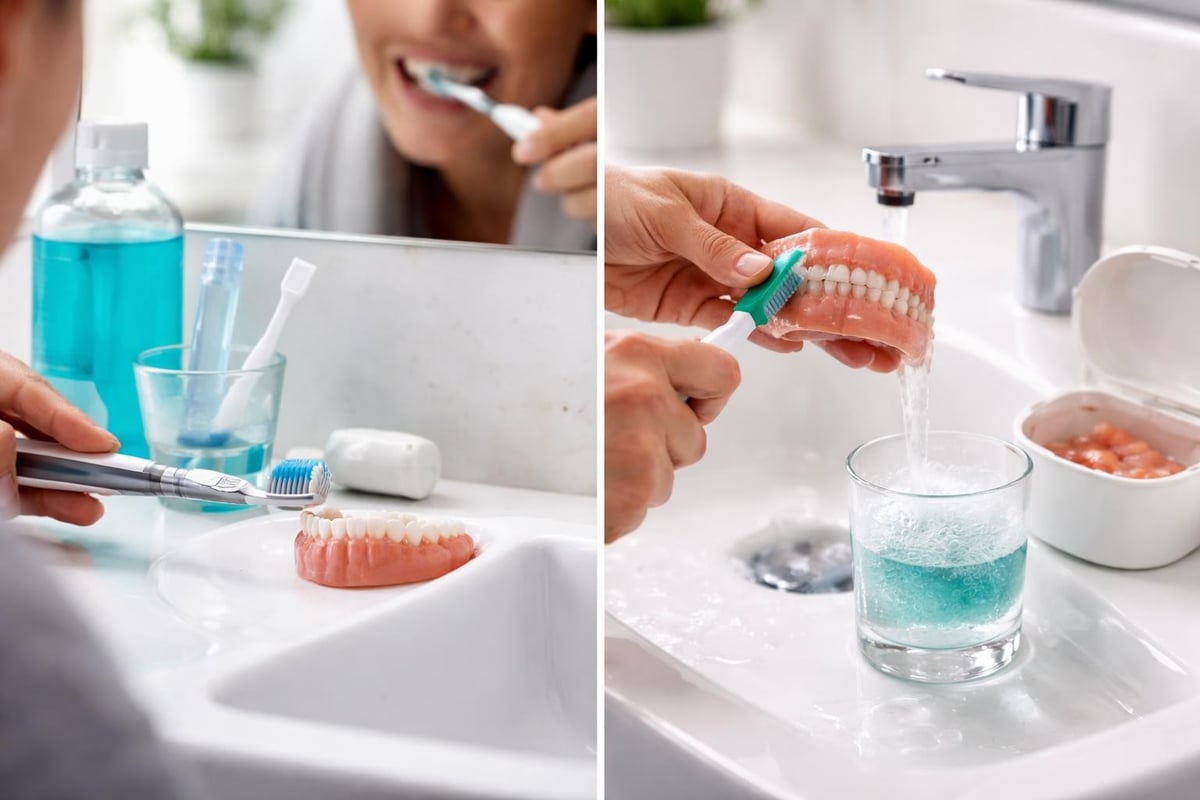
Implants require maintenance identical to natural teeth:
- Brush twice daily with a soft-bristled toothbrush
- Floss once daily using regular floss or interdental brushes
- Visit your dentist every six months for professional cleanings
- Avoid using teeth as tools to open packages
This simplicity appeals to patients who want tooth replacement without complicated care routines. There’s no removal, no special cleaning solutions, and no overnight soaking.
Denture Maintenance Protocol
Denture care involves multiple daily steps:
- Remove and rinse after every meal
- Brush dentures with specialized cleaner (never toothpaste)
- Soak overnight in denture solution
- Clean your gums, tongue, and palate each morning
- Handle carefully to avoid drops and damage
Additionally, denture wearers typically need annual adjustments as their gum and bone structure changes. These relines ensure proper fit and prevent sore spots that develop when dentures shift or rub.
Treatment Timeline and Process
Understanding what to expect during treatment helps you plan accordingly, whether you’re a working professional, busy parent, or retiree.
The Dental Implant Journey
The implant process unfolds in several stages:
Initial Consultation and Planning (1-2 appointments)
Your dentist evaluates your bone density, overall health, and creates a customized treatment plan. 3D imaging determines precise implant placement.
Implant Placement Surgery (1 appointment)
Under local anesthesia, titanium posts are surgically inserted into your jawbone. Most patients report minimal discomfort and return to normal activities within 2-3 days.
Healing Period (3-6 months)
Osseointegration occurs as your bone grows around the implant, creating a stable foundation. You typically wear a temporary restoration during this period.
Abutment Placement (1 appointment)
After healing, a connector piece (abutment) is attached to the implant.
Final Restoration (1-2 appointments)
Custom crowns, bridges, or dentures are fabricated and secured to your implants.
The entire dental implant timeline spans 3-9 months depending on individual healing rates and whether bone grafting is necessary.
The Denture Process
Denture fabrication follows a faster timeline:
- Initial examination – Assessment of your gum health and remaining teeth
- Impressions – Molds of your mouth create the foundation for custom dentures
- Bite registration – Determining your proper jaw relationship
- Try-in appointment – Testing fit and appearance before final fabrication
- Delivery – Receiving your completed dentures with adjustment instructions
- Follow-up visits – Fine-tuning fit and addressing sore spots
Most patients receive dentures within 4-8 weeks. Immediate dentures can be placed the same day as tooth extraction, though these require more frequent adjustments as your gums heal and reshape.
Candidacy and Health Considerations
Not everyone qualifies for both options equally. The dental implants vs dentures decision sometimes gets made based on health factors rather than preference.
Who Makes a Good Implant Candidate?
Ideal candidates for dental implants typically have:
- Adequate jawbone density and volume
- Healthy gums free from periodontal disease
- Good overall health without conditions that impair healing
- Non-smokers or willingness to quit during treatment
- Commitment to excellent oral hygiene
- Realistic expectations about outcomes and timeline
Conditions that may complicate implant surgery include:
- Uncontrolled diabetes
- Active cancer treatment
- Severe osteoporosis
- Heavy smoking (more than one pack daily)
- Certain autoimmune disorders
However, many of these concerns can be managed with proper medical coordination. At our New Braunfels location, we frequently work with patients’ physicians to optimize health before proceeding with implant surgery.
Who Benefits Most from Dentures?
Dentures work well for patients who:
- Have experienced significant bone loss
- Prefer non-surgical solutions
- Need to address tooth loss quickly
- Have health conditions that contradict surgery
- Want the most affordable initial investment
According to dental prosthesis research, modern dentures accommodate virtually any patient, regardless of bone structure or health status. This universality makes dentures an inclusive solution when implants aren’t feasible.
Durability and Longevity Comparison
When evaluating the dental implants vs dentures decision, understanding the expected lifespan of each option helps you project long-term satisfaction and costs.
Dental Implant Longevity
Success rates and durability:
- 95-98% success rate for lower jaw implants
- 90-95% success rate for upper jaw implants
- Expected lifespan of 25+ years with proper care
- Many implants last a patient’s lifetime
The titanium post itself rarely fails once successfully integrated. Crown replacements may be needed every 10-15 years due to normal wear, but this represents a minor procedure compared to full denture replacement.
Factors affecting implant longevity include:
- Oral hygiene habits
- Regular professional maintenance
- Smoking status
- Bruxism (teeth grinding)
- Overall health changes
Denture Lifespan
Traditional dentures require replacement every 5-7 years on average. This replacement schedule exists because:
- Acrylic materials wear down and stain
- Continuing bone resorption changes your mouth’s shape
- Teeth on the denture wear from chewing forces
- Proper fit becomes impossible to maintain through relining
Some denture wearers experience good function for up to 10 years, but this typically requires exceptional care and favorable bone stability. The ongoing bone changes beneath dentures mean perfect fit remains temporary regardless of the denture’s physical condition.
Aesthetic Outcomes and Natural Appearance
Your smile affects your confidence in professional settings, family photos, and everyday interactions. The dental implants vs dentures comparison includes important aesthetic considerations.
Natural Look and Feel
Modern dental implants provide unparalleled natural aesthetics because the restoration emerges from your gum line just like natural teeth. The crown portion can be customized to match:
- Exact shade of surrounding teeth
- Appropriate size and proportion
- Natural translucency and texture
- Proper gingival contours
Additionally, implants prevent the facial collapse associated with bone loss, maintaining your natural facial proportions and preventing the aged appearance that develops with long-term denture wear. Many patients report that even close friends and family members cannot identify their implant-supported teeth.
Denture Aesthetics
Contemporary dentures have improved dramatically from the obviously artificial teeth of previous generations. High-quality dentures feature:
- Realistic tooth shading with natural variations
- Appropriate gum coloring
- Properly sized teeth for your facial features
- Modern materials that resist staining
However, dentures face inherent aesthetic challenges:
- Bulkiness required for structural stability
- Visible metal clasps on partial dentures
- Potential for movement during speaking or eating
- Progressive changes in fit that affect appearance
Despite these limitations, skilled dental technicians create dentures that look remarkably natural in most social situations. The difference becomes most apparent to the wearer themselves, who knows the teeth are removable.
Addressing Common Concerns and Objections
Texas families considering the dental implants vs dentures decision often express similar worries. Understanding these concerns helps you move forward confidently.
“I’m worried about implant surgery being painful”
The reality: Most patients report that dental implant surgery involves less discomfort than tooth extraction. You receive local anesthesia during the procedure, and post-operative pain typically responds well to over-the-counter medications. Many patients describe the experience as “easier than expected” and return to work the following day.
Sedation options are available for anxious patients, and our experienced team at Dental Plus Clinic ensures your comfort throughout the process.
“Dentures seem embarrassing and old-fashioned”
The reality: While dentures carry outdated stereotypes, modern prosthetics bear little resemblance to your grandmother’s false teeth. Today’s dentures use advanced materials and design principles that create natural-looking results.
However, if this concern weighs heavily on your decision, implant-supported dentures combine the affordability of dentures with the stability of implants, eliminating movement and improving confidence.
“I can’t afford dental implants”
The reality: Implant costs present a significant initial investment, but financing options make treatment accessible for many patients. Consider:
- Healthcare credit cards with promotional interest periods
- In-house payment plans spread over 12-24 months
- Dental savings plans that reduce treatment costs
- FSA or HSA funds that use pre-tax dollars
Additionally, when you factor in the long-term cost comparison between dentures and implants, the lifetime expense difference narrows considerably. Some patients find that investing in implants ultimately costs less than decades of denture replacements and adjustments.
“What if my implants fail?”
The reality: Modern dental implants boast success rates exceeding 95%. When failures occur, they typically happen within the first few months, before the final restoration. Most practices, including ours, warranty implant placements and will replace failed implants at no additional charge.
Proper patient selection, surgical expertise, and post-operative care minimize failure risk. Non-smokers with good oral hygiene and overall health enjoy success rates approaching 98%.
Combination Solutions: The Best of Both Worlds
The dental implants vs dentures decision doesn’t always require choosing one solution exclusively. Hybrid approaches combine advantages from both technologies.
Implant-Supported Dentures
This innovative solution uses 2-6 dental implants to anchor a full denture securely. The implants snap into the denture base, providing:
Key advantages:
- Eliminates denture movement during eating and speaking
- Requires fewer implants than full arch restoration
- Costs 40-60% less than individual implants for each tooth
- Can be removed for cleaning but stays secure during wear
- Stimulates some bone preservation through implant integration
Implant-supported dentures work exceptionally well for patients who want denture affordability with implant stability. This represents one of the fastest-growing treatment options in restorative dentistry.
Individual Implants with Partial Dentures
Some patients choose strategic implant placement for critical teeth while using partial dentures for less visible areas. This approach prioritizes:
- Front teeth replacement with implants for aesthetics
- Molar implants for chewing function
- Partial dentures for remaining gaps
While less common, this customized approach addresses specific patient priorities and budget realities.
Making Your Decision: Key Questions to Ask
Before finalizing the dental implants vs dentures choice, consider these essential questions:
Lifestyle:
- How important is dietary freedom to your quality of life?
- Do you feel comfortable with a nightly removal routine?
- Does your profession or social life require absolute confidence in your teeth?
Health:
- Are you a suitable surgical candidate?
- Do you have adequate bone density for implants?
- How does your overall health status affect healing?
Finances:
- Can you manage the upfront implant investment?
- How does your dental insurance coverage compare for each option?
- What financing options make treatment affordable?
Timeline:
- Can you commit to a 6-9 month implant process?
- Do you need immediate tooth replacement?
- How does your schedule accommodate multiple appointments?
Long-term outlook:
- What’s your expected lifespan for return on investment?
- How important is maintaining your jawbone structure?
- Are you prepared for ongoing denture replacements?
Honest answers to these questions clarify which solution aligns with your unique circumstances. There’s no universally “better” choice in the dental implants vs dentures debate; the optimal solution depends entirely on your individual situation.
Texas-Specific Considerations for Families
Living in Texas presents unique factors that influence your tooth replacement decision. Our state’s demographics, insurance landscape, and lifestyle patterns all play roles.
Insurance and Medicaid Coverage in Texas
Texas Medicaid provides limited dental coverage for adults, typically excluding both implants and dentures except in cases of severe medical necessity. However, many employer-sponsored plans offer:
- 50% coverage for dentures up to annual maximums
- Partial coverage for implant-supported dentures
- Limited or no coverage for individual dental implants
Understanding your specific coverage helps you calculate out-of-pocket expenses accurately. Our billing specialists across all Dental Plus Clinic locations help patients maximize their insurance benefits.
Regional Lifestyle Factors
Texas families enjoy an active, outdoor-oriented lifestyle. Whether you’re attending Friday night football games, participating in community barbecues, or enjoying Tex-Mex cuisine, your tooth replacement should support your lifestyle rather than restrict it.
Dental implants better accommodate the Texas lifestyle by allowing you to:
- Enjoy traditional foods like brisket, fajitas, and corn on the cob
- Speak confidently at business meetings and social gatherings
- Participate in sports without worrying about denture displacement
- Smile naturally in family photos and professional headshots
For retirees throughout Beeville, Seguin, New Braunfels, Leander, and Converse, the long-term durability of implants eliminates concerns about managing denture issues during travel or retirement activities.
Frequently Asked Questions
How long do dental implants last compared to dentures?
Dental implants typically last 25 years or longer with proper care, and many last a lifetime. The crown portion may need replacement every 10-15 years due to normal wear. Dentures require complete replacement every 5-7 years as your mouth structure changes and materials deteriorate.
Can I switch from dentures to dental implants later?
Yes, many patients transition from dentures to implants. However, if you’ve worn dentures for many years, bone loss may require bone grafting before implant placement. Earlier conversion preserves more bone and simplifies the implant process.
Do dental implants feel like real teeth?
Dental implants feel virtually identical to natural teeth. Because they integrate with your jawbone, you sense pressure and texture normally. Dentures lack this proprioceptive feedback because they rest on soft tissue rather than connecting to bone.
Will insurance cover dental implants or dentures?
Most dental insurance plans cover 50% of denture costs up to annual maximums, typically $1,000-$2,000. Implant coverage is less common, though some plans offer partial coverage for implant-supported dentures. Medicare does not cover either option unless medically necessary due to accident or disease.
How painful is the dental implant procedure?
Most patients describe implant surgery as less uncomfortable than tooth extraction. You receive local anesthesia during the procedure, and post-operative discomfort typically resolves within 3-5 days with over-the-counter pain medication. Many patients return to work the next day.
Can I eat normally with dentures?
Dentures restore approximately 25-30% of natural chewing force, which limits food choices. Many denture wearers avoid hard, sticky, or chewy foods. Implants restore 90% of chewing force, allowing you to eat essentially any food you enjoyed with natural teeth.
What happens to my jawbone with dentures vs implants?
Dental implants prevent bone loss by stimulating your jawbone like natural tooth roots. Dentures accelerate bone loss because they provide no root stimulation while applying pressure that contributes to resorption. This bone loss changes your facial structure over time and requires frequent denture adjustments.
How do I clean dental implants vs dentures?
Implants require the same care as natural teeth: brushing twice daily, flossing once daily, and professional cleanings every six months. Dentures must be removed after meals, brushed with specialized cleaners, soaked overnight, and your gums must be cleaned separately each day.
Can I get dental implants if I have diabetes?
Controlled diabetes doesn’t preclude implant surgery. However, poorly controlled diabetes impairs healing and increases infection risk. Work with both your physician and dentist to optimize blood sugar levels before proceeding. Success rates for diabetic patients with HbA1c below 7% approach those of non-diabetic patients.
What’s the best choice for replacing all my teeth?
For full-arch replacement, options include traditional complete dentures ($2,000-$8,000), implant-supported dentures ($15,000-$25,000), or full arch implants ($20,000-$45,000). The optimal choice depends on your budget, bone density, timeline, and lifestyle priorities. Implant-supported dentures often provide the best balance of affordability and functionality for full-mouth restoration.
Exploring Related Dental Solutions
Beyond the traditional dental implants vs dentures discussion, understanding complementary treatments helps you make comprehensive oral health decisions.
Patients missing only a few teeth might consider dental bridges versus implants as another alternative. Bridges use adjacent teeth as anchors to support replacement teeth, offering a middle ground between removable dentures and permanent implants. However, bridges require grinding down healthy adjacent teeth and don’t prevent bone loss beneath the restoration.
For patients concerned about smile aesthetics alongside tooth replacement, cosmetic dentistry options can complement either implants or dentures. Procedures like teeth whitening, veneers, and gum contouring work together with restorative treatments to create comprehensive smile transformations.
Those experiencing tooth loss due to gum disease should understand how poor oral health affects overall body health before choosing replacement options. Addressing underlying periodontal disease ensures the long-term success of whichever tooth replacement method you select.
Real Patient Experiences from Texas
Understanding how other Texas families navigated the dental implants vs dentures decision provides valuable perspective.
Maria, 58, from New Braunfels:
“I wore dentures for three years after losing my back teeth. I constantly worried about them slipping when I talked to customers at work. After getting implant-supported dentures, I forgot I even had them. I can eat tacos again without cutting them into tiny pieces!”
Robert, 72, from Leander:
“My dentist recommended implants, but the cost seemed impossible on my retirement budget. We compromised with implants for my lower jaw and a traditional denture on top. The lower implants made such a difference in stability that I’m saving up for upper implants next year.”
Jennifer, 45, from Converse:
“I lost my front teeth in an accident and needed immediate replacement for my job in sales. I got a temporary denture the same day, then transitioned to implants over the next six months. Having both options available at different stages was crucial for my career and recovery.”
These experiences highlight how the dental implants vs dentures choice isn’t always binary. Phased treatment plans, hybrid solutions, and staged approaches accommodate diverse needs and circumstances.
Taking the Next Step Toward Your New Smile
Whether you choose dental implants, dentures, or a combination approach, the most important step is starting the conversation with experienced dental professionals who understand your unique situation.
During your consultation, expect:
- Comprehensive examination of your oral health
- 3D imaging to assess bone structure
- Discussion of your lifestyle needs and concerns
- Transparent cost estimates for all applicable options
- Review of financing and insurance considerations
- Personalized treatment timeline
Don’t let tooth loss compromise your quality of life. Modern dentistry offers solutions for every budget, timeline, and health status. The dental implants vs dentures decision becomes clearer when you have complete information about how each option addresses your specific needs.
Research from institutions like Wikipedia’s comprehensive dental implant overview and comparative analyses from trusted dental health resources provide scientific backing for the benefits and limitations of each approach. This evidence-based information empowers you to ask informed questions and make confident decisions.
Remember that tooth replacement isn’t just about filling gaps in your smile. It’s about preserving your bone structure, maintaining proper nutrition, supporting clear speech, and protecting your confidence in professional and social situations. The right solution addresses all these aspects of oral health and overall wellbeing.
Final Thoughts
Choosing between dental implants and dentures represents a significant decision that affects your daily comfort, long-term health, and financial investment. Both solutions offer proven benefits for Texas families facing tooth loss, and understanding the complete picture helps you select the option that best fits your unique circumstances. Whether you prioritize the permanence and functionality of implants or the affordability and accessibility of dentures, expert guidance ensures you receive treatment tailored to your specific needs. Dental Plus Clinic serves families throughout Beeville, Seguin, New Braunfels, Leander, and Converse with comprehensive tooth replacement solutions, personalized treatment planning, and flexible financing options that make exceptional dental care accessible for every budget.