

Choosing between dental insurance and paying out of pocket represents one of the most significant financial decisions affecting your oral health budget. With dental care costs continuing to rise in 2026, many patients wonder whether monthly insurance premiums offer better value than simply paying for services as needed. The answer depends on your unique situation, including your current oral health status, anticipated dental needs, budget flexibility, and access to quality providers. Understanding the financial implications of each approach helps you make an informed decision that protects both your smile and your wallet.
Understanding the True Costs of Dental Insurance
Dental insurance operates differently from medical insurance, with distinct coverage limits, waiting periods, and payment structures that significantly impact your out-of-pocket expenses. Most plans follow a 100-50-50 or 100-80-50 coverage model, meaning preventive care receives full coverage, basic procedures get 80% coverage, and major work receives only 50% coverage.
Monthly premiums for individual dental insurance typically range from $30 to $75 in 2026, with family plans costing between $100 and $200 per month. However, these premiums represent just the starting point of your financial commitment. Understanding dental insurance costs requires examining deductibles, copayments, and annual maximum benefits to calculate your true expenses.
Annual Maximums and Their Impact
Most dental insurance plans impose annual maximum benefits ranging from $1,000 to $2,000 per person. This ceiling creates a critical consideration when evaluating dental insurance vs paying out of pocket, especially for patients requiring extensive dental work.
Consider this breakdown of typical annual costs:
| Cost Component | Individual Plan | Family Plan (4 people) |
|---|---|---|
| Annual Premiums | $360-$900 | $1,200-$2,400 |
| Deductibles | $50-$150 | $150-$350 |
| Copays (estimated) | $200-$500 | $600-$1,500 |
| Total Annual Cost | $610-$1,550 | $1,950-$4,250 |
These figures demonstrate that even with insurance, you still pay substantial amounts throughout the year. The question becomes whether these expenses provide better value than direct payment for services.

Calculating Out-of-Pocket Dental Expenses
Paying for dental care without insurance means assuming full responsibility for treatment costs, but it also eliminates monthly premiums, deductibles, and coverage restrictions. Many dental practices, including Dental Plus Clinic locations across Texas, offer discounted rates for cash-paying patients and flexible payment arrangements.
The financial viability of paying out of pocket depends heavily on your dental health status and treatment frequency. Patients with excellent oral health who require only preventive care may find this approach more economical than maintaining insurance coverage.
Typical Dental Procedure Costs in 2026
Understanding standard procedure costs helps you evaluate whether dental insurance vs paying out of pocket makes financial sense for your situation:
- Routine cleaning: $100-$200
- Comprehensive exam with X-rays: $150-$350
- Dental filling: $150-$450 per tooth
- Root canal: $700-$1,500 depending on tooth location
- Crown: $1,000-$2,500 per tooth
- Dental implant: $3,000-$6,000 per tooth
- Wisdom teeth extraction: $200-$600 per tooth
For patients requiring only two annual cleanings and routine exams, paying out of pocket totals approximately $500-$900 annually. This amount falls below the combined cost of insurance premiums plus deductibles for many plans, making self-pay financially advantageous.
However, unexpected dental emergencies or major procedures dramatically change this equation. A single root canal and crown could cost $2,000-$3,500, far exceeding annual insurance premiums while potentially pushing against policy maximum benefits.
Analyzing Your Dental Health Risk Profile
Your decision between dental insurance and paying out of pocket should reflect your personal risk factors, dental history, and likelihood of requiring significant treatment. Certain indicators suggest higher probability of needing extensive dental work.
High-Risk Indicators for Dental Problems
Patients with these characteristics typically benefit more from maintaining insurance coverage:
- History of cavities or gum disease
- Previous root canals or crowns
- Ongoing orthodontic treatment
- Chronic health conditions affecting oral health (diabetes, autoimmune disorders)
- Tobacco use or heavy caffeine consumption
- Poor oral hygiene habits
- Family history of dental problems
- Age over 50 with existing dental work
Conversely, low-risk patients with excellent oral health, no existing dental issues, and consistent preventive care habits may find paying out of pocket more economical. Research on dental insurance value confirms that healthy patients with minimal treatment needs often spend less by avoiding insurance premiums.
Examining Dental Savings Plans as an Alternative
Between traditional insurance and pure out-of-pocket payment exists a third option: dental savings plans. These membership programs offer discounted rates on dental procedures without the complexity of insurance claims, waiting periods, or annual maximums.
Dental savings plans versus insurance presents distinct advantages and limitations worth considering. Dental Plus Clinic offers savings plans that provide percentage discounts on all procedures, making care more affordable without insurance restrictions.
Comparison of Payment Options
| Feature | Insurance | Savings Plan | Out-of-Pocket |
|---|---|---|---|
| Monthly Cost | $30-$75 | $10-$30 | $0 |
| Annual Maximum | $1,000-$2,000 | None | None |
| Waiting Periods | Yes (6-12 months) | No | No |
| Coverage Percentage | Varies by procedure | 10-60% discount | Payment in full |
| Provider Network | Limited | Participating practices | Any provider |
| Claim Filing | Required | Not required | Not applicable |
This comparison reveals that the choice between dental insurance vs paying out of pocket isn't binary. Savings plans occupy a middle ground, reducing costs without imposing coverage limitations or requiring claim submissions.

Evaluating Insurance Network Restrictions
Dental insurance plans typically require you to visit in-network providers to receive maximum benefits. Out-of-network care often results in significantly higher out-of-pocket costs or complete lack of coverage, limiting your choice of dental professionals.
When considering dental insurance vs paying out of pocket, provider access represents a crucial non-financial factor. Patients who value selecting their preferred dentist regardless of network status may find insurance restrictions frustrating and limiting.
Network Participation Considerations
Finding quality dental care within your insurance network requires research and sometimes compromise. Locating a dentist that accepts your insurance ensures you maximize benefits, but network directories frequently contain outdated information or limited provider options in certain geographic areas.
Dental Plus Clinic participates with major insurance carriers and welcomes patients across Texas, including those in Beeville, Seguin, New Braunfels, Leander, and Converse. This broad acceptance helps patients maintain continuity of care regardless of their insurance status.
Understanding Coverage Waiting Periods and Exclusions
Dental insurance policies impose waiting periods for specific procedures, meaning you can't immediately use your coverage for certain treatments after enrollment. These restrictions significantly impact the value proposition when comparing dental insurance vs paying out of pocket.
Typical waiting period structures include:
- No waiting period: Preventive care (cleanings, exams, X-rays)
- 6-month waiting period: Basic procedures (fillings, simple extractions)
- 12-month waiting period: Major procedures (crowns, bridges, implants, dentures)
These delays mean patients facing immediate dental needs cannot benefit from insurance coverage for months after purchasing a policy. Someone requiring a crown today would pay full out-of-pocket costs even with active insurance due to waiting periods, making the monthly premiums essentially wasted during the waiting interval.
Common Policy Exclusions
Beyond waiting periods, dental insurance commonly excludes certain procedures entirely:
- Cosmetic dentistry: Teeth whitening, veneers for aesthetic purposes
- Orthodontics: Many adult plans exclude braces or Invisalign
- Implants: Some policies don't cover dental implants
- Pre-existing conditions: Treatment for problems existing before coverage began
- Replacement limitations: Restrictions on how frequently crowns or dentures can be replaced
These exclusions force patients to pay out of pocket regardless of insurance status, diminishing the practical value of coverage for comprehensive dental care needs. Information on common dental insurance limitations helps patients understand what their policies actually cover versus what requires self-payment.
Breaking Down the Financial Math for Different Scenarios
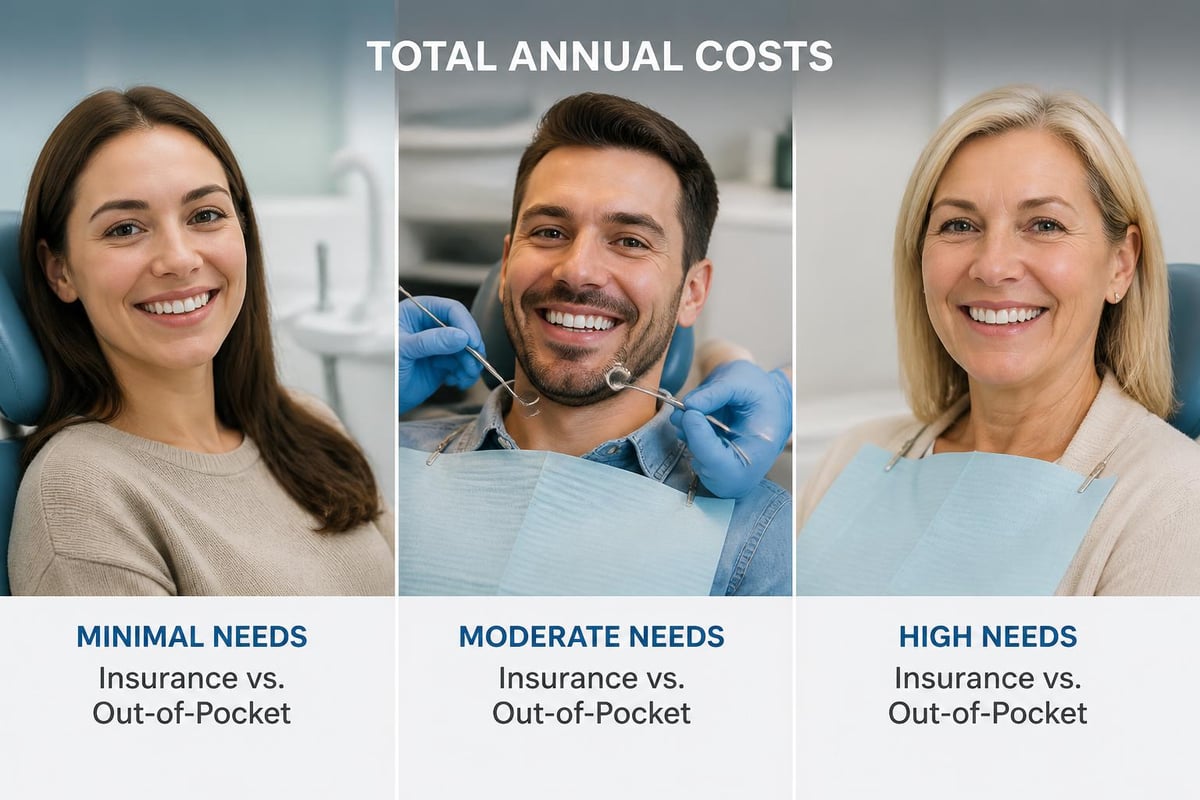
Determining whether dental insurance vs paying out of pocket saves money requires scenario-based calculations reflecting different patient situations. Let's examine three common profiles to illustrate the financial outcomes.
Scenario 1: Minimal Dental Needs
Patient Profile: Excellent oral health, no existing dental work, needs only preventive care
Annual Insurance Costs:
- Premiums: $600
- Deductible: $100
- Copays for two cleanings: $0 (typically covered 100%)
- Total: $700
Out-of-Pocket Costs:
- Two cleanings with exams: $500
- Total: $500
Savings by paying out of pocket: $200 annually
Scenario 2: Moderate Dental Needs
Patient Profile: Generally good oral health but requires occasional fillings, one or two basic procedures annually
Annual Insurance Costs:
- Premiums: $600
- Deductible: $100
- Copays for preventive care: $0
- Two fillings at 80% coverage ($300 per filling, patient pays 20%): $120
- Total: $820
Out-of-Pocket Costs:
- Two cleanings with exams: $500
- Two fillings at full cost: $600
- Total: $1,100
Savings with insurance: $280 annually
Scenario 3: High Dental Needs
Patient Profile: Multiple existing dental issues requiring major work
Annual Insurance Costs:
- Premiums: $720
- Deductible: $150
- Copays for preventive care: $0
- One crown at 50% coverage ($2,000 cost, patient pays $1,000): $1,000
- One root canal at 50% coverage ($1,200 cost, patient pays $600): $600
- Total: $2,470 (Note: This assumes procedures fit within annual maximum)
Out-of-Pocket Costs:
- Two cleanings with exams: $500
- One crown: $2,000
- One root canal: $1,200
- Total: $3,700
Savings with insurance: $1,230 annually
These scenarios demonstrate that dental insurance vs paying out of pocket yields different financial outcomes based on treatment volume and complexity. Patients with minimal needs save money by avoiding insurance, while those requiring major work benefit significantly from coverage.
Considering Employer-Sponsored Dental Benefits
Many employees receive dental insurance as a workplace benefit, fundamentally changing the financial calculation. Employer-sponsored coverage typically costs less than individual plans because employers subsidize premiums, sometimes covering the full amount.
When your employer pays most or all of your dental insurance premium, maintaining coverage almost always makes financial sense compared to paying out of pocket. Even if you rarely use dental services, the minimal or zero cost to you creates value simply by providing catastrophic coverage for unexpected major procedures.
Evaluating Employer Plan Value
Questions to assess your employer-sponsored dental insurance:
- What percentage of the premium does your employer pay?
- What is your actual monthly cost after employer contribution?
- Does the plan include your dependents, and at what additional cost?
- What are the annual maximums and deductibles?
- Does the network include quality providers near you?
If your employer covers 100% of employee-only premiums, accepting this benefit represents a clear advantage over paying out of pocket. However, adding family members at your expense requires the same cost-benefit analysis as purchasing individual insurance.
Factoring in Preventive Care Value
Regardless of whether you choose dental insurance or paying out of pocket, investing in preventive care delivers substantial long-term value. Regular cleanings and exams prevent expensive problems, making them financially wise even when paid at full cost.
Professional dental cleanings and exams remove plaque and tartar buildup that brushing alone cannot eliminate, preventing cavities and gum disease. The $100-$200 cost of routine cleaning pales compared to the $700-$2,500 expense of treating cavities that develop without preventive care.
Long-Term Cost Prevention
Studies consistently show that patients who maintain regular preventive dental visits experience fewer major dental problems requiring expensive treatment. The relationship between preventive care and overall costs significantly impacts the dental insurance vs paying out of pocket debate.
Consider a 10-year perspective:
Without Regular Preventive Care:
- Savings on skipped cleanings: $2,000
- Development of cavities requiring fillings: $1,800
- Progression to root canals and crowns: $5,000
- Net 10-year cost: $4,800 (dental work minus savings)
With Regular Preventive Care:
- Cost of biannual cleanings: $2,000
- Minimal restorative work needed: $500
- Net 10-year cost: $2,500
This comparison demonstrates that preventive care saves money regardless of insurance status, making it a priority investment whether you pay out of pocket or through insurance copays.
Navigating Emergency Dental Situations
Dental emergencies create unique challenges when evaluating dental insurance vs paying out of pocket. Sudden tooth pain, knocked-out teeth, or dental trauma require immediate treatment regardless of insurance status, but coverage significantly impacts your financial burden.
Insurance with no waiting period for emergency services provides valuable protection against unexpected costs. A dental emergency requiring extraction and temporary restoration could cost $800-$1,500 without insurance, while insured patients might pay $200-$400 after coverage.
However, many dental insurance plans impose waiting periods even for urgent care, leaving recently enrolled patients paying full costs despite maintaining coverage. This limitation reduces insurance value for patients anticipating immediate needs.
Emergency Care Cost Considerations
Common dental emergencies and their typical costs:
- Knocked-out tooth: $500-$2,000 for reimplantation or extraction
- Severe toothache requiring root canal: $700-$1,500
- Broken crown or filling: $200-$500 for repair
- Dental abscess: $300-$1,000 for treatment
- Fractured tooth: $500-$3,000 depending on damage severity
Access to emergency dental care becomes crucial when dental crises occur. Dental Plus Clinic provides emergency services to help patients manage urgent situations regardless of insurance status, offering payment plans to make care accessible.
Exploring Payment Plans and Financing Options
Modern dental practices increasingly offer payment plans and financing options that blur the traditional distinction between dental insurance vs paying out of pocket. These arrangements allow patients to spread treatment costs over time without insurance involvement.
Third-party financing through companies like CareCredit provides interest-free payment periods for qualified patients, making major dental work affordable through monthly installments rather than lump-sum payments. Many practices also offer in-house payment plans with flexible terms.
Financing Versus Insurance for Major Work
For patients facing significant dental treatment, comparing financing costs against insurance expenses reveals surprising insights:
$5,000 Dental Implant with Insurance:
- Annual premiums (assuming 2-year treatment): $1,440
- Deductibles: $200
- Patient responsibility after 50% coverage: $2,500
- Total cost: $4,140
- Plus potential annual maximum limitation issues
$5,000 Dental Implant with Financing:
- 12-month interest-free financing: $417/month
- No insurance premiums or deductibles
- Total cost: $5,000
- Complete provider choice without network restrictions
While insurance appears cheaper in this example, the calculation changes if the procedure exceeds annual maximums or requires out-of-network care. Additionally, financing eliminates ongoing premium payments after treatment completion.
Assessing Your Personal Financial Situation
Your broader financial picture influences whether dental insurance vs paying out of pocket makes sense. Factors beyond dental health impact this decision, including budget stability, emergency fund availability, and risk tolerance.
Financial Readiness Assessment
Evaluate these financial considerations:
- Emergency fund status: Can you cover a $2,000-$3,000 unexpected dental expense?
- Monthly budget flexibility: Can you comfortably afford insurance premiums?
- Other insurance coverage: Do you already carry medical, vision, and other policies?
- Income stability: Does your employment provide reliable, consistent income?
- Upcoming known expenses: Are you planning orthodontics, implants, or other major work?
Patients with robust emergency funds and stable finances can better absorb unexpected dental costs, making out-of-pocket payment more viable. Conversely, those living paycheck-to-paycheck benefit from insurance's predictable monthly costs versus sporadic large expenses.
Comparing Different Insurance Plan Types
Not all dental insurance operates identically. Understanding plan varieties helps you evaluate whether dental insurance vs paying out of pocket represents a fair comparison, as plan structure significantly affects value and flexibility.
Major Dental Insurance Plan Categories
| Plan Type | Network Requirements | Cost Structure | Provider Choice | Best For |
|---|---|---|---|---|
| PPO | Preferred but not required | Higher premiums, lower out-of-pocket | Flexible | Patients wanting provider choice |
| HMO/DHMO | Required for coverage | Lower premiums, higher out-of-pocket | Restricted | Budget-conscious with network access |
| Indemnity | None | Highest premiums, reimburses percentage | Complete freedom | Those prioritizing provider selection |
| Discount Plans | Participating providers only | Lowest monthly fee | Limited to members | Healthy patients needing occasional care |
Understanding PPO versus DHMO dental plans helps you select appropriate coverage if you choose insurance. Each structure offers different value propositions affecting the financial comparison against out-of-pocket payment.
Making Your Decision Based on Life Stage
Your age and life stage influence whether dental insurance vs paying out of pocket serves your needs better. Different life phases present varying dental health risks and financial priorities.
Young Adults (20s-30s)
Typically enjoy good oral health with minimal dental issues. Many young adults save money paying out of pocket for preventive care unless they require orthodontics or have existing dental problems. However, those with employer-sponsored coverage should maintain it regardless of cost.
Middle Age (40s-50s)
Face increasing likelihood of needing crowns, root canals, and other restorative work as earlier dental work ages. Insurance often provides better value during this stage due to higher treatment probability and more complex procedures.
Seniors (60+)
Frequently require extensive dental work including implants, dentures, and multiple restorations. Medicare doesn't cover routine dental care, making private insurance or dental savings plans important for managing costs. The dental insurance vs paying out of pocket equation for seniors often favors coverage due to treatment volume.
Families with Children
Require regular preventive care for multiple family members plus potential orthodontics. Family dental insurance plans typically deliver strong value by spreading coverage across several people, especially when children need braces or have cavity-prone teeth.
Regional Cost Variations Across Texas
Dental care costs vary significantly by location, affecting whether dental insurance vs paying out of pocket makes financial sense in your area. Texas presents diverse dental markets with different pricing structures between urban centers and smaller communities.
Metropolitan areas like Austin and San Antonio generally feature higher dental costs than smaller Texas cities, but they also offer more insurance plan options and provider competition. Patients in communities like Beeville or Leander may find different cost dynamics than those in major urban centers.
Texas-Specific Considerations
Texas residents evaluating dental payment options should consider:
- No state-mandated dental insurance: Texas doesn't require dental coverage, giving consumers complete choice
- Medicaid dental coverage limitations: Texas Medicaid provides limited adult dental coverage
- Regional provider availability: Rural areas may have fewer in-network options
- Cost of living variations: Dental pricing often correlates with local economic conditions
Choosing a dental clinic that accepts insurance becomes particularly important in areas with limited provider options. Practices that work with multiple insurance carriers give patients flexibility in coverage selection.
Analyzing Real Patient Outcomes
Real-world examples illuminate how the dental insurance vs paying out of pocket decision plays out for actual patients facing different circumstances. These scenarios reflect common situations encountered across Dental Plus Clinic's Texas locations.
Case Study 1: Sarah, Preventive Care Only
Sarah, 28, has excellent oral health and visits the dentist twice yearly for cleanings. Her employer offers dental insurance at $40 monthly ($480 annually). Two annual cleanings cost $400 out of pocket. By declining insurance and paying directly, Sarah saves $80 annually while maintaining her dental health through preventive care.
Case Study 2: Michael, Unexpected Major Work
Michael, 45, declined dental insurance to save money, spending about $500 annually on preventive care. When he cracked a tooth, he faced $2,800 for a crown and root canal. Had he maintained insurance with $600 annual premiums, his out-of-pocket cost would have been approximately $1,500 after coverage. His decision to forgo insurance cost him an additional $1,300 that year.
Case Study 3: The Martinez Family
This family of four pays $150 monthly ($1,800 annually) for dental insurance. Between routine care for everyone and braces for their daughter, they receive approximately $4,500 worth of dental services, paying $2,200 out of pocket after insurance. Without coverage, their total costs would exceed $6,000, making insurance highly valuable for their situation.
These examples demonstrate that no single answer fits everyone when considering dental insurance vs paying out of pocket. Your unique circumstances, health status, and anticipated needs drive the optimal choice.
Planning for Predictable Major Dental Work
Patients who know they'll need significant dental treatment face a different calculation than those maintaining basic oral health. Planned procedures like dental implants, orthodontics, or full mouth reconstruction require strategic financial planning.
For known upcoming major work, purchasing insurance several months before treatment allows you to satisfy waiting periods and benefit from coverage. This approach requires patience and planning but can reduce costs substantially.
Strategic Insurance Timing
Steps for maximizing insurance value with planned procedures:
- Research plans: Compare coverage levels and annual maximums for your needed procedure
- Enroll during open enrollment: Avoid underwriting or coverage limitations
- Wait through required periods: Complete waiting periods before scheduling treatment
- Understand maximums: Plan multi-year treatment if costs exceed annual limits
- Coordinate benefits: Some procedures can be split across benefit years to maximize coverage
However, insurance companies recognize this strategy and may impose limitations or exclusions for expensive procedures enrolled shortly before claims. Reading policy fine print prevents unpleasant surprises.
Evaluating Overall Value Beyond Pure Cost
While financial considerations dominate discussions of dental insurance vs paying out of pocket, non-monetary factors influence overall value. Peace of mind, treatment accessibility, and care consistency deserve consideration alongside dollars and cents.
Intangible Insurance Benefits
Insurance provides psychological benefits that pure cost analysis overlooks:
- Reduced financial stress: Knowing major expenses are partially covered
- Treatment confidence: More willingness to pursue needed care
- Budgeting predictability: Fixed monthly costs versus variable dental expenses
- Preventive care encouragement: "Free" cleanings motivate regular visits
Conversely, paying out of pocket offers different intangible advantages:
- Provider freedom: Complete choice without network limitations
- Simpler billing: No claim filing or insurance delays
- Negotiating power: Ability to discuss fees and payment arrangements directly
- No coverage disputes: Avoid insurance denials or coverage disagreements
These factors carry different weight for different people. Some patients value predictability and find insurance premiums worthwhile for peace of mind alone, while others prefer simplicity and control despite variable costs.
Understanding the Impact of Cosmetic Dentistry Goals
Patients interested in cosmetic dentistry services face unique considerations when weighing dental insurance vs paying out of pocket. Most insurance plans exclude cosmetic procedures entirely, making coverage irrelevant for aesthetic goals.
Treatments like teeth whitening, porcelain veneers, and smile makeovers typically require out-of-pocket payment regardless of insurance status. Patients pursuing cosmetic improvements might question the value of maintaining insurance that doesn't cover their primary dental interests.
However, even cosmetically motivated patients benefit from insurance if they also need restorative work. Many smile transformations combine cosmetic and functional elements, with insurance covering the restorative components while patients pay for aesthetic enhancements.
Examining Orthodontic Coverage Considerations
Orthodontic treatment presents special challenges in the dental insurance vs paying out of pocket analysis. Adult orthodontics coverage varies widely between plans, with many excluding it entirely or imposing lifetime maximum benefits separate from annual limits.
Typical orthodontic insurance provisions include:
- Lifetime maximum: $1,000-$2,000 total benefit
- Age restrictions: Coverage limited to patients under 18 or 19
- Waiting periods: 12-24 months before benefits begin
- Payment structure: Benefits paid over treatment duration, not upfront
Given that orthodontic treatment costs $3,000-$8,000, insurance rarely covers the majority of expenses. Patients seeking braces or Invisalign often find that insurance provides minimal value specifically for orthodontics, though it may still benefit them for other dental needs.
Weighing Healthcare Sharing Ministry Options
Some patients consider healthcare sharing ministries as alternatives to traditional insurance. These faith-based organizations pool member contributions to help pay medical and sometimes dental expenses, operating outside conventional insurance regulations.
Healthcare sharing ministries typically don't function well for routine dental care, as they focus on unexpected major expenses rather than predictable preventive services. The dental insurance vs paying out of pocket comparison doesn't include healthcare sharing as a viable third option for most dental patients.
Creating Your Personal Decision Framework
Determining whether dental insurance vs paying out of pocket works better for you requires systematic evaluation of your specific circumstances. Use this framework to guide your decision:
Step-by-Step Decision Process
- Calculate your typical annual dental expenses: Review past dental history
- Project upcoming treatment needs: Consider planned procedures or known issues
- Research available insurance plans: Compare premiums, deductibles, and maximums
- Determine your risk tolerance: Assess comfort with unexpected expense potential
- Evaluate your dental health status: Consider cavity history and existing dental work
- Check provider networks: Ensure your preferred dentists participate
- Compare total annual costs: Insurance premiums plus expected out-of-pocket versus full self-pay
- Factor in employer contributions: Account for any workplace benefits
- Consider alternative options: Explore dental savings plans or payment arrangements
- Make a provisional decision: Choose an approach and commit to evaluating annually
This systematic approach helps you move beyond emotional reactions or incomplete information to make financially sound decisions aligned with your healthcare needs and budget realities.
Choosing between dental insurance and paying out of pocket depends entirely on your individual dental health needs, financial situation, and anticipated treatment requirements. Neither option universally outperforms the other, making informed, personalized decision-making essential.
Whether you prefer the predictability of insurance coverage or the flexibility of direct payment, Dental Plus Clinic welcomes patients with all payment preferences across our Beeville, Seguin, New Braunfels, Leander, and Converse locations. Our team helps patients understand their options, maximize insurance benefits, and access care through flexible payment arrangements that fit every budget. Contact us today to discuss your dental health goals and discover which payment approach works best for your situation.