
The administrative burden of verifying dental insurance coverage has traditionally consumed countless hours in dental practices, leading to appointment delays, billing errors, and patient frustration. As dental clinics across Texas and nationwide modernize their operations in 2026, digital insurance verification has emerged as a critical solution that transforms how practices confirm coverage, understand benefits, and collect payments. This technological advancement not only streamlines front-office workflows but also directly impacts patient satisfaction and practice profitability.
The Evolution of Insurance Verification in Dental Practices
Traditional insurance verification required staff members to spend significant time on hold with insurance companies, manually documenting coverage details, and updating patient records. This process often occurred during peak office hours when staff needed to focus on patient care and appointment coordination.
Manual verification methods introduced multiple points of potential error. Staff members might mishear information, transcribe details incorrectly, or fail to catch coverage limitations that would later result in claim denials. These mistakes created financial uncertainty for both patients and practices.
The integration of digital insurance verification in dental clinics has fundamentally changed this landscape. Modern systems connect directly to insurance carrier databases, retrieving real-time eligibility information, coverage details, and benefit breakdowns within seconds rather than hours.
Key Drivers Behind Digital Adoption
Several factors have accelerated the shift toward digital verification systems in dental practices:
- Increased insurance complexity with varied plan types, coverage tiers, and exclusions
- Patient expectations for faster service and transparent cost estimates
- Staff shortage challenges requiring more efficient use of administrative resources
- Regulatory requirements for accurate documentation and patient communication
- Financial pressures to reduce claim denials and improve collection rates
The American Dental Association has recognized these challenges and provides guidance on insurance verification best practices that emphasize digital tools as essential components of modern practice management.
How Digital Insurance Verification Systems Function
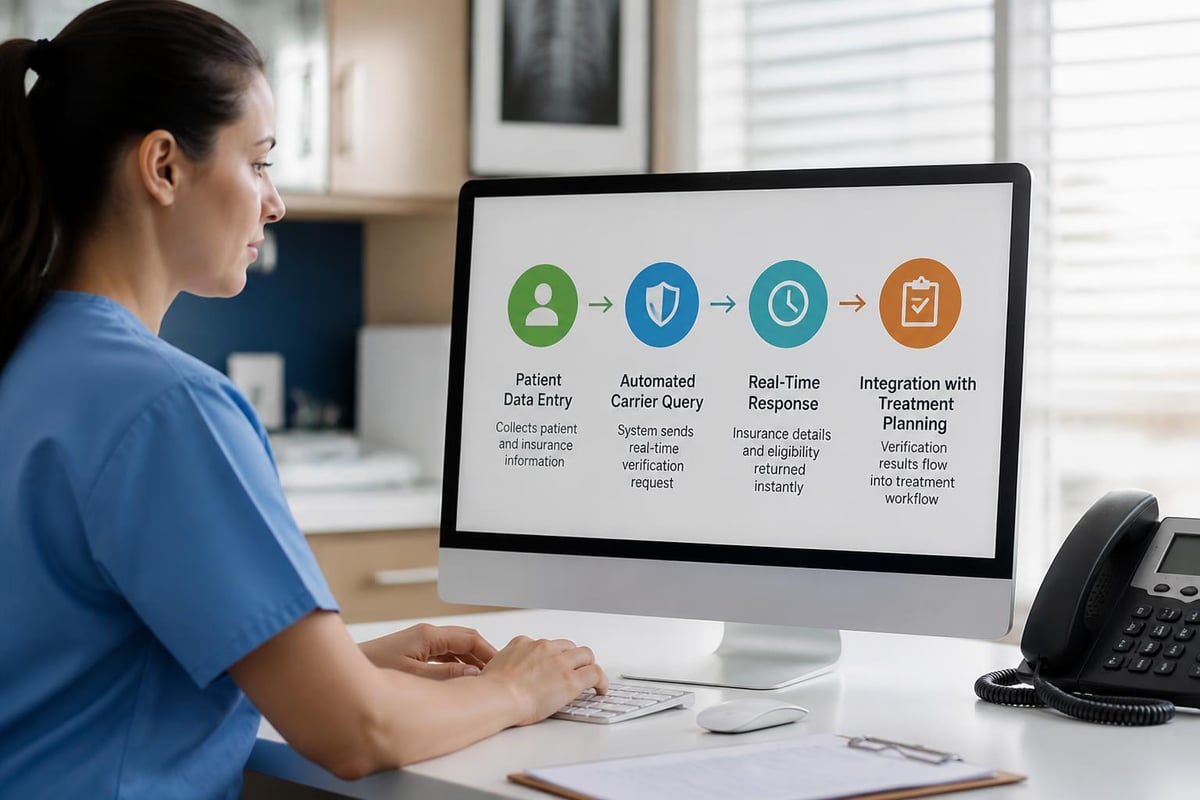
Digital insurance verification in dental clinics operates through sophisticated software that interfaces with multiple insurance carrier systems simultaneously. The process begins when patient information is entered into the practice management system, either during appointment scheduling or at check-in.
The verification software automatically transmits patient demographic and insurance information to the appropriate carrier database. Within moments, the system receives comprehensive responses containing eligibility status, coverage effective dates, deductible amounts, and benefit maximums.
Real-Time Eligibility Verification
Real-time eligibility checks represent the most basic yet essential function of digital verification systems. These checks confirm whether a patient's insurance is active on the date of service, preventing situations where patients receive treatment only to discover their coverage lapsed.
| Verification Element | Information Retrieved | Clinical Application |
|---|---|---|
| Active Coverage | Current policy status | Determines if patient can proceed with treatment |
| Effective Dates | Coverage start and end dates | Helps schedule treatments within coverage periods |
| Plan Type | PPO, HMO, or other structure | Guides referral and authorization requirements |
| Primary vs. Secondary | Coordination of benefits | Ensures correct billing sequence |
Beyond simple eligibility, advanced systems retrieve detailed benefit information that allows staff to provide accurate cost estimates before treatment begins. This transparency helps patients make informed decisions and reduces billing surprises.
Benefits Breakdown and Coverage Analysis
Understanding what procedures a patient's plan covers requires more than confirming active insurance. Digital systems provide detailed breakdowns of preventive, basic, and major service coverage percentages, annual maximums, and remaining benefits.
For a patient considering dental implants, the system can immediately show whether the plan covers implant placement, what percentage applies, and how much of the annual maximum remains available. This information enables treatment coordinators to present financing options and payment plans during the consultation.
Deductible tracking represents another critical component. Digital verification in dental clinics automatically calculates remaining deductible amounts, helping staff predict patient out-of-pocket costs accurately. When a patient has already met their annual deductible through previous treatments, this information appears instantly rather than requiring follow-up calls.
Implementation Strategies for Dental Practices
Transitioning to digital insurance verification requires careful planning and systematic execution. Practices that rush implementation without proper preparation often experience disrupted workflows and staff resistance.
Selecting the Right Verification Platform
The verification solution must integrate seamlessly with existing practice management software. Standalone systems that require duplicate data entry create inefficiency rather than eliminating it. Most modern dental software platforms either include built-in verification capabilities or offer certified integrations with leading verification services.
Evaluation criteria should include:
- Coverage breadth across major dental insurance carriers
- Response speed for real-time verification needs
- Data accuracy and error rates compared to manual verification
- Integration capability with current practice management systems
- Cost structure including per-verification fees versus flat monthly rates
- Support and training resources for staff onboarding
Practices with multiple locations, such as those operating across several Texas communities, benefit from cloud-based solutions that provide consistent verification capabilities across all sites while maintaining centralized reporting.
Staff Training and Workflow Integration
Technology only delivers value when staff members understand how to use it effectively. Comprehensive training ensures that front-office personnel can interpret verification results, recognize when additional follow-up is needed, and communicate findings clearly to patients.
Training should address both technical operation and clinical judgment. While digital systems provide data, staff members must understand dental terminology, common coverage exclusions, and practice policies for presenting treatment costs to patients.
Research on electronic health record integration in dental practices demonstrates that successful technology adoption correlates directly with staff confidence and proper training protocols.
Financial Impact and Return on Investment
Digital insurance verification in dental clinics delivers measurable financial benefits that justify the initial investment and ongoing costs. These benefits manifest through multiple channels that collectively improve practice profitability.
Reduced Claim Denials and Rejections
Insurance companies deny dental claims for numerous reasons, but coverage verification issues rank among the most common. When practices submit claims for patients without active coverage or for services not covered under the patient's plan, these claims return unpaid.
Each denied claim requires staff time to investigate, correct, and resubmit. Some practices never successfully collect on initially denied claims, writing off the charges as bad debt. Digital verification eliminates many preventable denials by confirming coverage before treatment begins.
| Denial Prevention Area | Manual Process Risk | Digital Verification Benefit |
|---|---|---|
| Inactive Coverage | 15-20% error rate | Near-zero errors |
| Plan Type Misidentification | 10-15% error rate | Automatic correct identification |
| Benefit Exhaustion | Frequent surprises | Real-time remaining benefits |
| Authorization Requirements | Often missed | Automated flag for pre-auth needs |
Understanding why choosing a dental clinic that accepts insurance matters to patients also highlights why accurate verification strengthens patient relationships and trust.
Improved Cash Flow and Collections
When patients understand their financial responsibility before treatment, they can prepare payment accordingly. This transparency significantly improves day-of-service collections compared to surprising patients with unexpected bills weeks after treatment.
Practices implementing digital verification report collection rate improvements of 15-30% for patient portions. Patients appreciate knowing costs upfront and are more likely to accept treatment when they can plan financially.

The reduction in accounts receivable also improves practice cash flow. Rather than carrying balances that require collection efforts, practices collect more revenue at time of service, reducing the need for payment plans and collection agency referrals.
Enhancing Patient Experience Through Digital Verification
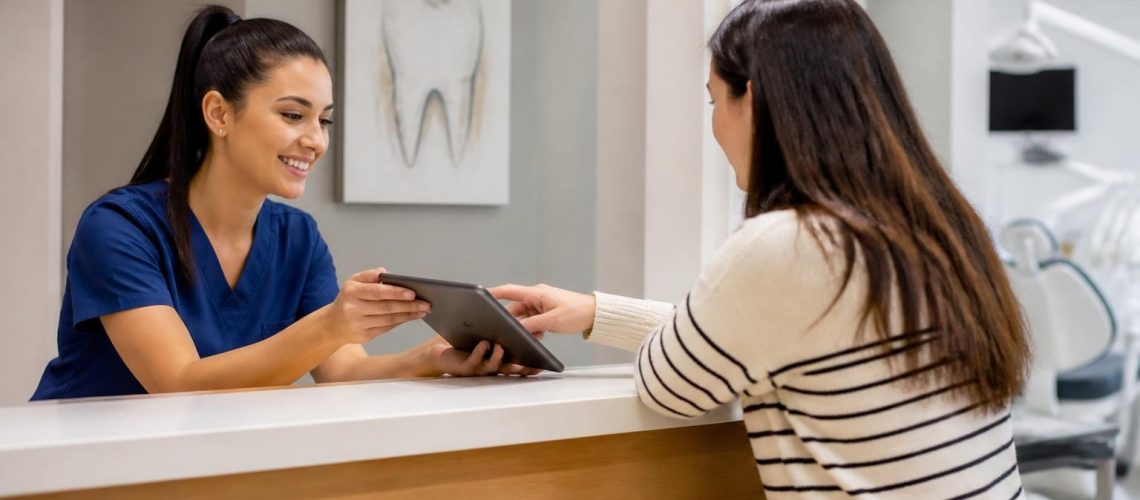
The administrative efficiency gains from digital insurance verification in dental clinics translate directly into improved patient experiences. Patients notice when practices operate smoothly and when staff can answer their questions confidently.
Reduced Wait Times and Streamlined Check-In
Traditional verification often occurred after patients arrived for appointments, creating delays while staff made phone calls and waited on hold. Digital systems complete verification before patients enter the office, allowing immediate check-in and reducing lobby wait times.
Some practices send verification requests when patients schedule appointments, ensuring all insurance information is current and accurate days before the visit. This proactive approach identifies coverage issues early, giving patients time to resolve problems with their insurance carriers.
Transparent Cost Estimates and Treatment Planning
Patients consistently cite cost uncertainty as a major source of dental anxiety. When treatment coordinators can provide accurate estimates based on verified benefits, patients feel more confident proceeding with recommended care.
For complex procedures like full mouth reconstructions or orthodontic treatment, detailed benefit breakdowns allow practices to present comprehensive financial plans. Patients can see exactly how insurance coverage, payment plans, and out-of-pocket costs combine to make treatment affordable.
This transparency extends to understanding PPO versus DHMO dental plans, where different plan structures create vastly different patient costs for identical procedures.
Overcoming Common Implementation Challenges
Despite clear benefits, some dental practices encounter obstacles when adopting digital verification systems. Recognizing these challenges in advance allows for proactive solutions.
Integration with Legacy Systems
Older practice management software may lack modern integration capabilities, creating technical barriers to digital verification adoption. Practices face decisions about upgrading their entire management system versus implementing workaround solutions.
Solution approaches include:
- Evaluating whether practice management software is due for upgrade regardless of verification needs
- Investigating middleware solutions that bridge legacy systems with modern verification platforms
- Implementing partial digital verification for new patients while maintaining manual processes temporarily for established patients
- Planning phased transitions that allow staff to adapt gradually
DentistryIQ's practical tips for improving insurance verification emphasize the importance of matching technology solutions to practice capabilities and needs.
Staff Resistance to Change
Some team members prefer familiar manual processes, viewing digital systems as complicated or unnecessary. This resistance can undermine implementation success if not addressed through proper change management.
Practice leaders should involve staff in the selection process, allowing them to evaluate different systems and voice concerns. When team members feel heard and see how technology addresses their daily frustrations, they become implementation advocates rather than resisters.
Data Accuracy and System Limitations
No digital system achieves perfect accuracy. Insurance carriers occasionally provide outdated information, plan details change without proper database updates, and complex coverage scenarios may require human interpretation.
Practices must establish protocols for situations where digital verification returns incomplete or questionable results. Staff need authority to make verification phone calls when necessary rather than blindly trusting system responses.
Security and Compliance Considerations
Digital insurance verification in dental clinics involves transmitting protected health information, creating obligations under HIPAA and related privacy regulations. Practices must ensure their verification systems meet stringent security requirements.
HIPAA-Compliant Data Transmission
Verification platforms should use encrypted connections for all data transmission between the practice, verification service, and insurance carriers. Patient information must never travel across unsecured networks where unauthorized parties might intercept it.
Practices should verify that verification vendors sign Business Associate Agreements acknowledging their responsibilities for protecting patient data. These agreements create contractual obligations that supplement technical security measures.
Access Controls and Audit Trails
Not all staff members require access to insurance verification functions. Practices should implement role-based access controls that limit verification capabilities to appropriate personnel.
Comprehensive audit trails documenting who accessed verification information, when, and for which patients help practices demonstrate compliance during audits and identify potential security breaches.

Advanced Features and Future Developments
Basic digital insurance verification in dental clinics has evolved to include sophisticated capabilities that extend beyond simple eligibility checks. Understanding these advanced features helps practices maximize their technology investments.
Predictive Analytics and Trend Identification
Modern verification platforms accumulate vast datasets about insurance coverage patterns, claim approval rates, and carrier behavior. Advanced analytics tools mine this data to identify trends that help practices optimize their operations.
For example, systems might identify that certain carriers consistently deny claims for specific procedure codes unless particular documentation is included. This insight allows practices to adjust their documentation processes proactively rather than learning through denied claims.
Automated Pre-Authorization Requests
Some insurance plans require pre-authorization before covering certain procedures. Digital systems can automatically detect when procedures require authorization and initiate the request process, reducing manual workload and preventing forgotten authorizations that delay treatment.
Strategies for streamlining insurance verification processes increasingly emphasize automation of secondary tasks like pre-authorization that complement primary verification functions.
Patient Portal Integration
Leading-edge practices integrate verification capabilities into patient portals, allowing patients to verify their own insurance information before appointments. This self-service approach reduces staff workload while empowering patients to take ownership of their insurance information.
When patients access their patient portal, they might receive prompts to confirm their insurance details, triggering automatic verification that updates their records before they arrive for treatment.
Measuring Success and Optimization
Implementing digital verification represents only the beginning. Practices must continuously measure performance and optimize their verification processes to achieve maximum benefit.
Key Performance Indicators
Essential metrics for monitoring verification effectiveness include:
- Verification completion rate – percentage of patients verified before appointment
- Claim denial rate – denials specifically related to coverage verification issues
- Day-of-service collection percentage – cash collected at appointment versus billed
- Staff time per verification – minutes spent on verification tasks per patient
- Patient cost estimate accuracy – how closely actual costs match pre-treatment estimates
Tracking these metrics monthly allows practices to identify improvement opportunities and demonstrate ROI to practice ownership.
Continuous Process Improvement
Regular team meetings should review verification metrics and discuss challenges encountered during the previous period. Staff members working directly with the system provide valuable insights about functionality gaps or training needs.
Practices should also periodically audit verification accuracy by comparing digital results against manual phone verification for a sample of patients. This quality control confirms the system performs as expected and identifies carriers or plan types that consistently return problematic data.
Practical Applications Across Different Treatment Types
Digital insurance verification in dental clinics serves different purposes depending on the complexity and cost of planned treatments. Understanding these applications helps practices tailor their verification approach.
Preventive and Routine Care
For dental exams and cleanings, verification primarily confirms active coverage and preventive care benefits. Most dental plans cover these services at 100% with no deductible, making verification straightforward.
However, even routine care benefits from digital verification by identifying frequency limitations. If a patient attempts to schedule a cleaning before their six-month benefit period expires, the system flags this issue, allowing the practice to discuss options with the patient.
Restorative and Major Procedures
Complex treatments like dental crowns or root canals require detailed benefit verification. Digital systems retrieve information about deductible requirements, coverage percentages for major services, and annual maximum limitations.
This detailed information enables treatment coordinators to provide accurate multi-procedure estimates. For example, a patient needing both a root canal and crown can receive a comprehensive cost breakdown accounting for how the procedures interact with their specific plan benefits.
Cosmetic and Elective Treatments
Insurance typically excludes cosmetic dentistry procedures like teeth whitening or porcelain veneers. Digital verification quickly confirms these exclusions, allowing staff to present self-pay pricing and financing options from the outset.
This immediate clarity prevents patient disappointment and streamlines the consultation process. Rather than patients hoping insurance might cover cosmetic work, they understand the financial commitment before deciding to proceed.
Regional and Network Considerations
Practices operating across multiple locations must account for how insurance networks and provider contracts vary by geography. Digital verification systems help manage this complexity.
Multi-Location Network Management
A practice with offices in Beeville, Seguin, New Braunfels, Leander, and Converse might participate in different insurance networks at each location.
Digital verification systems can account for these variations, showing different benefit levels based on whether the patient visits an in-network or out-of-network location for their specific insurance plan. This prevents situations where patients assume consistent coverage across all practice locations.
Finding In-Network Providers
Patients searching for dentists that accept dental insurance in Texas benefit when practices use verification systems that confirm network participation status. This transparency helps patients choose appropriate locations and understand their cost responsibility.
Addressing Special Situations and Edge Cases
While digital insurance verification in dental clinics handles most scenarios effectively, certain situations require special attention and often human judgment.
Coordination of Benefits
Patients with coverage under multiple insurance plans create coordination of benefits scenarios. Digital systems can identify primary and secondary insurance, but determining the exact payment sequence and calculating combined benefits often requires additional analysis.
Staff should understand how to interpret verification results showing multiple active policies and when to contact carriers for coordination guidance. Understanding dental insurance versus dental savings plans also helps staff advise patients with hybrid coverage arrangements.
Recently Changed Employment or Coverage
Patients who recently changed jobs may have insurance cards for coverage that hasn't activated yet, or they may believe coverage ended when it remains active through COBRA or month-end provisions. Digital verification identifies these discrepancies by checking real-time carrier databases rather than relying on card dates.
When verification reveals mismatches between patient information and carrier records, staff can help patients contact their insurance companies to resolve the confusion before treatment occurs.
Handling Verification System Downtime
Technology occasionally fails. Internet outages, system maintenance, or carrier database problems can temporarily prevent digital verification. Practices need backup protocols for these situations.
Dentaltown's guidance on making insurance verification less painful includes contingency planning that balances patient service with financial protection during system unavailability.
The Role of Verification in Treatment Acceptance
Accurate insurance verification directly influences whether patients accept recommended treatment. When patients understand their coverage and costs, they feel empowered to make informed decisions.
Building Patient Trust Through Transparency
Patients who receive accurate cost estimates that match their final bills develop trust in the practice's competence and honesty. This trust encourages them to accept future treatment recommendations and refer friends and family.
Conversely, practices that provide inaccurate estimates or surprise patients with unexpected bills damage relationships and generate negative reviews. Digital verification's accuracy protects both patient satisfaction and practice reputation.
Supporting Same-Day Treatment Decisions
For urgent needs like dental emergencies or tooth extractions, instant verification enables same-day treatment decisions. Patients can proceed confidently knowing their insurance coverage rather than delaying necessary care while awaiting manual verification.
This capability particularly benefits practices that offer comprehensive services including emergency care, where timing significantly impacts patient outcomes and comfort.
Training Patients to Maintain Current Insurance Information
Even the most sophisticated digital verification system depends on accurate patient-provided information. Practices should educate patients about their role in maintaining current insurance details.
Proactive Communication Strategies
Appointment reminder messages can include prompts asking patients to verify their insurance information remains current. Simple questions like "Is your insurance information the same as your last visit?" encourage patients to review their coverage before arriving.
Practices might also send annual verification requests asking patients to confirm or update insurance details, particularly in January when many patients switch plans during open enrollment periods.
Explaining Insurance Basics
Many patients don't understand fundamental insurance concepts like deductibles, annual maximums, or coverage percentages. Brief educational materials in waiting rooms or patient portals help patients interpret verification results and cost estimates.
When patients understand that their $1,500 annual maximum means their insurance stops paying after $1,500 in benefits regardless of treatment costs, they better grasp why extensive treatment might require out-of-pocket payment.
Future Trends in Digital Insurance Verification
The technology continues evolving, with emerging capabilities that will further transform digital insurance verification in dental clinics over the coming years.
Artificial Intelligence and Machine Learning
AI algorithms will increasingly predict coverage determinations for complex scenarios by analyzing historical patterns. Rather than simply reporting what carriers state, systems might flag situations where carrier responses appear inconsistent with typical coverage policies.
Machine learning might also identify optimal timing for treatments based on patient benefit utilization patterns, suggesting when patients should schedule expensive procedures to maximize insurance benefits.
Blockchain for Insurance Credentialing
Blockchain technology promises to create verified, immutable records of insurance coverage and provider credentialing. This could eliminate many current verification delays caused by outdated carrier databases or credentialing lapses.
Integration with Treatment Planning Software
Future systems will tightly integrate verification with clinical treatment planning, automatically calculating costs for multi-phase treatment plans and identifying optimal scheduling sequences that maximize insurance benefits across calendar years.
Digital insurance verification has transformed from a convenient luxury to an operational necessity for modern dental practices, delivering measurable improvements in efficiency, accuracy, and patient satisfaction while protecting practice revenue. As technology continues advancing, practices that embrace these tools position themselves for long-term success in an increasingly competitive healthcare landscape. Dental Plus Clinic leverages advanced digital verification systems across all five Texas locations to ensure patients receive accurate cost estimates and transparent insurance information from their first contact, supporting our commitment to accessible, patient-focused dental care that combines clinical excellence with administrative efficiency.