
Missing multiple teeth or facing complete tooth loss can significantly impact your quality of life, affecting everything from your ability to eat comfortably to your confidence in social situations. For Texas families exploring full-arch restoration options, understanding the differences between all-on-4 vs all-on-6 dental implants is essential for making an informed decision about your oral health. Both procedures offer permanent, natural-looking solutions that can restore function and aesthetics, but they differ in several important ways. This comprehensive guide will walk you through everything you need to know about these advanced dental implant techniques, helping you determine which option aligns best with your specific needs, jawbone health, and budget.
Understanding Full-Arch Dental Implant Solutions
Full-arch dental implant systems represent a revolutionary approach to replacing an entire set of upper or lower teeth. Unlike traditional dentures that sit on the gums or comparing dental implants versus dentures, these advanced solutions anchor a complete prosthetic arch to strategically placed titanium implants surgically inserted into the jawbone.
The fundamental principle behind both All-on-4 and All-on-6 techniques involves creating a stable foundation that mimics natural tooth roots. This foundation supports a customized bridge containing all replacement teeth for either the upper or lower jaw.
What Makes These Procedures Different from Traditional Implants
Traditional dental implants typically replace individual teeth, requiring one implant per tooth. Full-arch solutions dramatically reduce the number of implants needed while still providing comprehensive tooth replacement. This efficiency translates to several advantages:
- Reduced surgical time and faster recovery periods
- Lower overall costs compared to individual implant placement
- Immediate or same-day tooth replacement in many cases
- Minimal bone grafting requirements due to strategic implant positioning
The key distinction in all-on-4 vs all-on-6 dental implants lies primarily in the number of supporting implants and their placement angles, which directly affects stability, load distribution, and long-term success rates.
All-on-4 Dental Implants Explained
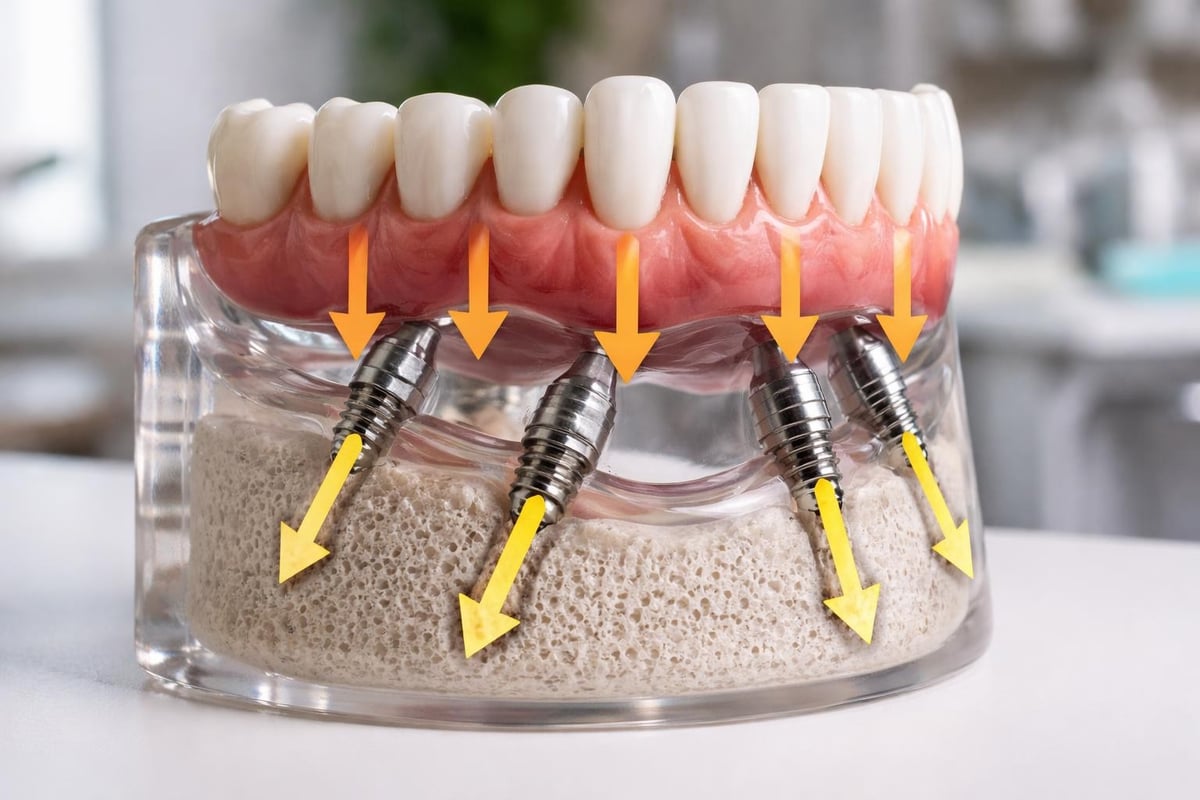
The All-on-4 concept was developed in the late 1990s and has since helped millions of patients worldwide regain their smiles. This technique uses exactly four dental implants to support a full arch of prosthetic teeth.
How All-on-4 Placement Works
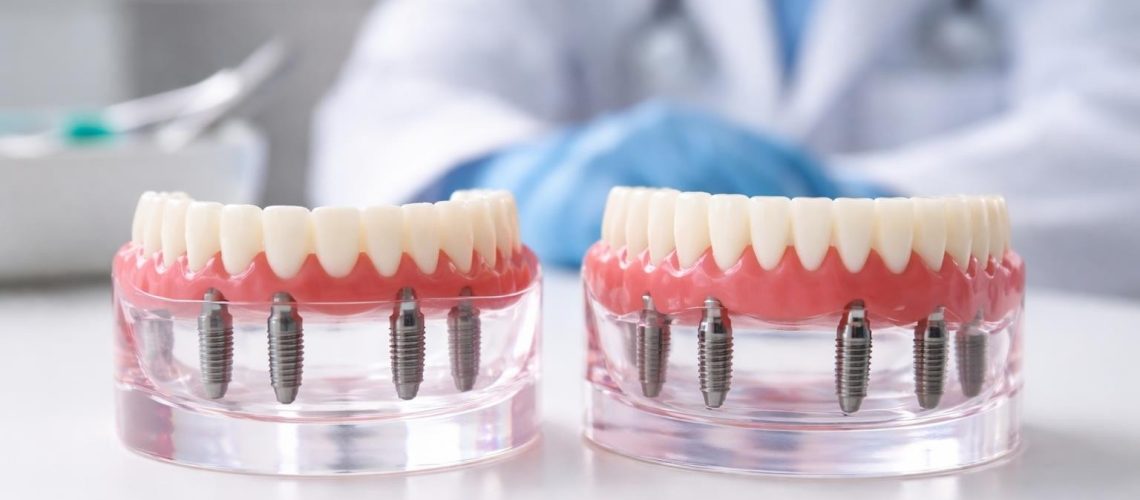
The strategic placement pattern makes All-on-4 uniquely effective. Two implants are positioned vertically in the front portion of the jaw where bone density is typically highest. The two posterior implants are angled at approximately 30 to 45 degrees, extending toward the back of the jaw.
This angled approach offers several benefits:
- Maximizes contact with available bone tissue
- Avoids anatomical structures like sinus cavities and nerve channels
- Distributes chewing forces more evenly across the jawbone
- Reduces the need for bone grafting procedures
According to research published by dental experts, the All-on-4 technique exceeding 95% when performed by experienced practitioners, making it a reliable option for many patients.
Ideal Candidates for All-on-4
This procedure works best for patients who have experienced significant tooth loss but maintain adequate bone density in the anterior jaw region. Common candidates include:
- Adults with severe tooth decay affecting most or all teeth
- Patients currently wearing traditional dentures seeking a permanent solution
- Individuals with bone loss in the posterior jaw who want to avoid extensive grafting
- Those looking for a cost-effective full-arch restoration
However, certain factors may affect candidacy. Patients with severe bone deterioration throughout the entire jaw, uncontrolled diabetes, or active periodontal disease may need additional treatment before proceeding.
All-on-6 Dental Implants Explained
All-on-6 represents an enhanced version of the full-arch concept, utilizing six implants instead of four to support the prosthetic arch. This additional support creates a more robust foundation for the replacement teeth.
The Six-Implant Configuration
The placement pattern for All-on-6 typically involves positioning implants more evenly across the jaw. While specific configurations vary based on individual anatomy, a common approach includes:
- Two implants in the anterior (front) region
- Two implants in the mid-arch positions
- Two implants in the posterior (back) areas
Some practitioners angle the posterior implants similarly to the All-on-4 approach, while others may place them more vertically depending on available bone structure and patient-specific factors.
Advantages of Additional Implant Support
The extra two implants in the All-on-6 system provide measurable benefits that make this option attractive for certain patients:
| Feature | All-on-4 | All-on-6 |
|---|---|---|
| Number of Implants | 4 | 6 |
| Load Distribution | Concentrated on 4 points | Spread across 6 points |
| Bone Requirement | Moderate | Moderate to Good |
| Long-term Stability | Excellent | Superior |
| Cost Range | $20,000-$30,000 per arch | $25,000-$40,000 per arch |
Enhanced stability is perhaps the most significant advantage. With six anchor points instead of four, the prosthetic arch experiences less stress on each individual implant. This distribution can potentially extend the lifespan of both the implants and the prosthetic teeth.
Better force distribution during chewing is particularly beneficial for patients with strong bite forces or those who want to eat a wider variety of foods without concern. The additional implants help prevent excessive wear on any single point.
Comparing All-on-4 vs All-on-6 Dental Implants: Key Differences
Understanding the nuanced differences between these two approaches helps patients make educated decisions aligned with their circumstances and expectations.
Structural Stability and Longevity
Both systems offer excellent long-term outcomes, but the six-implant configuration provides a margin of safety that appeals to many patients and dentists. If one implant were to fail in an All-on-4 system, the remaining three implants bear increased stress. In an All-on-6 system, five remaining implants can more easily compensate.
Research comparing the advantages and disadvantages of All-on-4 and All-on-6 indicates that while both achieve high success rates, All-on-6 may offer slightly better long-term stability in patients with higher functional demands.
Cost Considerations for Texas Families
Budget plays a crucial role in treatment decisions for most families. The cost difference between all-on-4 vs all-on-6 dental implants reflects the additional materials, surgical time, and complexity involved.
All-on-4 costs typically range from $20,000 to $30,000 per arch in Texas markets, though prices vary by location and provider. This makes it the more budget-friendly option for many patients seeking full-arch restoration.
All-on-6 costs generally fall between $25,000 and $40,000 per arch, reflecting the additional implants and extended procedural requirements. While the upfront investment is higher, some patients view this as worthwhile for the enhanced stability and potential longevity benefits.
At Dental Plus Clinic locations across Texas, including Beeville, Seguin, and Converse, our team provides transparent pricing and works with patients to explore financing options that make advanced dental care accessible.
Treatment Timeline and Recovery
The procedural timeline differs slightly between the two approaches:
All-on-4 procedure can often be completed in a single day, with patients receiving temporary prosthetic teeth immediately after implant placement. Final restoration typically occurs three to six months later, after osseointegration (bone fusion) is complete.
All-on-6 procedure may require slightly more surgical time due to the additional implants, but many patients still receive immediate temporary teeth. The healing timeline remains similar, with final prosthetics placed once full integration occurs.
Recovery experiences are comparable for both procedures. Patients typically experience:
- Mild to moderate discomfort for 3-7 days
- Swelling that peaks around day three and gradually subsides
- Dietary restrictions progressing from soft foods to normal diet over several weeks
- Follow-up appointments to monitor healing and adjust temporary teeth
Which Option Is Right for You?
Selecting between all-on-4 vs all-on-6 dental implants requires careful consideration of multiple factors unique to your situation.
Assessing Your Bone Health
Bone density and volume are critical determinants. Patients with moderate bone loss often succeed with All-on-4 thanks to the angled implant placement that maximizes use of available bone. Those with better preserved bone structure might benefit more from All-on-6’s additional support points.
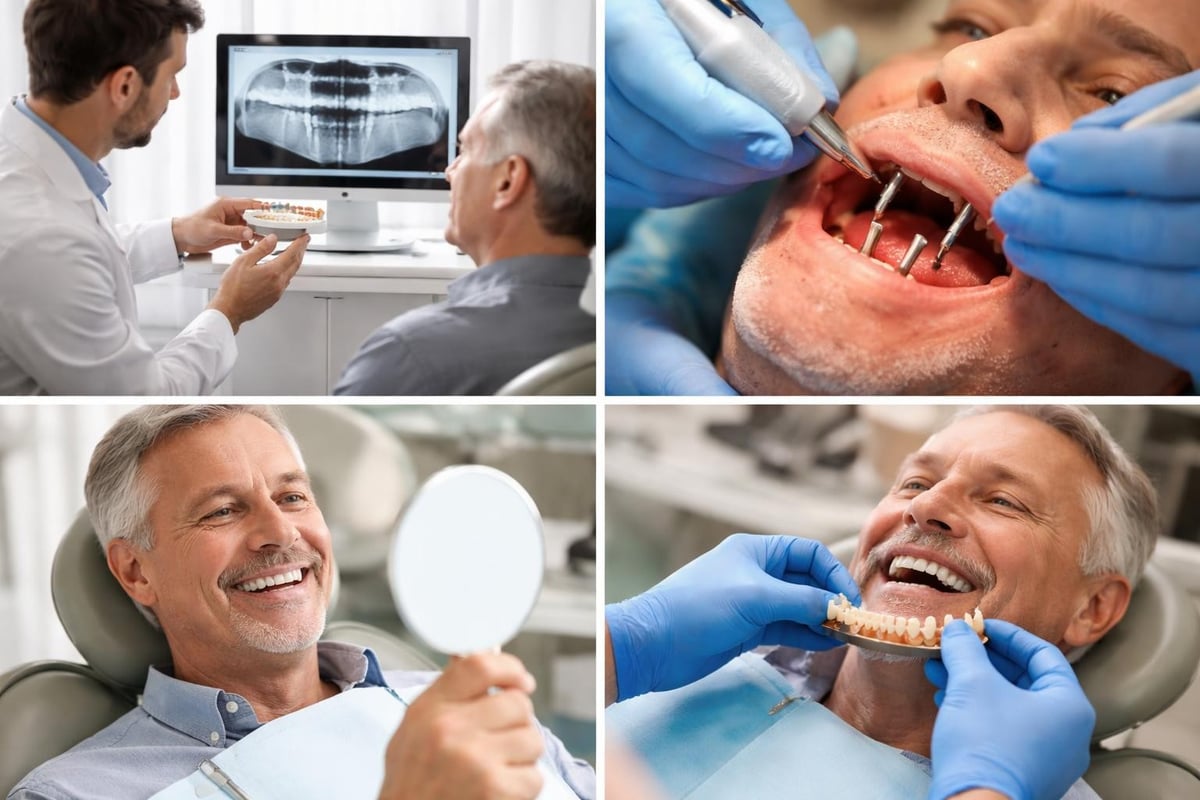
Your dentist will conduct comprehensive imaging, including 3D cone beam CT scans, to evaluate:
- Bone height and width in critical implant placement areas
- Bone density throughout the jaw
- Proximity to anatomical structures like nerves and sinuses
- Overall jaw architecture and any existing defects
This detailed assessment, available at Dental Plus Clinic’s implant services, ensures your treatment plan is based on accurate anatomical information rather than assumptions.
Lifestyle and Functional Needs
Your daily habits and expectations significantly influence the ideal choice. Consider these questions:
Do you have a strong bite force? Individuals who naturally bite with significant force, perhaps due to previous teeth grinding habits, may benefit from the additional stability of All-on-6.
What foods do you want to eat? While both systems restore most chewing function, patients who want to regularly consume very hard or tough foods might appreciate the extra security of six implants.
Are you an athlete or highly active? The reduced risk of prosthetic movement or stress fracture with All-on-6 can provide peace of mind for physically active individuals.
What is your overall health status? Certain medical conditions affecting healing or bone metabolism might make the more robust All-on-6 system preferable for long-term success.
Budget and Financial Planning
Being realistic about financial constraints is essential. While All-on-6 offers advantages, All-on-4 provides an excellent solution at a lower investment. Consider:
- Your available budget and savings
- Dental insurance coverage (though many plans offer limited implant benefits)
- Financing options and monthly payment affordability
- The value you place on the additional stability features
Many patients find that All-on-4 meets their needs perfectly while keeping treatment more affordable. Others prioritize the enhanced durability and choose All-on-6 despite the higher cost.
Success Rates and Long-Term Outcomes
Both procedures boast impressive success records when performed by qualified professionals using proper protocols. Understanding what “success” means in this context helps set realistic expectations.
Clinical Success Metrics
Dental implant success is measured through multiple criteria:
- Osseointegration completion (bone fusion to implant surface)
- Absence of infection or peri-implantitis
- Stable positioning without movement or shifting
- Healthy surrounding tissue and gum contours
- Patient satisfaction with function and aesthetics
Studies examining the comprehensive comparison of All-on-4 and All-on-6 show success rates ranging from 94% to 98% for All-on-4 and 96% to 99% for All-on-6 over ten-year periods. These numbers reflect proper patient selection, skilled execution, and appropriate maintenance.
Factors Affecting Long-Term Success
Several variables influence how well your implants perform over decades:
Oral hygiene compliance ranks as the most critical factor. Patients who maintain excellent home care and attend regular professional cleanings dramatically reduce their risk of complications.
Smoking cessation significantly improves outcomes. Tobacco use impairs healing and increases implant failure risk by up to 300%.
Systemic health management affects success rates. Controlling conditions like diabetes, maintaining good nutrition, and managing medications that affect bone health all contribute to positive results.
Professional maintenance through regular dental visits allows early detection of any issues before they become serious problems.
The Treatment Process: What to Expect
Understanding the journey from consultation to final restoration helps reduce anxiety and allows better preparation.
Initial Consultation and Planning
Your first visit involves comprehensive evaluation including:
- Complete medical and dental history review
- Clinical examination of your mouth, remaining teeth, and gum tissues
- Digital impressions or traditional molds of your jaws
- Advanced 3D imaging to map bone structure precisely
- Discussion of your goals, concerns, and expectations
This information allows your dental team to create a customized treatment plan specific to your anatomy and needs. You’ll receive detailed information about which approach (All-on-4 or All-on-6) is recommended for your situation, along with cost estimates and timeline projections.
Surgery Day Experience
Most patients feel anxious before their procedure, but understanding the process helps ease concerns:
- Anesthesia administration: You’ll receive appropriate sedation based on your comfort level and medical factors
- Remaining tooth removal: Any problematic teeth are extracted
- Implant placement: Titanium posts are precisely positioned following the surgical guide
- Temporary prosthetic attachment: In most cases, you’ll leave with functional teeth the same day
- Post-operative instructions: Your team provides detailed care guidelines and prescriptions
The entire surgical appointment typically takes 2-4 hours depending on complexity and whether you’re treating one or both arches.
Healing and Final Restoration
The months following surgery involve important biological processes:
Weeks 1-2: Focus on managing discomfort, following dietary restrictions, and maintaining excellent hygiene around your temporary teeth and surgical sites.
Months 1-3: Osseointegration progresses as bone cells grow onto the implant surfaces, creating a permanent bond. You’ll attend follow-up appointments to monitor healing.
Months 3-6: Once integration is complete, you’ll receive final impressions for your permanent prosthetic bridge. This custom restoration is crafted to match your facial features, smile design preferences, and bite requirements.
Final delivery: Your permanent teeth are attached, adjusted for perfect comfort and function, and you receive long-term care instructions.
Common Concerns and Questions Addressed
Patients considering full-arch implants often share similar worries. Addressing these concerns directly helps you feel more confident in your decision.
Pain and Discomfort Management
“How much will this hurt?” This tops the list of patient concerns. Modern anesthesia and sedation techniques ensure you feel no pain during the procedure itself. Post-operative discomfort is typically manageable with prescribed medications and usually peaks within the first 72 hours before steadily improving.
Most patients describe the recovery as less painful than they anticipated, comparable to having several tooth extractions. Following post-operative instructions carefully minimizes complications and discomfort.
Eating and Diet Restrictions
“What can I eat after getting implants?” Immediately following surgery, you’ll maintain a soft food diet for several weeks to protect the healing sites and new implants. This includes:
- Smoothies and protein shakes
- Scrambled eggs and soft cheeses
- Mashed potatoes and pureed soups
- Yogurt and soft fruits
- Pasta and well-cooked vegetables
As healing progresses, you’ll gradually reintroduce firmer foods. Once your final prosthetics are placed and you’ve fully healed, you can enjoy nearly all foods, though extremely hard items (like ice or hard candies) should still be avoided to protect your investment.
Maintenance Requirements
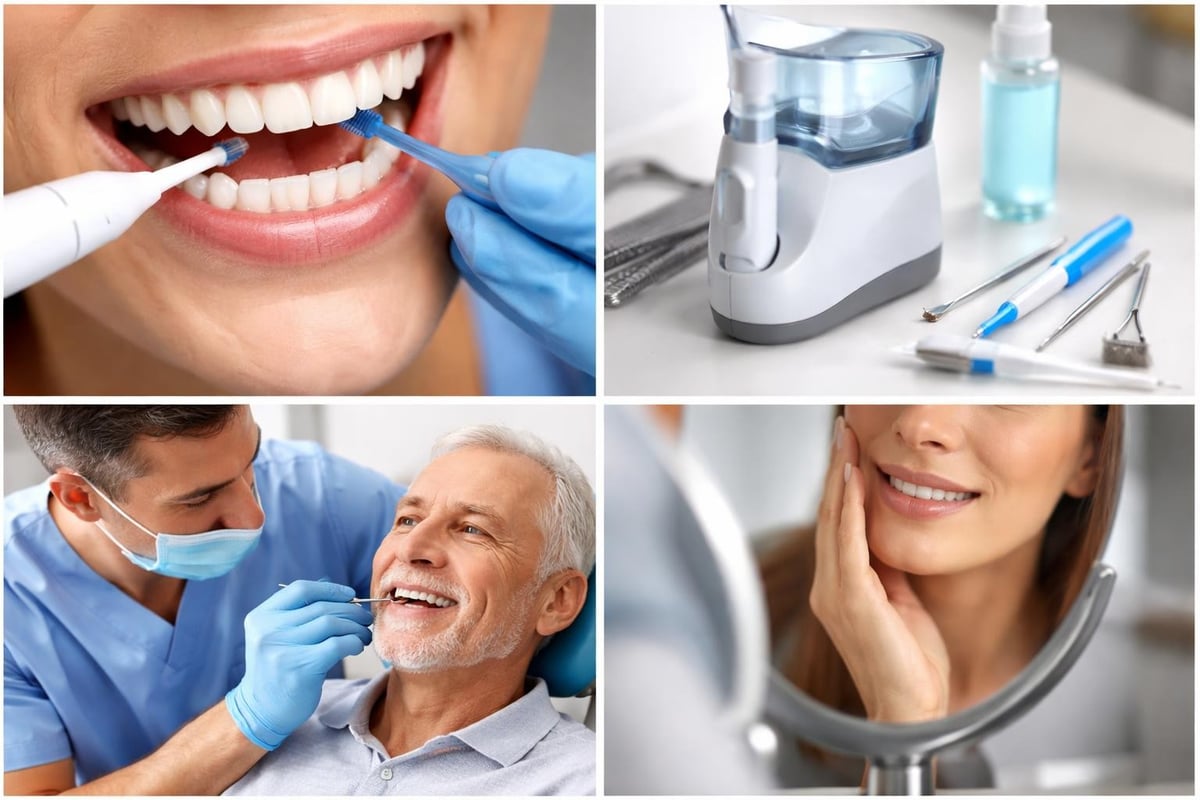
“Is caring for implants difficult?” Daily maintenance resembles caring for natural teeth but with some specialized considerations. You’ll need to:
- Brush your prosthetic teeth at least twice daily using a soft-bristled brush
- Use water flossers or special interdental brushes to clean around the implant connections
- Attend professional cleanings every 3-6 months for specialized implant maintenance
- Avoid abrasive toothpastes that could scratch prosthetic surfaces
This routine takes only a few extra minutes daily compared to natural tooth care but is essential for preventing peri-implantitis and ensuring your implants last decades.
Potential Complications
“What could go wrong?” While success rates are high, being aware of possible complications allows early recognition and treatment:
| Complication | Frequency | Prevention Strategy |
|---|---|---|
| Implant failure (non-integration) | 2-5% | Proper patient selection, smoking cessation |
| Infection at surgical site | 3-8% | Antibiotic prophylaxis, excellent post-op hygiene |
| Prosthetic complications (chips, fractures) | 5-10% over 10 years | Avoiding excessive forces, wearing nightguards if needed |
| Nerve damage | <1% | Precise 3D planning, experienced surgeon |
| Sinus issues (upper jaw) | <2% | Proper implant angulation, avoiding sinus penetration |
Working with experienced professionals who understand the key differences between All-on-4 and All-on-6 and follow evidence-based protocols significantly reduces these risks.
Making Your Decision: Next Steps
Armed with comprehensive information about all-on-4 vs all-on-6 dental implants, you’re better prepared to move forward with confidence.
Scheduling Your Consultation
The first practical step involves connecting with a qualified implant dentist who can evaluate your specific situation. During this visit, you’ll want to:
Ask about experience: Inquire how many full-arch cases the dentist has completed and request to see before-and-after photos of actual patients.
Discuss technology: Modern practices use 3D imaging and computer-guided surgery for precision. Verify that your provider employs current techniques.
Understand costs thoroughly: Request itemized treatment estimates that break down surgical fees, prosthetic costs, and any additional procedures. Discuss payment plans and financing options available.
Explore credentials: While general dentists can perform implant surgery, specialists like oral surgeons or periodontists bring additional training. Ask about continuing education and professional affiliations.
Preparing Financially
Given the significant investment required, financial planning is crucial:
- Review your dental insurance to understand any coverage for implant procedures, though benefits are often limited
- Explore healthcare financing through companies offering payment plans specifically for dental work
- Consider healthcare savings accounts (HSA/FSA) that allow pre-tax dollars for medical expenses
- Discuss in-house payment plans that many practices offer to make treatment accessible
Remember that while the upfront cost is substantial, full-arch implants typically last 20+ years with proper care, making the per-year cost much more reasonable than it initially appears.
Optimizing Your Candidacy
If you’re not quite ready for surgery or need to improve your candidacy, several steps can help:
Improve periodontal health: If you have active gum disease, complete treatment before implant surgery significantly improves success rates.
Quit smoking: Even reducing tobacco use improves healing. Complete cessation provides the best outcomes.
Optimize medical conditions: Work with your physicians to ensure diabetes, blood pressure, and other health factors are well-controlled before surgery.
Consider preparatory procedures: Some patients benefit from bone grafting several months before implant placement to create better foundations.
Frequently Asked Questions
How long do All-on-4 and All-on-6 implants last?
With proper care and maintenance, both All-on-4 and All-on-6 dental implants can last 20 years or longer. The titanium implants themselves often last a lifetime, while the prosthetic teeth may need replacement every 10-15 years due to normal wear. Success depends heavily on maintaining excellent oral hygiene, attending regular dental checkups, and avoiding harmful habits like smoking or chewing extremely hard objects.
Can I get All-on-6 if I have significant bone loss?
Patients with moderate to severe bone loss may still qualify for All-on-6, though the All-on-4 technique is often better suited for these situations due to its angled implant placement that maximizes available bone. In cases of extensive bone deterioration, bone grafting procedures performed several months before implant surgery can create adequate foundations for either approach. A detailed 3D evaluation helps determine the best path forward.
Is the procedure painful?
During the actual surgery, you won’t feel pain thanks to local anesthesia and optional sedation. Post-operative discomfort is typically moderate and manageable with prescribed pain medication. Most patients report that recovery is less painful than anticipated, with discomfort peaking around day three and gradually subsiding over the following week. Following your dentist’s post-operative instructions carefully minimizes pain and complications.
How soon can I eat normally after surgery?
You’ll need to follow a soft food diet for approximately 6-8 weeks after surgery to protect the healing implants and surrounding tissues. During this time, focus on nutritious soft foods like smoothies, eggs, soups, and mashed vegetables. Once your dentist confirms proper healing and your final prosthetic is placed (typically 3-6 months post-surgery), you can gradually return to eating most foods, though very hard items should still be avoided.
Does insurance cover All-on-4 or All-on-6 implants?
Dental insurance coverage for implants varies significantly by plan. Many policies provide limited or no coverage for implants, classifying them as cosmetic rather than medically necessary. However, some plans may cover portions of the procedure, such as tooth extractions or the prosthetic portion. Medical insurance rarely covers dental implants unless they’re related to accident trauma or medical conditions. Contact your insurance provider for specific coverage details and work with your dental office to maximize available benefits.
Which option provides better aesthetics?
Both All-on-4 and All-on-6 can deliver beautiful, natural-looking results. The aesthetic outcome depends more on the quality of the prosthetic fabrication, your dentist’s skill in smile design, and customization to your facial features than on the number of implants. Six implants may provide slightly better support for the prosthetic in the back areas, potentially creating more natural contours, but skilled practitioners achieve excellent aesthetics with either approach.
Can I have the procedure done if I’m diabetic?
Yes, diabetic patients can successfully receive All-on-4 or All-on-6 implants, provided their blood sugar is well-controlled. Uncontrolled diabetes significantly increases infection risk and impairs healing, so working with your physician to optimize your blood glucose levels before surgery is essential. Well-managed diabetics have success rates comparable to non-diabetic patients. Your dental team will coordinate with your medical providers to ensure safe treatment.
What happens if one implant fails?
Implant failure is uncommon but can occur, usually within the first year if osseointegration doesn’t complete properly. With All-on-4, losing one implant creates more significant challenges since only three remain to support the arch. With All-on-6, five implants can often continue supporting the prosthetic while the failed implant is addressed. In most cases, a failed implant can be removed and replaced after healing, or the prosthetic can be redesigned to function with fewer implants depending on circumstances.
How do I choose between All-on-4 and All-on-6?
The decision should be based on several factors: your bone quality and density, budget considerations, lifestyle demands, and your dentist’s professional recommendation after thorough evaluation. Patients with good bone structure and higher functional demands often benefit from All-on-6’s enhanced stability. Those with moderate bone loss or budget constraints frequently find All-on-4 provides excellent results at lower cost. A comprehensive consultation examining your specific anatomy and goals provides the clarity needed for this important decision.
Are there age restrictions for these procedures?
There’s no upper age limit for All-on-4 or All-on-6 implants. Many successful patients are in their 70s and 80s. Good overall health matters more than chronological age. The lower age limit typically corresponds to completed jaw growth, usually around age 18-21. Teens and young adults still experiencing facial development should wait until growth is complete to ensure optimal long-term implant positioning and results.
Final Thoughts
Choosing between all-on-4 vs all-on-6 dental implants represents a significant decision that impacts your oral health, daily function, and quality of life for decades to come. Both approaches offer transformative solutions for complete tooth replacement, and the right choice depends on your unique anatomical, functional, and financial circumstances. At Dental Plus Clinic, our experienced team across all five Texas locations provides comprehensive implant consultations using advanced 3D imaging technology to develop personalized treatment plans. Whether you’re in Beeville, Seguin, New Braunfels, Leander, or Converse, we’re committed to helping you restore your smile with confidence and precision. Schedule your consultation today to discover which full-arch solution best meets your needs and begin your journey toward a permanent, beautiful smile.