
Understanding the financial aspects of dental coverage can feel overwhelming, especially when you’re trying to budget for your family’s oral health needs. The dental insurance cost varies significantly depending on plan type, coverage level, location, and individual circumstances. For Texas residents seeking quality dental care in 2026, knowing what to expect financially helps you make informed decisions about protecting your smile while managing healthcare expenses effectively. This comprehensive guide breaks down exactly what you’ll pay for dental insurance coverage across the Lone Star State.
Understanding Dental Insurance Cost Components
When evaluating dental insurance cost, you need to look beyond the monthly premium. Several financial components work together to determine your total out-of-pocket expenses throughout the year.
Monthly premiums represent the fixed amount you pay to maintain coverage, regardless of whether you use dental services. For individual plans in Texas, average dental insurance premiums range from $20 to $50 monthly, while family coverage typically costs between $50 and $150 per month.
Key Cost Elements to Consider
Beyond premiums, understanding these additional costs helps you calculate true expenses:
- Deductibles: The amount you must pay before insurance benefits begin, typically ranging from $50 to $150 annually per person
- Copayments: Fixed fees for specific services, such as $25 per cleaning or $50 per filling
- Coinsurance: Your percentage share of costs after meeting the deductible, commonly 20% for basic procedures and 50% for major work
- Annual maximums: The cap on what insurance pays per year, usually between $1,000 and $2,000
- Waiting periods: Time before certain benefits activate, potentially delaying coverage for needed treatments
The actual dental insurance cost you experience depends on how these elements interact with your specific oral health needs and chosen plan structure.

Average Dental Insurance Premiums in Texas for 2026
Texas residents have multiple options when shopping for dental coverage, and dental insurance costs in 2026 reflect both national trends and regional factors specific to the state’s diverse markets.
Individual dental insurance plans in Texas average approximately $35 monthly, translating to $420 annually. Family plans covering two adults and multiple children typically cost around $100 to $120 monthly, or $1,200 to $1,440 per year.
| Plan Type | Individual Monthly | Family Monthly | Annual Individual | Annual Family |
|---|---|---|---|---|
| Basic HMO | $15-$25 | $40-$60 | $180-$300 | $480-$720 |
| Standard PPO | $30-$45 | $85-$115 | $360-$540 | $1,020-$1,380 |
| Premium PPO | $45-$65 | $120-$160 | $540-$780 | $1,440-$1,920 |
| Indemnity | $50-$80 | $140-$200 | $600-$960 | $1,680-$2,400 |
These figures represent baseline dental insurance cost expectations, though actual premiums vary based on location within Texas, age, coverage selections, and carrier.
Regional Variations Across Texas
Metropolitan areas like Austin, Houston, Dallas, and San Antonio generally show higher premium costs due to increased provider rates and cost of living. Smaller communities throughout Central and South Texas, including cities where Dental Plus Clinic operates, often feature more competitive pricing.
Residents in Beeville, Seguin, New Braunfels, Leander, and Converse typically find dental insurance cost options on the lower end of state averages, making comprehensive coverage more accessible for families.
Types of Dental Insurance Plans and Their Costs
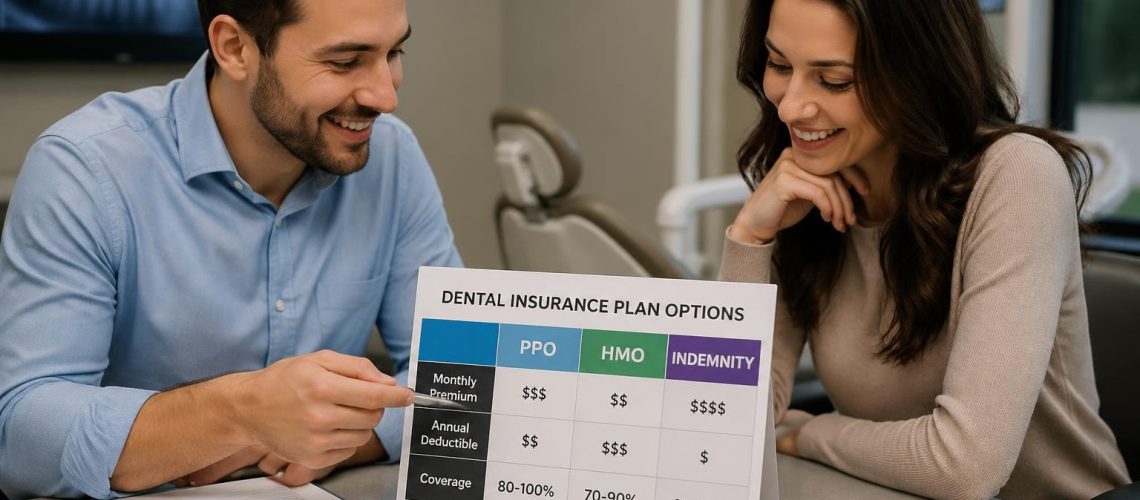
Choosing the right plan type significantly impacts your dental insurance cost and out-of-pocket expenses. Each structure offers distinct advantages depending on your dental health needs and budget flexibility.
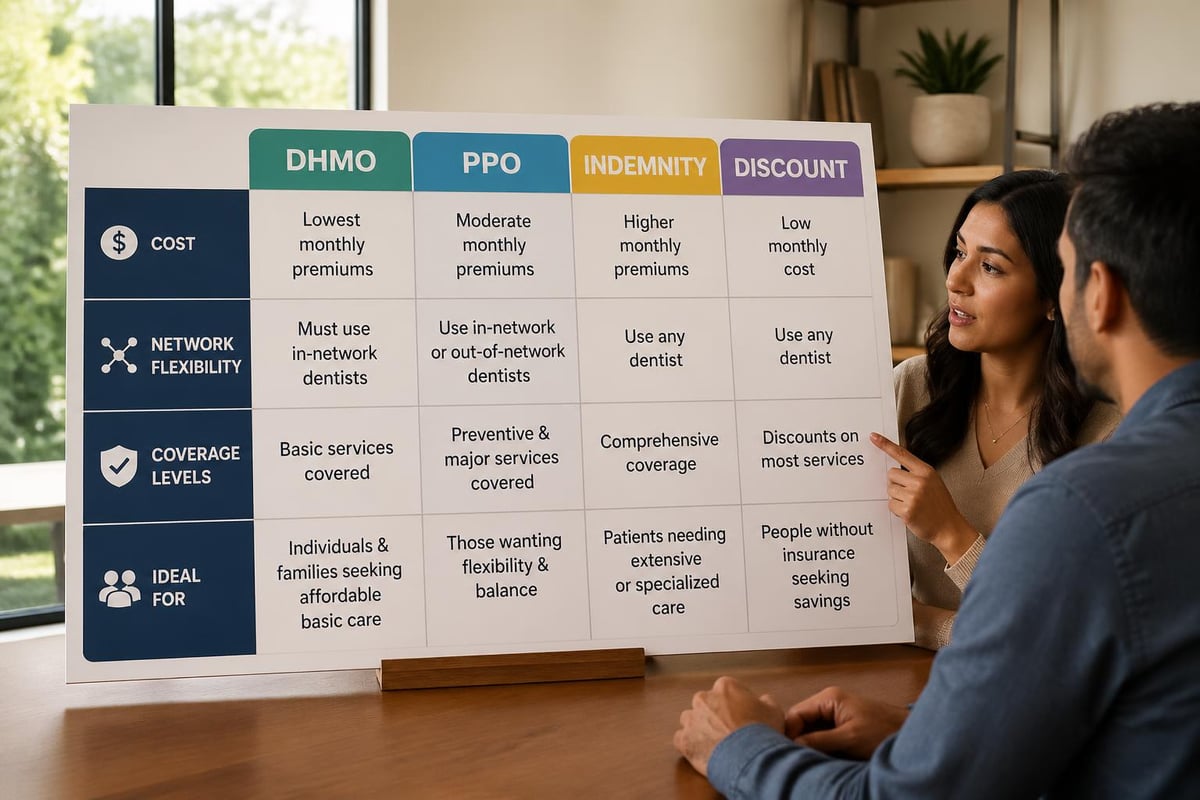
Dental Health Maintenance Organization (DHMO) Plans
DHMO plans represent the most budget-friendly option, with monthly premiums starting as low as $15 for individuals. These plans require you to select a primary dentist from a network and obtain referrals for specialist care.
Cost characteristics:
- Lowest monthly premiums
- Minimal or no deductibles
- Fixed copayments for services
- Limited provider network
- No out-of-network benefits
Preferred Provider Organization (PPO) Plans
PPO plans balance cost and flexibility, making them the most popular choice among Texas families. Understanding PPO dental insurance costs helps you evaluate whether the additional flexibility justifies higher premiums.
Cost structure:
- Moderate monthly premiums ($30-$65 individual)
- Annual deductibles ($50-$100 per person)
- Coinsurance percentages (typically 80/20 for basic, 50/50 for major procedures)
- In-network and out-of-network coverage options
- Higher reimbursement rates when using network dentists
Patients who value the freedom to visit multiple Dental Plus Clinic locations across Texas often find PPO plans ideal for their needs.
Indemnity (Fee-for-Service) Plans
Indemnity plans offer maximum flexibility but command the highest dental insurance cost. These plans let you visit any licensed dentist without network restrictions.
- Highest monthly premiums ($50-$80+ individual)
- Annual deductibles often exceeding $100
- Reimbursement based on “usual and customary” rates
- Complete provider choice
- Potential balance billing if dentist charges exceed plan allowances
Discount Dental Plans
Technically not insurance, discount plans provide reduced fees at participating providers for an annual membership fee, typically $100-$200 per year. For patients seeking affordable dental care solutions, these plans offer predictable savings without traditional insurance complexities.
What Dental Insurance Typically Covers
Understanding coverage levels helps you assess whether the dental insurance cost justifies the benefits you’ll receive. Most plans categorize services into three tiers with different reimbursement rates.
Preventive Care (100% Coverage)
Most plans fully cover preventive services with no cost-sharing after you pay your premium:
- Routine dental exams (typically two per year)
- Professional cleanings (two annually)
- X-rays (frequency varies by type)
- Fluoride treatments (often limited to children)
- Oral cancer screenings
These preventive services help maintain oral health and prevent costly problems, making them the cornerstone of dental insurance value.
Basic Procedures (70-80% Coverage)
After meeting your deductible, basic restorative work is partially covered:
- Fillings for cavities
- Simple extractions
- Non-surgical periodontal treatments
- Emergency dental care for pain or injury
For procedures like tooth extraction or dental fillings, you’ll typically pay 20-30% of the total cost.
Major Procedures (50% Coverage)
Complex treatments require higher out-of-pocket contributions:
- Crowns and bridges
- Root canals
- Dentures and partial dentures
- Dental implants (limited coverage or excluded)
- Periodontal surgery
Many patients find that cosmetic procedures like veneers or teeth whitening aren’t covered by standard dental insurance, impacting total treatment costs.
| Service Category | Typical Coverage | Patient Responsibility | Annual Limit Applied |
|---|---|---|---|
| Preventive | 100% | $0 after premium | Yes |
| Basic | 70-80% | 20-30% + deductible | Yes |
| Major | 50% | 50% + deductible | Yes |
| Orthodontics | 50% (if covered) | 50% + separate lifetime max | Separate limit |
| Cosmetic | 0% (typically excluded) | 100% | N/A |
What dental insurance covers varies by carrier and plan level, so reviewing specific policy details is essential before enrolling.
Factors That Influence Your Dental Insurance Cost
Multiple variables affect the premiums you’ll pay and the value you receive from coverage. Understanding these factors helps you anticipate costs and potentially reduce expenses.
Age and Demographics
Older adults typically face higher dental insurance cost due to increased likelihood of needing major procedures. Children’s coverage may cost less individually but families pay higher total premiums.
Age-related considerations:
- Adults 18-35: Lower individual premiums but may skip coverage
- Adults 36-55: Moderate premiums with higher utilization rates
- Adults 55+: Highest premiums reflecting greater treatment needs
- Children: Lower individual costs but family plans increase total expenses
Location Within Texas
Geographic variations in dental care costs directly impact insurance premiums. Urban areas with higher provider fees and operating costs generate elevated insurance rates.
Texas communities in Central and South regions often benefit from lower dental insurance cost compared to major metropolitan areas. Residents near Dental Plus Clinic’s Leander location or other service areas may find competitive rates reflecting local market conditions.
Coverage Level and Plan Design
Your chosen plan directly determines dental insurance cost. Plans with higher annual maximums, lower deductibles, or broader networks charge increased premiums.
- Basic plans: $1,000 annual maximum, higher deductibles, limited networks
- Standard plans: $1,500 annual maximum, moderate cost-sharing
- Premium plans: $2,000+ annual maximum, lower out-of-pocket costs, extensive networks
Employer Contributions
Employer-sponsored dental insurance dramatically reduces individual dental insurance cost. Employers typically cover 50-75% of premiums for employees and may contribute toward dependent coverage.
Employer plan advantages:
- Pre-tax premium deductions reducing taxable income
- Group rates lower than individual market pricing
- Streamlined enrollment without medical underwriting
- Integrated benefits coordination
Individual market plans require full premium payment but offer flexibility for self-employed professionals and those whose employers don’t offer dental benefits.
Tobacco Use and Health Status
While dental insurance generally doesn’t exclude pre-existing conditions, some carriers adjust premiums based on tobacco use due to elevated periodontal disease and oral cancer risks. Healthy lifestyle choices may qualify you for wellness discounts with certain insurers.
Comparing Dental Insurance Cost to Out-of-Pocket Expenses
Deciding whether dental insurance is financially worthwhile requires comparing annual premiums and cost-sharing against anticipated expenses without coverage.
Annual Cost Analysis
Consider this example for a Texas family of four:
With dental insurance (standard PPO):
- Annual premiums: $1,200
- Two cleanings per person (8 total): $0 (fully covered)
- Three fillings during year: $180 (20% of $900 after deductible)
- One root canal with crown: $700 (50% of $1,400)
- Total annual cost: $2,080
Without dental insurance:
- Two cleanings per person at $100 each: $800
- Three fillings at $200 each: $600
- One root canal at $1,000 plus crown at $1,200: $2,200
- Total annual cost: $3,600
This family saves $1,520 annually with insurance, making the dental insurance cost worthwhile despite premium expenses.
When Insurance May Not Be Cost-Effective
For individuals with excellent oral health who only need preventive care, paying out-of-pocket may be more economical:
Minimal needs scenario:
- Two annual cleanings at $100 each: $200
- One set of X-rays: $75
- Total: $275 versus $420 in annual premiums
Evaluating whether dental insurance is worth it depends on your specific situation, dental history, and anticipated treatment needs.

How to Reduce Your Dental Insurance Cost
Smart strategies help you minimize expenses while maintaining comprehensive coverage for your oral health needs.
Shop During Open Enrollment
Employer-sponsored plan changes occur during annual open enrollment periods. Comparing available options and selecting the most cost-effective plan for your anticipated needs prevents overpaying.
Individual market shoppers should compare multiple carriers annually, as rates fluctuate and new plans emerge offering better value.
Consider Alternative Coverage Options
Beyond traditional insurance, explore these cost-saving alternatives:
- Health Savings Accounts (HSAs): Pair high-deductible dental plans with tax-advantaged HSAs to reduce taxable income while saving for dental expenses
- Flexible Spending Accounts (FSAs): Use pre-tax dollars for predictable dental costs like orthodontics or planned procedures
- Dental savings plans: Pay annual membership fees for discounted services without deductibles, waiting periods, or annual maximums
- Professional association plans: Join professional organizations offering group dental insurance at competitive rates
Maximize Preventive Benefits
Using all covered preventive services helps avoid costly restorative work that increases your total spending despite insurance coverage. Schedule your two annual cleanings and exams to identify problems early.
Patients who maintain regular dental check-ups experience fewer emergencies and major procedures, reducing overall dental insurance cost impact.
Bundle Insurance Products
Some carriers offer multi-policy discounts when you bundle dental, vision, and health insurance. Consolidating coverage with one provider may reduce total premium expenses by 5-15%.
Time Major Procedures Strategically
Understanding your plan’s benefit year helps you maximize coverage:
- Schedule major work early in the benefit year to allow healing and potential follow-up before benefits reset
- Split extensive treatment across two benefit years to utilize annual maximums twice
- Coordinate with your dentist to sequence procedures optimally
Employer-Sponsored vs. Individual Dental Insurance Cost
The source of your coverage significantly impacts what you’ll pay and the value you receive.
Employer-Sponsored Plans
Most working Texans access dental insurance through employer group plans, which offer several financial advantages:
Cost benefits:
- Employer premium contributions (averaging 50-75% for employee coverage)
- Group purchasing power reducing per-person rates
- Pre-tax premium payments lowering taxable income
- Administrative simplicity with payroll deductions
Potential limitations:
- Limited plan choices (typically 1-3 options)
- Coverage tied to employment status
- Possible network restrictions based on employer location
- Reduced flexibility in benefit design
Individual Market Plans
Self-employed professionals, early retirees, and those whose employers don’t offer dental benefits must purchase individual coverage at full cost.
Individual plan characteristics:
- Complete premium responsibility
- Wider selection of carriers and plan types
- Ability to customize coverage levels
- Medical underwriting may apply with some carriers
- Typically higher administrative costs reflected in premiums
For Texas residents evaluating options, comparing dental insurance costs across carriers reveals significant price variations even for similar coverage levels.
Special Considerations for Families and Seniors
Different life stages create unique dental insurance cost considerations and coverage needs.
Family Coverage Strategies
Families must balance comprehensive coverage against budget constraints while ensuring children receive necessary preventive and orthodontic care.
Family plan decisions:
- Evaluate whether adding children to individual plans or purchasing family coverage costs less
- Assess orthodontic benefits if children may need braces (often separate lifetime maximum of $1,000-$2,000)
- Consider pediatric-specific plans for children while adults maintain separate coverage
- Review coverage for pediatric dental services including sealants and fluoride treatments
Medicare and Senior Dental Coverage
Original Medicare doesn’t include routine dental coverage, creating a coverage gap for seniors. Dental insurance cost becomes particularly important for older adults facing increased treatment needs.
Senior dental insurance options:
- Medicare Advantage plans (Part C) sometimes include dental benefits
- Stand-alone dental insurance specifically designed for seniors
- Dental discount plans offering predictable savings
- Association-sponsored plans through AARP or other senior organizations
Seniors should carefully evaluate annual maximums, as complex procedures like dental implants or full-mouth reconstructions may quickly exceed typical $1,000-$2,000 limits.
Understanding Waiting Periods and Their Cost Impact
Most dental insurance plans impose waiting periods before certain benefits activate, effectively increasing your initial out-of-pocket costs.
Typical Waiting Period Structure
| Service Category | Common Waiting Period | Cost Impact |
|---|---|---|
| Preventive Care | No waiting period | Immediate coverage |
| Basic Procedures | 6 months | Delayed savings on fillings, extractions |
| Major Procedures | 12 months | Delayed coverage for crowns, bridges, dentures |
| Orthodontics | 12-24 months | Extended wait for braces coverage |
If you need immediate major dental work, waiting periods mean you’ll pay full out-of-pocket costs despite paying premiums. This reality makes dental insurance cost less attractive for those with urgent treatment needs.
Strategies for Managing Waiting Periods
Plan ahead to minimize waiting period impact:
- Enroll in dental insurance before you anticipate needing major work
- Negotiate payment plans with your dentist for procedures during waiting periods
- Consider plans with reduced or waived waiting periods (often at higher premiums)
- Explore discount dental plans without waiting periods for immediate savings
Working with providers like Dental Plus Clinic who offer flexible payment options helps bridge the gap during waiting periods.
Dental Insurance Cost for Common Procedures in Texas
Understanding how insurance applies to specific treatments helps you budget accurately and assess whether your plan provides adequate value.
Preventive Care Costs
With most plans covering preventive care at 100%, your only cost is the premium:
- Routine cleaning: $0 with insurance (typically $75-$125 without)
- Comprehensive exam: $0 with insurance (typically $50-$100 without)
- Bitewing X-rays: $0 with insurance (typically $40-$80 without)
Annual preventive care value of approximately $300-$400 per person often justifies basic plan premiums.
Restorative Procedure Costs
Basic procedures require cost-sharing after meeting your deductible:
Dental fillings (80% coverage after $50 deductible):
- Composite filling cost: $150-$250
- Your cost with insurance: $30-$50 per filling after deductible
- Savings: $100-$200 per filling
Root canals (50% coverage for major work):
- Root canal cost: $800-$1,200
- Your cost with insurance: $400-$600
- Savings: $400-$600
Advanced Treatment Costs
Major procedures provide significant value if you need extensive work:
Dental crowns (50% coverage):
- Crown cost: $1,000-$1,500
- Your cost with insurance: $500-$750
- Savings: $500-$750
Advanced procedures like dental implants may receive limited or no coverage depending on your plan, with latest implant technology sometimes excluded from traditional insurance benefits.
Questions to Ask When Evaluating Dental Insurance Cost
Before selecting a plan, ask these critical questions to ensure you understand total costs:
- What is the monthly premium, and does it increase with age?
- What is the annual deductible per person and per family?
- What are the coinsurance percentages for basic and major procedures?
- What is the annual maximum benefit, and does it apply per person?
- Are there waiting periods for any services I might need?
- Which dentists are in-network in my area?
- Does the plan cover orthodontics, and what is the lifetime maximum?
- Are cosmetic procedures like veneers or whitening ever covered?
- How does the plan handle emergency dental care?
- Can I continue coverage if I change jobs or move?
Detailed cost analysis resources provide additional frameworks for comparing plans systematically.
The Value of In-Network Providers
Choosing in-network dentists dramatically affects your actual dental insurance cost by reducing out-of-pocket expenses and simplifying billing.
In-Network Advantages
- Negotiated rates: Insurance carriers secure discounted fees from network providers, reducing both insurance and patient costs
- Predictable expenses: Known copayments and coinsurance percentages eliminate billing surprises
- Simplified claims: Network dentists file claims directly, reducing administrative burden
- Maximum benefit utilization: Full coverage percentages apply without balance billing concerns
Out-of-Network Considerations
Visiting non-network dentists may result in:
- Lower reimbursement percentages (often 10-20% less than in-network rates)
- Balance billing where you pay the difference between dentist charges and insurance allowances
- Claims filing responsibility falling on you rather than the provider
- Reduced effective coverage despite paying full premiums
Verifying that preferred providers participate in your plan’s network prevents unexpected dental insurance cost increases.
Dental Insurance Alternatives Worth Considering
If traditional dental insurance cost seems prohibitive or doesn’t match your needs, consider these alternatives:
Dental Savings Plans
Annual membership fees ($100-$200) provide 10-60% discounts on dental services at participating providers without deductibles, waiting periods, or annual maximums.
Best for:
- Individuals needing major work immediately
- Those who want predictable discounts without insurance complexity
- People with pre-existing conditions facing waiting periods
- Families seeking transparent pricing
Direct Payment with Provider Financing
Many dental practices, including those offering comprehensive dental services, provide in-house financing or payment plans that may cost less than insurance premiums plus cost-sharing.
Payment plan benefits:
- No annual maximums limiting coverage
- Immediate treatment without waiting periods
- Transparent pricing with negotiated rates
- Flexible terms matching your budget
Health Savings Account (HSA) Self-Funding
High-income individuals may prefer funding dental care through HSAs, enjoying tax deductions while avoiding premium expenses and coverage limitations.
HSA advantages:
- Triple tax benefit (deductible contributions, tax-free growth, tax-free qualified withdrawals)
- No annual maximums on spending
- Funds roll over annually with no expiration
- Can be used for any qualified medical or dental expense
Making Your Final Decision on Dental Insurance Cost
Selecting appropriate coverage requires balancing dental insurance cost against your specific oral health needs, financial situation, and risk tolerance.
Develop a Personal Cost-Benefit Analysis
Calculate expected annual costs under different scenarios:
- List anticipated dental needs: Based on your dental history and dentist recommendations
- Calculate costs without insurance: Get estimates for expected procedures at actual provider rates
- Calculate costs with insurance: Apply coverage percentages, deductibles, and maximums to the same procedures
- Add annual premiums: Include total premium costs for the year
- Compare totals: Determine which scenario results in lower overall expense
Consider Non-Financial Factors
Beyond pure cost analysis, evaluate:
- Peace of mind: Insurance provides financial predictability even if it costs slightly more
- Access to care: Coverage may encourage you to seek needed treatment you’d otherwise delay
- Provider relationships: Staying with a trusted dentist may justify higher out-of-network costs
- Future needs: Anticipated major work makes insurance more valuable despite current minimal needs
Review Annually
Dental insurance cost and your oral health needs both change over time. Review coverage annually during open enrollment or before renewal to ensure your plan remains optimal.
Treatment planning for complex procedures like smile makeovers or extensive restorative work should consider insurance timing and benefit maximization strategies.
State-Specific Considerations for Texas Residents
Texas’s unique regulatory environment and market conditions create specific considerations for dental insurance cost evaluation.
Texas Insurance Market Characteristics
Texas operates a largely deregulated insurance market with numerous carriers competing for customers, generally resulting in competitive pricing. However, the state’s vast geography creates regional cost variations.
Urban market factors:
- Higher provider costs in major metropolitan areas
- Broader network options
- More plan choices
- Potentially higher premiums reflecting local dental service costs
Rural and suburban markets:
- Limited network dentist availability
- More stable pricing
- Fewer plan options
- Potential need for broader geographic networks
Texas-Specific Regulations
Texas requires certain consumer protections in dental insurance policies:
- Clear disclosure of coverage limitations and exclusions
- Standardized claims processes
- Grace periods for premium payments
- Continuation rights under specific circumstances
Understanding these protections helps Texas residents maximize their coverage value and address disputes effectively.
Finding Quality Dental Care in Texas
Dental insurance cost concerns shouldn’t compromise care quality. Texas residents benefit from numerous high-quality providers, including established practices across multiple communities offering comprehensive services with transparent pricing.
Locations in Beeville, Seguin, New Braunfels, Leander, and Converse provide accessible, professional dental care that works with various insurance plans and offers alternatives for uninsured or underinsured patients.
Final Thoughts
Understanding dental insurance cost empowers you to make informed decisions that protect both your oral health and your budget. Whether you choose traditional insurance, a dental savings plan, or direct payment arrangements, the key is matching your coverage strategy to your individual needs and financial situation. Dental Plus Clinic works with patients across Texas to provide exceptional dental care regardless of insurance status, offering transparent pricing, flexible payment options, and comprehensive services designed to keep your smile healthy for life. Schedule a consultation at any of our five convenient locations to discuss your dental care needs and explore the most cost-effective path to optimal oral health.