
Choosing the right dental implant solution can feel overwhelming when you’re facing tooth loss or considering restoration options. Whether you’re a busy parent in New Braunfels juggling family schedules or a retiree in Seguin looking for a comfortable, lasting solution, understanding your options is critical. The decision between mini dental implants vs traditional implants affects not just your smile, but your budget, recovery time, and long-term oral health. This comprehensive guide breaks down everything Texas families need to know about these two implant types, helping you make an informed decision that aligns with your health goals and lifestyle.
Understanding the Fundamental Differences
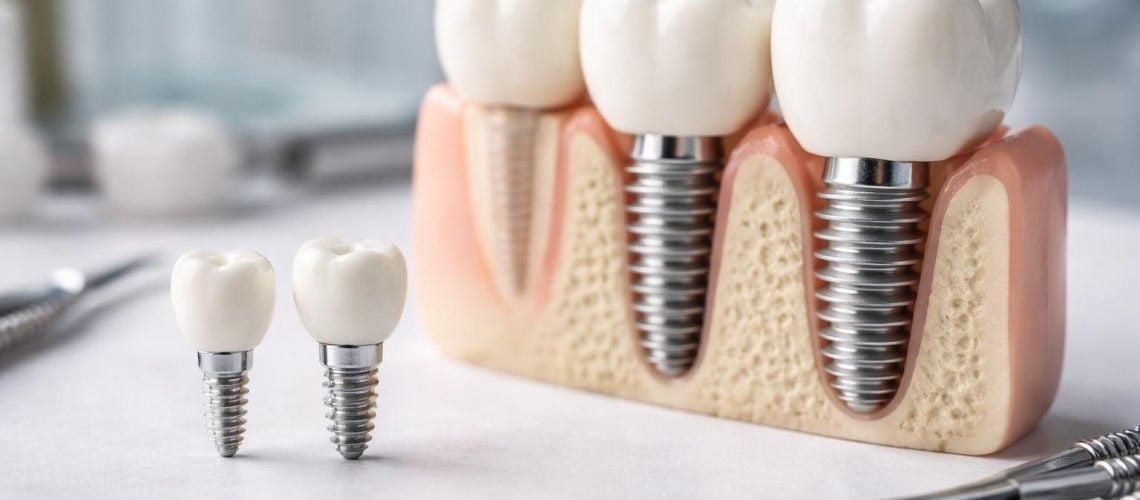
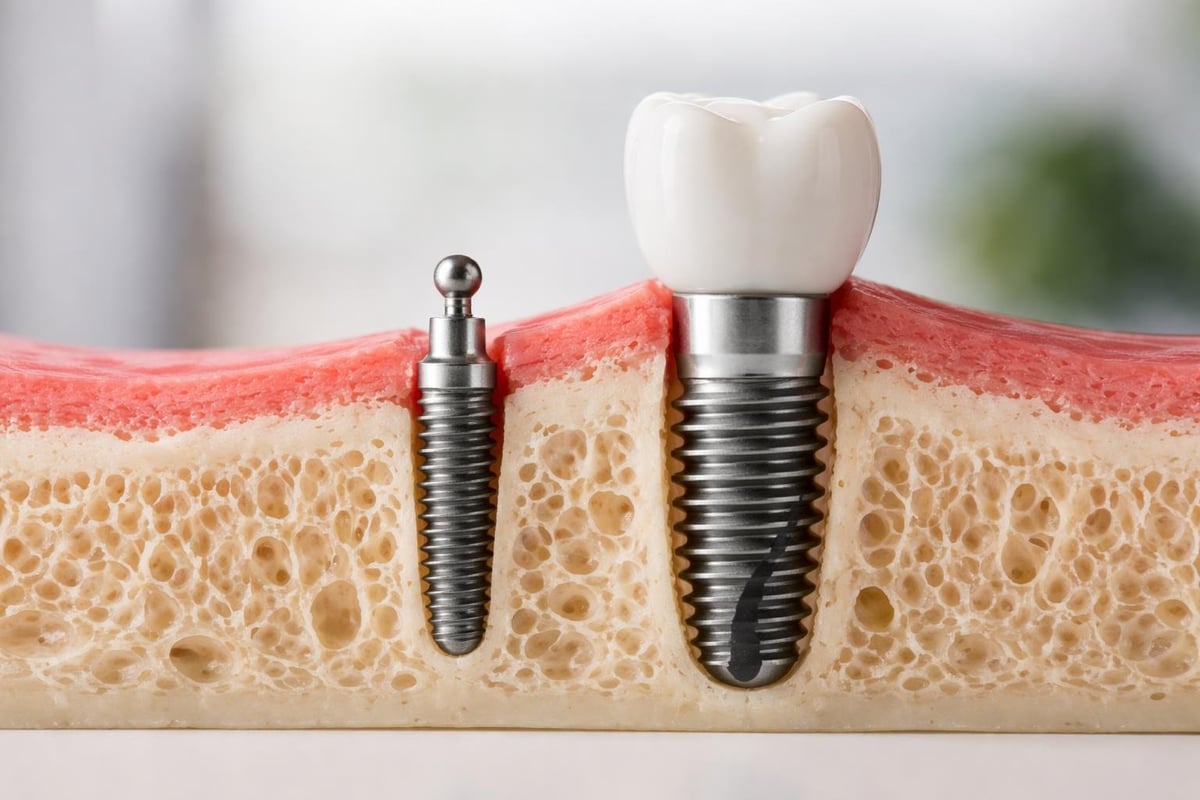
The primary distinction in the mini dental implants vs traditional implants debate centers on size, structure, and application. Traditional implants typically measure 3.5 to 6 millimeters in diameter and consist of two separate pieces: the titanium post surgically placed in the jawbone and the abutment that connects to the crown. Mini dental implants, by contrast, measure less than 3 millimeters in diameter and feature a one-piece design with the abutment integrated into the implant body.
Size and Structure Comparison
Traditional implants are built to handle significant chewing forces and support various restorations, from single crowns to full-arch dentures. Their larger diameter provides substantial stability and mimics natural tooth root dimensions. Mini implants serve different purposes, primarily stabilizing dentures or replacing smaller teeth in narrow spaces where traditional implants won’t fit.
Key Structural Differences:
- Diameter: Traditional implants (3.5-6mm) vs. mini implants (1.8-3mm)
- Design: Two-piece system vs. one-piece integrated design
- Thread pattern: Deeper, wider threads vs. narrower, finer threads
- Abutment: Separate component vs. built-in ball attachment
The structural differences directly impact how each implant type integrates with your jawbone and supports dental restorations. According to research on mini dental implant applications, these smaller implants offer unique advantages for specific clinical situations, particularly when bone volume is limited.
Candidacy Requirements and Bone Density Considerations
One of the most significant factors when evaluating mini dental implants vs traditional implants involves bone density and volume. Traditional implants require adequate bone width and height to accommodate their larger diameter. Patients with bone loss often need bone grafting procedures before implant placement, adding months to the treatment timeline and increasing costs.
Mini dental implants can often be placed in patients with insufficient bone for traditional implants, though this doesn’t mean they’re universally suitable for everyone. The reduced diameter allows placement in narrow ridges and areas where bone resorption has occurred.
Who Benefits Most from Each Option?
| Patient Profile | Traditional Implants | Mini Implants |
|---|---|---|
| Adequate bone density | Excellent choice | Also suitable |
| Limited bone volume | Requires bone grafting | Often viable without grafting |
| Single tooth replacement | Optimal for molars and premolars | Best for smaller front teeth |
| Denture stabilization | Supports implant-retained dentures | Ideal for denture retention |
| Budget constraints | Higher initial investment | More affordable option |
Families visiting our locations across Texas frequently ask whether bone grafting is necessary. The answer depends on your specific anatomy, but mini implants expand treatment possibilities for patients who might otherwise face extensive preparatory procedures. Understanding bone grafting for dental implants can help you appreciate how mini implants sometimes eliminate this requirement.
Medical Considerations and Contraindications
Both implant types share similar medical contraindications, including uncontrolled diabetes, active periodontal disease, certain bone disorders, and heavy smoking. However, mini implants may offer advantages for patients with medical conditions that complicate extensive surgery, as their placement typically involves less invasive procedures with shorter operating times.
Patients taking bisphosphonates or other medications affecting bone metabolism need careful evaluation regardless of implant type. Your dental professional will conduct comprehensive assessments, including 3D imaging and bone density measurements, before recommending either option.
The Surgical Process and Placement Techniques
The placement procedure represents another critical difference when comparing mini dental implants vs traditional implants. Traditional implant surgery typically requires incisions, bone preparation with progressively larger drills, implant placement, and suturing. The process demands precision but also creates tissue trauma requiring healing time.
Traditional Implant Placement Steps
- Initial consultation and treatment planning with 3D imaging
- Bone grafting if necessary (adds 3-6 months healing time)
- Surgical implant placement under local anesthesia or sedation
- Osseointegration period of 3-6 months for bone fusion
- Abutment placement and final restoration attachment
The multi-stage process delivers exceptional long-term results but requires patience and multiple appointments. Many patients appreciate understanding the complete dental implant procedure timeline before committing to treatment.
Mini Implant Placement Process
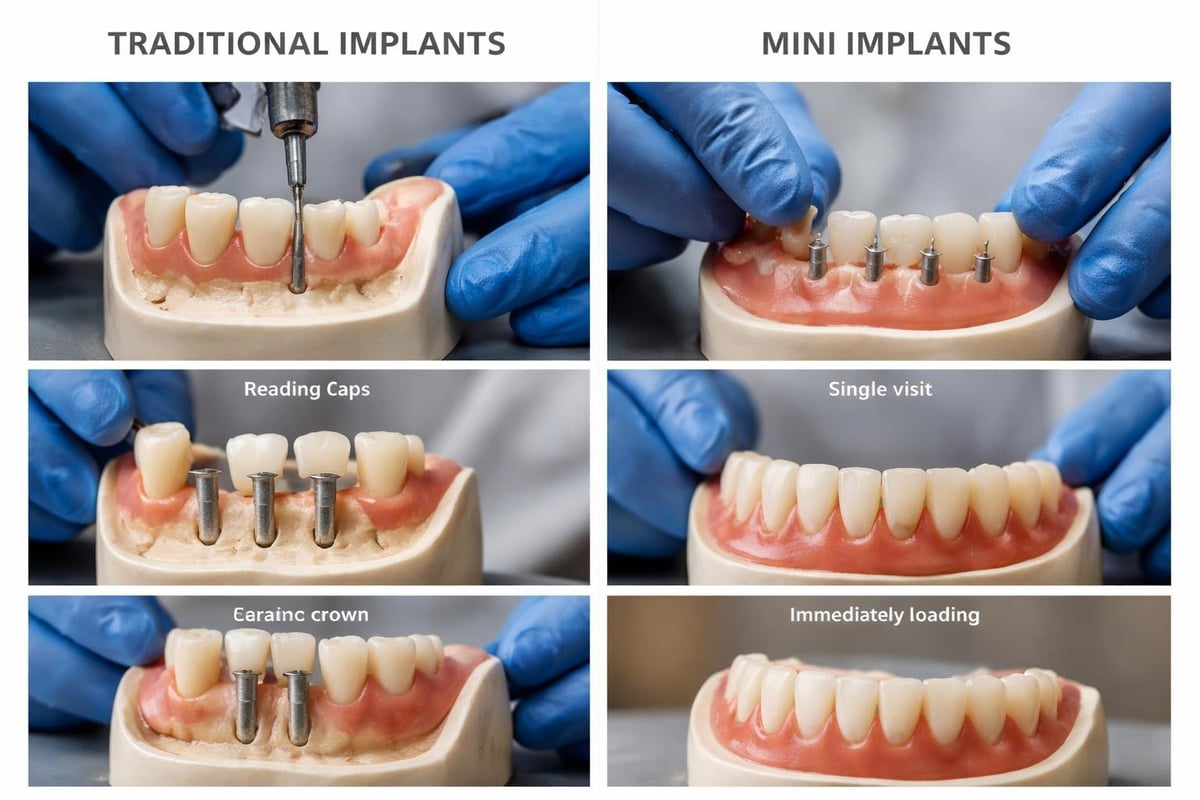
Mini dental implants typically follow a minimally invasive protocol. The dentist creates a small pilot hole through the gum tissue directly into the bone, then screws the mini implant into place. No incisions or sutures are usually necessary, and immediate loading with temporary restorations is often possible.
Advantages of Mini Implant Placement:
- Single appointment placement in many cases
- Minimal bleeding and swelling
- Immediate or same-day functional restoration
- No sutures required in most situations
- Significantly reduced discomfort post-procedure
This streamlined approach particularly benefits elderly patients, those with medical conditions complicating extensive surgery, or busy professionals unable to take substantial time off work. A long-term study of mini dental implants demonstrated favorable outcomes with this less invasive approach across diverse patient populations.
Recovery Time and Post-Operative Experience
Recovery experiences differ substantially when weighing mini dental implants vs traditional implants. Traditional implant patients typically experience moderate swelling, bruising, and discomfort for several days following surgery. Pain management involves prescription medications initially, transitioning to over-the-counter options as healing progresses.
The first week requires soft food diets, careful oral hygiene around surgical sites, and activity restrictions. Most patients return to normal routines within 7-10 days, though complete osseointegration takes months. During this healing period, patients may wear temporary restorations or continue using existing dentures with modifications.
Mini Implant Recovery Timeline
Recovery from mini implant placement is notably quicker and more comfortable. Most patients report minimal discomfort managed easily with over-the-counter pain relievers. Swelling and bruising rarely occur due to the minimally invasive nature of the procedure.
Typical Mini Implant Recovery Milestones:
- Day 1: Minor soreness, normal activities resume
- Days 2-3: Discomfort subsides significantly
- Week 1: Complete return to normal eating and routines
- Weeks 2-4: Continued bone integration, routine check-ins
Many patients receive functional restorations immediately or within days of mini implant placement, avoiding the waiting period traditional implants require. This immediate functionality particularly appeals to parents, professionals, and active adults who cannot accommodate extended recovery periods.
Cost Comparison and Financial Considerations
Budget concerns significantly influence the mini dental implants vs traditional implants decision for Texas families. Traditional dental implants typically cost between $3,000 and $6,000 per tooth, including the implant, abutment, and crown. Multiple implants or complex cases involving bone grafting increase costs substantially.
Mini dental implants generally range from $500 to $1,500 per implant, making them considerably more affordable. The cost difference stems from simpler procedures, less chair time, no bone grafting requirements in many cases, and streamlined components.
Cost Breakdown by Treatment Type
| Treatment | Traditional Implants | Mini Implants |
|---|---|---|
| Single tooth replacement | $3,000 – $6,000 | $500 – $1,500 |
| Full arch (per arch) | $20,000 – $45,000 | $6,000 – $12,000 |
| Denture stabilization (4 implants) | $12,000 – $24,000 | $2,000 – $6,000 |
| Bone grafting (if needed) | $300 – $3,000 | Often not required |
These figures represent general ranges, and actual costs vary based on complexity, location, and specific patient needs. Dental Plus Clinic offers transparent pricing and savings options to make quality implant care accessible for Texas families.
Insurance Coverage and Payment Options
Dental insurance coverage for implants varies significantly by plan. Many policies classify implants as cosmetic procedures, offering limited or no coverage. However, some plans provide partial reimbursement, particularly when implants replace teeth lost due to injury or disease.
Mini implants for denture stabilization may receive better coverage than single-tooth replacements, as they’re often deemed necessary for function rather than aesthetics. Always verify coverage details with your insurance provider before proceeding with treatment.
Financing options help families manage implant costs without compromising care quality. Payment plans, healthcare credit cards, and flexible spending accounts spread expenses over manageable periods, making both traditional and mini implants accessible to more patients.
Success Rates and Long-Term Durability
When comparing mini dental implants vs traditional implants, longevity and success rates merit serious consideration. Traditional dental implants boast impressive success rates exceeding 95% over ten years when properly placed and maintained. Their robust design handles significant occlusal forces, making them ideal for molar replacement and supporting fixed bridges.
Research indicates properly selected and placed mini implants also achieve favorable success rates, though data spans shorter timeframes given their more recent widespread adoption. Clinical studies on mini dental implants demonstrate success rates ranging from 90-94% for appropriate applications, particularly denture stabilization.
Factors Affecting Implant Longevity
Traditional Implant Success Factors:
- Sufficient initial bone density and volume
- Proper surgical technique and implant positioning
- Adequate healing time before loading
- Excellent oral hygiene and maintenance
- Regular professional monitoring
Mini Implant Success Factors:
- Appropriate case selection and patient screening
- Proper loading protocols and restoration design
- Good bone quality despite reduced volume
- Careful force distribution and occlusal adjustment
- Consistent maintenance and follow-up care
Both implant types fail when subjected to excessive forces, inadequate bone integration, or poor oral hygiene leading to peri-implantitis. The key difference lies in application: traditional implants excel in high-stress situations like molar replacement, while mini implants perform optimally for lower-force applications like denture retention.
Applications and Best Use Cases
Understanding optimal applications helps clarify the mini dental implants vs traditional implants discussion. Each implant type serves specific purposes where its design characteristics provide maximum benefit.
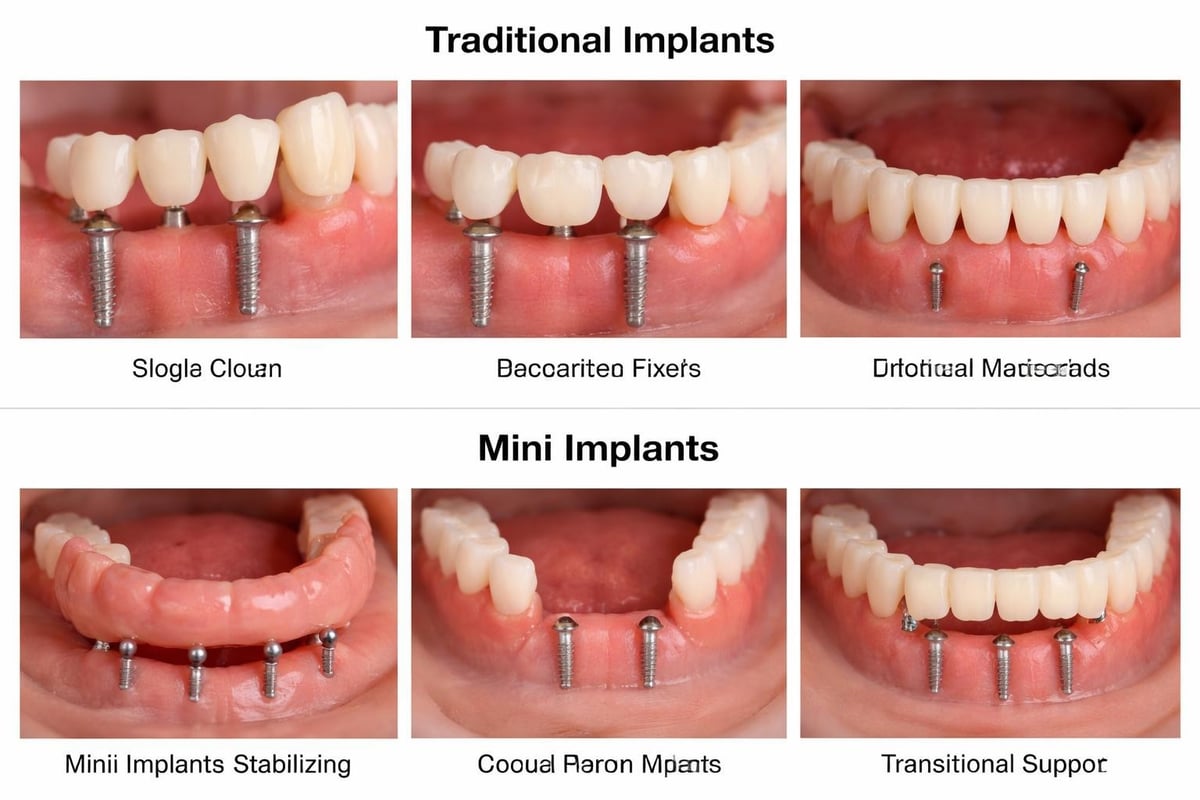
Traditional implants represent the gold standard for single-tooth replacement, particularly posterior teeth that endure significant chewing forces. They support fixed bridges, full-arch restorations like All-on-4 dental implants, and implant-supported dentures requiring substantial stability.
Ideal Candidates for Traditional Implants
- Patients replacing single posterior teeth (molars, premolars)
- Individuals seeking fixed bridge support
- Those desiring implant-supported dentures with maximum stability
- Patients with adequate bone density and volume
- Individuals comfortable with multi-stage treatment timelines
- Those prioritizing maximum long-term durability
Ideal Candidates for Mini Implants
Mini implants shine in specific scenarios where traditional implants prove impractical or unnecessary. Their primary application involves denture stabilization, transforming loose, uncomfortable dentures into secure, functional restorations. Four to six mini implants placed in the lower jaw dramatically improve denture retention without the expense or invasiveness of traditional implant-supported prosthetics.
Best Mini Implant Applications:
- Stabilizing existing complete or partial dentures
- Replacing small anterior teeth in narrow spaces
- Providing transitional support during implant treatment
- Treating patients with insufficient bone for traditional implants
- Serving elderly patients requiring minimally invasive options
- Offering affordable solutions for denture wearers
Patients exploring alternatives should also consider dental implants versus dentures to understand the full spectrum of tooth replacement options. Additionally, zirconia dental implants provide metal-free alternatives for patients with specific material preferences or sensitivities.
Maintenance Requirements and Ongoing Care
Proper maintenance determines long-term success regardless of which option you choose in the mini dental implants vs traditional implants decision. Both implant types require diligent home care and professional monitoring, though specific maintenance protocols differ slightly.
Traditional Implant Care Protocols
Traditional implants demand the same attention as natural teeth, plus specialized considerations for implant health. Patients must brush twice daily, floss carefully around implants and restorations, and use antimicrobial rinses when recommended. Professional cleanings every six months allow dental hygienists to remove plaque and tartar from implant surfaces and surrounding tissues.
Essential Traditional Implant Maintenance:
- Brush with soft-bristled toothbrush twice daily
- Floss daily using techniques suitable for implants
- Use interdental brushes or water flossers for hard-to-reach areas
- Attend regular professional cleanings and examinations
- Monitor for signs of peri-implantitis (inflammation around implants)
- Avoid excessive forces from grinding or clenching
Mini Implant Maintenance Considerations
Mini implants supporting dentures require attention to both the implants and the denture itself. Daily removal and cleaning of the denture prevents bacterial accumulation around implant attachment points. Gentle brushing of the mini implant heads maintains their cleanliness and function.
The ball attachments on mini implants connect to rubber O-rings within the denture, which periodically require replacement as they wear. This simple maintenance procedure takes minutes during routine dental visits and ensures continued secure denture retention.
Regular professional evaluations identify potential issues before they compromise implant health. Dentists assess bone levels around implants, check for inflammation, verify proper restoration fit, and make necessary adjustments. Early intervention prevents minor issues from becoming major problems requiring implant removal or replacement.
Addressing Common Myths and Misconceptions
Several misconceptions cloud the mini dental implants vs traditional implants conversation, leading to confusion for patients researching options. Separating fact from fiction empowers better decision-making.
Myth: Mini Implants Are Temporary Solutions
Reality: When properly selected and placed, mini implants provide long-term solutions for appropriate applications. Clearing up mini dental implant myths helps patients understand these devices aren’t inferior versions of traditional implants but rather purpose-designed alternatives for specific situations.
A retrospective analysis following mini implants over five years demonstrated excellent survival rates when used for recommended applications like denture stabilization. The key involves matching implant type to clinical indication rather than viewing one as universally superior.
Myth: Traditional Implants Always Require Bone Grafting
Reality: Many patients possess sufficient bone density and volume for traditional implant placement without grafting. Modern imaging technology allows precise assessment of bone availability before treatment planning. While bone grafting expands candidacy for patients with deficient bone, it’s not universally necessary.
Conversely, mini implants don’t completely eliminate bone requirements. Adequate bone quality and density remain essential for successful mini implant integration, though the reduced diameter allows placement where traditional implants won’t fit.
Myth: Mini Implants Can’t Support Individual Crowns
Reality: Mini implants can support single crowns for smaller anterior teeth in certain situations, though this remains a less common application. The critical factor involves occlusal forces: mini implants perform best when forces are distributed appropriately relative to their diameter.
Additional Common Misconceptions:
- “Mini implants are only for elderly patients” – They benefit diverse age groups when clinically appropriate
- “Traditional implants always last longer” – Success depends on proper application, placement, and maintenance for both types
- “Insurance never covers mini implants” – Coverage varies by plan and clinical indication
- “Recovery from traditional implants is unbearable” – Modern techniques and pain management make recovery manageable for most patients
Making Your Decision: Factors to Consider
Choosing between mini dental implants vs traditional implants requires evaluating multiple personal factors beyond clinical indications. Your lifestyle, budget, timeline, and priorities all influence the optimal choice.
Questions to Ask Yourself
Functional Needs:
- Am I replacing a single tooth, multiple teeth, or stabilizing dentures?
- Which teeth am I replacing, and what forces will they endure?
- Do I prefer fixed restorations or removable prosthetics?
Financial Considerations:
- What is my budget for implant treatment?
- Does my insurance provide any coverage for dental implants?
- Can I accommodate payment plans if needed?
Time and Convenience:
- How quickly do I need functional tooth replacement?
- Can I manage a multi-month treatment timeline with healing periods?
- How much time can I take away from work or family responsibilities for appointments and recovery?
Medical and Anatomical Factors:
- What is my current bone density and volume?
- Do I have medical conditions affecting healing or surgery tolerance?
- Am I comfortable with invasive surgical procedures, or do I prefer minimally invasive options?
Consultation with Dental Professionals
Professional evaluation remains essential regardless of preliminary research. Dentists assess your specific anatomy, medical history, and restoration needs through clinical examinations, 3D imaging, and comprehensive diagnostics. This personalized assessment determines candidacy for each implant type and identifies the optimal solution for your situation.
During consultations at Dental Plus Clinic locations, dental professionals discuss treatment options transparently, explaining advantages and limitations of each approach. This collaborative decision-making process ensures alignment between clinical recommendations and patient preferences.
Comprehensive comparisons like those found in professional analyses of mini versus traditional dental implants provide valuable context, but individual assessment determines the right choice for your unique circumstances.
Technological Advances and Future Developments
Dental implant technology continues evolving, improving outcomes for both traditional and mini implant systems. Advances in materials, surface treatments, and digital planning enhance success rates, reduce complications, and expand candidacy for implant treatment.
Modern implant surfaces feature nano-scale modifications promoting faster, stronger bone integration. These technological improvements benefit both implant types, accelerating healing and enhancing long-term stability. Digital treatment planning using 3D imaging and computer-guided placement increases precision, particularly valuable in complex cases.
Emerging Technologies Affecting Implant Dentistry
3D Printing and Custom Implants:
Additive manufacturing enables custom implant designs tailored to individual anatomy. While currently more common for complex maxillofacial cases, this technology may eventually extend to routine dental implants, optimizing fit and integration.
Bioactive Surface Coatings:
Advanced surface treatments incorporating calcium phosphate compounds or growth factors accelerate bone formation around implants. These innovations potentially shorten healing times and improve outcomes in patients with compromised bone quality.
Immediate Loading Protocols:
Research into immediate loading expands situations where implants can support restorations immediately after placement. This advancement particularly benefits mini implant applications, where immediate denture attachment already represents standard practice in many cases.
Staying informed about the latest dental implant technology helps patients access cutting-edge solutions delivering optimal results with maximum comfort and convenience.
Regional Considerations for Texas Patients
Texas families face unique considerations when evaluating mini dental implants vs traditional implants, including provider selection, access to specialized care, and regional cost variations. Urban areas like San Antonio offer numerous implant dentistry options, while residents of smaller communities may travel for specialized treatments.
Dental Plus Clinic serves patients across multiple Texas locations, including Beeville, Converse, Leander, New Braunfels, and Seguin. This geographic distribution provides convenient access to comprehensive implant services for families throughout central and south Texas.
Selecting the Right Provider
Implant dentistry requires specialized training and experience beyond general dentistry. When researching providers, investigate credentials, continuing education, and specific experience with your chosen implant type. Dentists placing mini implants should demonstrate proficiency with these specific systems, while traditional implant providers should have extensive surgical experience and training.
Questions to Ask Potential Providers:
- How many implants of this type have you placed?
- What is your success rate with this specific procedure?
- What technology do you use for treatment planning and placement?
- How do you handle complications if they occur?
- What follow-up care and monitoring do you provide?
Patient testimonials and reviews offer insights into real experiences at dental practices. Reading about others’ implant journeys helps set realistic expectations and identifies providers delivering exceptional patient care alongside technical expertise.
Frequently Asked Questions
How long do mini dental implants last compared to traditional implants?
Mini dental implants can last 10-15 years or longer with proper care and appropriate application, though traditional implants often exceed 20-25 years when well-maintained. Longevity depends heavily on oral hygiene, regular professional care, appropriate force distribution, and individual factors like bone quality and systemic health. Mini implants stabilizing dentures typically provide many years of reliable service when O-rings are replaced as needed and proper maintenance protocols are followed.
Can mini implants replace any tooth that traditional implants can?
No, mini implants are not suitable replacements for all teeth that traditional implants can restore. Their smaller diameter limits their ability to withstand heavy occlusal forces, making them less ideal for posterior teeth like molars that endure significant chewing pressure. Mini implants excel at denture stabilization, replacing smaller anterior teeth in narrow spaces, and providing transitional support. Traditional implants remain the preferred choice for most single-tooth replacements, especially in the posterior region, and for supporting fixed bridges or full-arch restorations requiring maximum stability.
Is the mini dental implants vs traditional implants procedure equally painful?
Mini implant placement typically causes significantly less discomfort than traditional implant surgery due to its minimally invasive nature. The procedure usually requires no incisions or sutures, resulting in minimal post-operative pain, swelling, and bruising. Most patients manage discomfort with over-the-counter pain relievers and resume normal activities within a day or two. Traditional implant surgery involves more extensive tissue manipulation and bone preparation, leading to moderate post-operative discomfort requiring prescription pain management initially. However, modern anesthesia and pain control techniques make both procedures tolerable for most patients.
Will insurance cover mini implants if they won’t cover traditional implants?
Insurance coverage varies significantly by plan and clinical indication rather than implant type. Some insurance companies provide better coverage for mini implants used for denture stabilization, viewing them as functionally necessary rather than cosmetic. However, policies differ widely, and many dental plans offer limited or no coverage for any implant procedures. Always verify specific coverage details with your insurance provider before treatment, providing detailed treatment codes and clinical justification. Even without insurance coverage, mini implants’ lower cost often makes them more accessible than traditional implants for budget-conscious patients.
How do I know which option is right for me?
Determining the optimal choice between mini dental implants vs traditional implants requires professional evaluation of your specific anatomy, restoration needs, medical history, budget, and personal preferences. Schedule comprehensive consultations with experienced implant dentists who can assess bone density through 3D imaging, discuss your functional requirements, and explain candidacy for each option. Consider factors like timeline urgency, comfort with surgical procedures, financial constraints, and long-term goals. The right choice balances clinical appropriateness with personal priorities, ensuring your implant solution meets both functional needs and lifestyle requirements.
Can I convert my existing dentures to work with mini implants?
In many cases, existing dentures can be retrofitted to attach to mini implants, though this depends on the denture’s condition, design, and fit. Dentures must be in good structural condition without cracks, proper occlusion, and appropriate fit to surrounding tissues. Your dentist evaluates whether your current dentures are suitable for conversion or if new dentures fabricated specifically for implant retention would provide better results. Converting existing dentures reduces overall treatment costs, making mini implant denture stabilization even more affordable for patients with well-fitting current prosthetics.
How soon after tooth extraction can I receive implants?
Traditional implants can sometimes be placed immediately after tooth extraction in favorable situations with adequate bone, though most cases require 3-6 months of healing before implant placement. This healing period allows bone to fill the extraction socket and mature, providing stable support for the implant. Mini implants may also be placed after appropriate healing, with timing determined by bone quality and clinical circumstances. Immediate placement protocols exist for both implant types but depend on specific clinical factors your dentist evaluates through imaging and examination. Some situations benefit from delayed placement, ensuring optimal bone healing and implant success.
What happens if a mini or traditional implant fails?
Implant failure, while uncommon, occasionally occurs due to insufficient bone integration, infection, excessive forces, or other factors. Failed traditional implants can often be replaced after addressing the underlying cause, sometimes requiring bone grafting to restore adequate support. Failed mini implants can similarly be replaced, often with minimal additional procedures given their small size. Your dentist monitors implants regularly to identify potential problems early, when intervention prevents failure. Many implant warranties cover replacement in cases of failure unrelated to patient factors like poor hygiene or trauma, though specific terms vary by provider and manufacturer.
Final Thoughts
Choosing between mini dental implants vs traditional implants ultimately depends on your unique dental needs, anatomy, budget, and lifestyle preferences. Both options offer proven solutions for tooth replacement when appropriately selected and expertly placed. Whether you need single-tooth restoration, full-arch rehabilitation, or denture stabilization, Dental Plus Clinic provides personalized consultations and comprehensive implant services at convenient Texas locations. Our experienced team uses advanced technology to evaluate your candidacy, discuss all available options, and create customized treatment plans that restore your smile with confidence and comfort. Schedule your consultation today to discover which implant solution best meets your needs.